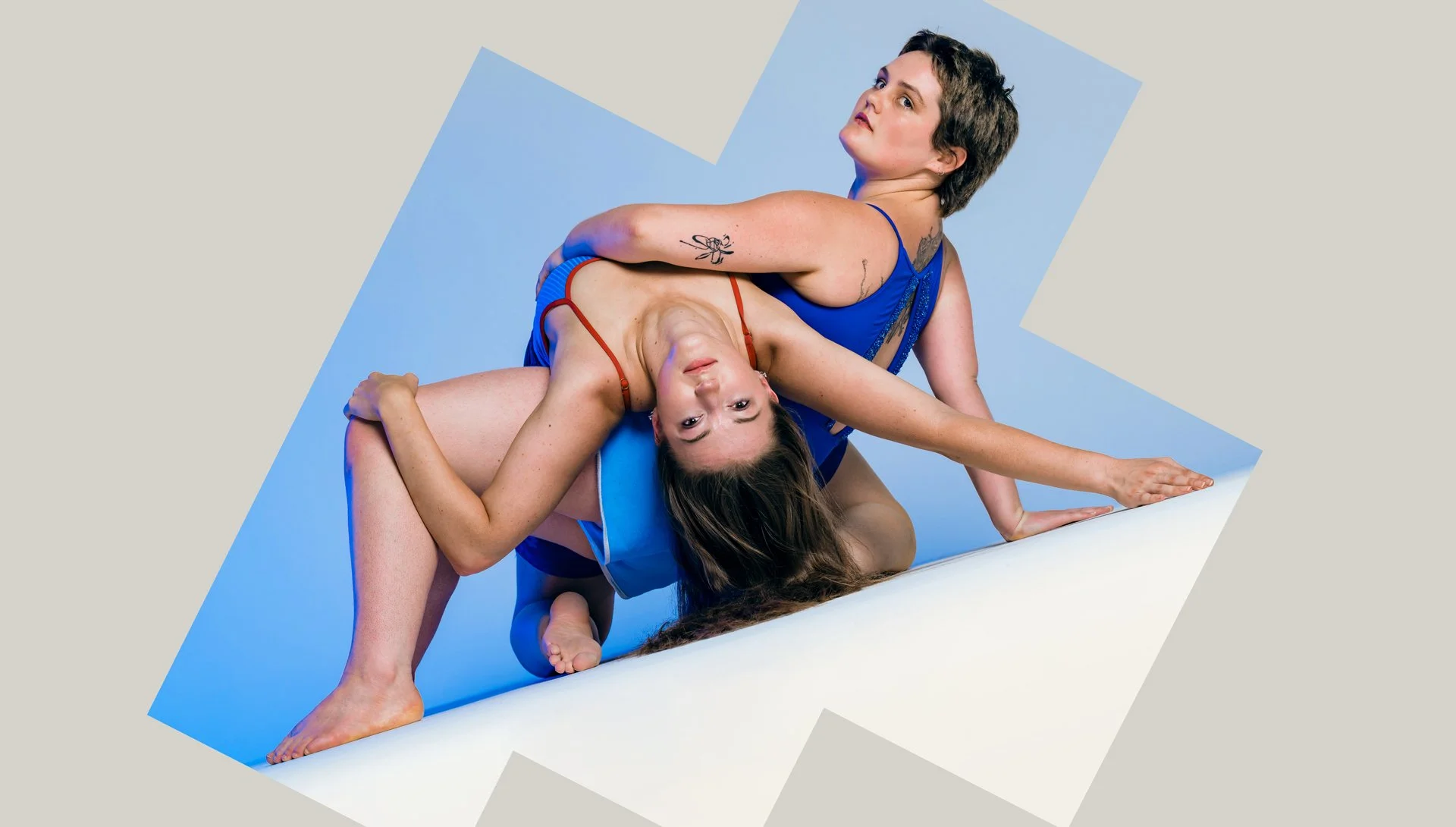
Unitec Dance returns to Te Pou Theatre with SHOWCASE 2026, three compelling contemporary dance works created by Bianca Hyslop, Tamsyn Russell and Rose Philpott and performed by students from Years 1, 2, and 3. The evening brings together resonant choreography, dynamic physicality, and the unique voices of emerging artists from across the programme. It’s also a celebration of our 2026 graduating students, brought to life through expressive movement, music, costume, and lighting.
Unitec's annual end-of-year showcase serves a dual purpose. It acts as both a celebration of graduating performers preparing to enter the industry and a demonstration of the diverse choreographic voices shaping the future of contemporary dance in Aotearoa. Showcase 2026 embraces both responsibilities confidently, presenting a tightly packed triple bill that highlights the technical versatility of the student performers while guiding audiences through three distinctly different worlds. Across seventy-five minutes, the programme explores themes of connection, renewal, competition, community, and survival, creating an evening that feels surprisingly cohesive despite the radically different artistic approaches of its three choreographers.
Presented within the intimate black-box environment of Te Pou Theatre, the production benefits immediately from its use of space. Jo Kilgour's lighting design consistently transforms the venue into something larger than its physical footprint. The stage frequently appears to emerge from darkness, with dancers materialising out of shadow before dissolving back into it again. This recurring visual language becomes one of the defining features of the evening. Performers are rarely simply waiting offstage. Instead, they feel as though they exist in a larger world just beyond the audience's reach, stepping into focus when required before vanishing once more into obscurity. It also highlights the scale of the undertaking facing all three choreographers. With more than twenty dancers sharing the stage throughout much of the programme, managing traffic flow, entrances, exits, formations, and audience focus becomes a significant compositional challenge in its own right. The fact that each work remains visually readable despite the density of bodies moving through the space is an achievement that should not be understated.
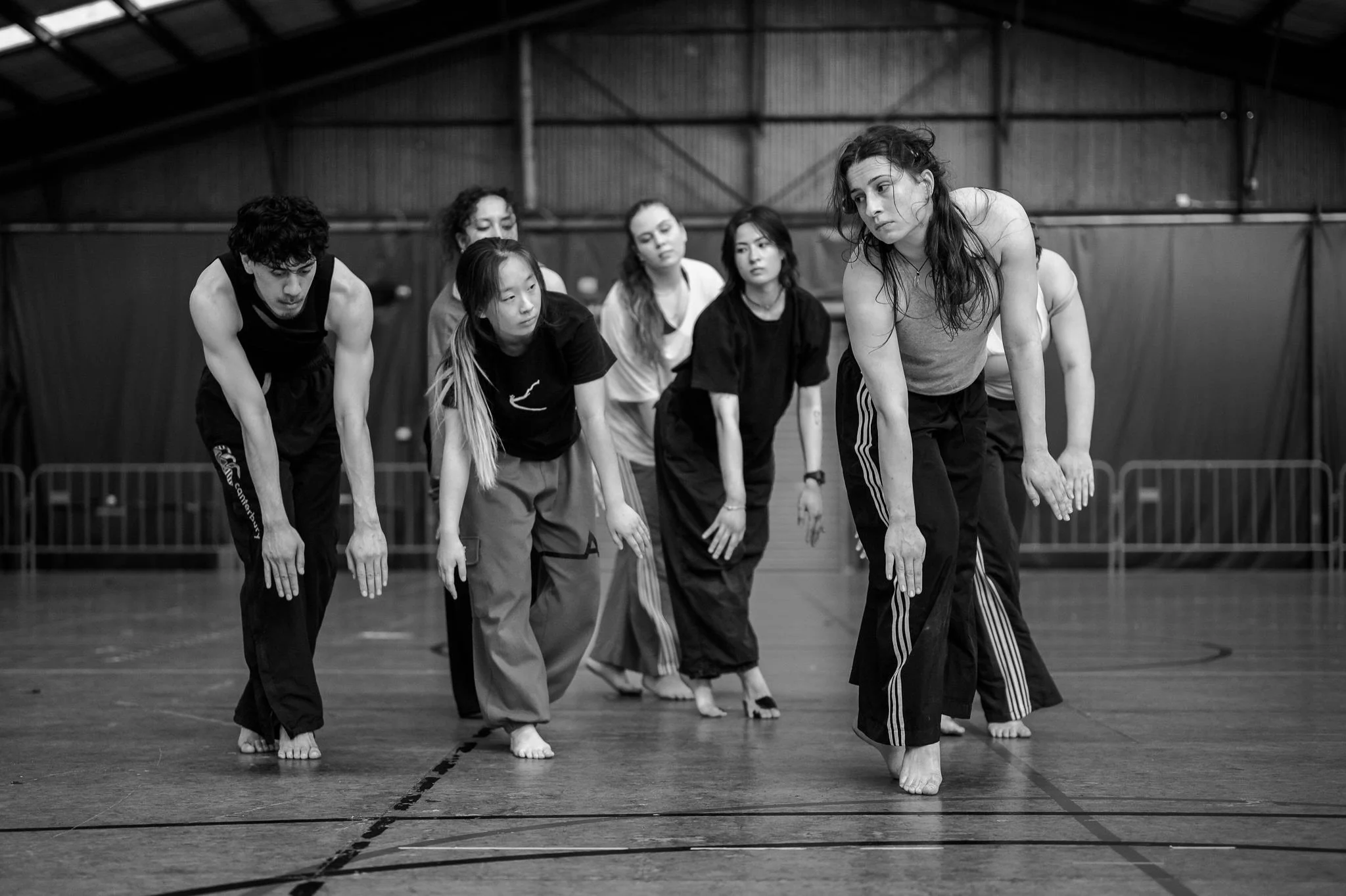
Photo credit: Jinki Cambronero
The programme opens with Bianca Hyslop's Tuku Atu, Tuku Mai, a work inspired by ideas of reciprocity, collective contribution, and the passing of knowledge between generations. Bringing together performers from all three year levels immediately establishes a sense of continuity within the programme itself. The graduating students may be preparing to leave, but the work reminds us that knowledge and experience continue flowing through those who remain.
What stands out most is the emphasis on relationship. Rather than focusing on synchronised spectacle, Hyslop's choreography prioritises interaction. Dancers lean into one another, support each other's weight, share momentum, and continually exchange physical information. Duets emerge and dissolve organically throughout the space, creating the impression of energy constantly circulating through the ensemble. Even when performers separate, there remains an invisible thread linking their movement decisions. The physical quality of the choreography feels grounded and tactile. Bodies move with weight rather than striving for ethereal lightness. Breath becomes visible. Moments of stillness carry as much significance as moments of action. There is an earthy urgency throughout the work, with performers appearing to draw energy from each other as much as from the music itself.
The soundscape supports this beautifully. At various points, the auditory focus shifts towards the dancers themselves. Feet striking the floor, bodies moving through space, and collective breathing become integral components of the experience. This creates a strong sense of immediacy and reinforces the work's exploration of connection. It is not simply about dancing together. It is about listening, responding, and existing within a shared physical environment.
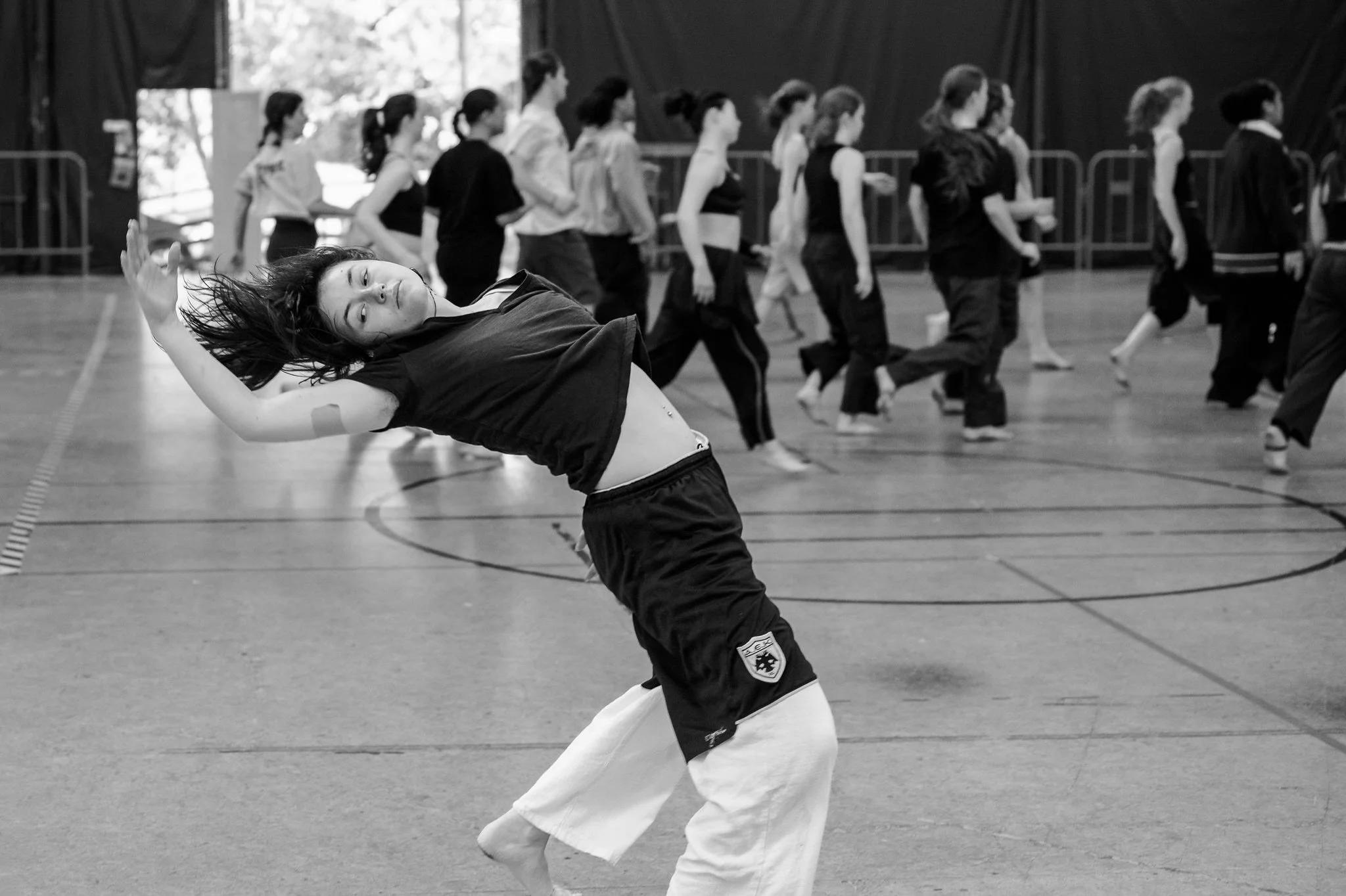
Photo credit: Jinki Cambronero
Where Hyslop's work explores collective exchange, Tamsyn Russell's Fallowland turns its attention towards cycles of rest, renewal, and growth. Drawing inspiration from the agricultural practice of leaving land dormant before future cultivation, the piece becomes an exploration of what happens during periods of apparent inactivity. The result is a fascinating study in tension between stillness and motion.
Russell organises the stage space differently, allowing some dancers to remain motionless while others move around and between them. Throughout the piece, performers alternate between activity and dormancy, creating an ever-shifting landscape of bodies. At times the stage resembles an open field, with pathways carved through clusters of performers. Elsewhere, groups form temporary barriers or structures before dissolving again. The choreography possesses a strong sense of momentum despite its thematic focus on rest. Movement frequently travels across the floor with sweeping efficiency, carrying dancers from grounded floorwork into expansive standing phrases. There is a constant sense of energy gathering and dispersing, as though the performers themselves are participating in natural cycles of growth and recovery.
The scale of the ensemble makes this particularly impressive. Russell is regularly coordinating large groups moving in different rhythms and directions simultaneously, yet the work rarely feels cluttered. Individual journeys remain visible even as larger formations continuously reshape themselves around them. The accompanying score reinforces this sensation through repeated musical patterns that generate a feeling of forward motion interrupted by periodic pauses. Together, the music and choreography create a strangely compelling rhythm of progress and retreat. It feels as though the work is constantly asking whether stillness represents stagnation or preparation. Individual dancers periodically drift away from the group, pursuing their own movement ideas before eventually being reabsorbed back into the wider ensemble. The tension between personal expression and collective identity becomes one of the work's most intriguing features, allowing Russell to explore how communities function while never losing sight of individual bodies within the crowd.
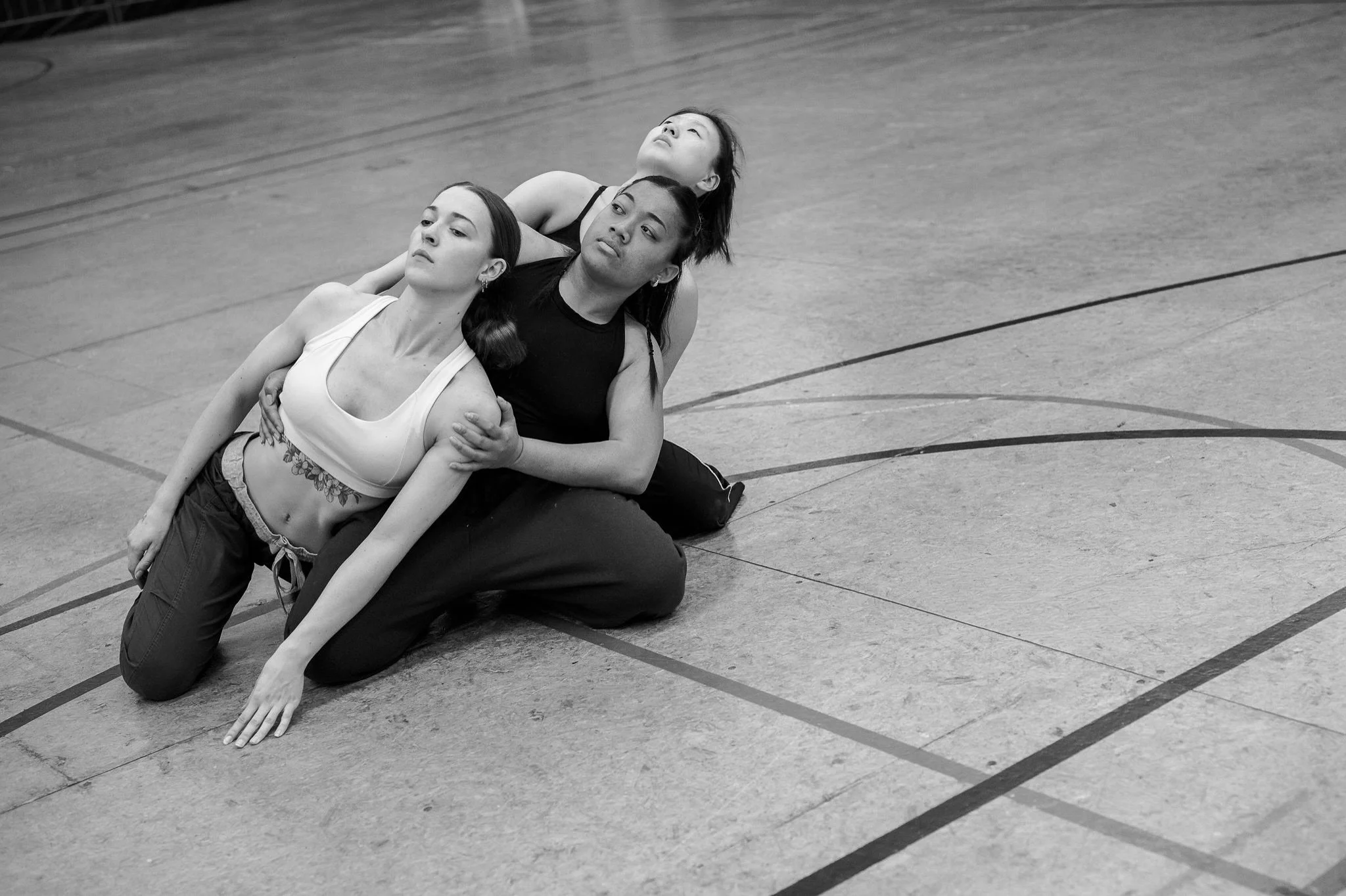
Photo credit: Jinki Cambronero
The final piece, Rosamund Philpott's Dog Eat Dog, pushes the evening into dramatically different territory. Where the earlier works emphasise connection and coexistence, Philpott introduces friction, competition, and unpredictability. The stage suddenly feels less like a community and more like contested ground.
The choreography embraces multiplicity. Individual performers frequently appear to operate under shared instructions while responding in completely different ways. This creates scenes where countless movement ideas unfold simultaneously, encouraging the audience to constantly shift focus between different areas of the stage. Rather than presenting a single point of attention, Dog Eat Dog overwhelms the viewer with possibilities. That sensory overload becomes a central feature of the work. Every glance reveals another interaction, another gesture, another movement phrase competing for attention. The result feels intentionally chaotic, reflecting an environment where everybody is pursuing their own objectives while navigating the presence of everyone else.
The sound design amplifies this effect considerably. Compared with the previous works, the sonic landscape becomes more abrasive and confrontational. Dissonant textures and aggressive audio shifts create a feeling of instability that perfectly complements the choreography's underlying themes. The audience is never allowed to settle comfortably into familiar patterns. One of the production's most striking visual sequences arrives midway through the work when large metallic gold forms enter the stage. These objects completely alter the environment, providing a new set of relationships for the dancers to navigate. The performers weave between them, manipulate them, and ultimately transform them into a mesmerising visual landscape. What begins as abstract material gradually develops into something far more evocative, creating one of the evening's most memorable images.
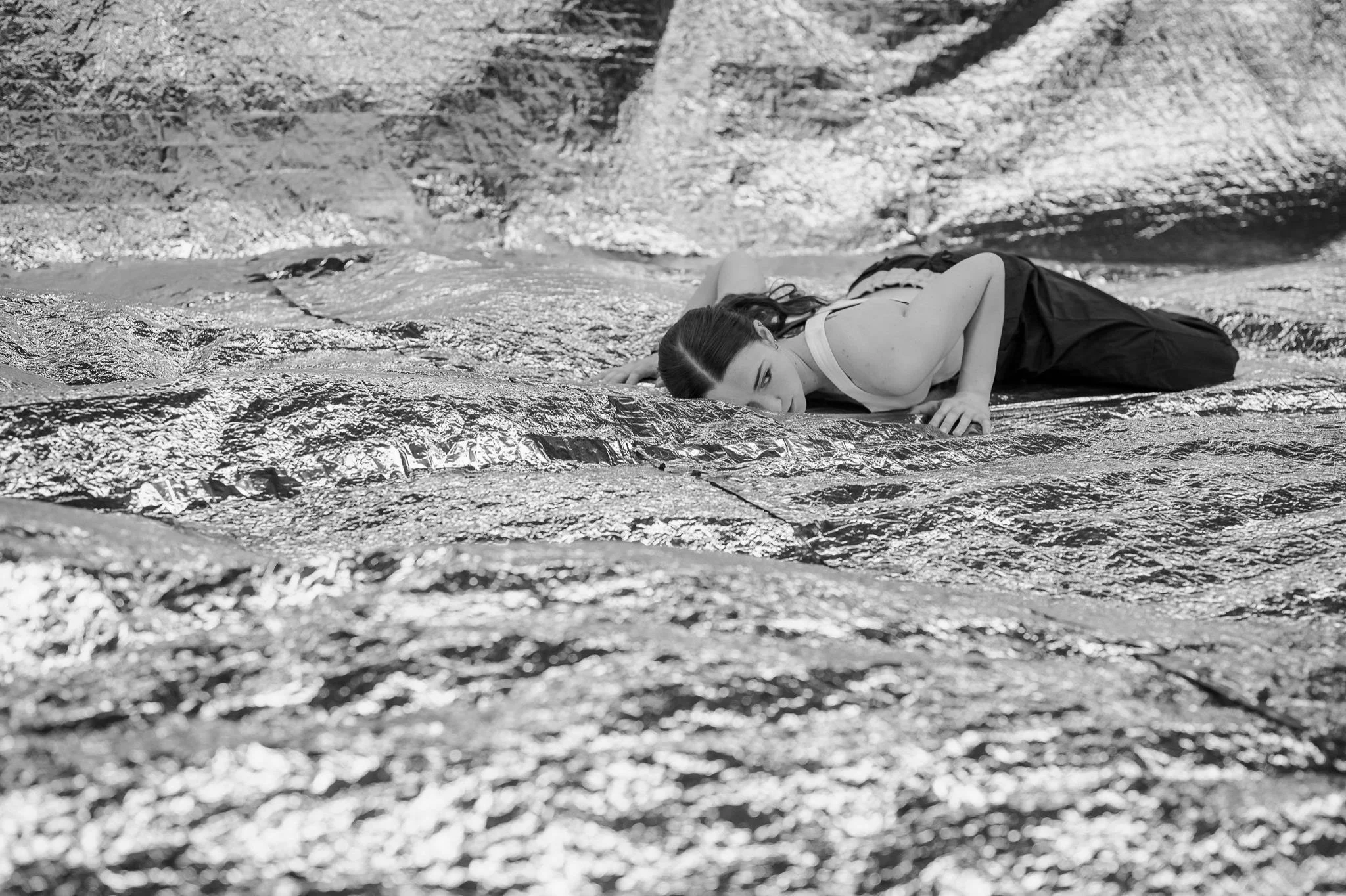
Photo credit: Jinki Cambronero
Taken individually, each work offers a distinct perspective on how people relate to one another. Together, they create a surprisingly coherent progression. The evening begins with mutual support and shared exchange, moves through cycles of collective labour and regeneration, and concludes with a world of competition, hierarchy, and instability. Thematically, it forms a loose journey from community towards individual struggle without ever spelling that trajectory out explicitly.
What ultimately makes Showcase 2026 so successful is the calibre of the student performers. Across all three works, the dancers demonstrate remarkable adaptability, shifting comfortably between very different movement languages and performance demands. The sheer number of performers sharing the stage means there is often far more happening than any audience member can fully absorb in a single viewing, and the programme almost demands repeat attendance to appreciate every detail. There is also something genuinely impressive about the mechanics of the evening itself. Coordinating more than twenty dancers at a time while maintaining artistic clarity is an enormous choreographic undertaking, particularly when each work asks those performers to navigate entirely different physical languages, spatial relationships, and thematic concerns. The audience rarely notices that complexity because the choreography feels so assured, but the ability to organise that many moving parts without losing coherence is one of the programme's most significant achievements.
The evening stands as both a celebration of emerging talent and a showcase for the diversity of contemporary dance practice in Aotearoa. Through three distinct choreographic voices, Showcase 2026 delivers an engaging, ambitious, and visually rich programme that highlights the strength of Unitec's dancers while offering audiences plenty to reflect on long after the curtain call.
The Unitec Dance Showcase 2026 was performed from 12-15 November at the Te Pou Theatre.
Review written by Alex Moulton
