Derya and Aziz, an actress-playwright couple, find themselves under pressure after falling foul of the authoritarian Turkish regime and losing their jobs. Together with their 13-year-old daughter, the previously well-off family with progressive ideals must redefine their way of life amidst political turmoil and authoritarian scrutiny.
Sarı Zarflar (Yellow Letters); Official paper notices and dismissal letters used by state institutions in Turkey to notify dissidents, academics, and artists that they have been fired, blacklisted, or placed under ‘legal and psychological limbo.’ (Mubi & Genç, 2026)
Artists from Aotearoa to Ankara, Turkey, reckon with the uncomfortable choices that creative artists face across the globe - to fight to make their art their way, or to face the reality of surviving in a society that runs on the oil of capitalist globalisation.
Yellow Letters (German: Gelbe Briefe) is İlker Çatak’s 2026 political drama, casting Berlin and Hamburg in the roles of Turkish cities of Ankara and Istanbul. As the winner of the Golden Bear at the 76th International Berlin Film Festival, there has been significant buzz surrounding Çatak’s fifth feature film, which sees the filmmaker turn his gaze to his Turkish origins to tell a story that appears to warn its audience of far-away threats in a foreign setting, yet in the same breath confronts them with an all-too-familiar crisis of ethics.
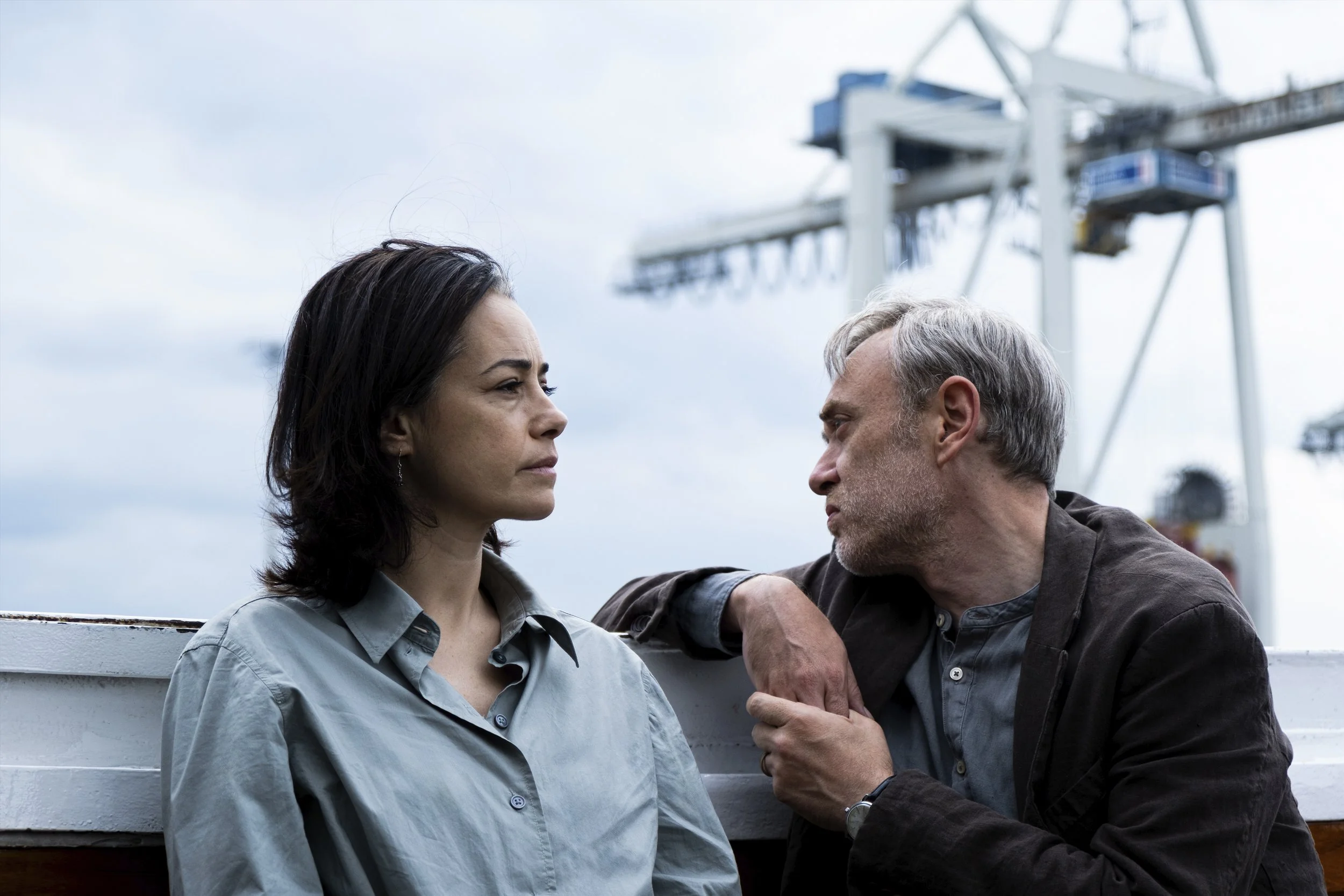
© Ella Knorz, if... Productions, Alamode Film
The film opens on Derya Tufan (Özgü Namal) performing the climactic final scene at the premiere of the play authored by her husband Aziz Tufan (Tansu Biçer), at the State Theatre in Ankara. The viewer does not ever get to hear the content of this play, only glimpsing these moments before the audience erupts into applause, with an overlay of sound design that evokes the feeling of an orchestra tuning in the pit before the curtain rises onstage - this is a film that centres around the political and personal art of theatre, and this convention signifies to the viewer that the drama at hand is about to begin.
This single performance is seemingly enough to draw the couple to the attention of state ministers, and the following day, Derya and Aziz are among a group served with Yellow Letters, both facing termination from employment and set to await a hearing deciding what charges may be laid against them. We follow the couple as they move to live with Aziz’s mother in Istanbul, trying to find stability for their 13-year-old daughter Ezgi (Leyla Smyrna Cabas) while they are in limbo.
The film’s setting is beautifully transposed; while the production was shot in Germany, the sense of a modern Turkey is not lost in the production design of this film. Judith Kaufmann’s cinematography immediately sets the viewer in the position of a fly-on-the-wall, using steady-cam shots to match (or set) the tone and energy of the scene on screen.

© Ella Knorz, if... Productions, Alamode Film
Çatak presents a challenging question throughout the course of the film: can one firmly hold onto their ethics, beliefs, and politics, even if compromise is the path towards a better future? Underneath the tense political drama that surrounds this family, Derya and Aziz are driven by their need to continue to speak their truth through their art, and both are confronted by what this would truly mean in their given circumstances.
Biçer’s Aziz is a recognisable portrait of the liberal intellectual elite, steeped in an underlying privilege of his security in Turkish society as an educated man from a liberal and financially secure background. Aziz reacts to his situation with fear and panic; he is the victim of circumstance, and losing the security of his academic world pulls him abruptly into the harsh reality of political turmoil that surrounds him. He is truly shocked that he could be accused of such a serious crime, and the consequences of a guilty charge numb him, causing him to fear the power he once wielded as a political voice of dramaturgy in Ankara. And yet, in a moment of hope (or perhaps duty), Aziz tells Derya, “Getting through the day shouldn’t be the dream. It can’t be.”
Namal’s Derya holds an underlying strength and substance, with assertive and angry frustration that peels away to reveal the realist she always has been. To call Derya an opportunist would incorrectly assume that she holds no moral standpoint in the politics of the state. Derya confronts her husband (and by extension the viewer) by asking Aziz to prove that he is not simply a pseudo-intellectual, playing the part of the revolutionary, the feminist, the non-religious, all to discuss the philosophy of the experiment from the safety of the post of academia - or safely behind the curtain as an actor is speaking the words he has written for the stage. Derya adapts to survive. She understands the position she holds as an actor, a woman, and a mother - her compromise is an act of calculated survival. This does not mean that her beliefs are any less formidable; she shows this with well-timed moments of bravery for the sake of the truth in the text that Aziz has written for her: "It's not about what we want, but what the scene requires.”
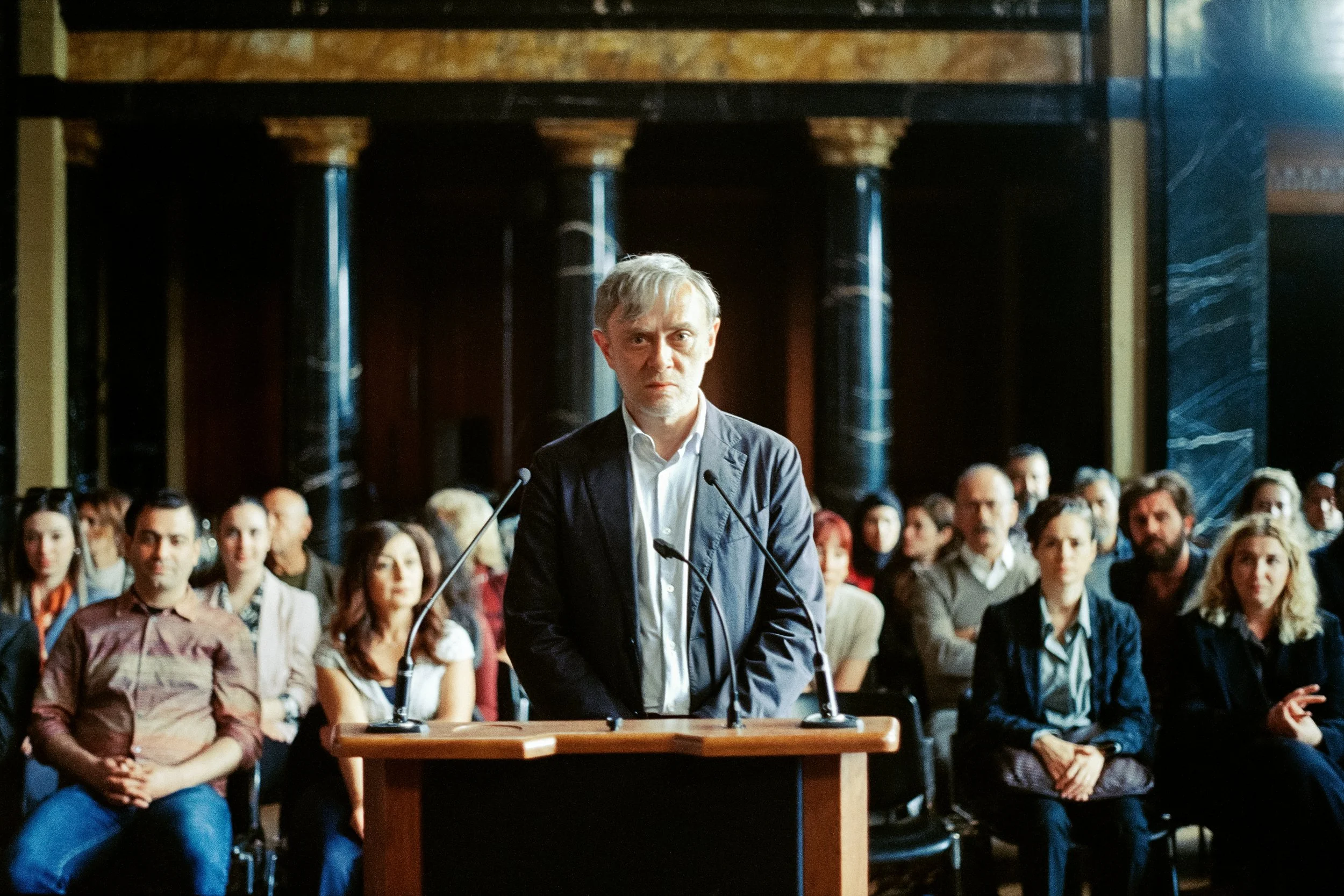
© Ella Knorz, if... Productions, Alamode Film
The undercurrent of fighting for the right to practise freedom of speech is quite literally jeopardised by the film's plot, as a conservative government threatens any form of political critique with criminal charges, leading this family to face survival in an uncomfortable position outside of their liberal bubble. This fight is far more confronting for the couple on screen, but will not be lost on any viewer who aligns with the couple’s artistic or social beliefs. To assume the social setting of Yellow Letters as the root cause for this turmoil would be to disregard everyday struggles many experience in 2026 - the ability to express one’s opinion freely may not only be suppressed by a ‘yellow letter’. Freedom of expression crucially relies on one’s real-world circumstances: financial freedom, freedom from gender or cultural bias, freedom of religious (or non-religious) expression.
İlker Çatak investigates how the complexities of financial struggle, parenthood and the broad experience of social progress affect the concept of personal freedom for a man and a woman in their early 50s, a grandmother in her 70s, and a young teenage woman. What choices can these people truly make?
When does compromise for the sake of survival turn into opportunistic ‘selling out’?
When does fighting for the sake of your beliefs become privileged naivety?
Yellow Letters opens in NZ cinemas on November 12. Find your nearest screening here.
Review written by Charlie Underhill
