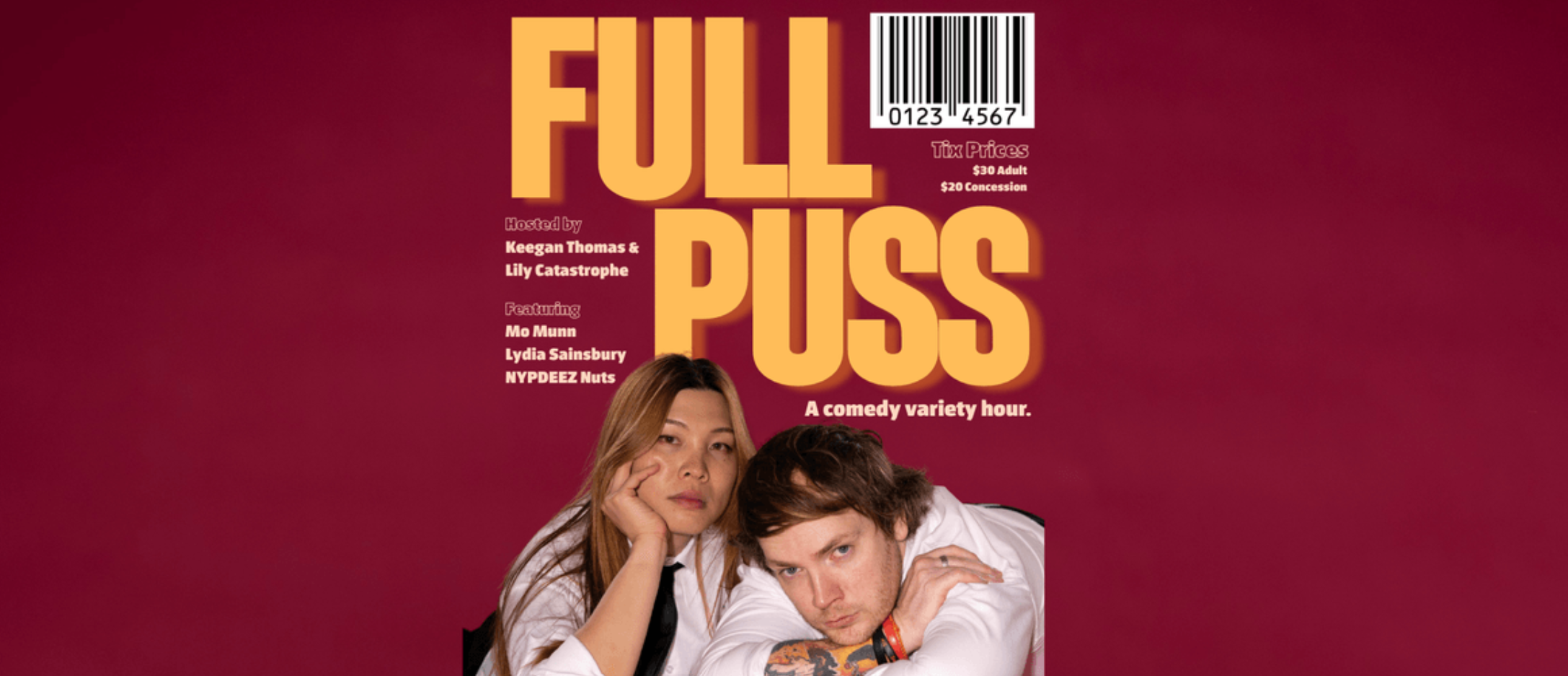
Full Puss (ˈfu̇l pu̇s): Whole hog, no holding back, no surrender.
Full Puss is a maximalist alt-comedy cabaret born from the minds of Wellington comics Lily Catastrophe (BOTTOM SURGERY, Little Sister) and Keegan Thomas (Hey Miss!, Boy Band Brain). Slamming together dumb and sexy, glitter and grime, with just a hint of y2kcore nostalgia, Full Puss is a love letter to manic, physical, surreal comedy. Starring Lily Catastrophe, Keegan Thomas, featuring a bunch of their favourite comedians from across the motu in a series of sketch, improv, and burlesque acts that will let them go balls to the wall full puss.
Full Puss is exactly the kind of show that would collapse under the weight of its own ambition if the people behind it weren't so completely committed to the chaos. Created and hosted by Lily Catastrophe and Keegan Thomas, this fast-moving cabaret hybrid throws sketch comedy, improv, burlesque, audience participation, music, dance, character work and outright nonsense into a blender, then cranks it to maximum speed. The result is an unapologetically messy celebration of alternative comedy that rarely pauses long enough for audiences to question where it's heading next.
Before a single sketch has properly begun, the audience is given a tongue-in-cheek checklist of what to expect from the evening. The list reads as if someone generated it after combining a nightclub, an internet fever dream and an especially unhinged group chat. Rather than serving as hyperbole, it functions as an oddly accurate mission statement for the night ahead. Full Puss embraces excess from the outset and spends the rest of its runtime determined to deliver on every ridiculous promise.
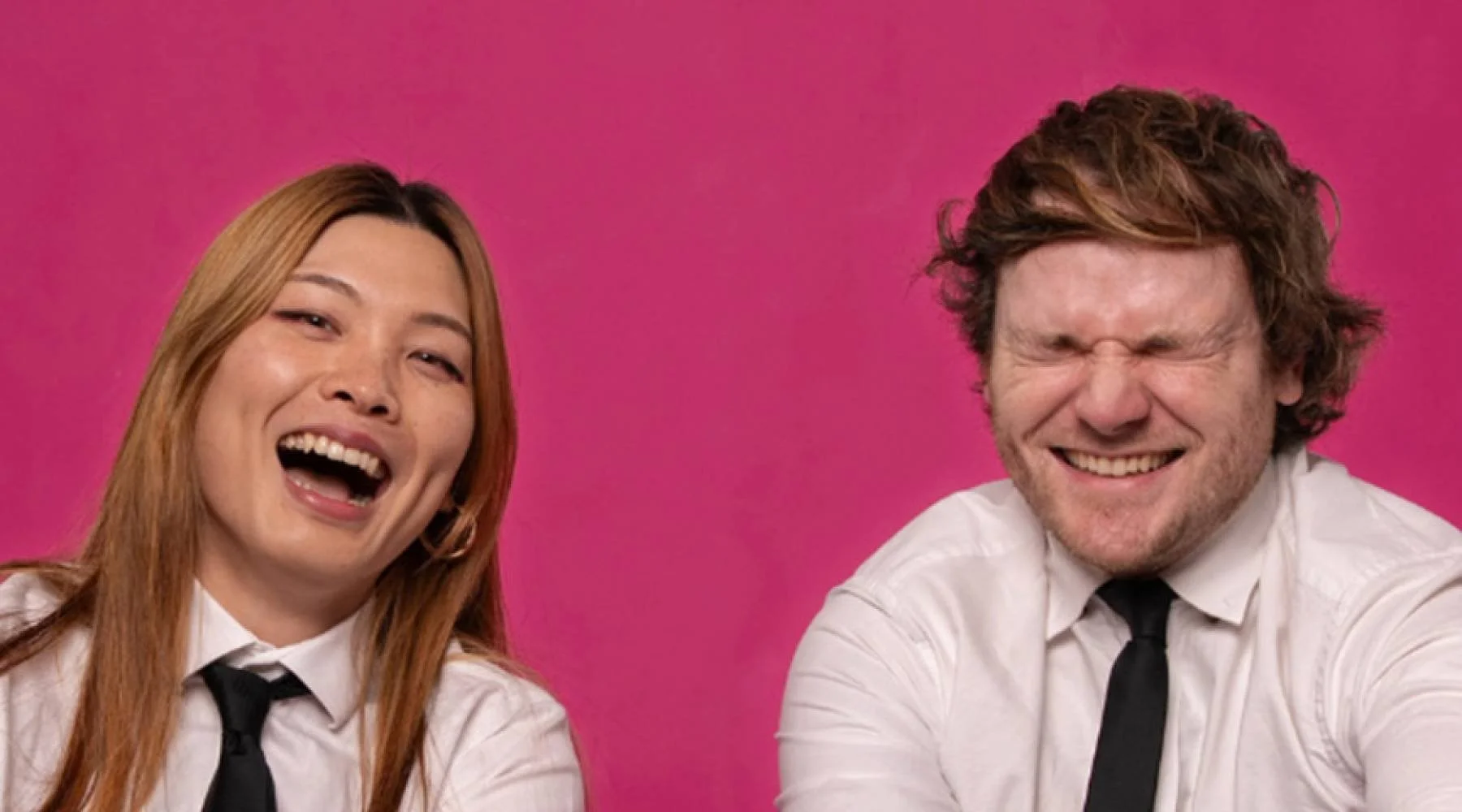
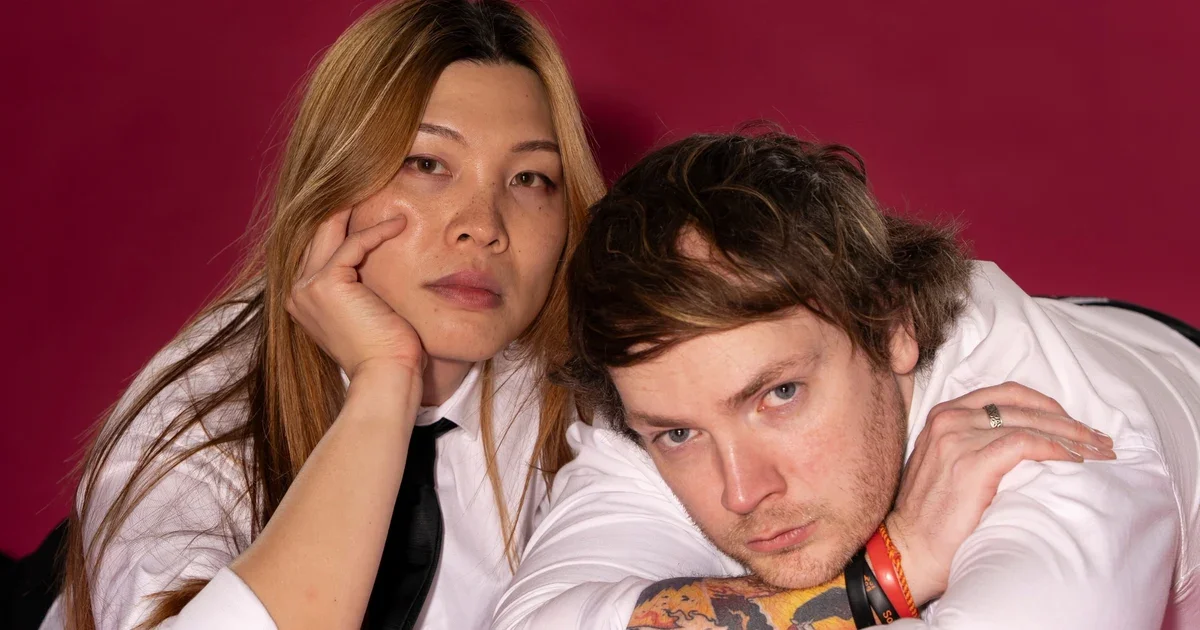
Lily Catastrophe and Keegan Thomas prove ideal ringmasters for this particular circus. Their chemistry feels effortless, built on a shared willingness to commit fully to jokes regardless of how absurd they become. The opening stretch establishes the show's rhythm through a series of rapid-fire exchanges packed with wordplay, double meanings and escalating silliness. Their material thrives on taking a seemingly straightforward premise and pushing it in several directions, utilising the vague and varying definitions of the words. Sketches feel like they were thrown together moments before the show began, but that looseness often becomes part of the joke.
One of the evening's strengths is how effectively it balances its central duo with a rotating selection of guest performers. Rather than feeling like unrelated acts awkwardly stitched together, each segment contributes to the overall personality of the show. The performers are united by a similar comedic sensibility, one that favours strange ideas, committed performances and a willingness to follow ridiculous concepts to their natural conclusion.
Mo Munn delivers a strong early appearance through a routine built around perpetual self-sabotage. The brilliance of the act comes from its awareness of contemporary online culture and the way public figures are often forced into cycles of apology before they've even had a chance to say anything controversial. The material evolves into an increasingly absurd examination of social embarrassment and trivial personal failings, drawing surprisingly enthusiastic audience recognition for behaviours that most people would never willingly admit to. Munn possesses an easy confidence on stage that allows the strange premise to land effectively, generating laughs through both the concept itself and the sincerity with which it is performed.
Later, the energy shifts into interactive territory with NYPDEEZ Nuts, the comedy duo of Izzy Renton and Bridie Thomson. Appearing as a pair of deeply committed detectives, they transform the audience into unwilling accomplices in an increasingly ridiculous investigation. The segment blends improvisation with audience participation, creating the sense that absolutely anything might derail the performance at any moment. What makes it particularly successful is the performers' ability to remain fully locked into character regardless of where audience responses lead them. The mystery itself becomes secondary to watching two performers desperately and confidently navigate mounting nonsense while racing against an arbitrary deadline.
Lydia Sainsbury provides perhaps the most relatable material of the night, albeit filtered through the show's trademark absurdism. Beginning from a premise that immediately taps into familiar feelings of family guilt and modern digital dependence, the character work steadily evolves into something far stranger and more surreal. Sainsbury expertly balances recognisable emotional truths with increasingly bizarre developments, allowing audiences to laugh both at the premise and at how quickly it spirals away from reality into obsession. It is a performance that demonstrates the show's ability to shift between clever observation and complete nonsense without ever feeling inconsistent.
Throughout the evening, Lily and Keegan regularly reappear to reset the energy and steer the audience toward the next unpredictable destination. Their recurring sketches showcase an impressive range of comedic styles. One routine transforms audience members' favourite films into opportunities for playful judgement, while another turns a simple discussion about travel preferences into an unexpectedly passionate defence of a destination that somehow becomes another topic of obsession. Elsewhere, game show formats are twisted beyond recognition, audience members find themselves unexpectedly participating in bizarre challenges, and seemingly serious conversations suddenly dissolve into dance numbers or elaborate physical comedy.
The evening ultimately leans fully into its cabaret roots, culminating in a pair of burlesque-infused performances that feel both entirely predictable and completely absurd within the context of the show. What begins as a tongue-in-cheek exploration of comedy, attraction and audience expectations evolves into a showcase that allows both hosts to commit wholeheartedly to the bit. The contrast between the two performances becomes part of the joke itself, with each performer bringing a distinct energy while gleefully poking fun at the assumptions audiences bring to who gets sexualised, celebrated or ogled on stage. Like much of Full Puss, the routines work because they balance genuine performance skill with a refusal to take themselves too seriously.
What stands out most is the duo's willingness to lean into ideas that many performers might abandon after a single punchline. Rather than chasing efficiency, Full Puss often finds humour through overcommitment. A joke that feels complete after thirty seconds might continue for another minute simply because the performers believe there is still something funny left to uncover. Occasionally this approach results in a segment outstaying its welcome, with a handful of sketches stretching just beyond their strongest punchlines. Fortunately, the show's relentless pace means these moments rarely linger for long before something entirely different arrives to reclaim the audience's attention.
Director Shiyi Redpath helps ensure that despite its deliberately chaotic nature, the production never completely loses control. There is a surprising amount of structure hidden beneath the madness. Transitions arrive at the right moment, the guest acts are well integrated, and the evening maintains enough variety to prevent any one style of comedy from becoming repetitive. The constant shifts in format keep audiences engaged, whether the performers are dancing, singing, improvising or engaging directly with the crowd.
The show's visual sensibility deserves mention as well. Embracing a messy collision of glamour, internet culture, nostalgia and self-aware trashiness, Full Puss creates an aesthetic that feels perfectly aligned with its comedic voice. It understands that part of the joke is the presentation itself. Everything feels knowingly excessive, yet never so polished that it loses the chaotic energy that defines the production.
Perhaps the greatest achievement of Full Puss is that beneath its layers of silliness, innuendo and deliberate ridiculousness lies an obvious affection for both its performers and its audience. The atmosphere throughout the evening is warm, welcoming and genuinely communal. Audience participation never feels cruel or exploitative, and even the sharpest jokes are delivered with a sense of shared enjoyment rather than mockery.
Not every sketch lands equally, and audiences seeking traditional stand-up may find themselves slightly disoriented by the show's anything-goes approach. Yet that unpredictability is also what makes it memorable. Full Puss is loud, weird, occasionally chaotic and frequently hilarious. More importantly, it feels like a celebration of comedy in all its strangest forms, brought to life by performers who understand that committing fully to an absurd idea is often the fastest route to genuine laughter.
Full Puss is being performed at Auckland’s Basement Theatre on the 5 & 7 November 2026. Purchase tickets here
Review written by Alex Moulton
