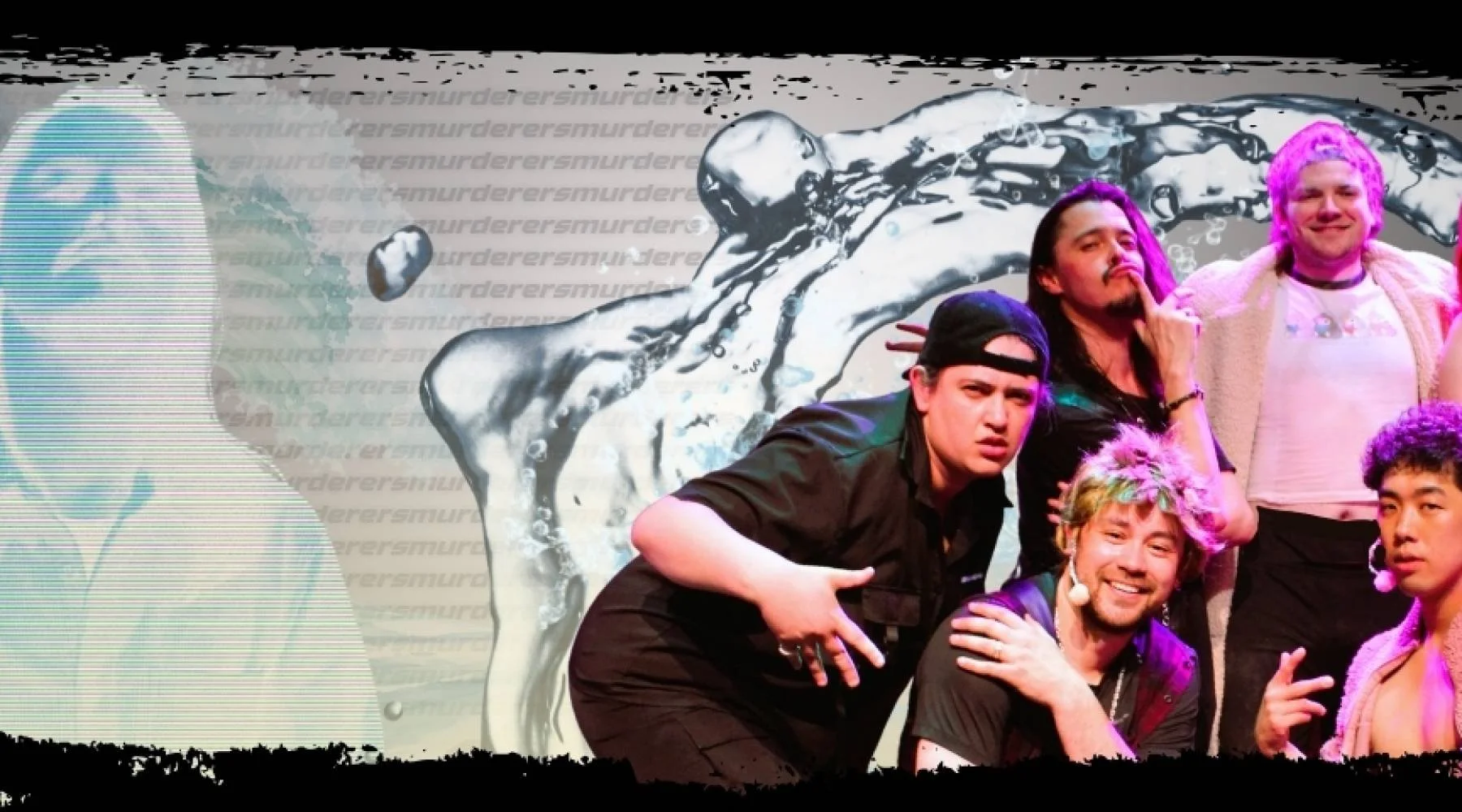
After the tragic death of their leader, Scott, SKWERT is reuniting for one massive memorial tour. However, not is all as it seems as the show is taken over by a mysterious force that exposes the band's secret: one of them killed him. Can the band pull themselves together and solve the mystery before SKWERT is destroyed forever?
There is a very particular kind of comedy that thrives on complete and utter ridiculousness. It asks the audience to abandon logic at the door, embrace the chaos, and simply enjoy the ride. SKWERT: The Reunion understands that assignment perfectly. This absurd musical comedy throws together boy band nostalgia, murder mystery tropes, celebrity scandal culture, AI paranoia, interactive theatre, and an escalating stream of nonsense, then somehow moulds it into an immensely entertaining night out.
Created by Elliott Lam, with original music and lyrics by Finn McKinlay, the show imagines the return of once-beloved early 2000s pop sensation SKWERT. Following the death of their former frontman Scott, the surviving members regroup for a memorial reunion tour. Naturally, this should be an emotional celebration of friendship and legacy. Instead, old grievances quickly resurface, questionable life choices come back to haunt them, and strange forces begin dragging long-buried secrets into the spotlight. As the increasingly dysfunctional reunion unfolds, the band's attempt at redemption becomes something far messier.
The premise alone is delightfully silly, but what elevates the production is the confidence with which it commits to every ridiculous idea. Nothing is played with a wink and a nudge. The show fully believes in its own madness, allowing the comedy to emerge naturally from increasingly ludicrous circumstances. Whether it is failed solo careers, bizarre rebrands, suspicious business ventures, public scandals, or increasingly outlandish plot developments, SKWERT: The Reunion operates in a heightened world where absolutely anything feels possible.
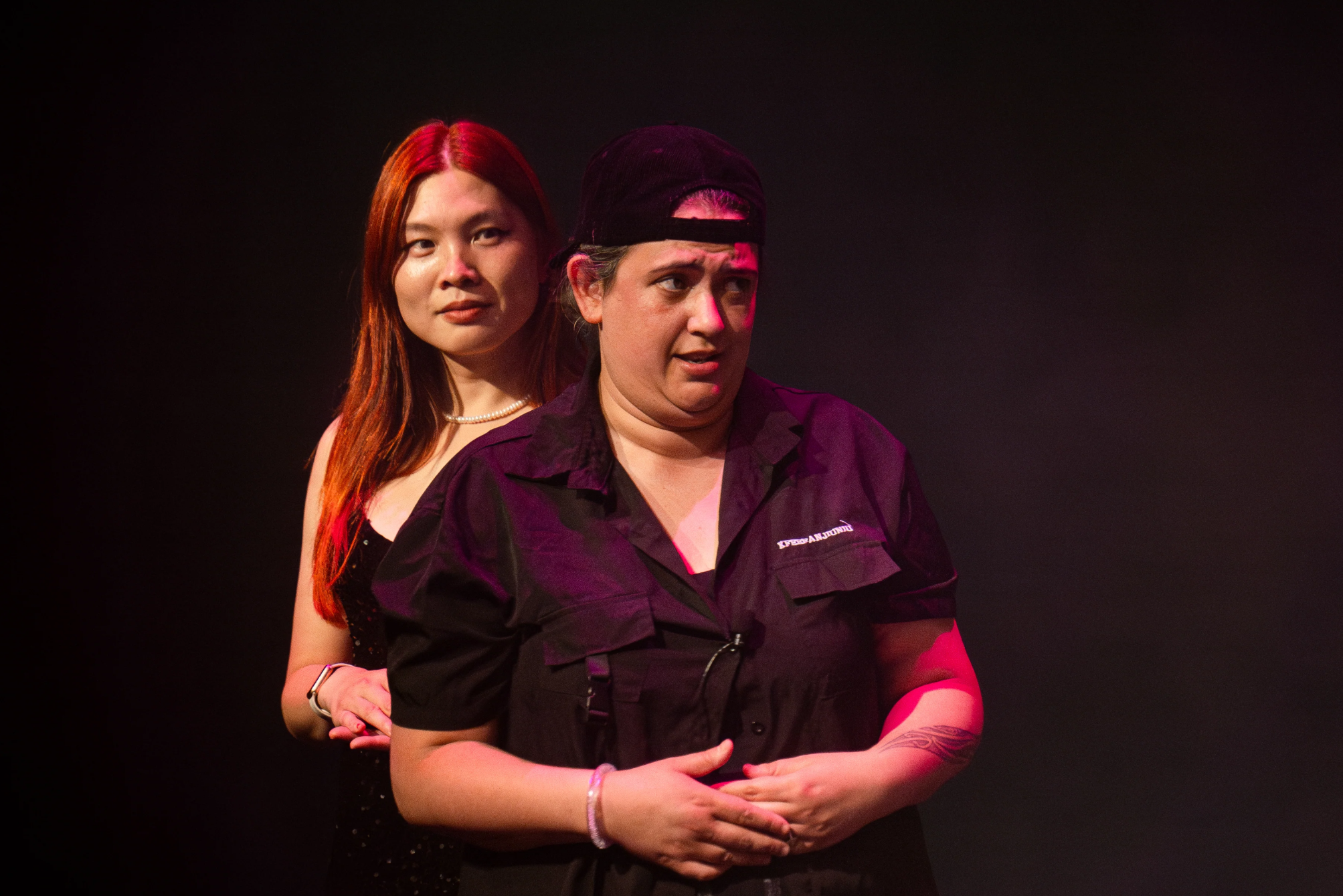
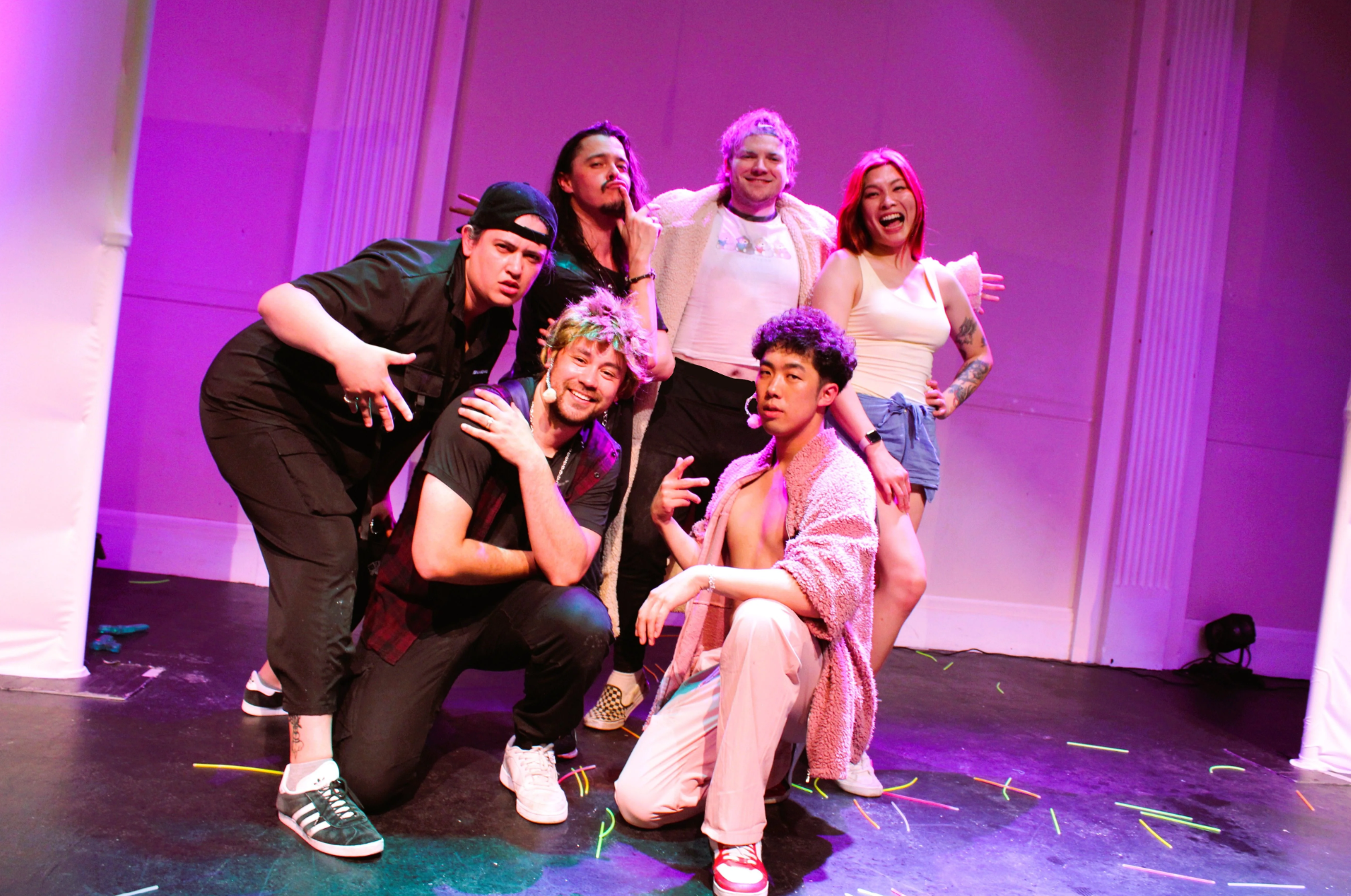
The audience is brought into that world from the moment they enter the theatre. Cast members circulate before the show begins, enthusiastically greeting audience members, distributing glow sticks, and treating everyone as though they are attending a genuine reunion concert. There is a wonderfully playful atmosphere before a single scene has even started. The production constantly encourages participation, blurring the line between audience and fanbase in a way that feels organic rather than forced.
That immersive energy carries through the entire performance. Audience members are recruited into the joke at every opportunity, whether through singalong moments, direct interactions, or the increasingly questionable management of a clearly marked splash zone. The splash zone itself becomes its own running gag, repeatedly shifting to target new victims as cast members gleefully ignore any expectation of fairness. Thankfully, the resulting water effects are more mischievous than soaking, creating plenty of laughs without sending anyone home drenched.
The show's greatest strength is undoubtedly its cast. More than anything else, the production succeeds because the performers throw themselves wholeheartedly into its absurdity. There is never any sense that anyone is holding back. The commitment level remains sky-high from beginning to end, and their enjoyment is infectious.
Elliott Lam does strong work as Ecko, the self-appointed glue desperately attempting to hold both the band and the show together. As the group's former heartthrob, Ecko possesses just enough confidence to think he has everything under control while clearly having very little control at all. Lam commands attention whenever he is on stage, providing a central anchor around which the growing chaos can orbit.
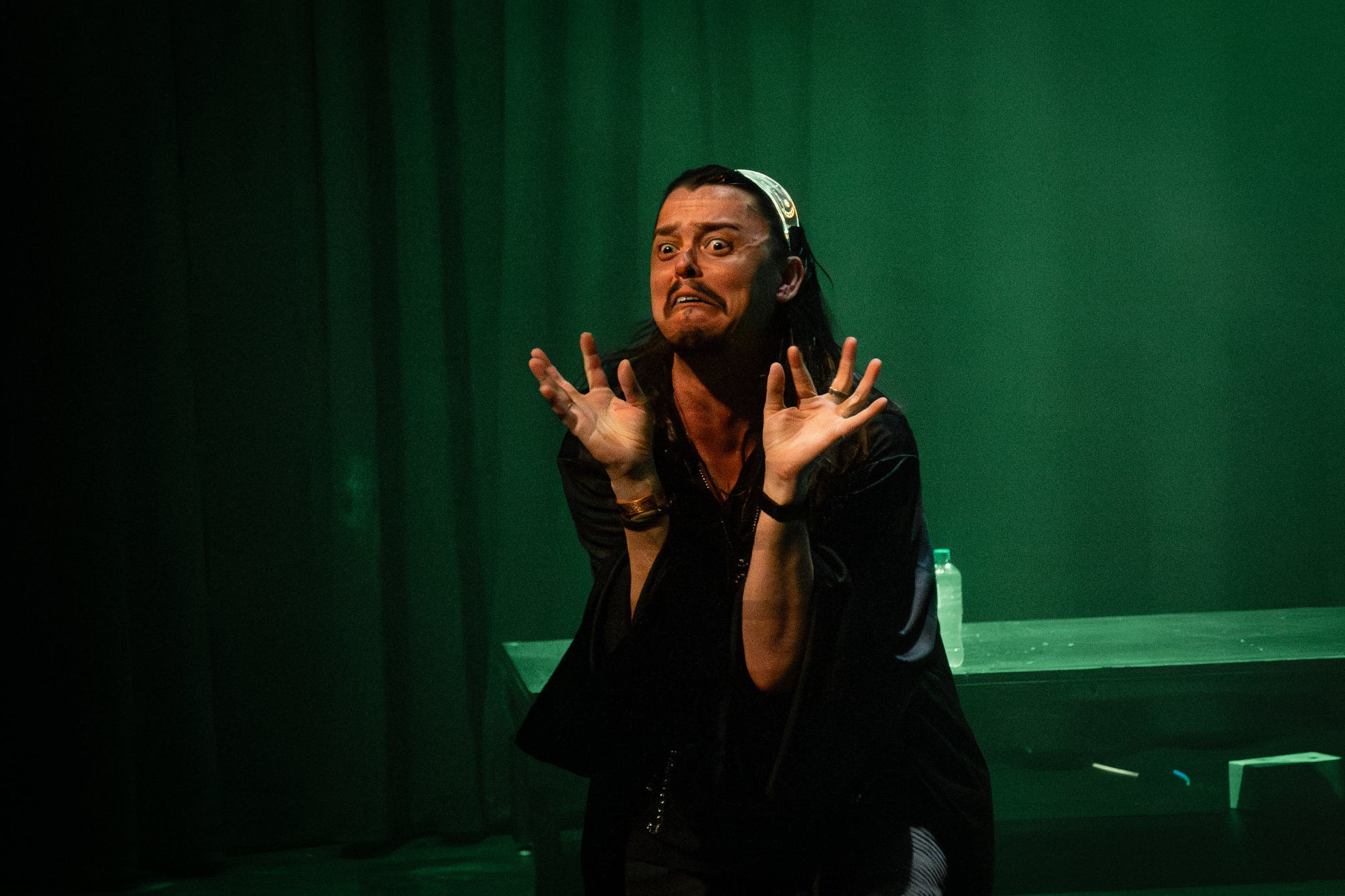
Aaron James Douglas makes a memorable impression as Scott, whose presence continues to loom over events despite his untimely demise. The character's legacy drives much of the narrative, and Douglas plays his role with exactly the right blend of sincerity and absurdity. The contrast between the show's increasingly ridiculous developments and the seriousness with which Scott's importance is treated becomes a reliable source of comedy throughout.
Lily Catastrophe delivers some of the production's strongest vocal work as Enya, the band's resident genius and aspiring business mogul. Her character brings a different dynamic to the ensemble, balancing the more aggressively ridiculous personalities with a level of calculated ambition. Catastrophe's performance adds another flavour to the group's chemistry while showcasing an impressive singing voice.
Mo Munn's Reece initially appears to be the closest thing the show has to a normal person, which only makes the character's journey funnier as events spiral further out of control. The contrast between Reece's carefully maintained image and the reality lurking underneath creates several of the show's strongest character-based jokes. A standout musical number allows Munn to fully embrace the character's contradictions to hilarious effect.
Q Potts' Locke functions as a constant source of comic chaos. Fresh from a variety of questionable life decisions and permanently focused on financial recovery schemes, Locke charges through the show with relentless enthusiasm. The character's shameless hustling provides repeated laughs, particularly whenever an opportunity arises to push merchandise or promote dubious products.
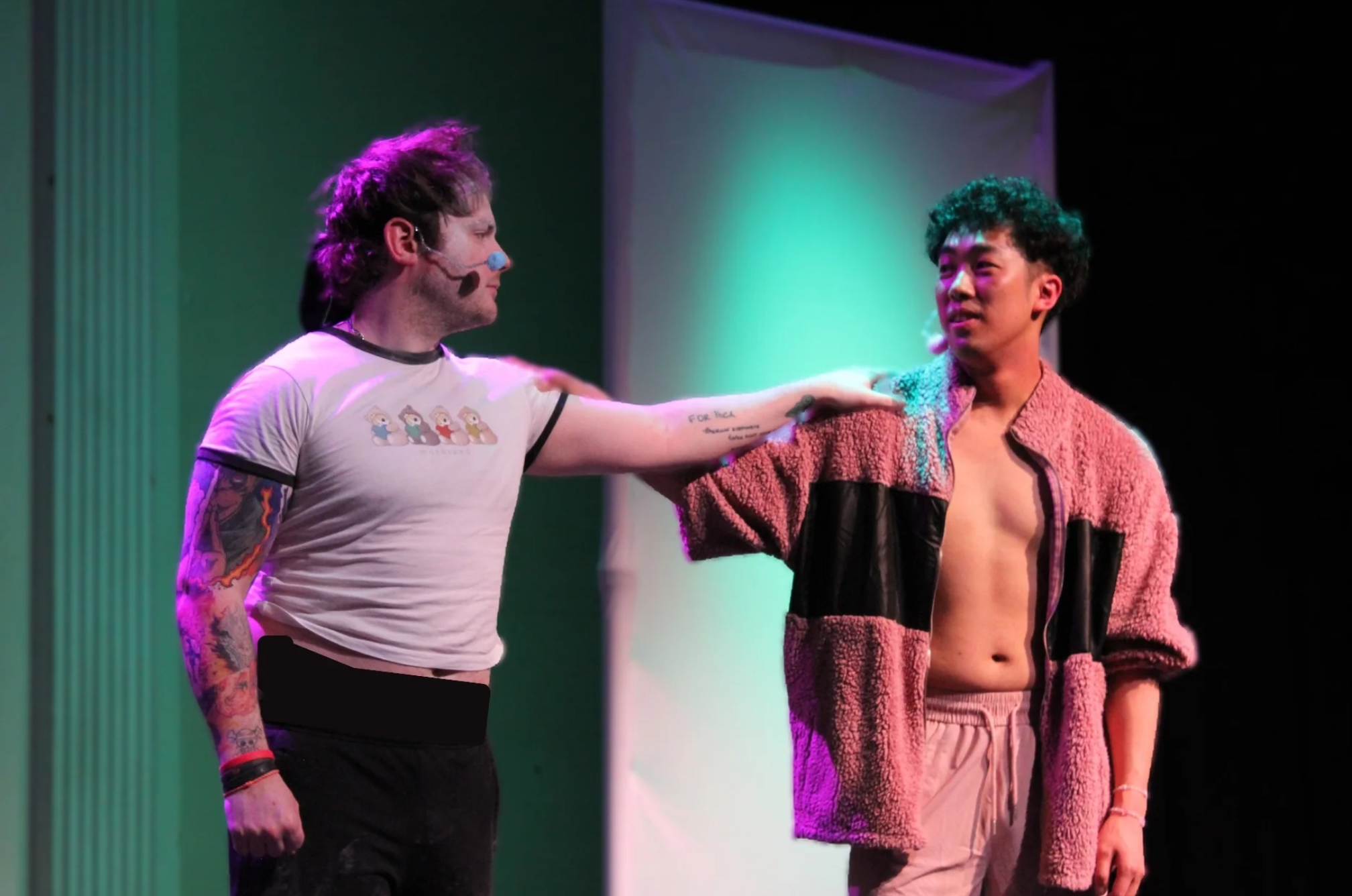
Keegan Thomas is perhaps the production's most consistently funny performer as Yuri. Existing on what often feels like an entirely separate wavelength from everybody else, Yuri's complete lack of concern for normal social behaviour generates some of the evening's biggest laughs. Thomas finds an excellent balance between absurdity and unpredictability, creating a character whose every appearance feels capable of taking a scene somewhere unexpected.
Musically, the show cleverly draws from the unmistakable style of late 90s and early 2000s pop groups. The choreography embraces synchronised dance routines, exaggerated poses, and all the slightly awkward coolness that defined the era. Importantly, the routines are polished enough to be recognisable but rough enough to preserve the comedic edge. There is a deliberate layer of cringe embedded throughout the production, and it works brilliantly.
The original songs themselves are packed with clever satire, pop culture observations, and wonderfully ridiculous lyrical turns. The score constantly finds fresh ways to parody both boy band culture and modern celebrity obsession. There is a surprising amount of creativity packed into the music, with several numbers extending far beyond simple parody into genuinely memorable comedy songwriting.
Visually, the production demonstrates how far imagination can stretch limited resources. The set remains intentionally minimal, relying largely on projections and a handful of staging elements. Rather than feeling underdeveloped, the simplicity encourages the audience to focus on the performers and rapid-fire comedy. The projections do significant storytelling work, helping to establish context, deliver exposition, and reinforce the show's heightened aesthetic.
Narratively, trying to apply traditional logic to SKWERT: The Reunion misses the point entirely. The plot regularly veers into complete nonsense, but nonsense is precisely the fuel powering the show's comedy. The production asks audiences to surrender to its ridiculousness rather than analyse it too closely. Those willing to embrace that approach will find plenty to enjoy.
By the time the final number arrives, any lingering reservations have long since disappeared. Glow sticks are waving enthusiastically, audience members are singing along with songs they had never heard before entering the theatre, and the room feels transformed into an actual SKWERT concert. It is loud, chaotic, ridiculous, and completely committed to its own weirdness.
SKWERT: The Reunion may be overflowing with cringe, absurdity, and spectacularly questionable decision-making, but that is exactly what makes it work. Fuelled by infectious enthusiasm, catchy original music, and a cast clearly having the time of their lives, this gloriously chaotic musical comedy proves that sometimes the best approach is simply to embrace the madness.
SKWERT: The Reunion is being performed at Auckland’s Basement Theatre from 3-7 November 2026. Purchase tickets here.
Review written by Alex Moulton
