A young race car mechanic fakes an engagement with racing's most scandalous star - officially for his reputation, secretly for her own shot behind the wheel. But soon the lie threatens to destroy everything - including what's already become so much more than just a deal…
On paper, Drive - The Pretenders has all the ingredients of an easy crowd-pleaser. Fast cars, a fake engagement, simmering romantic tension, and two ambitious people using each other to get ahead feel like a formula that should practically drive itself. Adapted from Tamara Lush's popular novel, the film leans heavily into familiar romance tropes while placing them against the glamorous backdrop of European motorsport. The result is a perfectly watchable romantic drama that rarely challenges expectations, but also struggles to find the emotional spark needed to truly stand out.
The story follows Sarah Jenkins, a talented mechanic determined to break through the barriers keeping her out of the driver's seat. Despite her expertise, opportunities remain frustratingly out of reach, and when a chance presents itself through an unconventional arrangement, she grabs hold of it. Enter Dante Annunziata, a gifted racing star whose career is being overshadowed by controversy and poor public perception. To help repair his image, the pair agree to present themselves as an engaged couple, a mutually beneficial arrangement that promises to help both of them achieve their goals. Naturally, what begins as a calculated business deal gradually becomes far more complicated as genuine feelings begin to emerge.
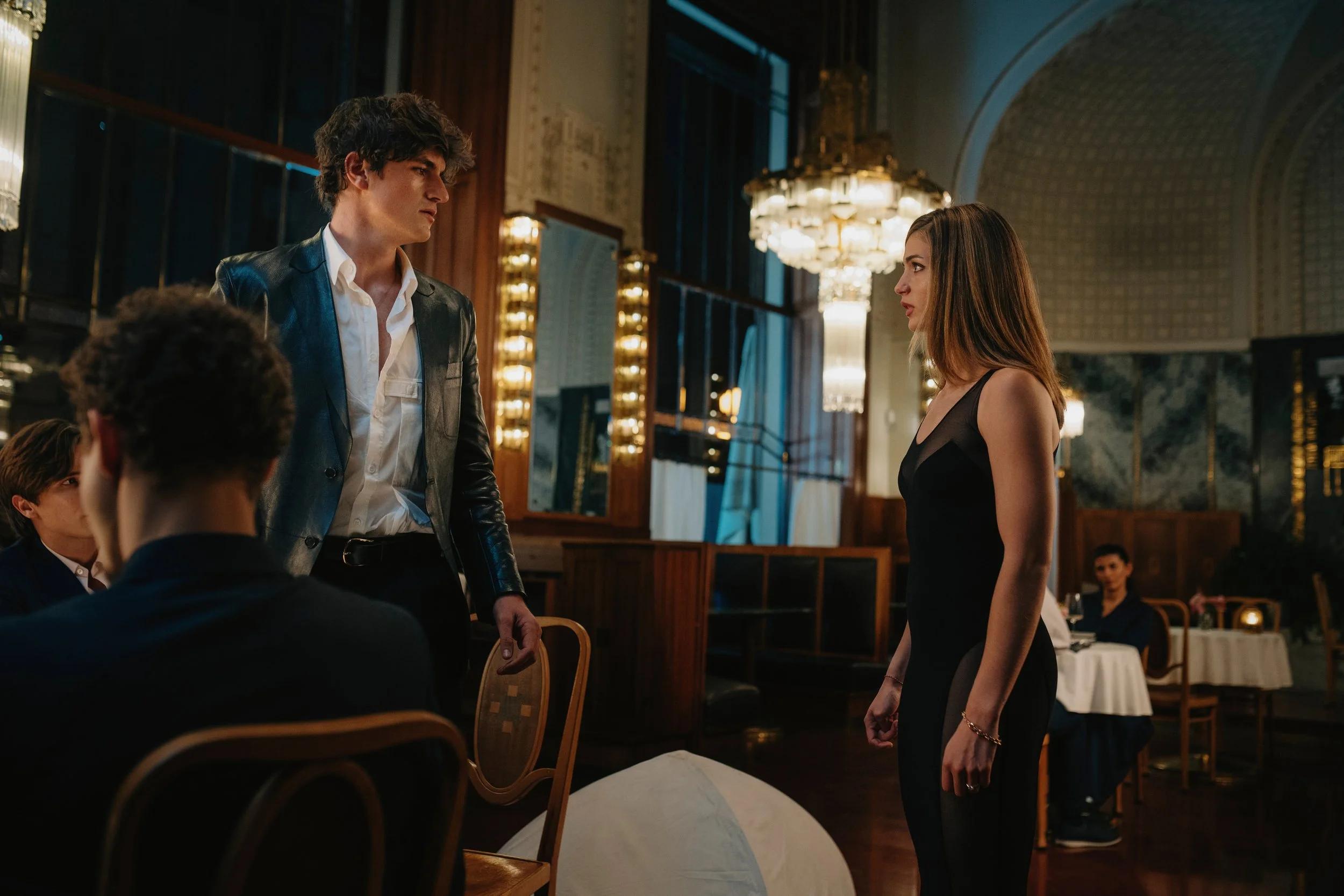
Anyone familiar with fake dating romances will immediately recognise where the story is headed. There are very few surprises here, and the film makes little attempt to conceal its destination. Conflicts are telegraphed well in advance, emotional turning points arrive exactly when expected, and many of the dramatic revelations feel less like shocks and more like checkpoints along a predetermined route. Yet there is something undeniably comforting about that predictability. The film never asks much from its audience, making it an easy, undemanding watch that delivers exactly what it promises.
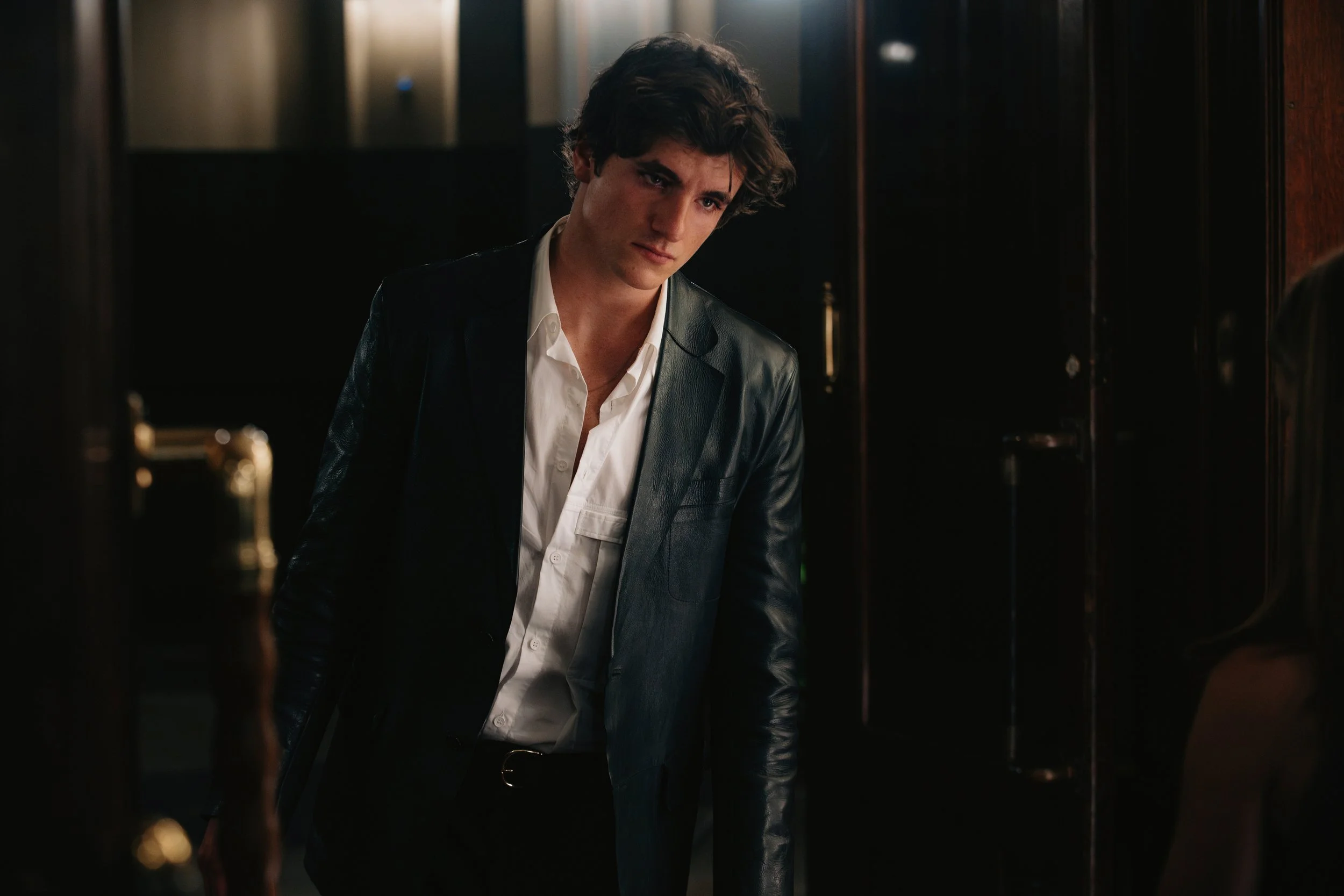
Where the narrative becomes more frustrating is in the way it handles its central characters. Dante spends much of the film behaving in ways that make him difficult to root for. While the adaptation appears to soften some of his rougher edges from the source material, many of his actions remain intact without sufficient explanation or context. The story eventually attempts to justify aspects of his behaviour through emotional baggage, but those explanations arrive too late and too lightly to fully reshape audience opinion. You can see the character evolving over the course of the film, but the transformation rarely feels substantial enough to erase the damage done by earlier scenes.
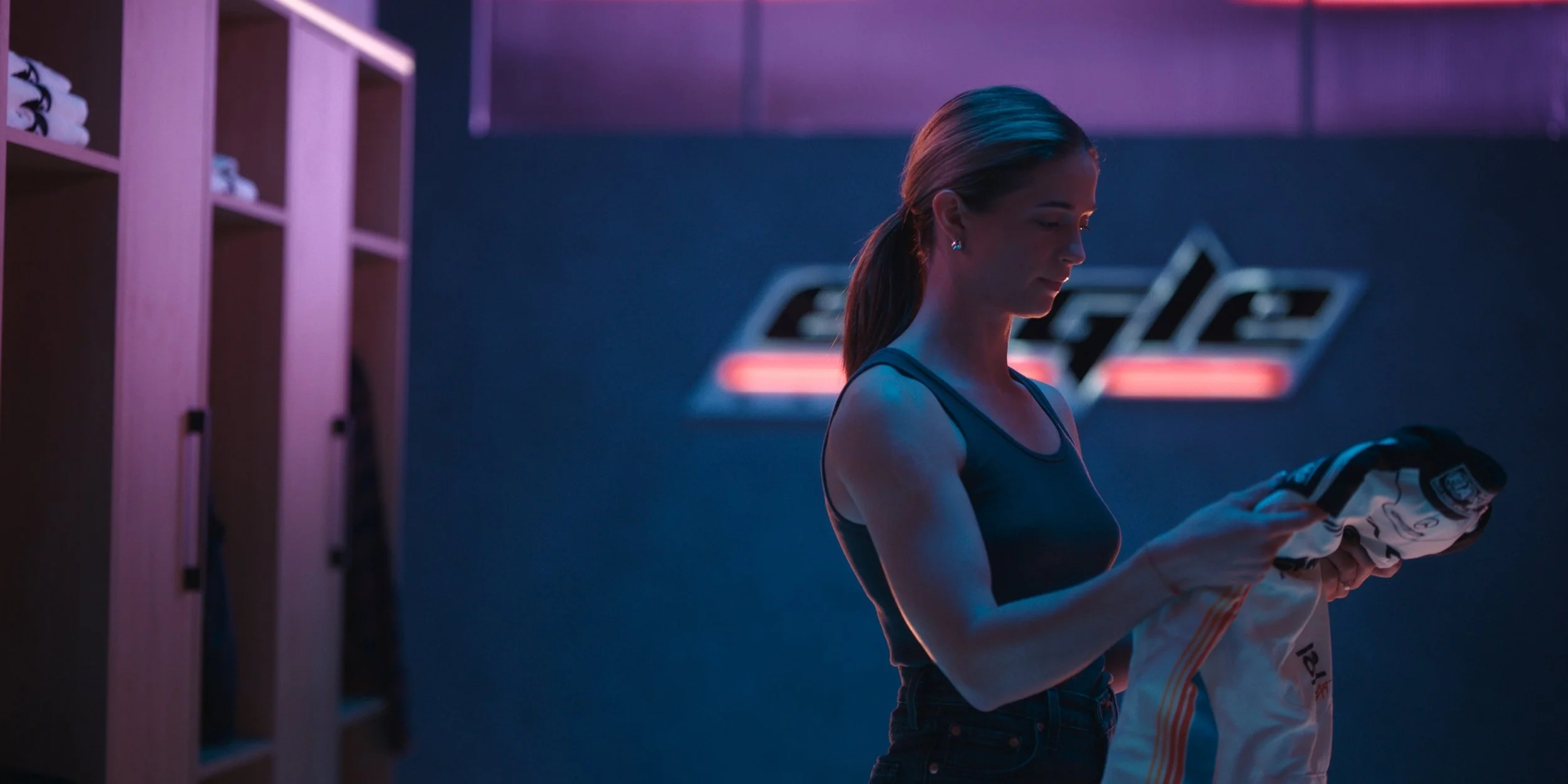
Sarah presents a different problem. She is introduced as fiercely determined, ambitious and unwilling to abandon her dream of racing. The film repeatedly tells us that she possesses both talent and drive, and Lisa-Marie Koroll does her best to sell that determination. Yet despite these qualities, Sarah often finds herself being pushed around by the narrative rather than actively shaping it. Decisions are made for her by managers, family members, friends, and Dante himself. Important developments frequently happen around her rather than because of her. For someone whose goal is to take control of her own future, she spends much of the story reacting to the agendas of others.
This imbalance creates an odd disconnect at the centre of the film. Sarah's ambitions provide the foundation for the entire premise, yet the screenplay often sidelines her agency whenever the romance takes priority. As a result, her journey towards becoming a driver can feel less compelling than it should, particularly when the film hints at bigger themes surrounding opportunity, gender expectations and ambition within professional motorsport but never explores them in meaningful depth.
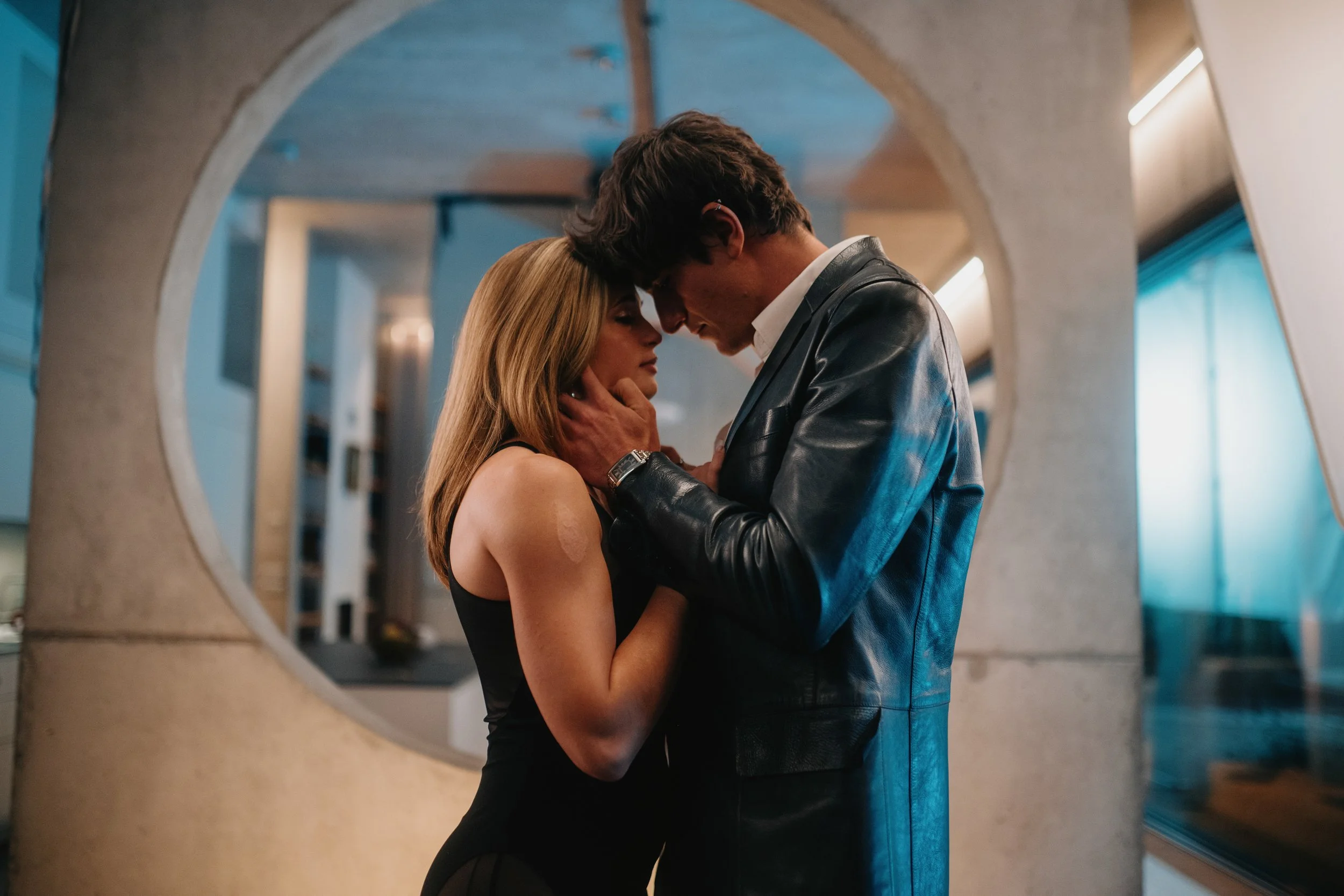
The romantic side of the story faces its own challenges. For a film built around two people gradually falling for each other, there is surprisingly little time devoted to developing that emotional connection. The screenplay moves quickly from animosity to attraction, but often skips over the quieter moments that would make the progression feel convincing. There are glimpses of chemistry between Koroll and Amin Baahmed, particularly when the hostility begins to fade and the characters allow themselves moments of vulnerability, but those scenes are spread too thinly throughout the runtime.
As a result, the relationship often feels more like a requirement of the genre than a naturally evolving connection. The audience is told these characters are growing closer, but the film does not always provide enough evidence to make that emotional shift land with the impact it needs. When the story eventually leans into its romantic payoffs, they feel earned on a structural level because the genre demands them, but not necessarily because the relationship itself has been given enough room to breathe.
Ironically, despite being set in the world of professional racing, the on-track action is not the film's primary weakness. The racing sequences are serviceable and visually polished, even if they never deliver the adrenaline rush that motorsport fans might hope for. The races function more as narrative support than centrepiece spectacle, providing stakes and momentum rather than pulse-pounding excitement. That approach would be perfectly acceptable if the character drama fully compensated for it, but because the romance feels somewhat rushed and the character arcs lack depth, the overall package never quite reaches top gear.
Visually, however, Drive - The Pretenders consistently impresses. The production makes excellent use of its European locations, with racing circuits, coastal scenery and glamorous hospitality settings giving the film an appealing sense of scale. The cinematography embraces vibrant colour palettes, particularly during evening scenes where blue, pink and orange hues dominate the frame. The result is a polished, attractive aesthetic that helps elevate material that can otherwise feel formulaic.
The soundtrack also does a solid job of maintaining energy throughout. A mixture of contemporary pop, alternative tracks and energetic rock selections complements the youthful atmosphere, while the orchestral score effectively shifts between high-pressure racing sequences and quieter emotional moments. Even when the storytelling falters, the audiovisual presentation keeps things moving at a steady pace.
One of the film's biggest issues is that it tries to juggle too many emotional threads without giving any of them enough attention. Multiple complications from all angles compete for screen time. Several subplots are introduced with apparent significance, only to fade into the background before receiving meaningful resolution. The film repeatedly gestures towards deeper emotional territory but rarely commits long enough to make those moments resonate.
Ultimately, Drive -The Pretenders is an enjoyable but frustrating romance. It delivers exactly what fans of fake dating and enemies-to-lovers stories are likely expecting, but rarely goes beyond those established conventions. The performances are solid, the visuals are attractive, and the setup offers plenty of potential. Unfortunately, underdeveloped characterisation and a romance that never fully ignites leave the film feeling like it is constantly operating below its own potential. It moves quickly, looks good, and remains entertaining throughout, but much like its protagonists, it spends so much time chasing what it wants to be that it never fully becomes it.
Streaming globally from Wednesday, October 28 on Prime Video
Review written by Alex Moulton
