At the height of the Cold War, Fatherland centres on the relationship between the writer Thomas Mann and his daughter Erika—actress, writer and rally driver—as they embark on a road trip in a black Buick cruiser across a Germany in ruins.
Paweł Pawlikowski’s Fatherland is a film of remarkable restraint, one that draws its emotional force not from grand declarations or dramatic confrontations, but from the uneasy spaces between them. Running for a lean 82 minutes, this black-and-white historical drama follows Nobel Prize-winning author Thomas Mann and his daughter Erika as they return to Germany in 1949 after more than a decade and a half in exile. What unfolds is less a conventional road movie than a meditation on belonging, memory, and the impossible task of reconciling cultural identity with historical trauma.
The Germany that greets them is fractured in every imaginable sense. Cities still bear the wounds of war, political tensions are rapidly hardening into Cold War divisions, and the question of what German identity means hangs heavily over every encounter. Mann arrives as a celebrated intellectual, invited to receive prestigious honours that recognise both his literary achievements and his opposition to fascism. Yet the accolades come with an uncomfortable irony. He is being welcomed back into a country that no longer feels like home, a nation attempting to define its future while still surrounded by the ruins of its recent past.
Pawlikowski approaches this material with characteristic discipline. There is very little excess in Fatherland. The dialogue is often sparse, scenes rarely linger beyond their purpose, and much of the storytelling unfolds through visual language rather than exposition. Viewers expecting a traditional biographical drama may find themselves surprised by how little emphasis is placed on historical explanations. Instead, the film trusts its audience to absorb meaning from atmosphere, body language, and carefully composed imagery.
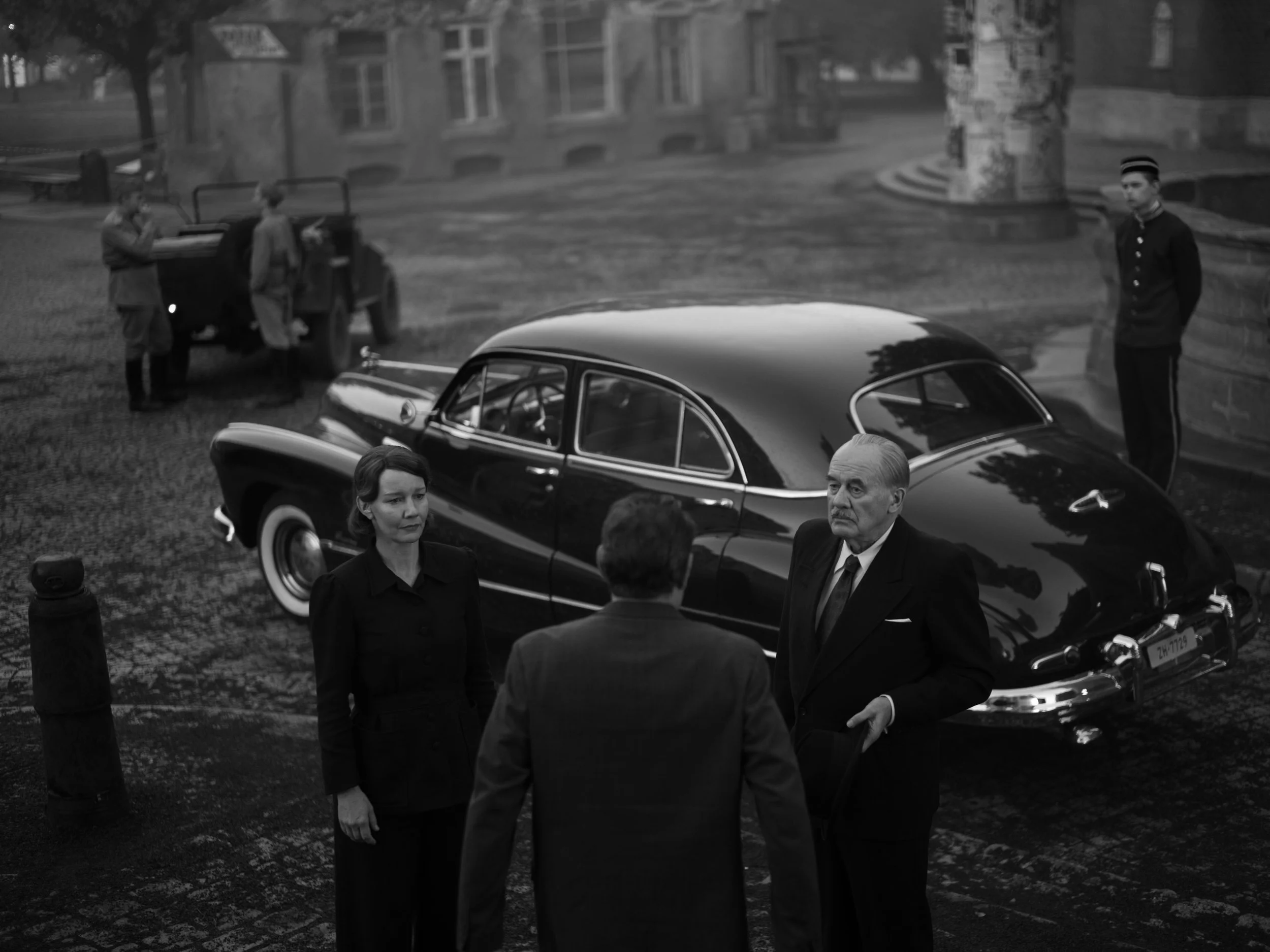
Photo credit: Agata Grzybowska
That trust is rewarded by the extraordinary work of cinematographer Łukasz Żal. Every frame feels meticulously considered without appearing artificial. Shot in luminous monochrome and presented in the academy ratio, the film frequently confines its characters within rigid architectural lines, doorways, and windows. These visual choices create a sense of emotional containment that mirrors the inner lives of the people on screen. Germany itself becomes a character, simultaneously familiar and alien, grand and broken. The contrast between devastated urban landscapes and moments of natural beauty subtly reinforces the film’s central concerns about civilisation, culture, and renewal.
At the centre of the story is the relationship between Thomas and Erika, and it is here that Fatherland finds its deepest emotional resonance. Hanns Zischler delivers a measured, thoughtful performance as Mann, portraying him as a man whose immense cultural stature offers both strength and protection. He carries himself with the confidence of someone who believes in the enduring value of art and intellectual inquiry, yet there is an unmistakable fatigue beneath the surface. This is not a triumphant homecoming. Rather, it feels like the journey of a man confronting the uncomfortable reality that history has moved beyond his ability to shape it.
Thomas spends much of the film attempting to champion an idealised vision of culture as a path forward. He resists aligning himself fully with any political ideology, instead placing his faith in literature, philosophy, and artistic achievement. There is something admirable in that conviction, but Pawlikowski never presents it as uncomplicated wisdom. The film continually questions whether intellectual distance is enough when confronted with immense human suffering and moral collapse. Thomas often appears more comfortable analysing catastrophe than emotionally engaging with it, a trait that increasingly strains his relationship with those around him.
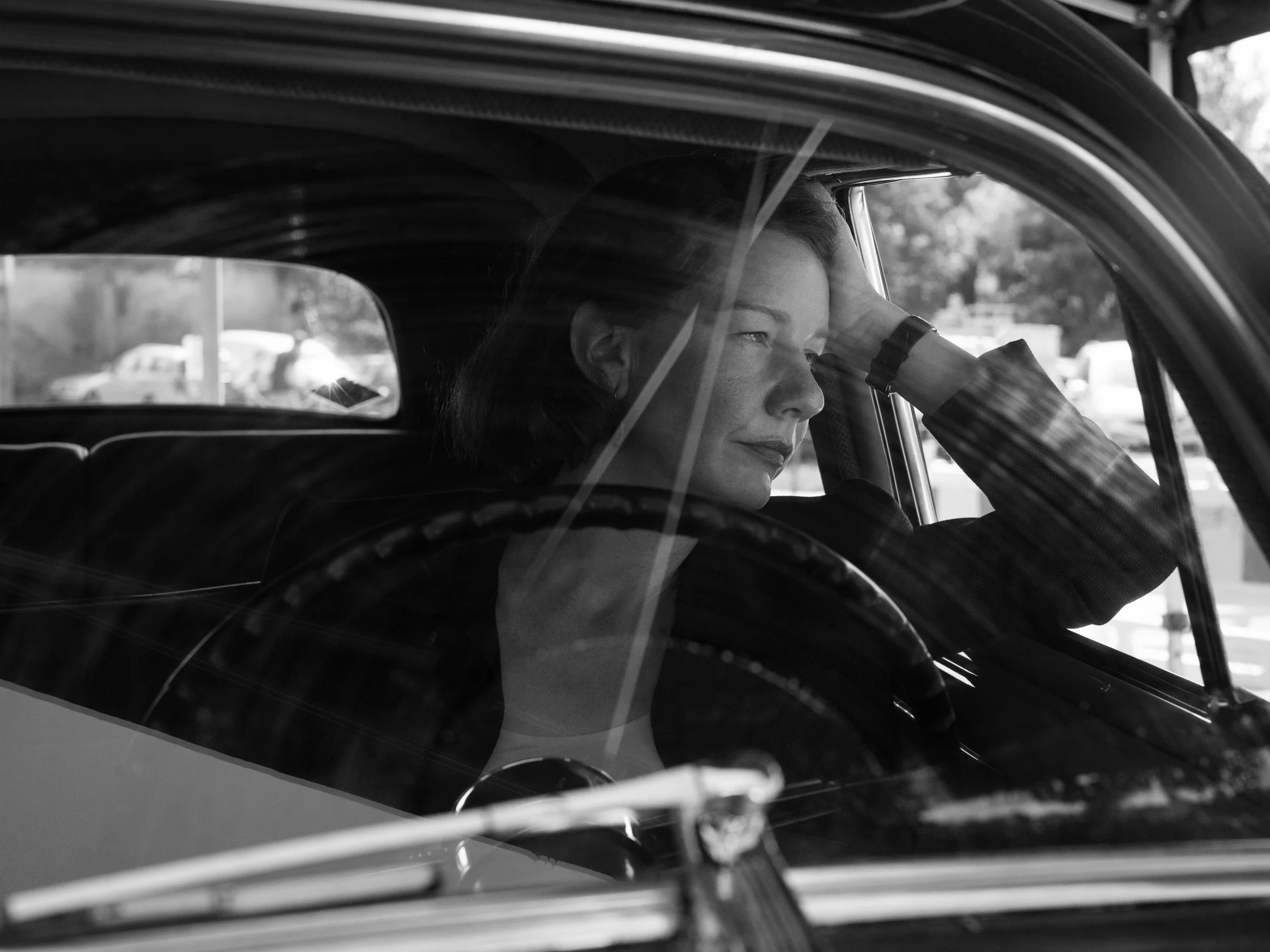
Photo credit: Agata Grzybowska
Sandra Hüller provides the film’s emotional anchor as Erika. While Thomas attempts to navigate post-war Germany through reason and cultural ideals, Erika moves through the same landscape carrying wounds that remain painfully raw. Hüller gives a beautifully controlled performance, capturing a woman whose intelligence and resilience are constantly battling grief, anger, and disillusionment. Even when she says very little, her presence dominates scenes. A glance, a hesitation, or a moment of silence often communicates more than pages of dialogue could.
The dynamic between father and daughter becomes the film’s most compelling thread because it reflects the larger themes playing out around them. Thomas seeks understanding through abstraction and reflection. Erika demands acknowledgement of emotional truth. Their disagreements rarely erupt into open conflict, yet they create a quiet tension that persists throughout the journey. In many ways, Erika functions as the conscience of the film, challenging both her father and the audience to recognise that some wounds cannot simply be absorbed into intellectual discourse.
Pawlikowski is particularly effective at capturing how grief and displacement manifest in subtle ways. Characters carry themselves as though weighed down by invisible burdens. Conversations circle around loss without directly naming it. Moments that might be emotionally explosive in another director’s hands are instead understated, allowing their impact to accumulate gradually. The result is a film that feels haunted by absence, by people who are no longer present and certainties that no longer exist.
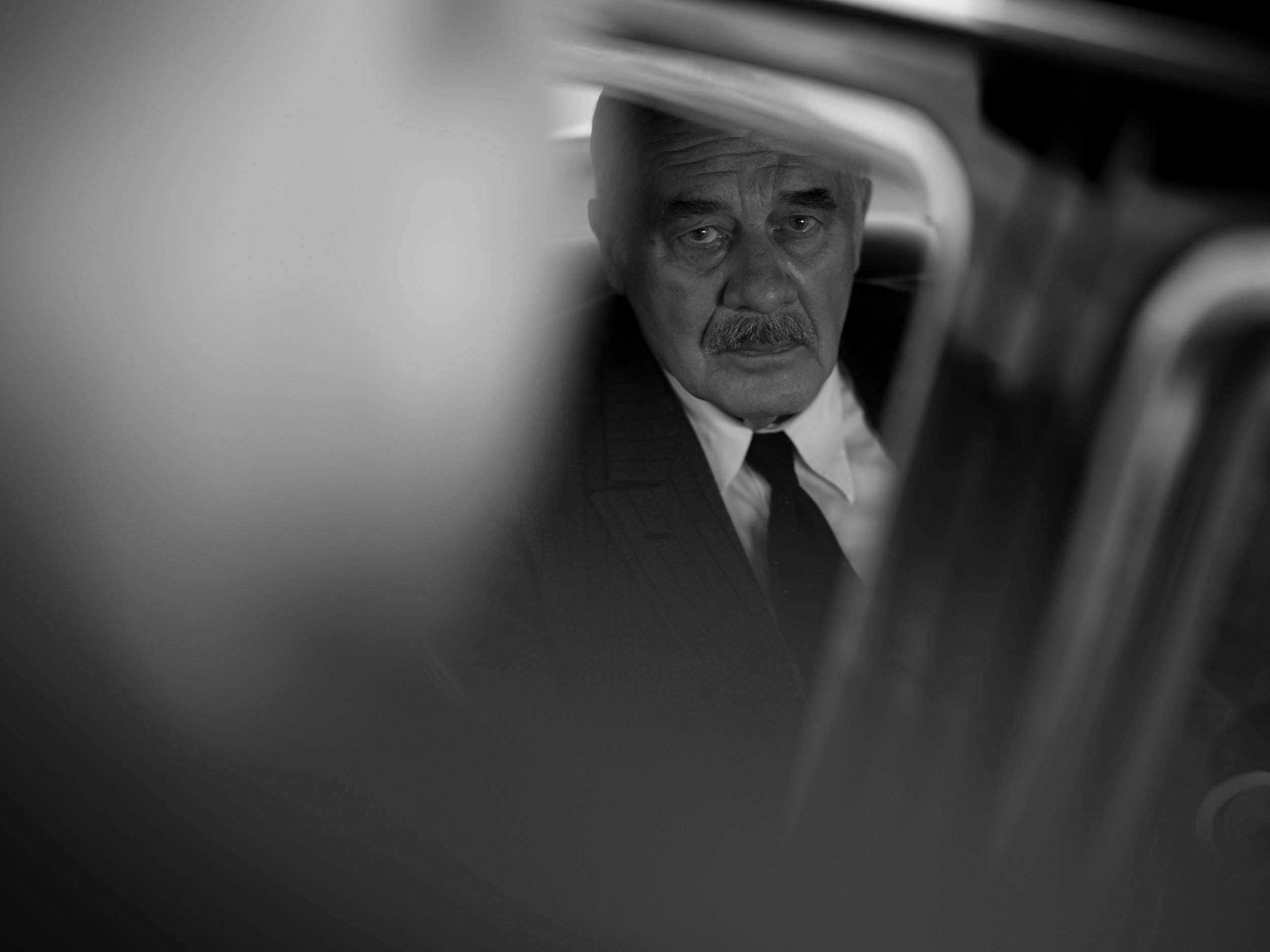
Photo credit: Agata Grzybowska
The political backdrop further enriches this atmosphere. The emerging divide between East and West Germany creates a sense of unease that never overwhelms the personal story. Various factions hope to claim Mann as a symbolic figure, seeing his reputation as a valuable endorsement of their respective visions for the future. Yet the film remains sceptical of ideological certainty. Whether in the form of capitalism, communism, or nationalism, grand political narratives seem inadequate when measured against the reality of human suffering. What remains valuable is not certainty but curiosity, questioning, and the ongoing search for meaning.
For all its strengths, Fatherland is unlikely to appeal to every audience. Its narrative is deliberately slight, prioritising mood, symbolism, and emotional texture over plot-driven storytelling. Many of its most significant ideas emerge indirectly, requiring viewers to engage with what remains unsaid as much as what is spoken. Those seeking a more conventional historical drama may find its pace demanding. Yet for viewers willing to settle into its rhythm, the film offers considerable rewards.
What lingers after the credits is not any single scene or revelation, but a feeling. Fatherland captures the disorientation of returning to a place that shaped you only to discover that it no longer exists, and perhaps never truly did in the way memory suggests. Through exquisite cinematography, finely judged performances, and an unwavering commitment to subtlety, Pawlikowski creates a poignant reflection on identity, family, and the long shadows cast by history. It is a quiet film, but one that speaks volumes.
Fatherland is in NZ cinemas from November 12, 2026. Find your nearest screening here
Review written by Alex Moulton
