A thrilling ghost story set in Dickens' London, following one man's supernatural journey to face his past, present and future as he fights for a second chance at redemption.
Charles Dickens's A Christmas Carol has been adapted so many times that any new version faces an immediate and difficult question: what can it possibly add? Ebenezer appears to have an answer. With horror filmmaker Ti West directing and Johnny Depp playing literature's most famous miser, the film promises a darker, more unsettling interpretation of Scrooge's supernatural reckoning. Yet despite its grim atmosphere and grotesque spirits, this is ultimately a familiar retelling wearing unusually macabre clothes. It is polished, handsome and never entirely dull, but it rarely finds a compelling reason to exist alongside the countless adaptations that came before it.
Nathaniel Halpern's screenplay follows the established story with considerable loyalty. Scrooge remains the bitter, suspicious and cold-hearted businessman who dismisses charity, mistreats Bob Cratchit and regards Christmas cheer as an irritation. The death of his former partner Jacob Marley, played by Ian McKellen, leads to the expected warning from beyond the grave, followed by visits from three spirits determined to confront Scrooge with the consequences of his behaviour. A little extra family history has been threaded into the journey, and there is a minor adjustment to the concluding material involving Bob, played by Rupert Grint, but neither change meaningfully reshapes the narrative. The additions feel decorative rather than essential, supplying more information without giving the present-day drama greater weight.
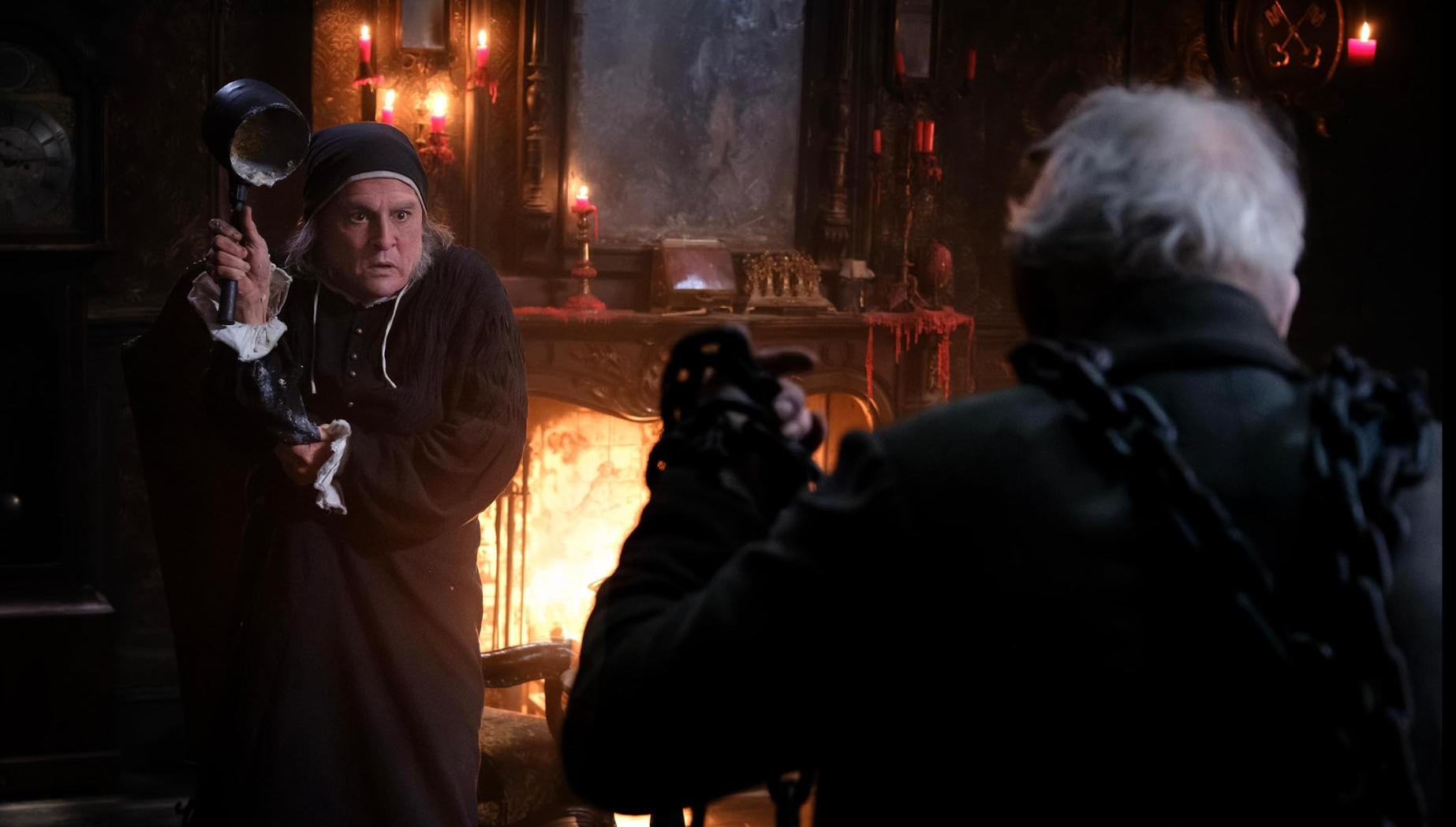
West's most distinctive contribution is the emphasis he places on the story's Gothic foundations. A Christmas Carol has always contained the machinery of horror: rattling chains, ominous prophecies, disfigured spirits and a terrified man forced to stare at his own mortality. Ebenezer simply turns up the volume. Screeching sounds, sudden shocks and grisly transformations dominate the hauntings, while practical effects give the supernatural encounters a pleasingly physical presence. Doors and rooms seem possessed by malicious energy, and the spectral visitors have a decayed, almost tactile ugliness. The result is likely too intense for very young viewers, which is a curious choice for a Christmas film whose most receptive audience may be children unfamiliar with the story.
The ghosts provide the film's most memorable imagery, even if they do not seem to belong to the same visual universe. Andrea Riseborough's Ghost of Christmas Past has an eerie, faceless appearance that immediately establishes a sense of unease. It is arguably the most frightening design, using absence and obscurity more effectively than overt gore. The Ghost of Christmas Present, played by Tramell Tillman, is more elaborate: a deteriorating figure whose body gradually breaks down during his encounter with Scrooge. The final spirit, portrayed by Robert Strange, returns to the familiar silent, hooded figure associated with death. It remains an effective image, but after the invention shown elsewhere, it feels conventional and dramatically flat.
Tillman is the clear standout. His spirit may have the film's most visually elaborate transformation, but the performance is what gives the character genuine force. Tillman has a gift for suggesting fury beneath a controlled exterior, and he allows that anger to surface with unnerving precision. His restrained menace brings a sense of judgment that the other hauntings sometimes lack, making his sequences feel less like obligatory stops on a familiar tour. Whenever that calm hardens into open wrath, the film briefly achieves the dangerous intensity it has been pursuing.
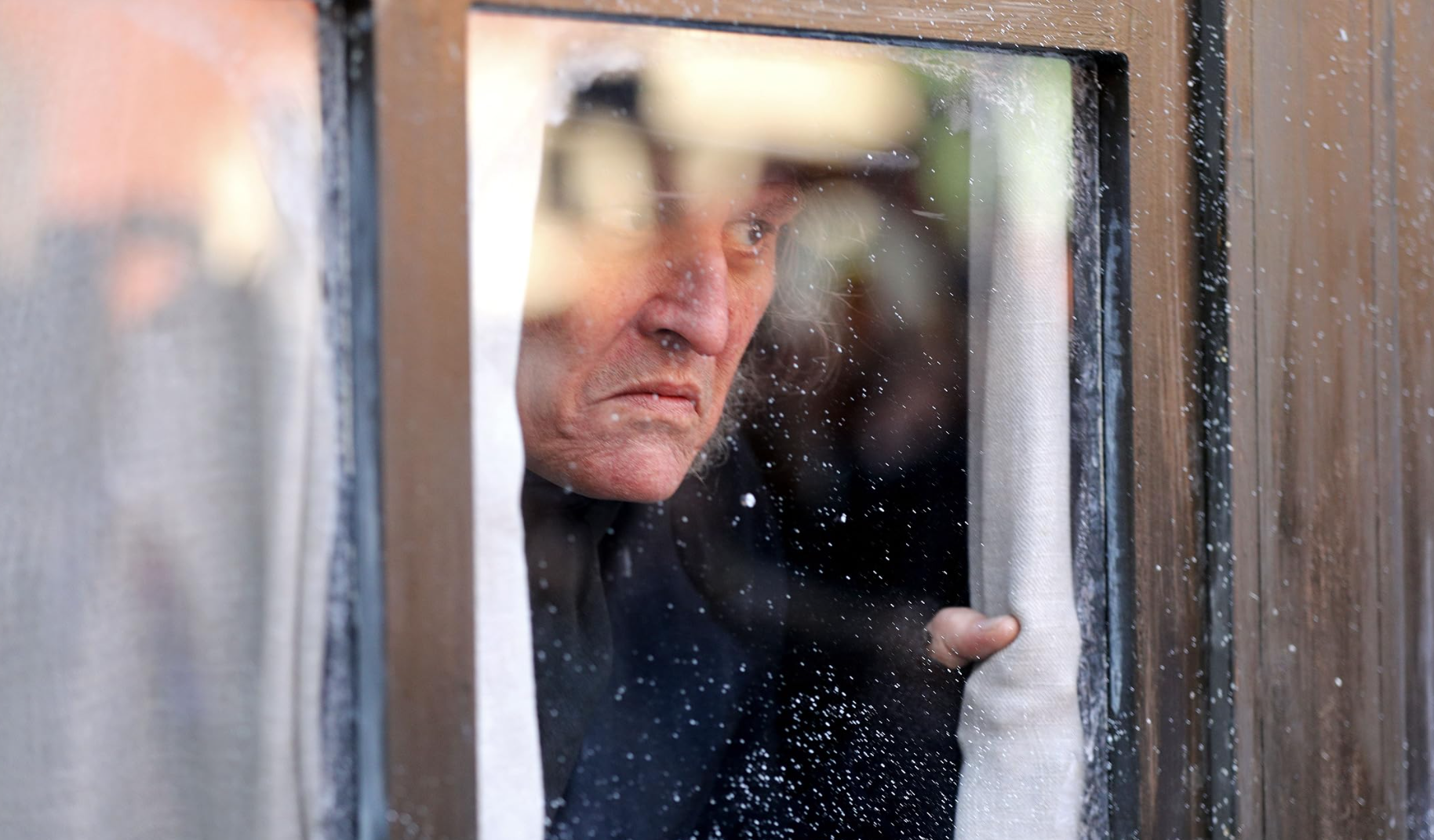
Depp gives Scrooge a mixture of arrogance, petulance, sorrow and eventual warmth, and he is dependable enough to hold the film together. Still, his interpretation can occasionally resemble an elderly Jack Sparrow who has traded the sea for an accounting office. Familiar gestures and comic rhythms slip into the performance, particularly when the film attempts physical humour. Those moments sit awkwardly beside West's harsher horror, producing tonal jumps that never feel entirely deliberate. Depp becomes more effective as Scrooge's emotional defences collapse, although his approach remains surprisingly subdued during the character's catharsis. There are heartbreaking flashes, but the performance seldom offers a radically different understanding of the man.
The production design does more to establish the film's personality. Victorian London is presented as a damp, hostile maze of fog, gaslight and looming Gothic architecture. Grimy interiors, muted costumes and low lighting drain warmth from almost every frame, while the textured, grainy photography creates the impression of a city permanently trapped beneath a layer of soot. The modest budget is used intelligently, with carefully dressed sets and practical details giving Scrooge's world a persuasive sense of age and decay. This may be the bleakest-looking screen version of the story, and the oppressive environment makes the eventual arrival of hope feel visually meaningful.
For all its craftsmanship, however, Ebenezer moves at the pace of a film convinced that fidelity is enough. It is not exactly boring, but it drags whenever West allows Dickens's familiar structure to unfold without fresh interpretation. The lack of humour makes that familiarity more noticeable. Previous adaptations have often balanced the darkness with playfulness, but this version largely rejects frivolity in favour of severity. That decision is defensible, and West treats the material with sincerity, yet the film becomes heavy without becoming especially profound. Even its horror credentials cannot make it truly novel, since the ghosts and Scrooge's fearful reactions have always invited frightening treatment.
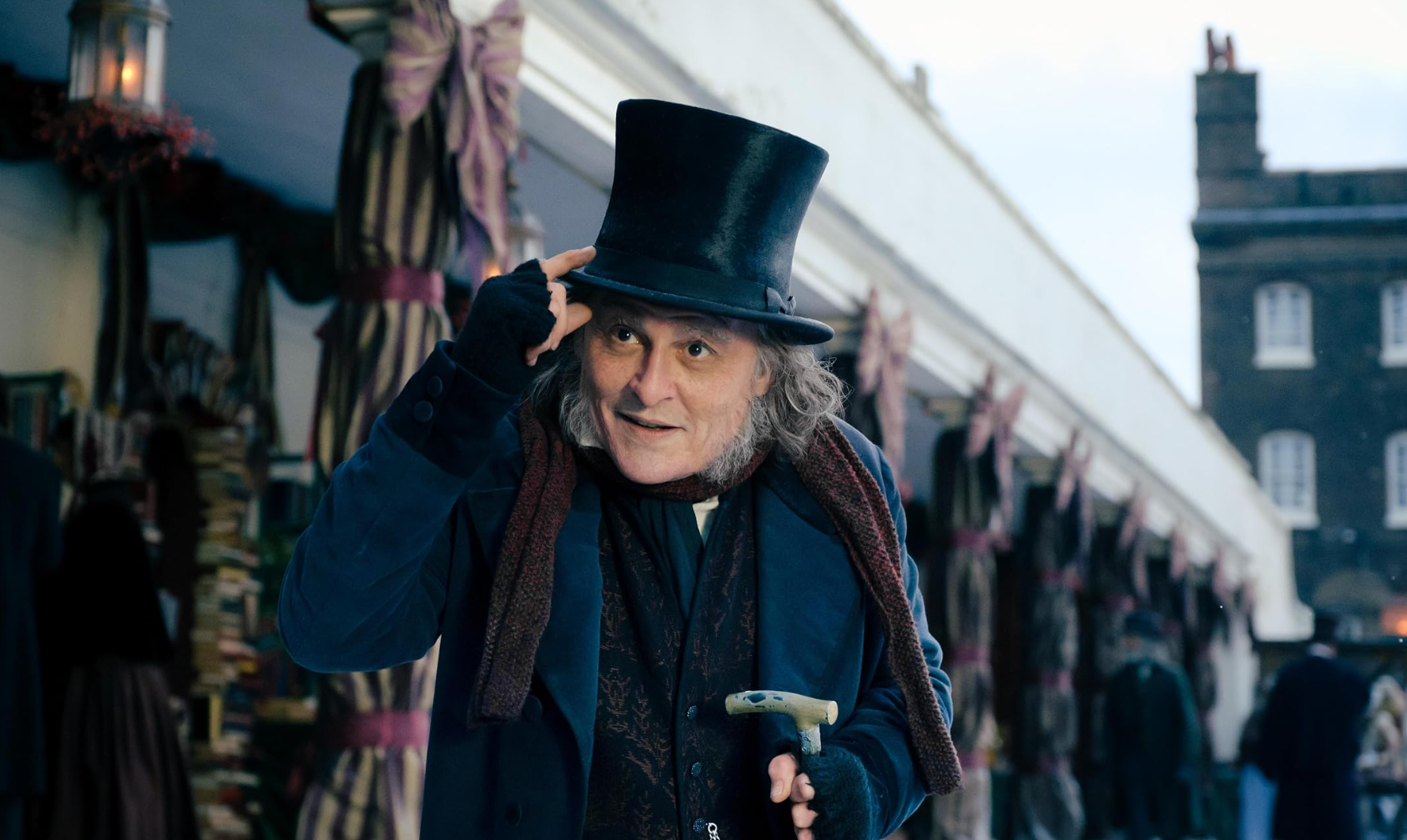
The enduring power of Dickens's story prevents the film from becoming a complete failure. Its pain, pity and despair remain potent, and the transition towards compassion, hope and redemption still carries an emotional charge. When Scrooge finally understands what he has lost and what he might yet save, it is difficult not to feel some degree of joy. That response, though, belongs more to the source material than to anything this adaptation has discovered for itself.
Ebenezer is therefore an accomplished but forgettable production. Its practical effects, gloomy atmosphere and excellent work from Tillman give it moments of real distinction, while Depp provides a steady if overly familiar centre. Yet beyond its aggressive Gothic styling, there is little to separate it from the many versions already available. Viewers encountering Scrooge for the first time may find it an effective, if unusually frightening, introduction. Anyone who already knows the tale well is likely to see an attractive new wrapping around the same old Christmas gift. It will function perfectly well as seasonal background viewing, but it is unlikely to become anybody's essential annual tradition.
Ebenezer is in NZ cinemas from November 12, 2026. Find your nearest screening here
Review written by Alex Moulton
