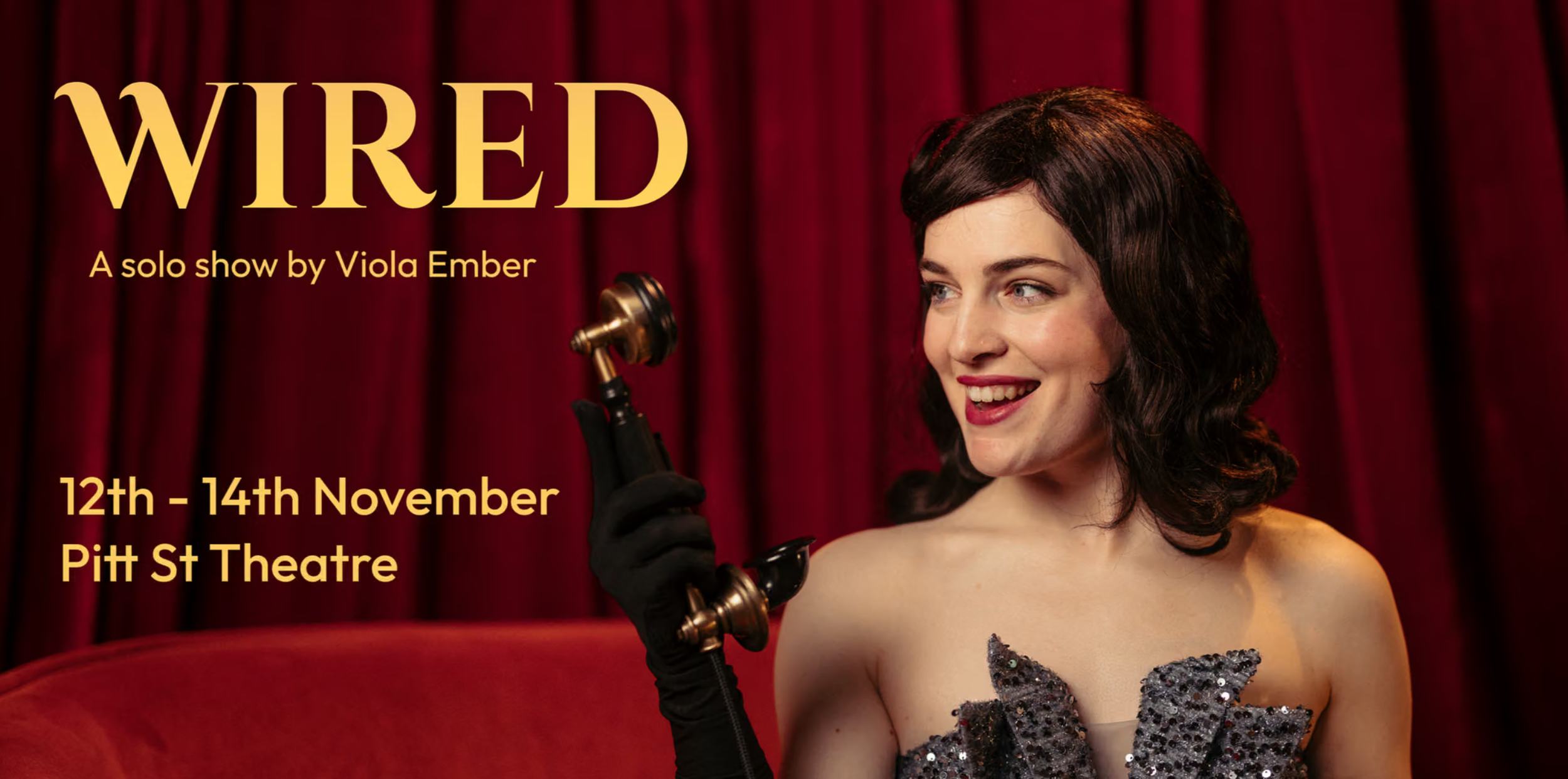
One woman. Five phones. 50 minutes. The show follows Maddie, a self-proclaimed overachiever, through the whirlwind of phone calls and to-do-lists that make up her life. Seduced by the glamour of productivity, Maddie is convinced she can be that woman that ‘has it all’. But what happens when life doesn’t play by the rules? And how much is she willing to sacrifice to keep up the performance?
WIRED feels like the theatrical equivalent of having twenty tabs open, three deadlines approaching, a phone buzzing in your pocket, and a growing suspicion that everyone else has somehow figured out how to manage life better than you have. Viola Ember's debut solo show takes that sensation and transforms it into an entertaining, exhausting, darkly funny exploration of modern ambition, burnout, and the impossible expectations many people place on themselves in an age of constant connectivity.
At its centre is Maddie, an ambitious overachiever desperately trying to keep every aspect of her life running smoothly. Work demands attention. Friends need replies. Personal goals remain unfinished. Health routines need maintaining. The endless list of responsibilities keeps growing, yet somehow the expectation remains that everything should be handled effortlessly and with a smile. WIRED takes that familiar pressure and reframes it through the lens of cabaret spectacle, creating a world where every notification becomes part of a performance and every demand arrives like another act in an increasingly overwhelming show.
The production's biggest achievement lies in the clarity of its central metaphor. From the moment the audience enters Maddie's world, it becomes obvious that this is not simply a story about technology. The phones scattered throughout the stage represent far more than communication devices. They function as competing priorities, conflicting identities, and the endless fragmentation of modern life. Each call demands a different version of Maddie. One phone may require professionalism, another friendship, another self-improvement, another family obligation. What initially appears organised and manageable slowly transforms into something much harder to control.
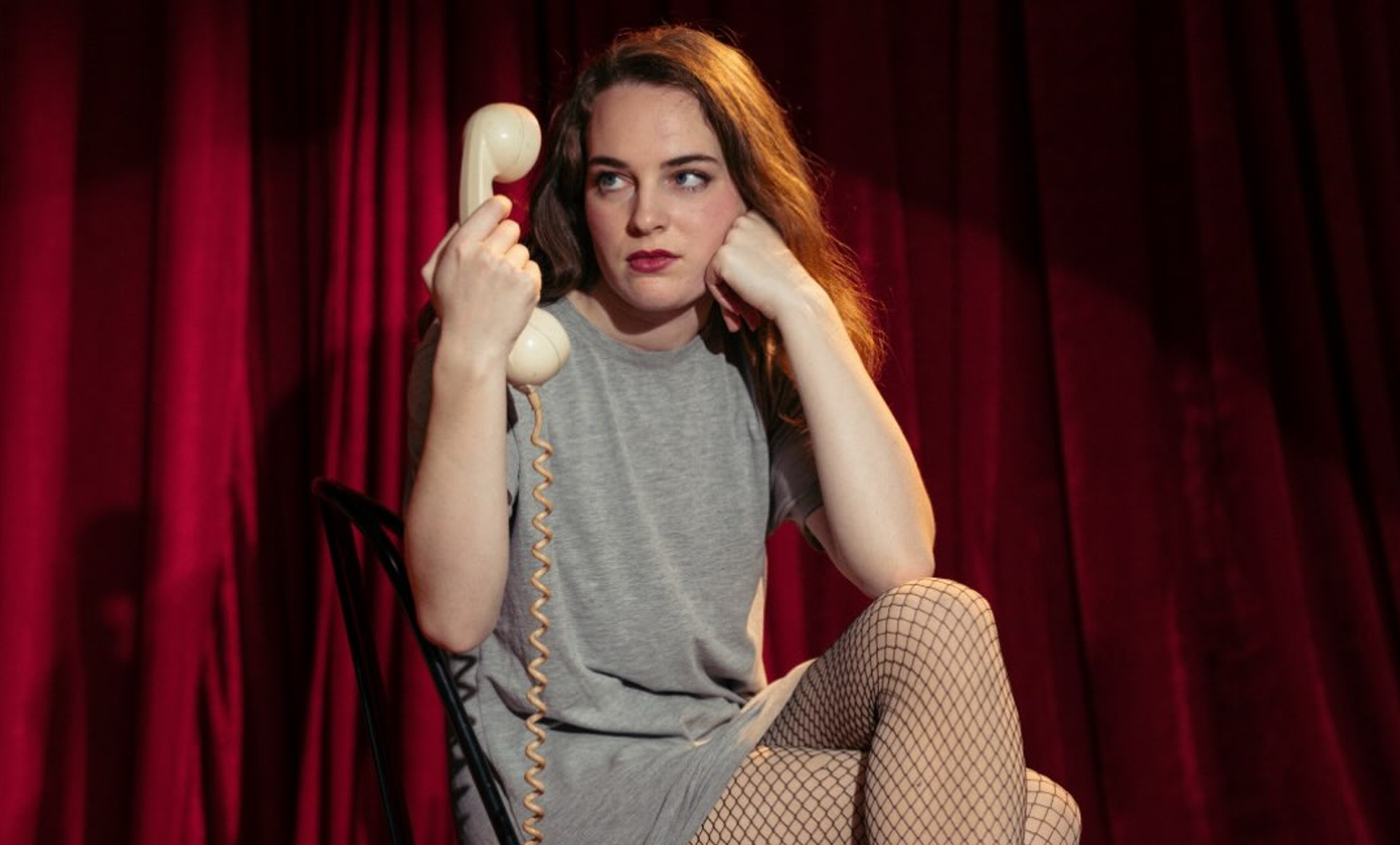
The decision to assign distinct identities to different phones is particularly effective because it gives the audience an immediate visual understanding of how compartmentalised modern life has become. People rarely maintain a single version of themselves anymore. Instead, they move continuously between professional, social, personal, and digital personas depending on who is demanding attention. WIRED transforms that invisible mental juggling act into something physical. Maddie is constantly moving between different areas of the stage, different relationships, and different expectations. What begins as a system for managing life gradually becomes the mechanism through which life overwhelms her.
Ember is on stage alone for fifty minutes, and carrying a production built almost entirely around one performer is no small task. The demands are substantial. WIRED requires rapid transitions between comedy and vulnerability, between stylised movement and grounded dialogue, and between moments of broad observation and deeply personal reflection. Ember navigates all of those shifts with remarkable confidence, maintaining enough energy to keep the audience engaged while never losing sight of the emotional truth underneath the chaos.
The performance works particularly well because Ember understands that burnout is often absurd. Many discussions around exhaustion and overwork become solemn very quickly, but WIRED recognises the dark comedy hidden inside modern productivity culture. The relentless pursuit of becoming the person who "has it all" is presented as both admirable and ridiculous. Maddie chases efficiency with almost religious devotion, convinced that one more app, one more routine, one more carefully scheduled plan will finally create balance. The audience laughs because the behaviour is exaggerated, then immediately realises how familiar it feels.
That balance between comedy and discomfort becomes one of the show's strongest qualities. The audience is allowed to recognise their own habits without feeling directly lectured. Rather than presenting technology as an obvious villain, the production examines the culture surrounding it. Phones themselves are not the problem. The expectation that people should always be available, always productive, always informed, and always performing becomes the real target.
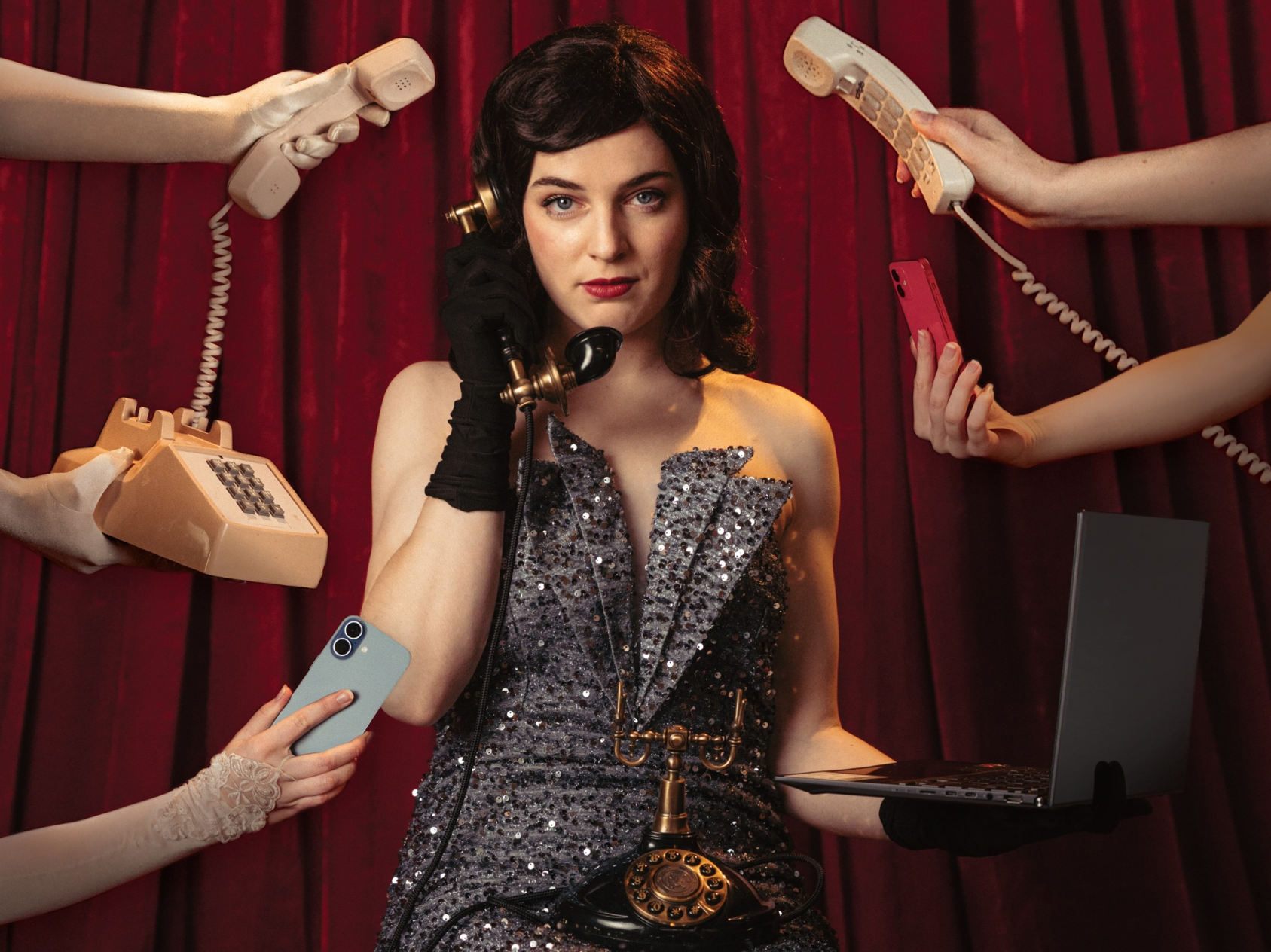
This is where the cabaret influence becomes particularly effective. WIRED constantly draws parallels between performance and daily life. The glamorous costumes, confident choreography, and polished presentation create an image of effortless capability. Beneath that surface, Maddie is permanently scrambling to stay ahead of the next demand. The contrast feels intentional. Much like performers who must smile through exhaustion to maintain an illusion, modern professionals are often expected to project competence and enthusiasm regardless of what is happening behind the scenes.
The physical staging reinforces this idea beautifully. Rather than relying on large scenic elements, the production allows the telephones themselves to define the space. They become landmarks, obstacles, and narrative triggers. Their placement forces Ember into constant motion, transforming the stage into a map of competing responsibilities. The more demands that arrive simultaneously, the less room there seems to be to breathe.
The choreography deserves significant credit here as well. Jemma Goeldner's movement work integrates seamlessly with the dramatic material, allowing physical exhaustion to become an extension of the character's emotional state. Dance sequences never feel disconnected from the storytelling. Instead, they operate as visual manifestations of Maddie's increasingly fragmented mindset. As the pressure builds, movement becomes more frantic, less sustainable, and increasingly difficult to maintain.
That escalating pressure would not work nearly as effectively without Max König's technical design. Sound and lighting move in lockstep with Ember's performance, creating the sensation that the entire production is accelerating alongside its protagonist. Distinct ringtones, sharp shifts in focus, and precisely timed lighting changes direct the audience's attention across the stage with remarkable efficiency. The cumulative effect is subtle but powerful. As notifications multiply and responsibilities collide, the audience begins feeling the same sensory overload affecting Maddie.
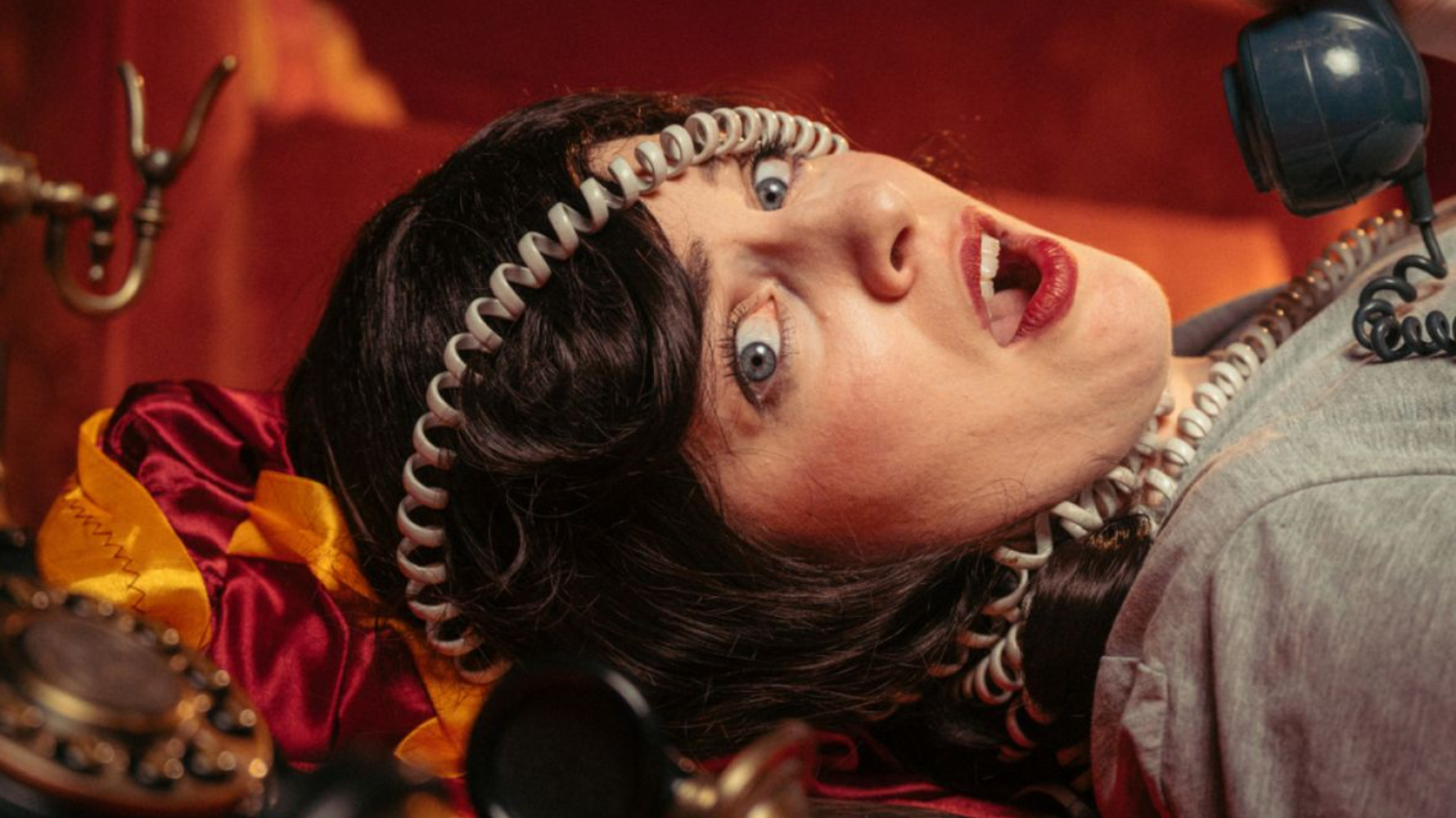
What makes this particularly impressive is how coordinated everything feels. A solo performance naturally places emphasis on the performer, but WIRED often feels like a conversation between Ember and the technical elements surrounding her. The phones ring at exactly the wrong moment. Lights pull attention away before comfort can settle in. Sound cues create interruptions that mirror the experience of modern distraction. By the end of the performance, the technology itself begins to feel like an unseen antagonist constantly demanding more.
If there is a limitation to the production, it is occasionally the same thing that makes it successful. The sensory overload is intentional, but there are moments where the sheer volume of ideas, movement, and interruptions threatens to overshadow the quieter observations underneath. Some of the strongest emotional insights arrive during the calmer moments, and there were times I found myself wanting to sit with those ideas slightly longer before the next demand arrived. Then again, that frustration may simply be part of the point. Modern life rarely allows people to fully process one concern before introducing another.
Ultimately, WIRED works because it captures something deeply familiar about contemporary existence. It understands the strange contradiction of living in a world filled with tools designed to save time while simultaneously feeling as though there is never enough of it. Through humour, movement, sharp writing, and a committed central performance, Viola Ember has created a production that feels both deeply personal and widely relatable. It is funny, clever, occasionally uncomfortable, and perhaps a little too recognisable for anyone who has ever looked at a never-ending to-do list and wondered whether the finish line was real in the first place.
WIRED is being performed from 12th - 14th November at Auckland’s Pitt St Theatre. Find tickets here.
Review written by Alex Moulton
