Verity (2026)
Lowen Ashleigh is hired to ghostwrite for Verity Crawford. After she uncovers what appears to be Verity's autobiographical notes, she wrestles with the confessions about Verity's husband, and finds it hard to separate fiction from reality.
Verity is the kind of film that wants audiences arguing in the car park, texting their friends afterwards, and spending the next few days trying to decide what actually happened. Based on Colleen Hoover’s bestselling novel, Michael Showalter’s adaptation blends psychological thriller, domestic mystery, erotic drama, and gothic melodrama into a story built almost entirely around uncertainty. Sometimes that ambiguity is the film’s greatest strength. Sometimes it feels like it is being mistaken for depth. Either way, Verity remains strangely compelling, even when it isn’t entirely convincing.
The premise is undeniably strong. Struggling writer Lowen Ashleigh is hired to complete a bestselling book series after its author, Verity Crawford, is left unable to continue following a devastating accident. To prepare for the task, Lowen relocates to the Crawford family home and begins sorting through Verity’s notes and research material. It is not long before she discovers a deeply personal manuscript that raises unsettling questions about Verity, her marriage, and the tragedies that have surrounded the family. As Lowen digs deeper, certainty becomes increasingly difficult to find.
The film is built almost entirely around that uncertainty. Every room feels weighted with suspicion. Every conversation appears to contain hidden meaning. Every lingering glance becomes evidence for one theory or another. The Crawford estate itself contributes heavily to that atmosphere. It is the sort of place that seems designed to make people uncomfortable. Vast rooms, towering bookshelves, crackling fireplaces, ominous woods, and endless corridors create a setting that feels simultaneously luxurious and claustrophobic. The house becomes a prison long before the story ever confirms who, exactly, is trapped inside it.
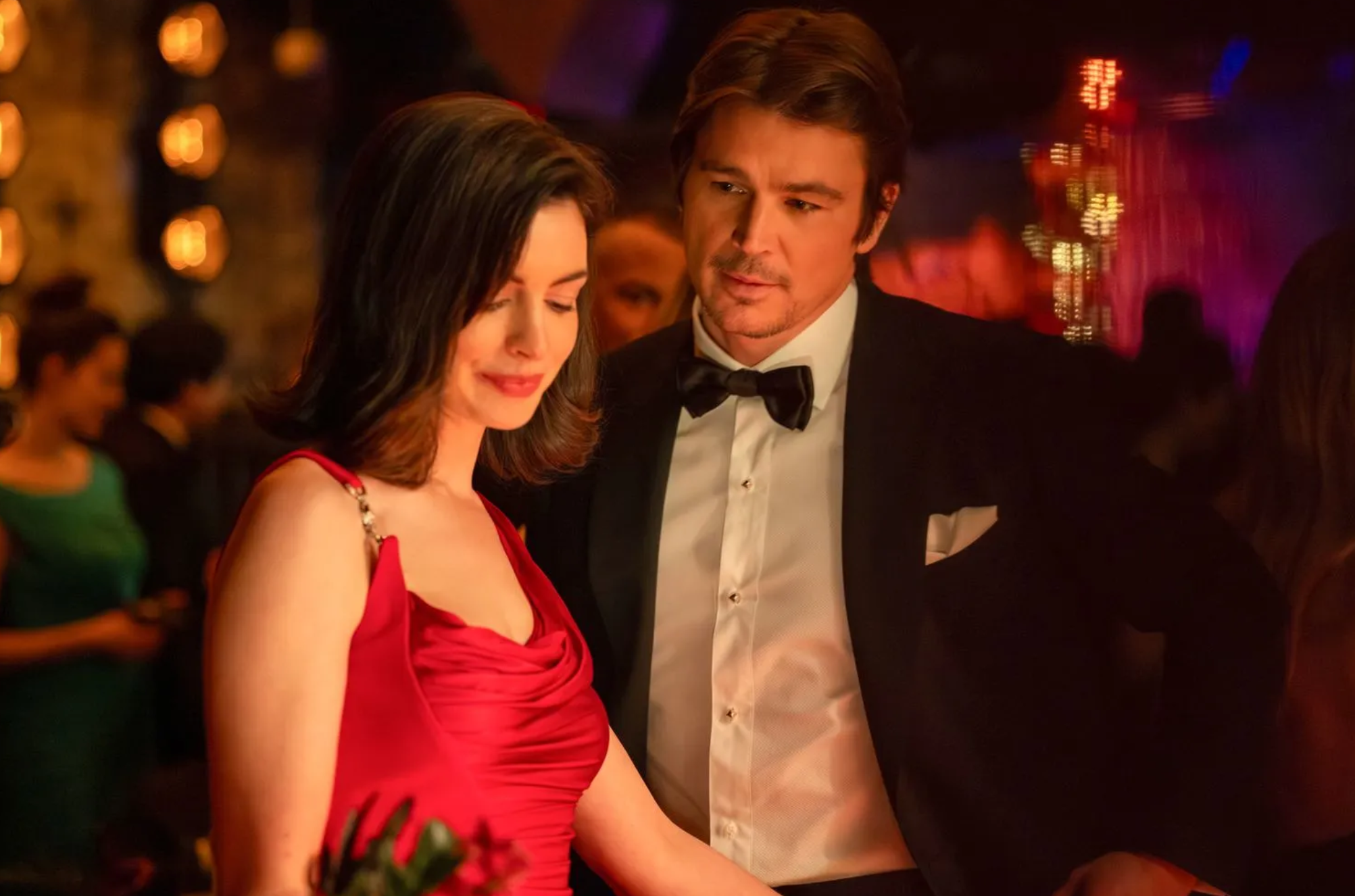
Visually, the film is impressive. Cinematographer Jim Frohna embraces a heightened, almost theatrical aesthetic that constantly reinforces the story’s uneasy tone. Grey skies hang over the landscape. Interiors feel cold despite all the roaring fireplaces. The camera lingers just long enough on details to make audiences question whether they have overlooked something important. Even when the story occasionally loses momentum, the visual presentation remains captivating.
The strongest element of the film, however, is Anne Hathaway.
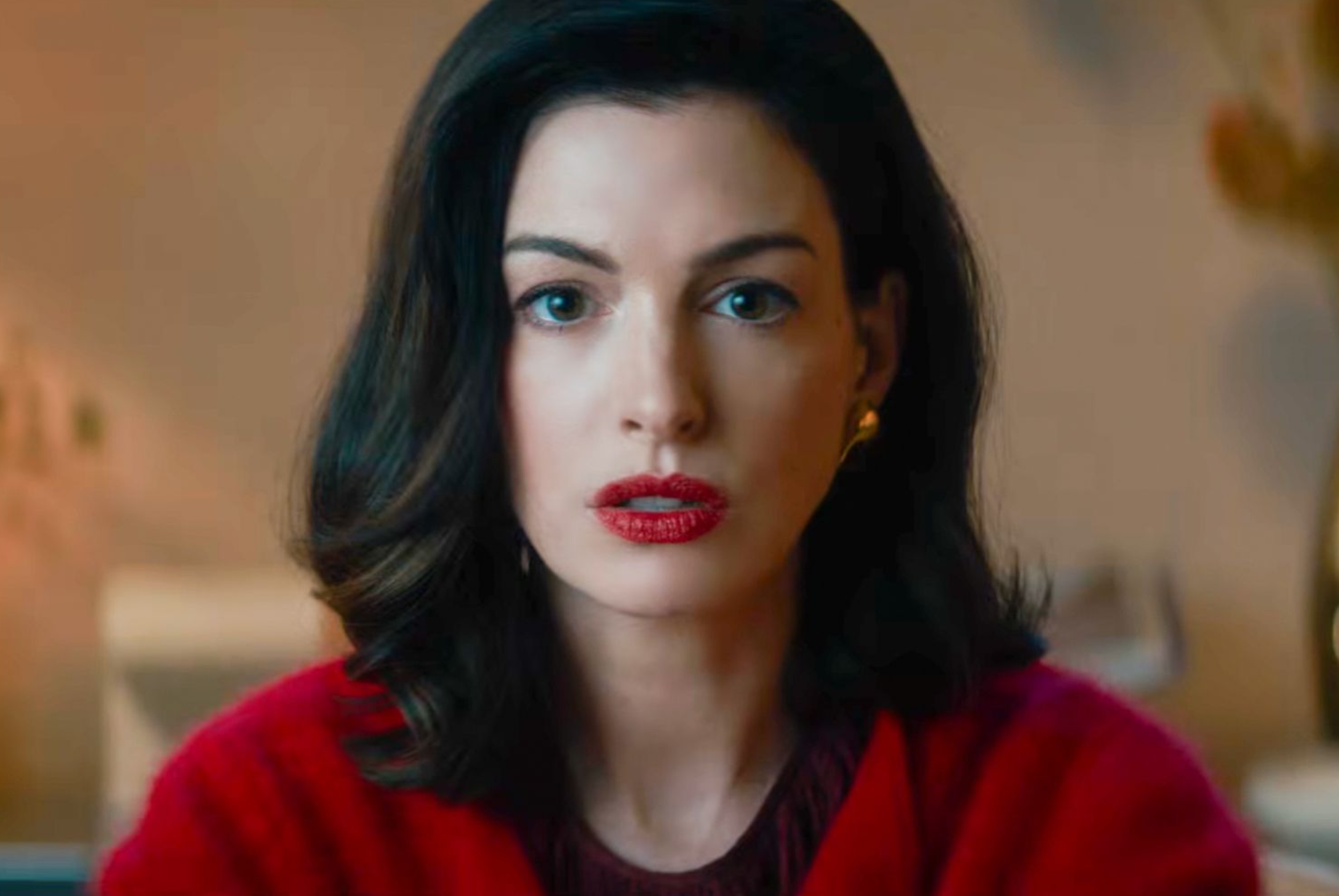
Verity Crawford is one of those rare characters who benefits from remaining partially unknowable, and Hathaway seems to understand that instinctively. For much of the runtime, Verity exists as an enigma. We only see the public face, and pre-accident. The audience is never entirely sure how much of what they are seeing is performance, truth, manipulation, fantasy, or projection. Hathaway embraces every contradictory aspect of the character and delivers a performance that constantly shifts shape depending on whose perspective we happen to be viewing events through.
Josh Hartnett also does excellent work as Jeremy Crawford. While much of the film asks audiences to focus on Verity’s mystery, Hartnett quietly provides the emotional foundation that keeps everything grounded. There is an exhaustion to Jeremy that feels authentic. Grief, frustration, anger, longing, and confusion all seem to exist simultaneously beneath the surface. Hartnett consistently chooses restraint where many actors might reach for melodrama, and the result is one of the film’s most believable performances.
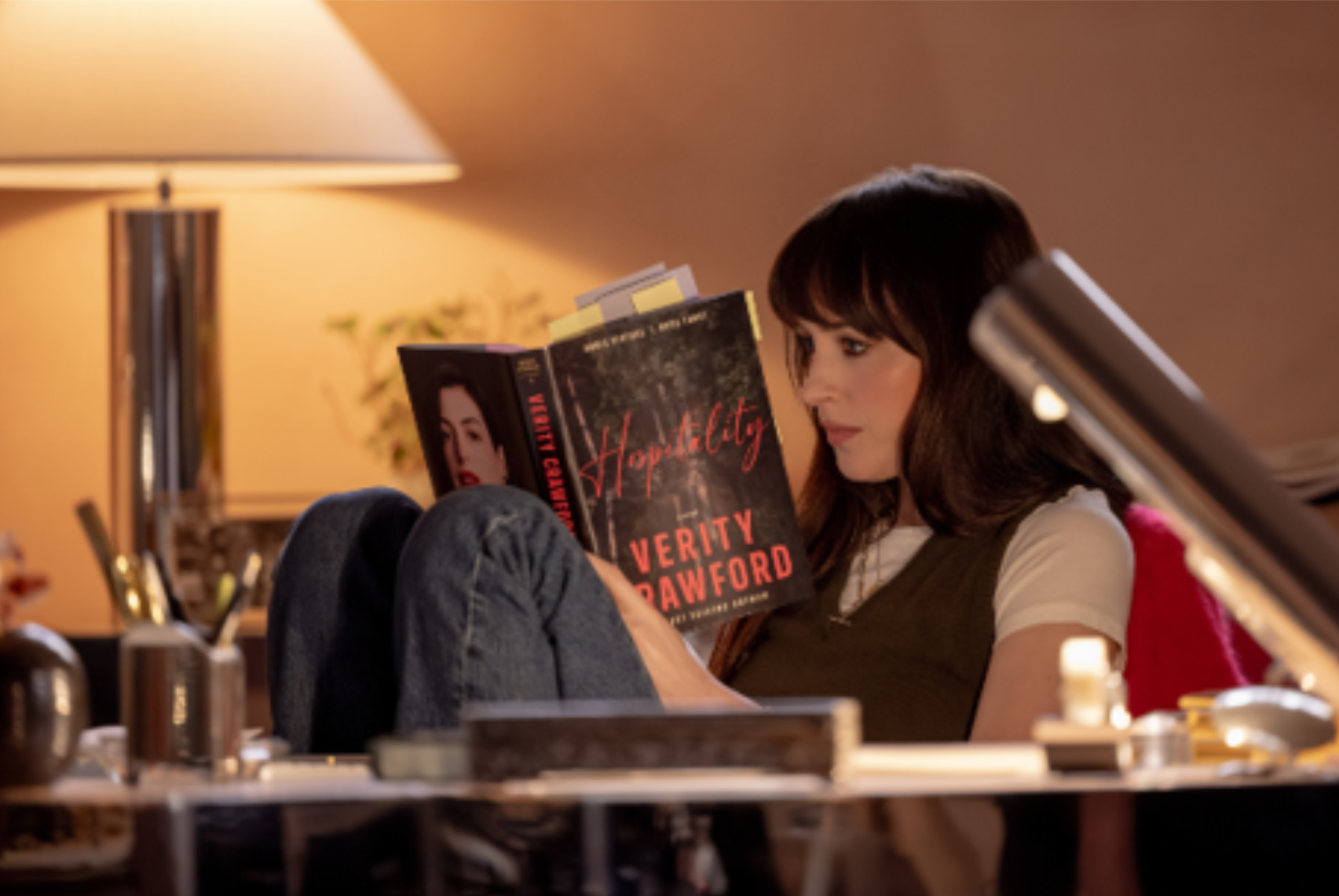
Dakota Johnson faces the difficult task of serving as the audience surrogate while surrounded by bigger personalities. Lowen is intentionally passive compared with the people around her. She spends much of the story observing, reading, questioning, and reacting. Johnson’s controlled performance largely works within those boundaries, though the character remains somewhat underdeveloped. That may be intentional, but it does occasionally leave Lowen feeling less like a fully realised person and more like a vehicle guiding the audience through the mystery.
The manuscript itself becomes one of the film’s most effective narrative devices. It provides the story with its strongest sense of intrigue and creates a fascinating dilemma about truth and authorship. How much weight should be placed on private writing? Do our darkest thoughts represent who we are, or do they simply reveal the boundaries of imagination? The manuscript raises these questions effectively, and it is often during these sections that Verity becomes most engaging.
Unfortunately, the film struggles to maintain momentum between these revelations. For long stretches, the narrative becomes repetitive. Lowen discovers something unsettling, grows suspicious, investigates further, and then discovers something else. While the atmosphere remains effective, the actual progression of the plot can feel slower than it should. Much of the first half relies on building tension rather than delivering payoff, and viewers expecting a more traditional thriller may find themselves impatient waiting for the story to accelerate.
The marketing also does the film few favours. It suggests something closer to a horror thriller than what viewers actually receive. Verity is ultimately more interested in psychological uncertainty than outright fear. The scares are subtle and often arise from suggestion rather than genuine horror. Even when the film attempts more overt suspense, it rarely crosses into truly frightening territory.
The romantic and erotic elements are less successful. While they clearly serve a narrative purpose, they never fully convince on an emotional level. The attraction between certain characters often feels more functional than organic, existing because the story requires it rather than because genuine chemistry is present. As a result, some of the more intimate moments lack the impact they are clearly intended to have.
Tone becomes another challenge. Verity frequently feels caught between two competing identities. One version of the film wants to be a serious psychological thriller about truth, grief, and perception. The other wants to indulge in scandal, obsession, melodrama, and outrageous twists. Both approaches could have worked independently. Balancing them together proves more difficult.
Yet there is something undeniably entertaining about watching the film attempt it. By the time the third act arrives, Verity fully embraces its more outrageous instincts. Twists arrive quickly. Assumptions are challenged. New questions emerge just as old ones seem ready for answers. Not all of it works, but the commitment is admirable. The film never backs away from being messy.
Ultimately, Verity succeeds more as a conversation starter than as a perfectly constructed thriller. The mystery surrounding Verity Crawford is fascinating. Anne Hathaway is excellent. Josh Hartnett provides much-needed emotional weight. The atmosphere is thick with tension, uncertainty, and lingering suspicion. Yet the pacing drags, the romance never fully lands, and the film occasionally struggles to reconcile its competing ambitions.
Still, there is something satisfying about a movie willing to leave audiences debating its characters, motives, and conclusions. Verity may not provide clean answers, but it certainly provides plenty to talk about. Whether that counts as success will depend entirely on what you are looking for, but there is no denying the film remains lodged in your thoughts long after the credits roll.
Verity is in NZ cinemas October 1, 2026. Find your nearest screening here.
Review written by Alex Moulton
