For Life (2026)
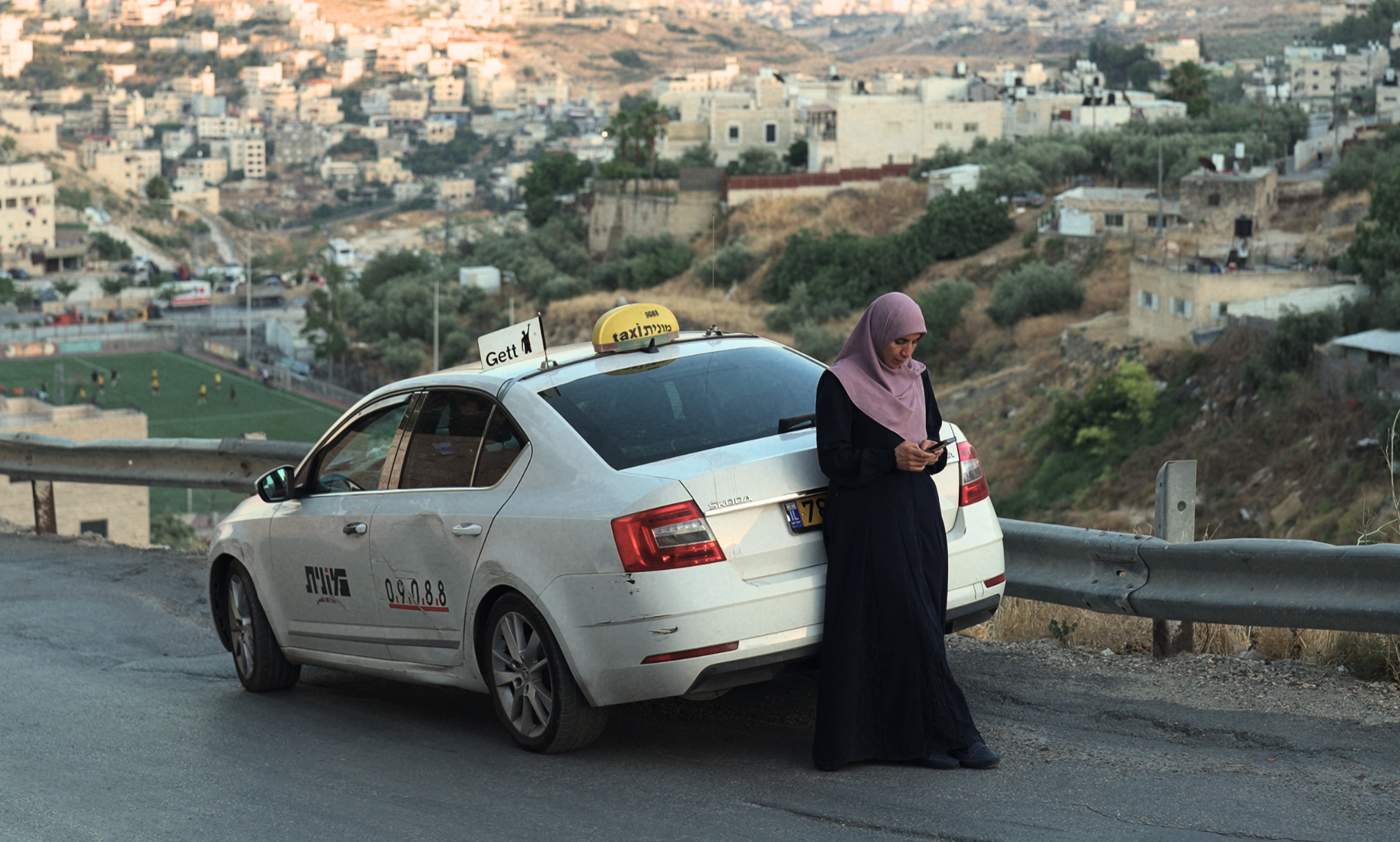
Screening as part of Doc Edge 2026
Hind, a Palestinian woman, has been living apart from her husband, Ramadan, who has been held in an Israeli prison, serving a life sentence for over twenty years. Their rare visits are limited to brief moments in a space divided by a glass partition, where physical contact is impossible. Despite everything, Hind remains determined to fulfill her desire to become a mother. To do so, she must secretly smuggle her husband’s sperm out of prison and undergo IVF treatment. Hind’s arduous journey intersects with the stories of other prisoners’ wives who share the same desire, forming a space of collective solidarity. For Palestinian women, this ordinary desire gradually transforms into an extraordinary act of resistance under the conditions of occupation.
For Life, directed by Ahmet Seven, is a documentary that begins with a simple, universal desire and slowly reveals the extraordinary, almost impossible lengths required to fulfil it under occupation. At its centre is Hind, a Palestinian woman whose determination to conceive a child with her husband, Ramadan, becomes a story that is both deeply intimate and profoundly political. The film is not framed as a political lecture, yet every moment is shaped by the machinery of the occupation that surrounds her. What emerges is a portrait of love, faith, and resilience in a place where even the most private aspects of life are controlled by forces far beyond one’s reach.
The premise is deceptively straightforward. Hind wants another child. Her husband is serving a life sentence in an Israeli prison. The only way to conceive is to smuggle his sperm out of the prison and undergo IVF. The film treats this not as a sensational twist, but as a lived reality for dozens of Palestinian women who have already done the same. The process is dangerous, delicate, and time sensitive. It requires meticulous planning, secrecy, and a network of women and men who understand the stakes. What might sound like an urban legend becomes, through the film’s careful observation, a very real, very human act of defiance.
The documentary opens with a frantic journey through checkpoints as Hind tries to reach her daughter’s graduation. It sets the tone immediately. Movement is never simple. Time is never guaranteed. Even the most ordinary milestones are shaped by the unpredictability of military control. Hind has already raised two daughters largely on her own. She speaks with pride about ensuring they received university educations, about helping them build stable lives despite the absence of their father. Yet beneath that pride is a quiet loneliness. She does not want to grow old alone. She wants to expand her family while she still can.
The film captures this loneliness with a restrained, almost haunting visual style. Hind moves through her home, a space clearly cared for and decorated with love, yet the silence is heavy. It is the kind of silence that comes from years of waiting. Years of doing everything alone. Years of living in a house that could be raided or destroyed at any moment, as so many Palestinian homes have been. The cinematography leans into muted tones and dim lighting, creating a sense of a life lived under a constant shadow. Nothing is bright. Nothing is carefree. Even hope feels fragile.
What makes For Life so compelling is how it refuses to flatten Hind into a symbol. She is not presented as a martyr or a political statement. She is a woman who loves her husband, who misses him, who collaborates with him on his writing, who types his handwritten notes into a computer so he can continue working on a book about memorising the Quran. Their partnership is intellectual, emotional, and spiritual. The film shows how deeply connected they remain despite the walls between them.
The smuggling process itself is treated with a mixture of tension and tenderness. One relative insists they should not call it smuggling but liberating. The distinction matters. It reframes the act not as a crime, but as a reclamation of agency in a system designed to strip Palestinians of control over their own bodies and futures. Once the sample is freed, the race begins. It must reach the clinic quickly, in the right condition, and in the right quantity. Every delay, every checkpoint, every unexpected obstacle becomes a threat. The film’s pacing mirrors this anxiety. It slows to a crawl during moments of waiting, forcing the viewer to sit with the same frustration Hind experiences daily. Then it accelerates when last minute complications arise, turning the journey into a high stakes heist.
Beyond Hind’s personal story, the documentary highlights a network of solidarity among the wives of other incarcerated Palestinians. These women share advice, encouragement, and hard earned knowledge. They understand the emotional weight of raising children alone, the bureaucratic hurdles, the humiliation at checkpoints, the constant fear. Their presence expands the film’s scope, showing that Hind’s struggle is not an isolated case but part of a larger pattern of life under occupation.
The film also touches on the gendered dimensions of this struggle. Hind recounts how an Israeli soldier mocked her for having only daughters. The IVF clinic explains that the Palestinian Authority covers treatment for families who have only boys or only girls. Yet the film never reduces Hind’s desire to a quest for a son. At a gender reveal gathering, no one guesses or expresses a preference. They simply wish for a healthy baby. The nuance here is important. The film avoids reinforcing stereotypes about gender expectations in the region. Instead, it shows how external pressures, including casual cruelty from soldiers, shape the emotional landscape of Palestinian women.
What For Life does most effectively is humanise Palestinians in a way that cuts through decades of dehumanising narratives. It challenges the colonial trope that Palestinians do not value life, that they reproduce carelessly, that their children are expendable. Hind’s journey exposes the cruelty of that lie. Every step she takes is deliberate. Every risk is calculated. Every prayer is filled with longing. Her desire for a child is not reckless. It is intentional, rooted in love, faith, and a refusal to let the occupation dictate the boundaries of her family.
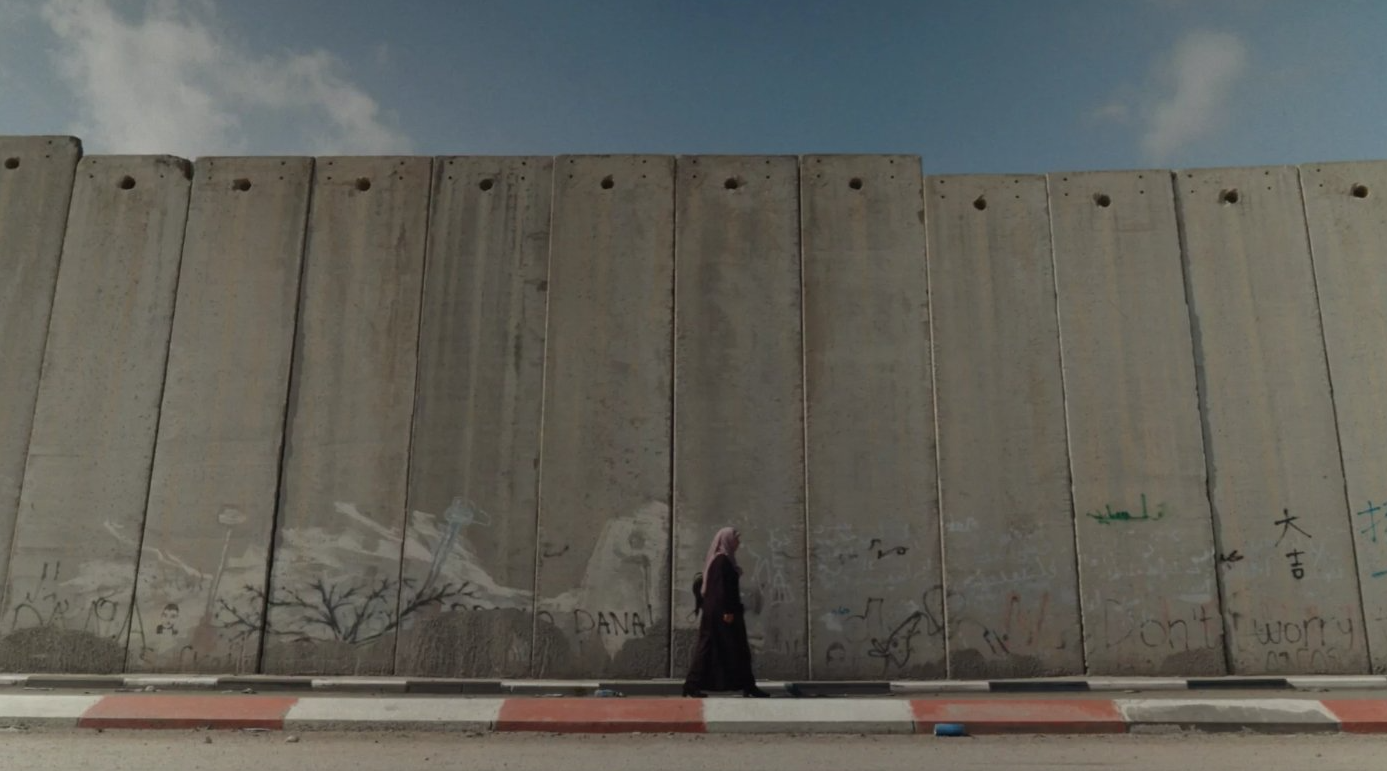
The documentary also makes clear that Hind, like her husband, is serving a kind of life sentence. He is confined within prison walls. She is confined within the walls that encircle Palestinian cities. Her movements are restricted. Her time is controlled. Her future is shaped by forces she cannot escape. Yet she continues. She plans. She hopes. She resists simply by insisting on life.
The ending carries a bittersweet weight. As someone who is childfree, I cannot fully understand the depth of Hind’s longing, but the film makes it impossible not to feel the intensity of her determination. The final moments are quiet, restrained, and emotionally heavy. They leave you with a sense of admiration, sorrow, and a lingering ache for a woman whose love has become an act of resistance.
For Life is a powerful, patient, and deeply human documentary. It reveals the intimate cost of occupation while honouring the resilience of those who live within it. It is not loud. It is not sensational. It is simply honest. And that honesty is devastating.
Screening as part of Doc Edge 2026. Check out the films and screenings here
Review written by Alex Moulton
