Ranginui: Call of the Ice (2026)
Screening as part of Doc Edge 2026
Antarctica in winter is one of the most extreme places on Earth: isolated, locked in darkness, and -50°C. Māori astronomer Rangi Matamua and language expert Mataia Keepa enter this frozen world, where science and Indigenous knowledge meet in real time. Rangi carries a personal promise to honour his grandfather’s dying wish and share Māori starlore beyond Aotearoa. When unexpected snowstorms roll in, they are forced to stay longer than planned, cut off inside a continent that continues to shift and close in around them. Through auroras, storms, first sunrise and shifting ice, they learn to read a living landscape most will never witness.
Ranginui: Call of the Ice arrives with quiet curiosity, unfolding not through crisis or danger, but through the simple act of two Māori thinkers stepping into a place that reshapes how they see the world. Antarctica in winter is a landscape most people will never witness. Darkness, cold, silence, and a horizon that feels like the edge of existence. Into this frozen expanse walk Rangi Matamua, Māori astronomer, and Mataia Keepa, te reo Māori researcher, carrying questions that have nothing to do with survival and everything to do with meaning.
The film follows them as they arrive at Scott Base, expecting a short stay. Antarctica has other plans. Storms roll in, winds roar at 120 kilometres an hour, and flights are cancelled. What was meant to be ten days becomes nearly a month. The stakes remain low. They are safe, warm, and surrounded by scientists. Yet the extended isolation becomes the heart of the documentary. With nowhere to go and nothing urgent to accomplish, they begin to think deeply about where they are, what they are seeing, and how Māori knowledge might stretch across a landscape that is not Aotearoa.
Rangi stepping into the cold and immediately confronting a sky that feels awry. Stars he knows intimately sit in unfamiliar positions. Sirius is low. The Southern Cross is high. Matariki is absent. The sky is familiar and unfamiliar at once, a reminder that celestial knowledge is shaped by place. Rangi’s reaction is not scientific shock. It is emotional. He feels disoriented, then grounded, then curious. The film captures this shift with tenderness, showing how a lifetime of stargazing can be unsettled by a single night in a new world.
Director Julia Sartorio and producer‑writer Miriama Kamo build the documentary around this sense of gentle dislocation. Antarctica is not framed as hostile. It is framed as alive. The ice moves. The light shifts. The auroras flicker and vanish before the camera can catch them. The environment is unpredictable, but not threatening. It is a place that demands patience. The crew can only step outside for short bursts before the cold becomes dangerous. They wait indoors, watching weather reports, hoping for a break in the wind. When the sky clears, they rush out to witness whatever the landscape chooses to reveal.
This rhythm shapes the film. It becomes a cycle of anticipation, observation, reflection, and return. The low stakes allow the documentary to lean into philosophy. Rangi and Mataia spend long stretches discussing how mātauranga Māori might adapt to a place without tūpuna, without familiar markers, without the environmental cues that shape Māori cosmology. They ask whether Māori knowledge belongs only to Aotearoa or whether it travels with Māori wherever they go. They consider how language might evolve to describe ice, auroras, and Antarctic winds. They wonder whether the land is Papatūānuku, Tangaroa, or something entirely new.
These conversations are the film’s emotional centre. They are not academic debates. They are personal reflections shaped by the environment. Rangi speaks about his grandfather’s dying wish that he share Māori starlore beyond Aotearoa. Antarctica becomes part of that promise. Mataia, whose PhD work explores the revival of karakia, brings questions about how ritual and language respond to new landscapes. Their discussions feel like watching two people build a bridge between worlds, one idea at a time.
The documentary also traces Rangi’s life story, though gently. It does not dominate the film. Instead, it appears in fragments: childhood memories, family connections, the path that led him to become one of Aotearoa’s most recognised cultural astronomers. These moments add depth without overshadowing the Antarctic journey. They remind the audience that Rangi’s work is rooted in whakapapa, not just scholarship.
Visually, the film is striking. Antarctica in winter is a place of extremes. Darkness stretches for hours. The cold is so intense that breath freezes instantly. The ice shifts and cracks, creating sounds that feel ancient. Sartorio captures these details with sensitivity. The camera lingers on the horizon, the snowdrifts, the faint glow of auroras, and the first sunrise after weeks of darkness. The beauty is quiet, not dramatic. It feels like watching a world breathe.
The documentary’s pacing mirrors the environment. It is slow, contemplative, and patient. There are no dramatic twists. No countdowns. No looming threats. The tension comes from the weather, which decides when the crew can step outside. This lack of urgency becomes one of the film’s strengths. It allows the audience to settle into the rhythm of the place, to feel the stillness, and to appreciate the philosophical space that isolation creates.
Rangi’s reflections anchor the film. He speaks about the comfort he feels when spotting the Southern Cross, even in a distorted sky. He talks about how the angles of the sun shift the light from day to night. He considers what it means to bring Māori values into a land with no human history. His curiosity is infectious. The viewer begins to see Antarctica not as a remote scientific outpost, but as a place where cultural knowledge can expand, adapt, and evolve.
The documentary also highlights the relationship between science and Indigenous knowledge. Rangi and Mataia engage with researchers at the Antarctic Science Platform, sharing perspectives and learning from each other. The film does not frame this as a clash. It frames it as a meeting point. Both knowledge systems observe the same sky, the same ice, the same storms. Both seek understanding. The film shows how they can coexist, complement, and enrich one another.
What makes Ranginui: Call of the Ice compelling is its softness. It is not a film about danger. It is not a film about achievement. It is a film about wonder. It invites the audience to slow down, to listen, to think, and to feel the weight of being in a place that challenges familiar ways of knowing. It shows how a landscape can reshape perspective without threatening survival.
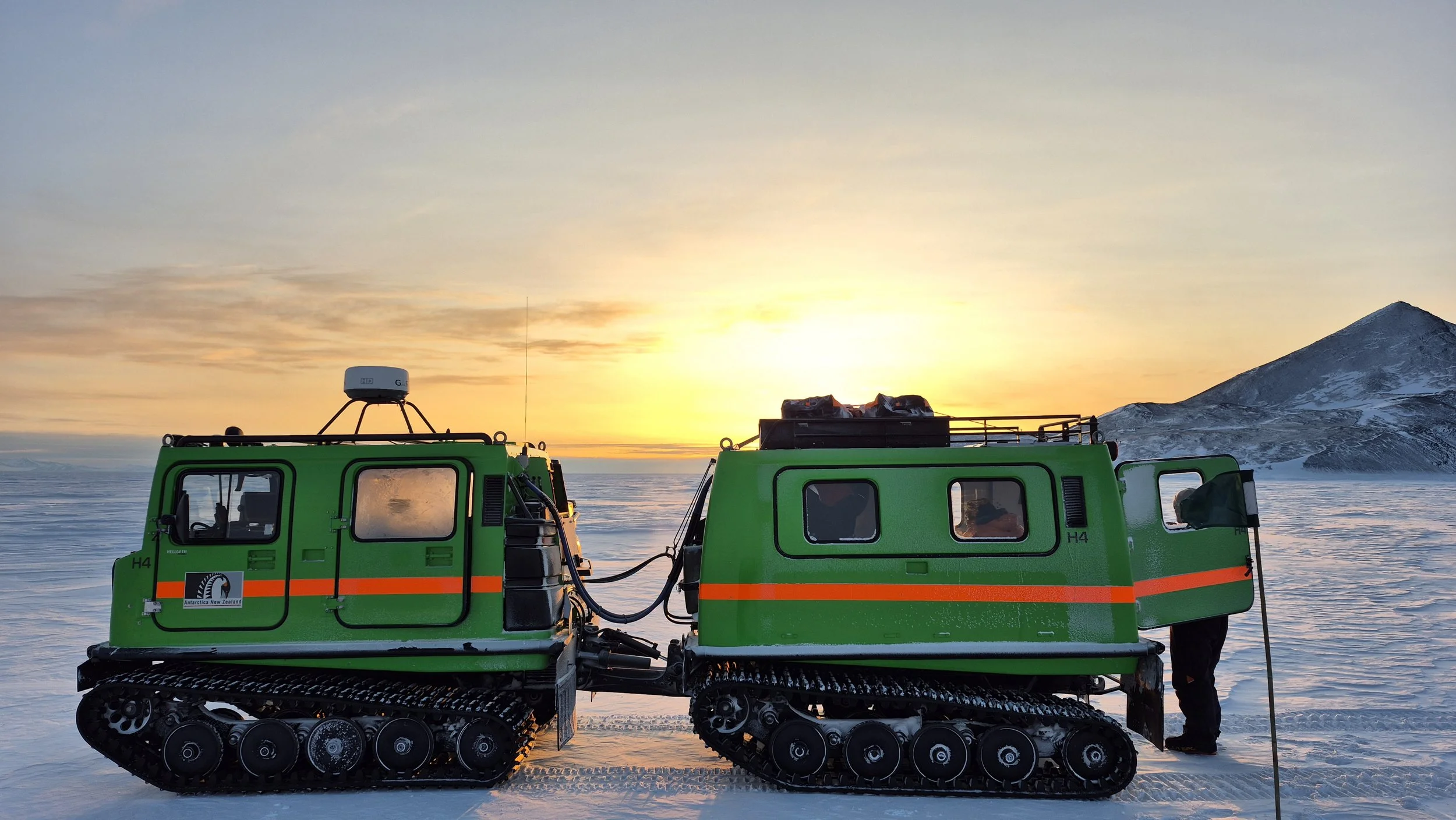
The final scenes capture the first sunrise after weeks of darkness. The light creeps across the horizon, illuminating the ice in shades of gold and blue. Rangi and Mataia watch quietly. The moment is simple, but profound. It feels like a metaphor for the entire journey: a slow emergence of clarity, shaped by patience, curiosity, and respect for the land.
Ranginui: Call of the Ice is contemplative, gentle, and deeply thoughtful. It is a meditation on knowledge, place, and the possibility of cultural expansion. It is a reminder that exploration does not always require urgency. Sometimes it requires stillness. Sometimes it requires listening. And sometimes it requires stepping into a frozen world to see familiar stars from a new angle.
Screening as part of Doc Edge 2026. Check out the films and screenings here
Review written by Alex Moulton
