Constellations

Presented by Silo Theatre
An astrophysicist and a beekeeper meet at the summit of Maungawhau, drawn together by curiosity and connection. Their relationship unfolds across infinite realities — blossoming, faltering, and transforming in ways both tender and devastating. At once intimate and expansive, Constellations explores the fragile balance between choice and fate, asking what changes when we shift the context of a love story.
Constellations arrives as a quiet, intricate piece of theatre that feels both intimate and enormous at the same time. Nick Payne’s original script is already known for its clever structure and emotional weight, but this Aotearoa adaptation by Nī Dekkers‑Reihana adds a new layer of meaning. Set beneath the stars of Matariki, the story becomes grounded in local context, shaped by te ao Māori, and alive with the idea that renewal and possibility sit inside every moment. It is a two‑hander that relies entirely on the chemistry between Jarod Rawiri and Renaye Tamati, and they carry the show with care, humour and emotional precision.
The premise is simple. An astrophysicist and a beekeeper meet on Maungawhau. Their first conversation is awkward, charming and slightly strange. In most plays, this would be the start of a linear romance. In Constellations, it is only one version of the moment. The scene repeats again and again, each time shifting in tone, intention and outcome. Sometimes they connect. Sometimes they clash. Sometimes the moment ends before it even begins. The play uses these variations to explore how tiny changes in behaviour, tiny choices, can alter the entire trajectory of a relationship.
The structure mirrors ideas from quantum mechanics. In physics, the universe behaves differently depending on scale. Large things follow smooth, predictable rules. Tiny things behave like waves, jumping between states. When you use string theory to bridge these ideas, you get the concept of multiple possible realities. Constellations takes this scientific framework and applies it to human connection. Every choice creates a new branch. Every hesitation, every joke, every misstep becomes a doorway into another version of the story. The play does not move forward in a straight line. It jumps between timelines, offering fragments of a life rather than a single path.
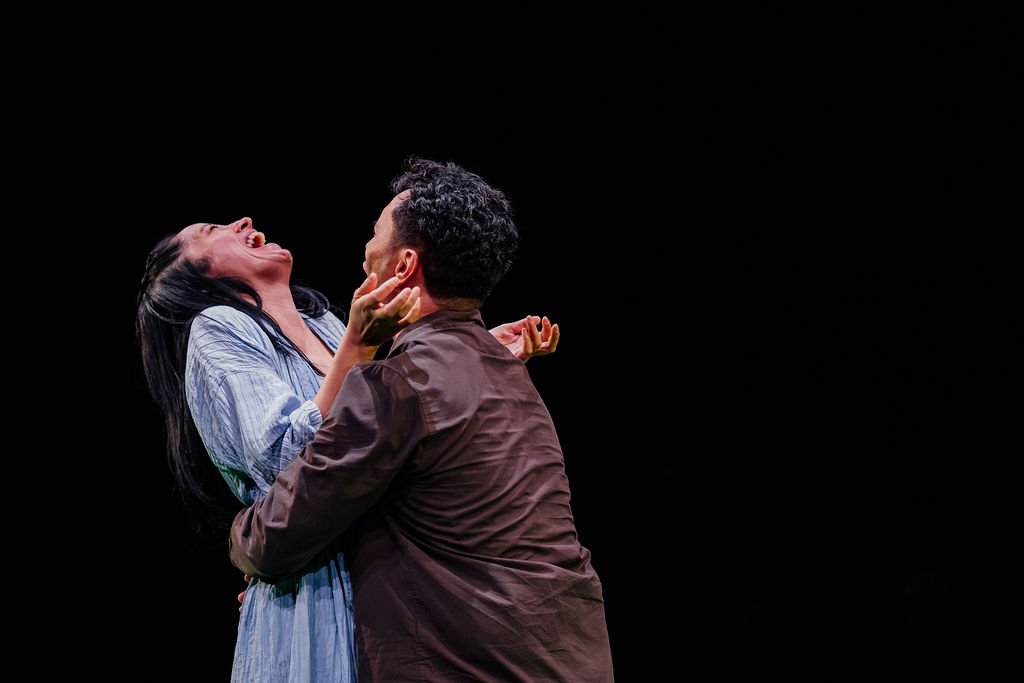
Photo Credit: Andi Crown Photography
This structure demands a lot from the performers. There are no elaborate sets or scene changes. The stage is simple, shaped by lighting shifts and subtle movement. Grace Newton’s design keeps the space open, allowing the actors to move freely as they navigate different universes. Filament Eleven 11’s lighting becomes a guide, signalling changes in time and tone with small adjustments. Te Aihe Butler’s sound design adds texture without overwhelming the dialogue. Everything is minimal, which means the actors must carry the full weight of the storytelling.
Rawiri and Tamati handle this with skill. They shift between moods quickly, sometimes within seconds. A line delivered with flirtation in one universe becomes defensive in another. A gesture that feels warm in one moment becomes cold in the next. The repetition never feels dull because the emotional context keeps changing. Their chemistry is strong enough to make the unlikely pairing of a beekeeper and a physicist feel natural. They move between humour, frustration, affection and grief with clarity, making each version of the relationship feel distinct.
The Aotearoa adaptation adds cultural grounding that strengthens the story. References to local places, shops and everyday details make the romance feel familiar. The use of te reo Māori and New Zealand Sign Language adds depth, especially during the proposal scenes. Even without direct translations, the meaning is clear through tone and physicality. The repeating nature of the dialogue helps the audience follow the shifts, and the cultural elements feel woven into the fabric of the play, and the depth of the characters, rather than added on top.
The emotional arc of the story is gentle but powerful. Some universes are lighthearted, full of teasing and awkward charm. Others are tense, shaped by miscommunication or infidelity. The darkest timelines explore illness and mortality. Marianne’s diagnosis arrives quietly, but its impact ripples through every version of the relationship. The play does not linger on medical detail. Instead, it focuses on how people respond to limited time. The scenes involving assisted dying are handled with sensitivity, showing how love can exist even in moments shaped by fear and uncertainty.
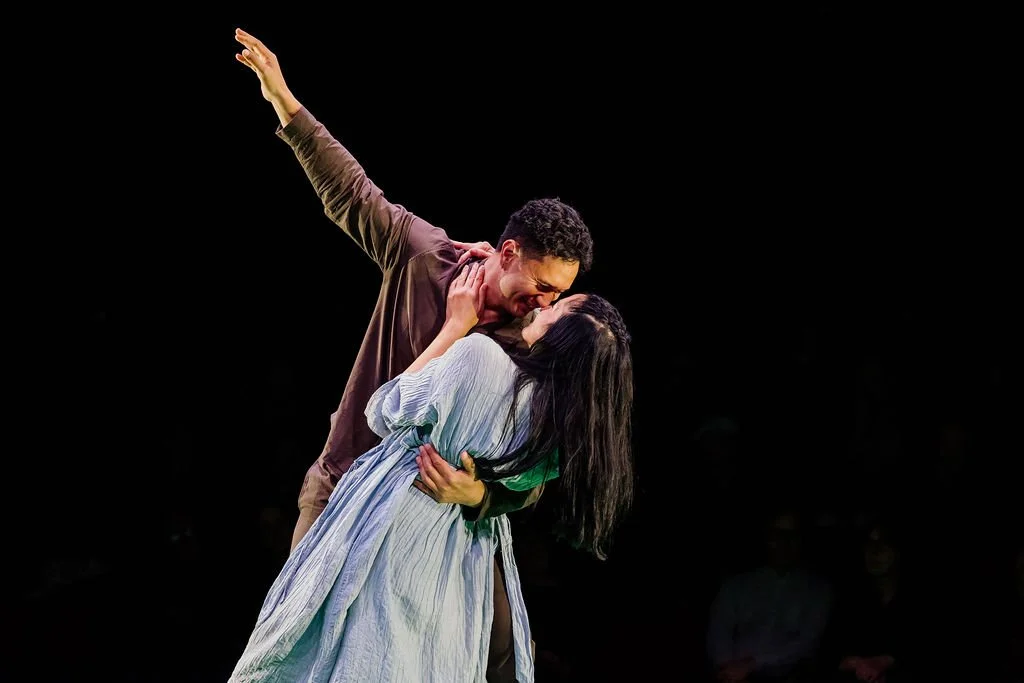
Photo Credit: Andi Crown Photography
The play balances these heavy themes with humour. There are scenes where the characters stumble through flirtation, scenes where they argue about small things, and scenes where they try to navigate the awkwardness of honesty. These lighter moments prevent the story from becoming overwhelming. They also highlight how relationships are built from both joy and difficulty. The contrast between comedy and grief makes the emotional payoff stronger.
One of the most striking elements of Constellations is how it encourages reflection. The structure invites the audience to think about their own choices. How many versions of a moment exist? How many paths could have unfolded from a single conversation? The play does not offer answers. It simply shows how fragile and unpredictable human connection can be. It suggests that every moment contains infinite possibilities, and that even the smallest decisions can shape a life.
The movement direction by Ross McCormack helps guide the transitions between universes. The shifts are subtle, often indicated by a change in stance or a slight adjustment in posture. These small choices make the structure feel smooth rather than chaotic. The intimacy coordination ensures that the physical closeness between the characters feels safe and natural, especially in scenes involving vulnerability or conflict.
The adaptation also highlights how social expectations influence relationships. The play touches on how confidence, vulnerability and gendered assumptions shape responses. A gesture that seems romantic in one universe becomes intrusive in another. A moment of honesty can be seen as brave or careless depending on context. These variations show how people interpret behaviour through their own experiences and biases.
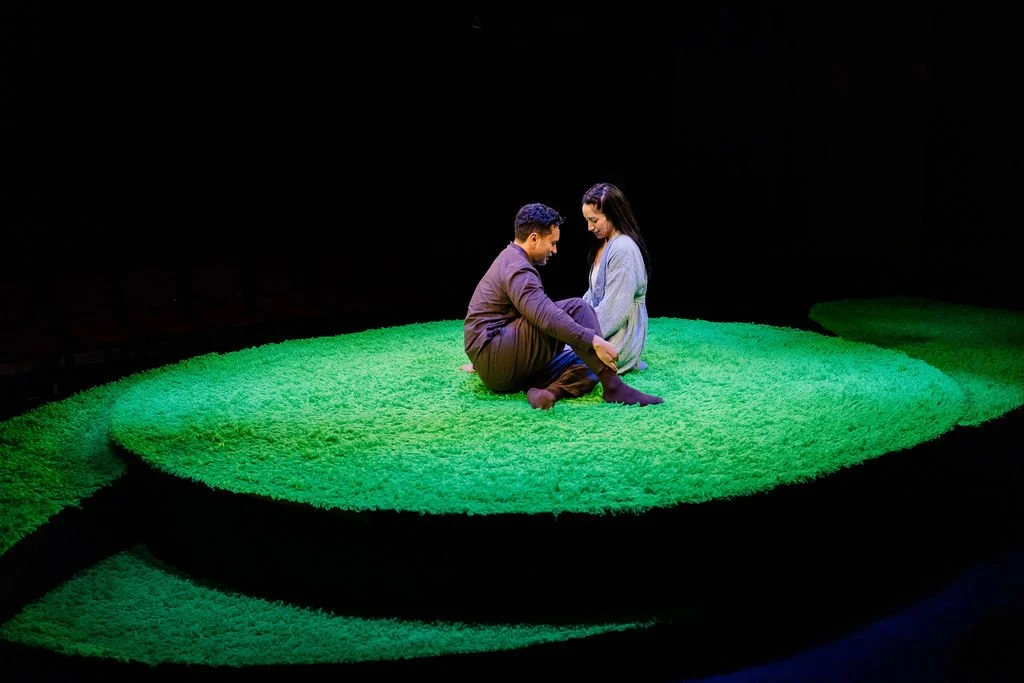
Photo Credit: Andi Crown Photography
The final scenes bring the story to a quiet, emotional close. The timelines converge around the reality of illness, and the play becomes a meditation on love, memory and the limits of time. It does not end with a grand gesture. Instead, it ends with acceptance. The simplicity of the ending makes it more powerful. It affirms companionship even as it acknowledges loss.
Constellations is a thoughtful, beautifully executed piece of theatre. It is playful without being frivolous, emotional without being heavy-handed, and clever without being inaccessible. The Aotearoa adaptation enriches the story, grounding it in local culture while keeping the universal themes intact. Rawiri and Tamati deliver performances full of nuance, making each universe feel alive. The production team supports the story with subtle, effective design choices.
It is a show that lingers. It invites you to consider your own “what if” moments, your own branching paths, your own constellations of choices. It is a reminder that life is fragile, unpredictable and full of possibility.
Performances run from July 2-19 at Q Theatre. More info and tickets here
Review written by Alex Moulton
