An Enemy of the People by Henrik Ibsen
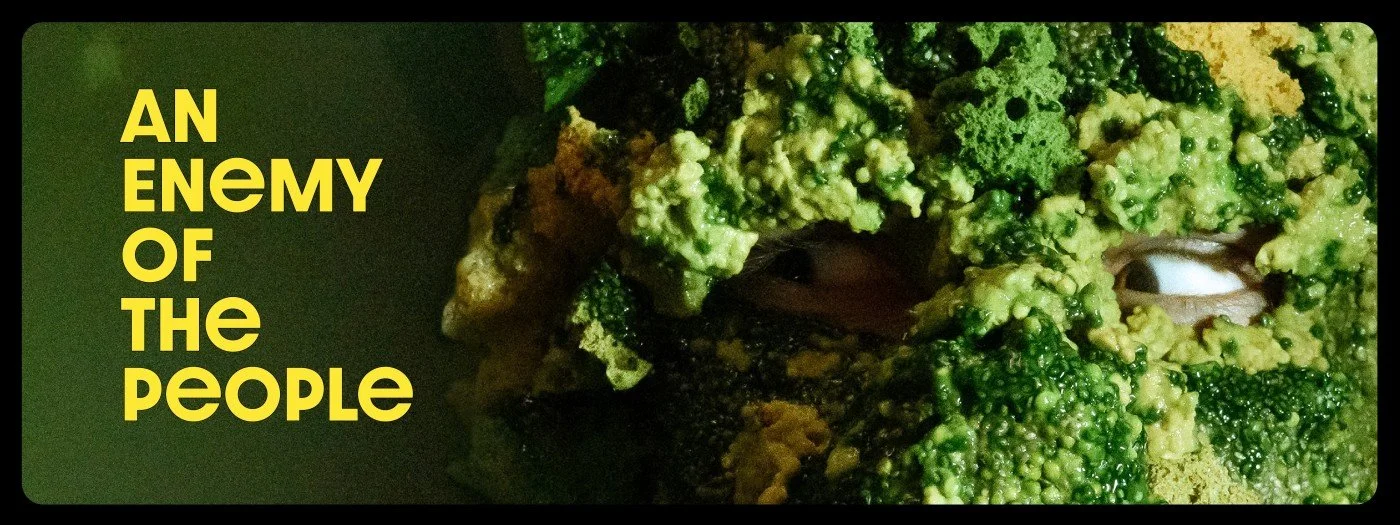
Dr. Thomas Stockmann is the medical officer of his small-town’s new eco-spa. An upstanding member of their close-knit community, when Thomas discovers the town’s water has been contaminated, he raises the alarm. But his truth comes at a price, when those in power - including his own brother - try not only to discredit him, but to crush him.
Flyleaf Theatre Company’s An Enemy of the People is a tense and timely political drama that feels uncomfortably close to the present moment in Aotearoa. Henrik Ibsen’s classic has been reimagined by Aaron Richardson into a contemporary New Zealand setting, and the result is a production that mirrors the ideological clashes, environmental anxieties and economic pressures that shape our national conversations. It is a story about truth, power and the cost of speaking up, delivered with a clarity that makes the audience feel as though they are watching real events unfold rather than a play written more than a century ago.
The production follows Dr Thomas Stockmann, the medical officer for a newly established eco spa that promises prosperity for the town. When he uncovers a serious issue with the water supply, he believes he is doing the right thing by raising the alarm. What follows is not a scientific debate, but a political one. The discovery becomes a catalyst for conflict, exposing how quickly communities fracture when confronted with uncomfortable truths. The tension between public health and economic stability becomes the central struggle, and the production handles this conflict with nuance rather than simplicity.
Fraser Hoffman’s performance as Thomas is compelling. He begins as an enthusiastic scientist who genuinely believes he has found something that will help the town. As resistance grows, his frustration intensifies. Hoffman captures the emotional shift with precision, showing how conviction can harden into stubbornness when met with opposition. His portrayal avoids the trap of making Thomas a flawless hero. Instead, he becomes a man who is right in principle but flawed in execution, someone whose passion risks isolating him from the very people he hopes to protect.
Opposite him is Sam Bunkall as Peter, Thomas’s brother, boss, and the town’s mayor. Bunkall brings a polished confidence to the role, embodying a leader who believes he is acting in the community’s best interest. His performance highlights the tension between political pragmatism and moral responsibility. Peter is not a villain, but a man who prioritises stability and economic survival. His decisions are shaped by fear of collapse rather than malice, and the production allows the audience to understand his perspective even when they disagree with it.

Photo credit: Lucie Everett-Brown
The staging is simple and effective. The long, narrow performance space places the audience on both sides, creating a corridor that heightens the sense of pressure. Chairs and tables shift to become offices, living rooms or public meeting spaces. The minimalism keeps the focus on the actors and the dialogue, which is where the real intensity lies. Lighting and sound are used sparingly, supporting the emotional beats without overwhelming them. Water appears in creative but subtle ways throughout the set, a quiet reminder of the issue at the heart of the conflict, gradually escalating as the performance progresses.
The supporting cast adds depth to the production. Grace Cullen’s Katherine, Thomas’s wife, is intentionally sidelined for much of the play, reflecting how domestic voices are often overshadowed in political battles. Matt Chamberlain’s Martin, Thomas’s father-in-law, brings a grounded, down-to-earth presence that feels distinctly Kiwi. His performance adds warmth and humour, while also hinting at the generational tensions that shape community decisions. Joseph Wycoff’s Hobson, the media head, captures the uneasy balance between journalism and financial survival. His portrayal raises questions about whether media can ever be truly neutral when funding and influence are always in the background. Sarah Nessia’s Alison offers a working-class perspective, while Jessica Bennett’s Billie provides insight into how younger generations navigate systems that feel broken before they even enter them.
The production excels at showing how allegiances shift under pressure. Characters who initially support Thomas begin to waver when confronted with potential economic consequences of his discovery. The play demonstrates how easy it is for people to agree on a problem but disagree entirely on the solution. It also shows how quickly political promises can sway public opinion, especially when those promises offer short-term relief at the expense of long-term wellbeing.
One of the strengths of this adaptation is its refusal to present the conflict as a simple battle between good and bad. Thomas and Peter represent different priorities, both of which have merit. The production acknowledges that environmental responsibility is essential, but also that economic stability matters. It shows how communities struggle when forced to choose between immediate survival and future wellbeing. This complexity makes the story feel real rather than symbolic.

Photo credit: Lucie Everett-Brown
The pacing is steady, driven by dialogue rather than spectacle. The intensity builds gradually, culminating in scenes where emotions run high and alliances collapse. The production’s strength lies in its ability to make the audience feel the weight of each decision. It does not offer easy answers. Instead, it invites reflection on how communities respond to crisis, how truth becomes politicised and how individuals navigate the tension between personal conviction and collective responsibility.
The contemporary setting makes the themes resonate strongly. The tension between environmental protection and economic growth is familiar in New Zealand. Debates about infrastructure, water quality, funding cuts and political promises are ongoing. The production arrives at a moment when public trust in institutions is fragile, and communities are grappling with the consequences of short-term decision-making. The adaptation does not shy away from these parallels. It uses them to highlight how easily communities can be divided when confronted with uncomfortable truths.
An Enemy of the People is a powerful and timely adaptation that captures the complexity of modern political and environmental debates. It is driven by strong performances, thoughtful direction and a clear understanding of the play’s relevance. It is not comfortable theatre, but it is necessary theatre. It challenges audiences to consider their own priorities, their own biases and their own role in shaping the future of their communities.
An Enemy of the People runs from 12 - 22 August 2026 at Auckland’s Q Theatre. Purchase tickets here.
Content Advisory: Strong language, adult themes, depictions of tobacco use, sudden loud noise, discussions of serious environmental and political issues.
Review written by Alex Moulton
