Every Kind of Weather
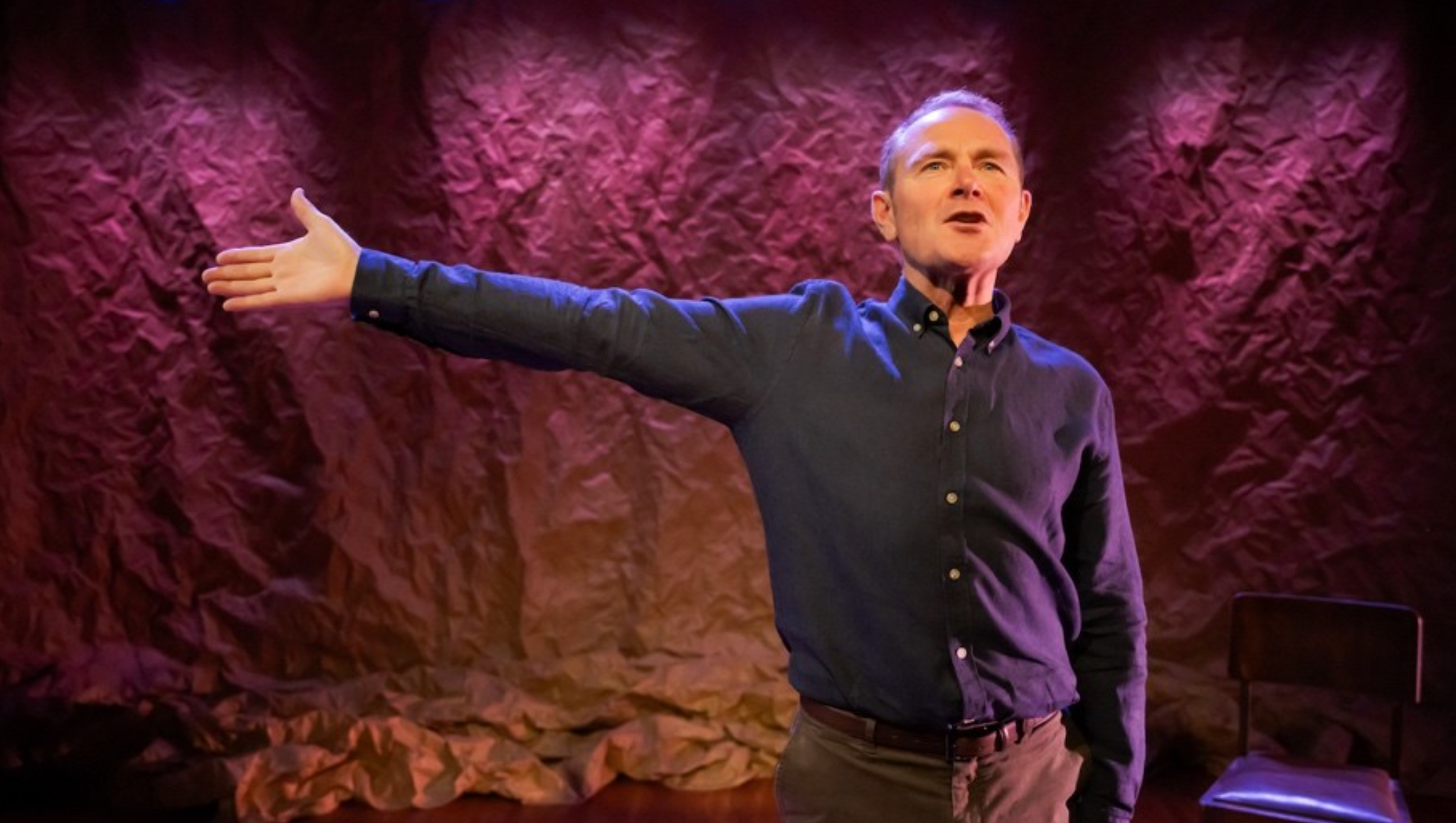
Photo credit: Stephen A'Court Photography
Presented by Brilliant Adventures with Q Season Support
One iconic playwright. Two plays. One unmissable event.
THE END OF THE GOLDEN WEATHER. Bruce Mason’s quintessential Kiwi classic chronicles the friendship between a 12-year-old boy and Firpo, a social outcast who dreams of winning big at the Olympics. Through the boy’s eyes, we see the wonder of life on a perfect beach, in a perfect 1930s New Zealand. It’s a world of magic and transformation, where anything can happen, and miracles seem possible.
NOT CHRISTMAS, BUT GUY FAWKES. An adolescent boy tries to find his place in an adult-dominated world. A young man retraces an intensely felt boyhood experience of bullying. A playwright in his final days reckons with the value of an artistic life – and with the stories New Zealand tells about itself.
Every Kind of Weather, presented by Brilliant Adventures with Q Season Support, is a rare theatrical offering. Two Bruce Mason works performed back-to-back, both carried by Stephen Lovatt under the direction of Shane Bosher, both shaped by the same design team, yet each landing with its own emotional temperature. It is not simply a double bill. It is a conversation between two plays, two eras, two versions of Mason, and two visions of New Zealand’s cultural identity. The result is a night of theatre that feels expansive, intimate and quietly monumental.
The event begins with The End of the Golden Weather, Mason’s most iconic work and arguably the cornerstone of New Zealand solo theatre. It is a story many may know, yet seeing it live, performed with such care, reminds you why it has endured. Lovatt steps into the role with a kind of gentle authority, guiding the audience into the remembered world of a 1930s Takapuna summer. The play is framed as a mature man looking back on a defining childhood season, but Lovatt’s performance blurs the line between memory and immediacy. He shifts between characters with ease, slipping from the boy’s wide‑eyed wonder to the clipped tones of adults, from Firpo’s fragile optimism to the chorus of townspeople who dismiss him.
The set is deceptively simple. Jane Hakaraia’s design uses crumpled sheets of brown paper cascading down the back wall, meeting a square of warm wooden floorboards. A single chair sits onstage. That is all. Yet the space feels full. Sean Lynch’s lighting and Paul McLaney’s sound design work together to conjure the beach, the heat, the salt, the hum of summer. The simplicity allows Mason’s language to take centre stage. His prose is melodic, rich, and full of imagery. Lovatt delivers it with clarity, letting the words paint the world rather than forcing it.
The early moments of the play feel exaggerated, almost theatrical in the old‑fashioned sense. Lovatt leans into the heightened language, the descriptive flourishes, the boyish enthusiasm. At first, it feels like too much. But slowly, the style settles. The exaggeration becomes part of the worldbuilding. The audience adjusts, and the performance begins to feel natural. Once that shift happens, the characters emerge fully. The boy’s innocence becomes palpable. Firpo’s vulnerability becomes heartbreaking.
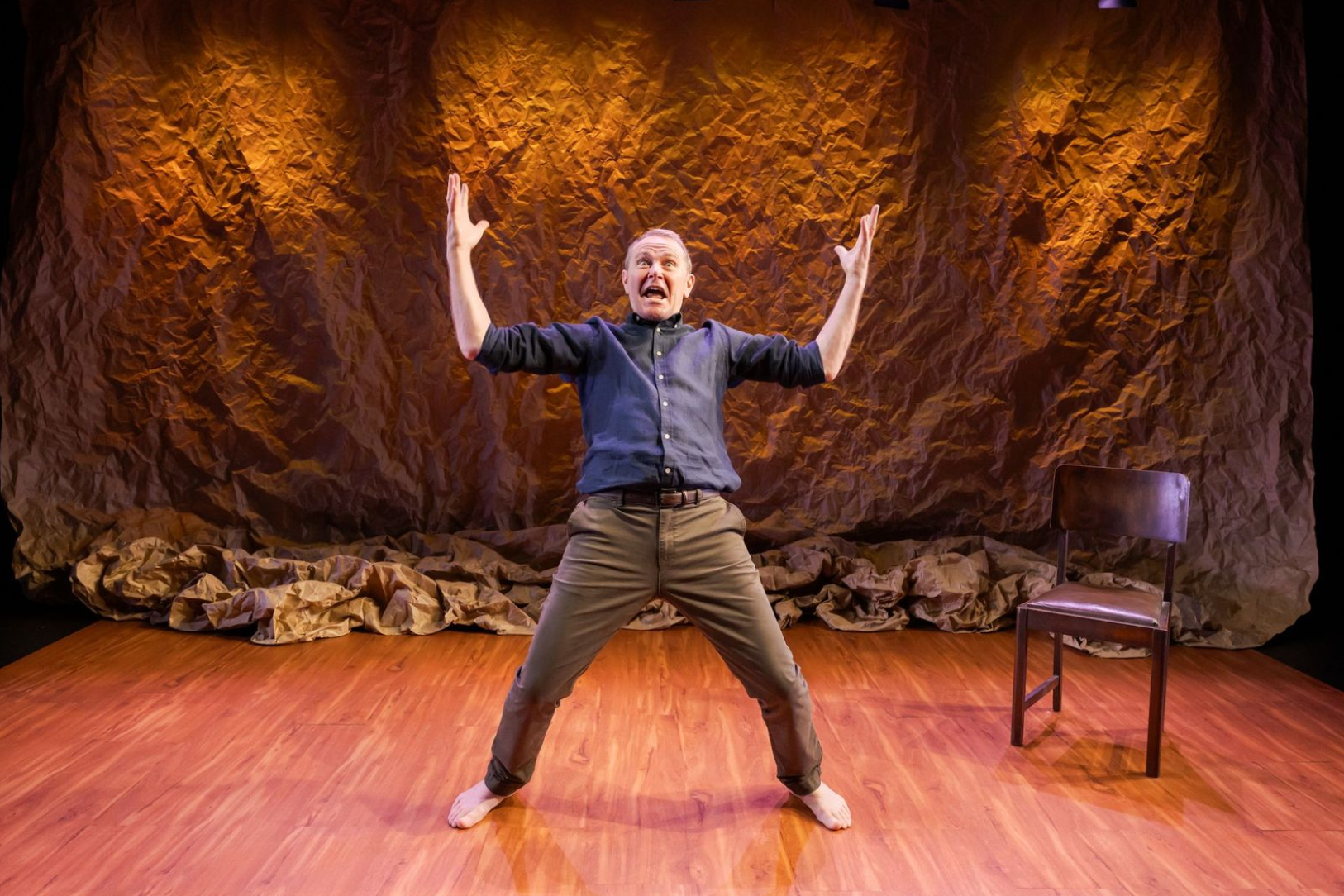
Photo credit: Stephen A'Court Photography
Firpo is the emotional centre of the play. A mentally unwell dreamer who believes he can become an Olympic athlete, he is treated with ridicule by the community. Lovatt’s portrayal is careful, compassionate and deeply human. He avoids caricature. Instead, he shows Firpo’s inner world, his determination, his loneliness, and his desperate want to be taken seriously. The boy’s attempt to help Firpo achieve his dream becomes the play’s turning point, revealing the clash between childhood optimism and adult pragmatism.
The loss of innocence in The End of the Golden Weather is not sudden. It creeps in slowly, through small moments of cruelty, through the father’s dismissive warnings, through the community’s laughter. Lovatt captures this shift beautifully. His physicality changes as the boy begins to understand the world’s harshness. The youthful bounce fades. The posture tightens. The voice lowers. It is subtle, but unmistakable. The transformation is one of the production’s strongest achievements.
The solo format demands versatility, and Lovatt delivers. He moves between characters with precision, altering posture, facial expression and vocal tone in an instant. Lighting shifts help mark transitions, but the real magic lies in Lovatt’s ability to inhabit each role fully. At times, the stage feels crowded, even though he is alone. The audience sees the beach, the townspeople, the Christmas morning, the games, the arguments. It is a masterclass in solo performance.
By the end of the play, the audience is left with a sense of bittersweet nostalgia. Mason’s writing captures the beauty of childhood summers, but also the pain of growing up. Lovatt honours both. The final moments land softly, leaving the audience suspended between memory and reality.
After a short interval, the tone shifts. Not Christmas, But Guy Fawkes is a very different creature. It has not been performed in Auckland for fifty years, and historically, only Mason himself ever performed it. Seeing it revived feels like witnessing a piece of theatrical archaeology. Yet the play is not dusty. It is sharp, funny, reflective and surprisingly contemporary.
Where Golden Weather is immediate and immersive, Guy Fawkes is more objective. Lovatt channels Mason directly this time, not an unnamed boy. He becomes Mason as a child, Mason as a young man, and Mason as an ageing playwright looking back on his life. The shift in perspective is striking. It feels more personal, more confessional, more exposed.
The set remains simple, but now sheets of paper scatter the floor. The chair is still present, but the space feels more like a writer’s mind than a physical location. The lighting is softer, more introspective. The sound design is delicate, supporting the text without overwhelming it.
The play unfolds in three phases. First, an adolescent boy tries to navigate a world dominated by adults. Lovatt captures the vulnerability and confusion of youth with humour and tenderness. The boy’s attempts to understand adult behaviour are both funny and poignant. Mason’s writing shines here, full of wit and sharp observation.
The second phase revisits a childhood bully. Lovatt shifts into the young man confronting the memory of cruelty, exploring themes of power, shame and the lingering impact of childhood trauma. The performance is nuanced, showing how the bully’s influence stretches far beyond the schoolyard. The confrontation is not literal. It is emotional, reflective, and deeply human.
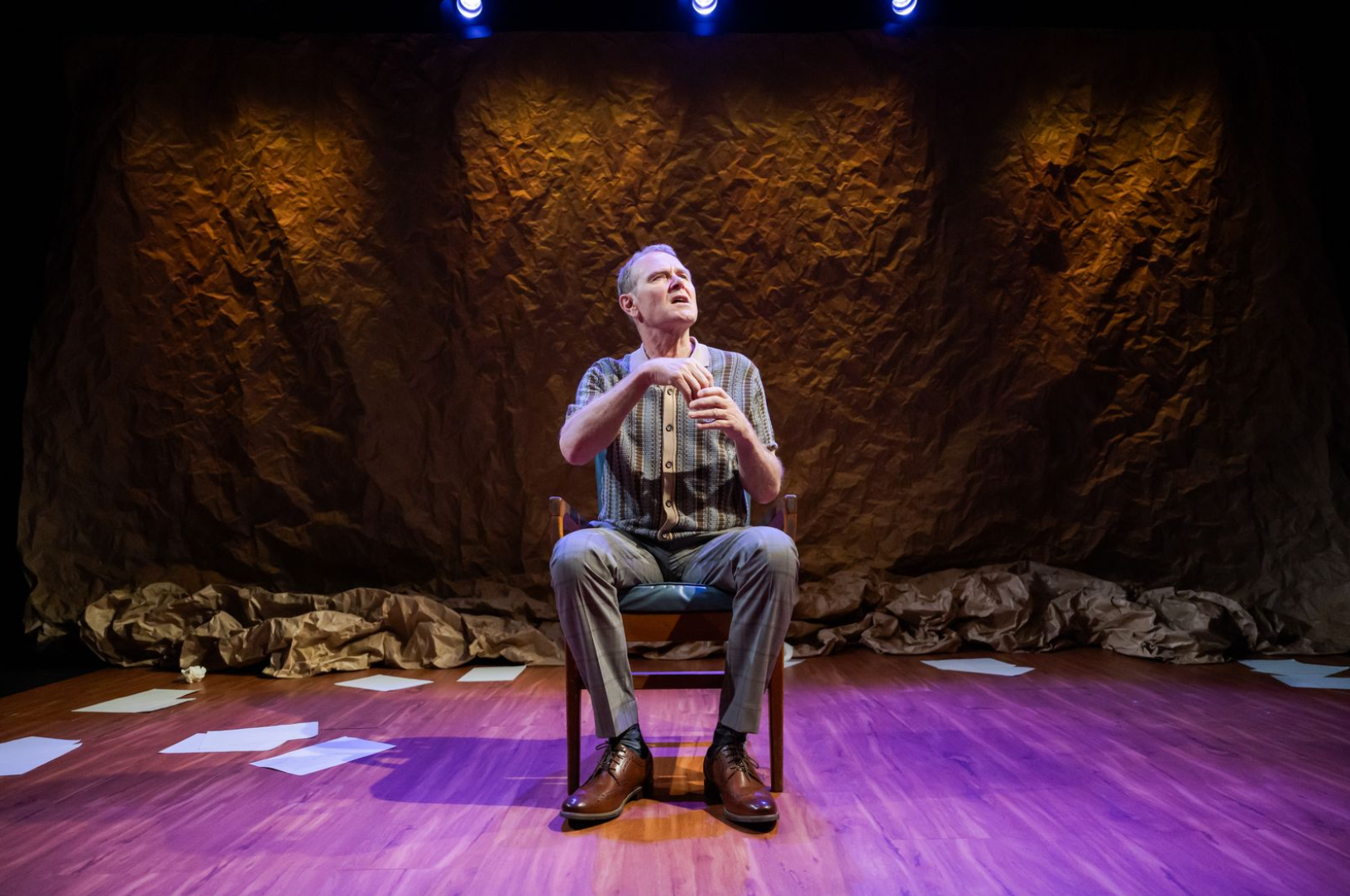
Photo credit: Stephen A'Court Photography
The final phase is the most powerful. Mason, now older, reflects on his life as an artist. He speaks about the frustrations of working in a country that often undervalues theatre. He acknowledges the playwrights who followed him. He praises the artistry within Māori culture. He questions the purpose of storytelling. He wonders what it means to be a New Zealander. These reflections feel as relevant today as they did when Mason wrote them. Lovatt delivers them with sincerity, sitting in the chair, speaking directly to the audience. It feels less like a performance and more like a conversation.
At several points, it is easy to forget that Lovatt is not Mason. His delivery is so natural, so textured, so full of lived experience, that the boundary between actor and playwright dissolves. The audience becomes part of Mason’s internal dialogue. The final moments are quiet, contemplative and deeply moving.
The double bill format enhances both plays. Golden Weather shows Mason’s mastery of childhood storytelling, his ability to capture innocence and loss. Guy Fawkes reveals his introspective side, his humour, his frustrations, his artistic philosophy. Together, they form a portrait of a playwright who shaped New Zealand theatre. Lovatt and Bosher honour Mason’s legacy without turning the plays into museum pieces. They feel alive, relevant and emotionally resonant.
The design team deserves recognition. Hakaraia’s set is minimal but evocative. Lynch’s lighting is precise and atmospheric. McLaney’s music supports the text without overshadowing it. The technical elements are understated, allowing Mason’s language and Lovatt’s performance to remain central.
The evening is long, but never slow. The two plays complement each other, offering different textures, different emotional tones, different perspectives. The audience leaves with a sense of having witnessed something rare. Not just two plays, but a dialogue between past and present, between childhood and adulthood, between art and memory.
Every Kind of Weather is a celebration of Bruce Mason’s legacy, but it is also a reminder of the power of solo performance. Lovatt’s work is extraordinary. Bosher’s direction is thoughtful and precise. The production is a gift to anyone who cares about New Zealand theatre.
THE END OF THE GOLDEN WEATHER plays in repertory with NOT CHRISTMAS, BUT GUY FAWKES from 23 July - 2 August 2026 at Auckland’s Q Theatre. Tickets are available here.
Review written by Alex Moulton
