HOME MADE
HOME MADE is presented in partnership with Te Pou Theatre and ONEONESIX, with support form Creative New Zealand, Foundation North and Auckland Council.
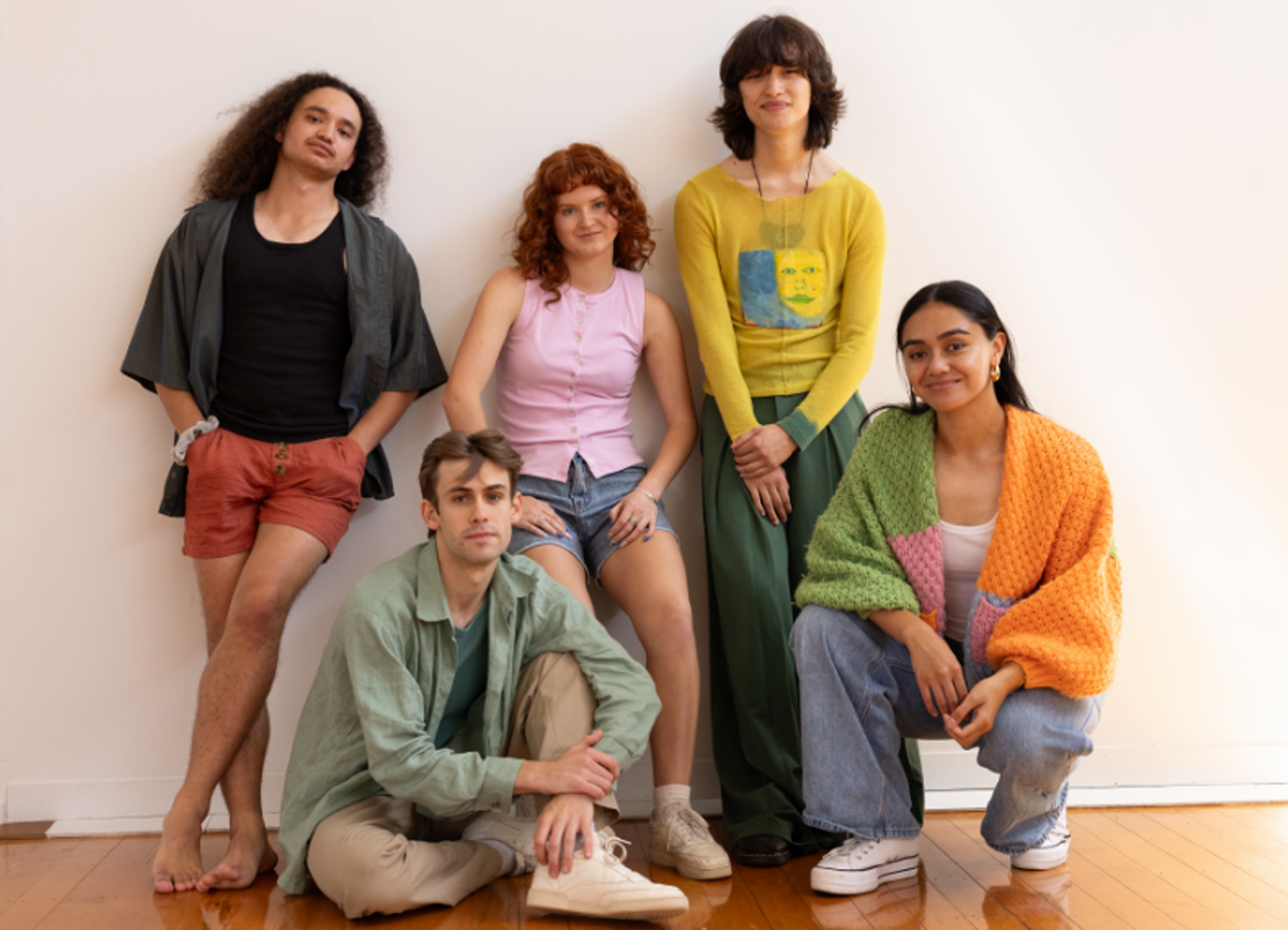
At its heart are five artists, each one with their own answer to what home looks, sounds, and feels like. Playful and heartfelt, the cast contemplate: Where does your heart live, and who does it call home?
HOME MADE, Massive Theatre Company’s newest work, arrives as a warm, generous reflection on belonging. It is presented in partnership with Te Pou Theatre and ONEONESIX, and it feels shaped by the spirit of collaboration. Five devising actors stand at the centre of the piece, each carrying their own memories, their own definitions of home, and their own emotional landscapes. What emerges is not a single story, but a constellation of them, woven together with care, humour and a quiet sense of courage.
The show opens simply. No props, no elaborate set, just a cluster of lampshades hanging overhead and a group of performers ready to speak. The absence of physical objects becomes a strength. It forces the audience to focus on the performers themselves, on their voices, their movement, their presence. The stage becomes a space shaped entirely by memory. The performers build homes out of gestures, out of shared glances, out of stories that flicker between joy and pain.
Director Denyce Su’a guides the ensemble with a light touch. The structure is loose but intentional. Each performer steps forward to share a personal piece, while the others shift around them, becoming supporting characters, emotional echoes or physical extensions of the story. The transitions are smooth, often connected by short bursts of choreography that act as bridges between memories, as the performers pass the baton between themselves. These movement sequences are gentle and fluid, suggesting the way memories drift and collide.
The lighting design by Jane Hakaraia plays a crucial role. Lamps brighten, dim, and change colour to signal emotional shifts, isolating a performer when a moment requires intimacy or flooding the stage when the ensemble moves as one. The lighting becomes a kind of narrator, guiding the audience toward the heart of each story. It is subtle, but deeply effective.
The stories themselves cover a wide range of experiences. Some are loud and chaotic, filled with family gatherings, childhood mischief or the noise of growing up in a busy household. Others are quiet, shaped by loneliness, loss or the ache of trying to find connection in unfamiliar places. The show moves between these tones with confidence, never lingering too long in one emotional register. It mirrors life in that way. Moments of heaviness are followed by moments of levity. A joke appears just when the audience needs it. A silence arrives just when the story demands space.
Māui Hitchens brings dramatic weight to the ensemble. His piece explores the reality of a fractured family and the need to rebuild identity when the foundation shifts. He performs with intensity, but also with vulnerability, allowing the audience to feel the rawness beneath the humour.
Manunui Rainey offers a quieter but playful presence. His story carries the flavour of rural life, shaped by whānau, land and cultural grounding. He brings a gentle sincerity that balances the more energetic sections of the show. His performance feels rooted, steady and deeply personal.
Tom Webster provides much of the comedic relief. His neurodivergent perspective is handled with honesty and warmth, often the punchline but never reduced it. He brings laughter, but also moments of reflection that catch the audience off guard. His timing is sharp, and his presence adds texture to the ensemble.
Phoebe Reyneau delivers one of the most affecting pieces. Her reflections on elder care, and the difference between how children and grandchildren perceive ageing, are tender and quietly devastating. She performs with restraint, allowing the emotional truth of her story to speak for itself. Her segment is one of the moments that lingers long after the show ends.
Tyla Tuala Vaimasenu’u carries the heaviest emotional load. Her piece grapples with loss and the fragility of life. She performs with openness, letting the audience see the weight she carries. Her story is not bleak, but it is honest, and it adds depth to the show’s exploration of what home means when the people who shaped it are no longer present.
Together, the ensemble creates a rhythm that feels organic. They support one another, stepping in and out of scenes with ease. Their choreography is not about technical perfection. It is about connection. They move as a group, then break apart, then come together again, mirroring the way relationships shift over time. The pacing is steady, and the energy never drops. Even the quiet moments feel alive.
The show’s thematic core revolves around the idea that home is not a single place. It is not defined by walls or geography. It is built from people, from memories, from the small rituals that anchor us. A cup of tea with a grandmother. A phone call from a mother when you are far away. A father wearing a Christmas gift with pride. These details appear throughout the performance, grounding the stories in everyday life. They remind the audience that home is often found in the smallest gestures.
The show also acknowledges that home can change. Families break. People move. Relationships shift. Loss arrives. But the performance insists that new homes can be created. Friends become family. Partners become anchors. Communities expand. The show celebrates diversity and openness, suggesting that belonging is something we build together, not something we inherit.
One of the most striking aspects of HOME MADE is how personal it feels. The performers are not acting. They are sharing. The honesty of their stories creates a sense of intimacy that draws the audience in. It is impossible not to see parts of yourself reflected in their experiences. The show becomes a mirror, inviting viewers to consider their own definitions of home.
The absence of props reinforces this intimacy. With nothing to hide behind, the performers rely entirely on their bodies and voices. They mime objects, create spaces with movement and use the lampshades as emotional markers. This simplicity allows the audience to focus on the performers’ expressions, their breath, their pauses. It is theatre stripped down to its essentials.
By the end, HOME MADE feels like a collective offering. It is a celebration of whānau, friendship, identity and resilience. It is a reminder that home is not static. It grows, it shifts, it expands. It is shaped by the people we love and the people we lose. It is shaped by the stories we carry.
Massive Theatre Company has created a piece that is heartfelt, thoughtful and quietly powerful. It is a love letter to belonging, performed with sincerity and crafted with care. It leaves the audience with a sense of warmth, and perhaps with a renewed appreciation for the homes they have built, and the homes they are still building.
Performances of HOME MADE run from 22-25 July 2026 at Henderson’s Te Pou Theatre. Purchase tickets here
Review written by Alex Moulton
