Free Fish (أسماك حرّة) (2025)
Screening as part of Doc Edge 2026
Filmed in Gaza during one of the deadliest years in recent history, the film follows two brothers, Mohammad and Ahmad Kaloob, separated by siege and displacement, yet bound by the sea.
Free Fish opens with a jolt. The natural rhythm of waves breaking against the shore is pierced by the crack of gunfire, a contrast so sharp it almost startles. That tension sets the tone for the entire short. It is a film built on opposites. Beauty and danger. Silence and violence. Hope and devastation. Life and the constant threat of death. From the first frame, the documentary makes it clear that these contradictions are inseparable in Gaza.
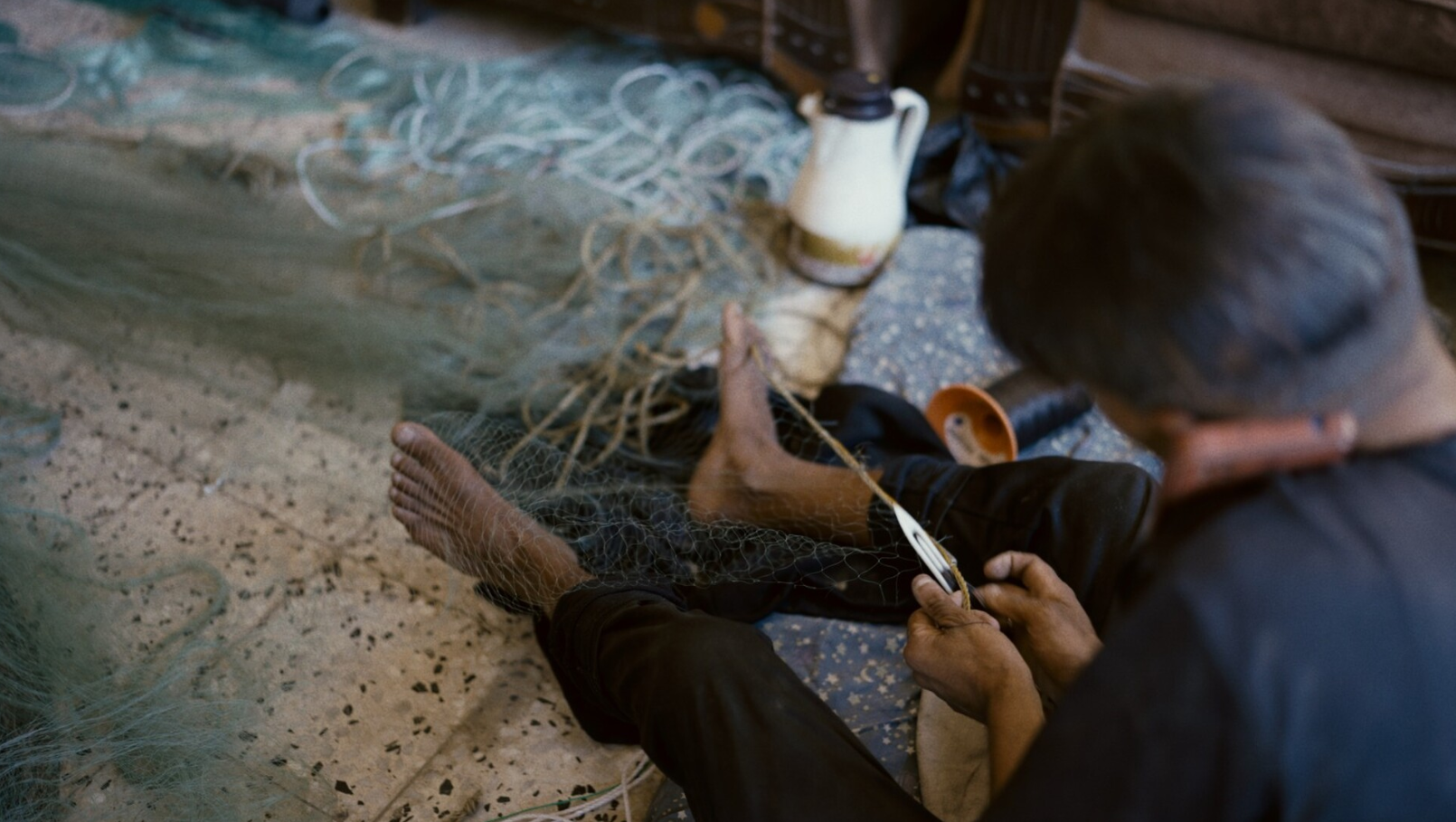
Visually, the film is striking. It leans heavily on shallow focus, isolating its subjects against blurred, indistinct backgrounds. This selective focus pulls the viewer’s eye exactly where the filmmaker wants it, creating images that feel intimate and almost fragile. The technique works beautifully here. It mirrors the emotional reality of the fishermen, whose world has narrowed to survival, family, and the sea. Everything else fades into a soft, unreachable blur.
At its heart, Free Fish is a love letter. A man’s love for the ocean, for the work that has defined generations, for the simple act of providing for his family. Even in the middle of a war, even when everything familiar has been stripped away, that love remains. The film never romanticises the situation, but it does honour the resilience required to keep going.
The scale of that resilience becomes clear as the documentary reveals the conditions Gaza’s fishermen face. With 4,500 people relying on the sea for food and income, the coastline is a lifeline. Yet the tools available are heartbreakingly improvised. Instead of a boat capable of carrying a tonne and a half of fish, some are forced to rely on a fridge door, or scraps of cork stitched into a mattress cover. These makeshift rafts are symbols of both desperation and determination. They float because they must.
And all of this unfolds under the threat of being shot by military forces patrolling the coast. The film does not sensationalise this danger. It simply presents it as a fact of daily life, which makes it even more chilling. The fishermen push out into the water not because they are reckless, but because they have no other choice. When everything has been taken from you, survival becomes an act of courage.
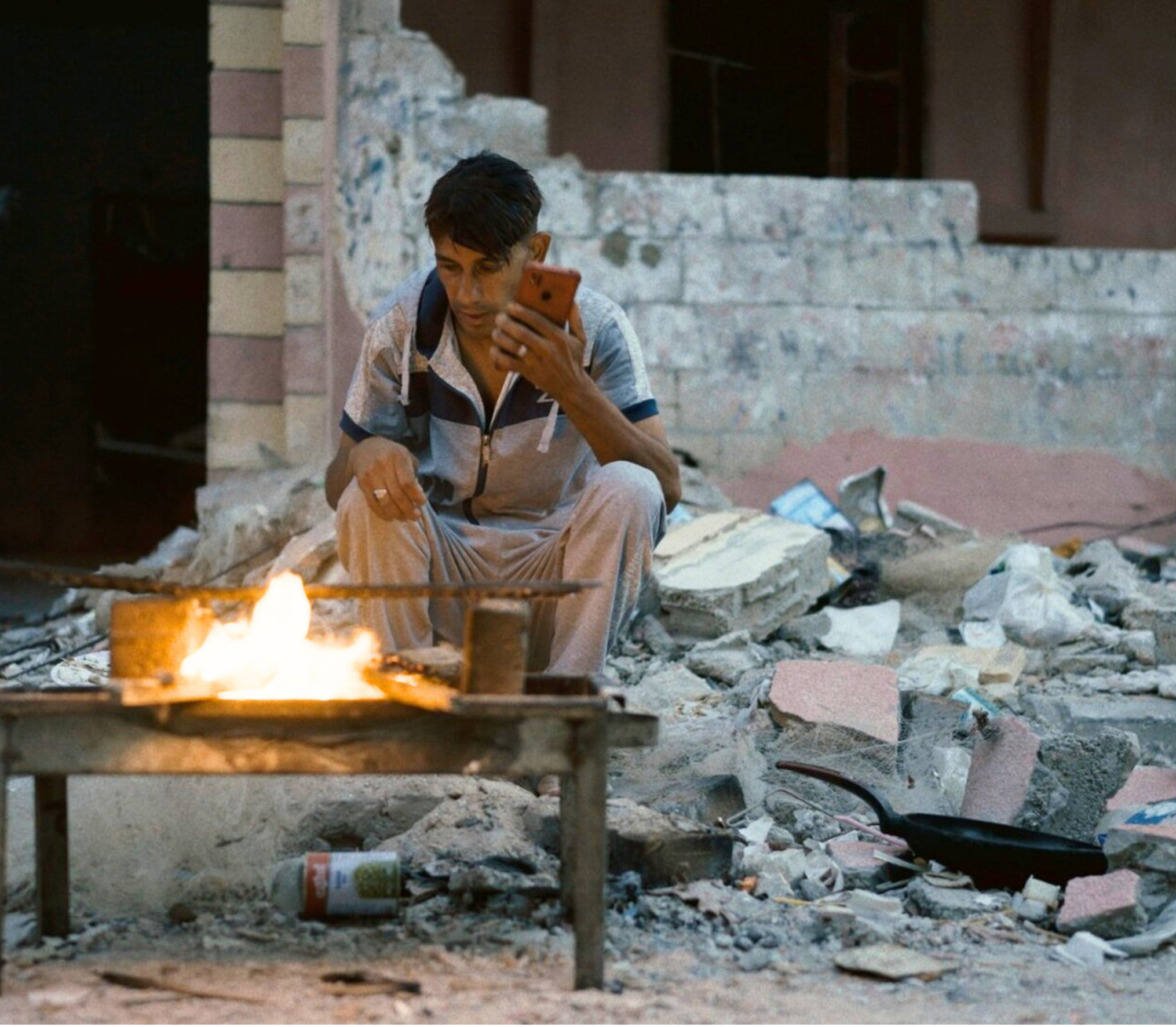
The documentary’s sense of contrast extends beyond the fishing scenes. The ruins of the city are quiet, almost hollow. Buildings stand half collapsed, streets are empty, and the silence feels heavy. Then the film cuts to the coastline, where life pulses with movement. Boats, rafts, nets, voices, waves. The sea is where the energy is, where people gather, where hope still flickers. Yet it is also where danger waits. The film captures this duality with clarity.
The cinematography does not shy away from beauty. The colour gradients are rich, the landscapes are stunning, and the water glows even in the midst of devastation. The filmmaker refuses to flatten Gaza into a single narrative of suffering. Instead, the film acknowledges the pain while also showing the life that persists around it. The beauty is not a contradiction. It is part of the truth.
One of the most powerful moments comes after the short itself ends. During the credits, the film shows footage of the Gaza seaport before the war. The difference is staggering. The abundance, the activity, the sense of normality. When compared to the meagre catches of the north and south waters today, the loss becomes even more pronounced. It is a quiet but devastating reminder of what has been taken.
Despite the heaviness of its subject, Free Fish is not a hopeless film. It is grounded in humanity. The fisherman at the centre of the story speaks through his actions, his persistence, and his connection to the sea. His love for the water, for the fish, for his family, and for his homeland is woven through every scene. The film never needs to state this outright. It is visible in every gesture.
The short is concise, direct, and emotionally resonant. It does not linger unnecessarily, but it leaves a strong impression. The contrasts it presents are not just visual. They are emotional, political, and deeply personal. The sea is both a refuge and a threat. The land is both home and ruin. The people are both exhausted and unbreakable.
Free Fish is a reminder that survival is not just about staying alive. It is about holding on to the things that make life meaningful, even when the world around you is falling apart.
Screening as part of Doc Edge 2026. Check out the films and screenings here
Review written by Alex Moulton
