In the Path of Giants (2025)
Screening as part of Doc Edge 2026
In 2017, Bangladesh opened its borders to nearly a million Rohingya fleeing violence in Myanmar. But the vast camp built to shelter the refugees cut off Bangladesh’s wild elephants from their last migratory corridor, causing them to rampage across farmland in their search for food. The result is a tense stand-off as Rohingya refugees, local Bengalis and Indigenous farmers are forced to contend with the elephants in a fight for land, survival and a place to call home.
In the Path of Giants is one of those documentaries that begins with a simple premise and slowly reveals itself to be far more layered, far more confronting, and far more heartbreaking than you expect. On the surface, it appears to be a film about human–elephant conflict in Bangladesh. But as it unfolds, it becomes clear that the elephants are only one part of a much larger, tangled story about displacement, inequality, political violence, and the unintended consequences of survival.
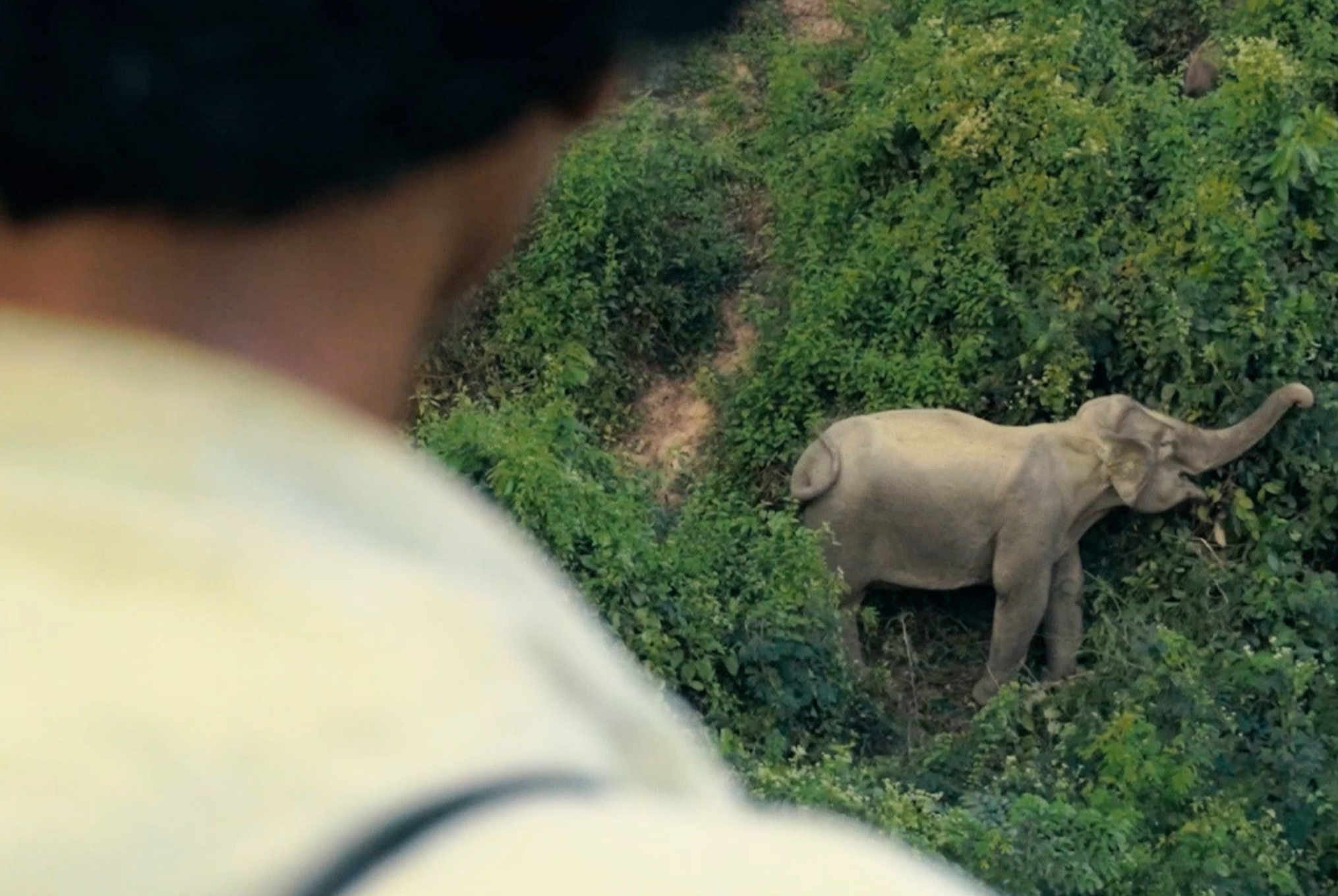
The film opens with a perspective that feels almost impossible to imagine for those of us who see elephants as majestic, endangered creatures. In the communities featured here, elephants are not symbols of wonder. They are a daily threat. They raid crops, destroy homes, and occasionally kill people. The documentary does not judge these communities for their fear. Instead, it invites us to sit with the discomfort of understanding that two truths can exist at once. Elephants are extraordinary animals, and they can also be dangerous neighbours.
But the film quickly makes it clear that this is not a simple story of wildlife encroaching on human land. The real issue is that the elephants have lost their land. Their ancient migration routes once stretched between Bangladesh and Myanmar, allowing them to travel long distances in search of food. An adult elephant needs around 150 kilograms of food a day. Migration is not optional. It is survival.
That survival has been disrupted by one of the largest refugee crises in the world.
The documentary traces the chain of events back to Myanmar, where decades of persecution, massacres, and military violence have forced more than a million Rohingya people to flee across the border into Bangladesh. The camps in Cox’s Bazar, now among the largest refugee settlements on the planet, sit directly on the elephants’ traditional migration paths. The elephants cannot cross back into Myanmar because of the border fence. They cannot move through the camps without risking deadly encounters with people. Their food sources have been cut off. They are starving, stressed, and increasingly desperate.
The film handles this with a sobering clarity. It does not blame the refugees. It does not blame the elephants. It shows how both groups are victims of the same root cause: violence in Myanmar. The Rohingya cannot return home because their villages have been burned, their families killed, and their safety destroyed. The elephants cannot migrate because the land they once travelled through is now filled with people who have nowhere else to go. It is a collision of tragedies.
The documentary also highlights the experiences of the indigenous Chakma people, who live in the surrounding areas and are often caught in the middle. They are not supposed to farm on government land, yet they have little choice because they lack equal rights and access to resources. When elephants destroy their crops, they receive no compensation. When they try to protect their livelihoods, they are criticised for harming wildlife. Their frustration is palpable, and the film gives them space to express it without judgement.
One of the most powerful aspects of In the Path of Giants is how it reframes the idea of “problem animals.” It shows that focusing on the elephants as the issue is a distraction. The real problem is the chain of political violence that pushed the Rohingya into Bangladesh. The real problem is the lack of international accountability for the massacres in Myanmar. The real problem is the absence of long‑term planning for both human and animal survival. The film argues, gently but firmly, that you cannot solve the human–elephant conflict by chasing elephants away. You solve it by addressing why they are there in the first place.
The documentary uses a mix of interviews, observational footage, and aerial shots to show the scale of the crisis. The camps stretch endlessly across the landscape. The border fence cuts through the forest like a scar. The elephants move in small, anxious groups, searching for food that is no longer there. The visuals are stunning, but they are also deeply unsettling. Beauty and tragedy sit side by side.
What makes the film so compelling is its refusal to simplify. It acknowledges the fear of farmers whose crops are destroyed. It acknowledges the desperation of refugees who do not want to be refugees. It acknowledges the suffering of elephants who are starving because their world has been taken from them. It acknowledges the political failures that created this situation. It acknowledges the racism and inequality that shape who receives help and who is ignored.
The film also explores the emotional toll on the communities that live with this conflict. People speak about sleepless nights, about losing their homes, about watching elephants kill neighbours or family members. Others speak about the guilt of harming animals they once respected. The documentary never sensationalises these stories. It presents them with a quiet, steady compassion.
One of the most striking themes is the idea of value. Who gets protected? Who gets compensated? Who gets ignored? The film shows how placing value on one group over another creates resentment, fear, and division. Conservationists want to protect elephants. Humanitarian groups want to protect refugees. Local communities want to protect their families. All of these desires are valid. All of them clash.
The documentary does not pretend there is an easy solution. Instead, it offers a lesson in root causes. If you want to stop elephants from entering human areas, you must restore their migration routes. If you want to restore their migration routes, you must allow refugees to return home. If you want refugees to return home, Myanmar must be safe. And Myanmar is not safe. Nineteen massacres in the last five years alone. Renewed conflict between the military and the Arakan Army. Entire villages destroyed. Entire communities erased.
It is a chain of suffering that began long before the elephants started stealing from the fields of Bangladesh.
By the end of In the Path of Giants, what stays with you is not just the plight of the elephants or the hardship of the refugees. It is the realisation that these crises are interconnected. You cannot pull on one thread without tugging at the others. The film is thoughtful, sobering, and deeply human. It asks us to look beyond the surface and consider the systems that create conflict. It asks us to care about people and animals without pitting them against each other. It asks us to imagine solutions that address the root, not just the symptoms.
It is a documentary that lingers, not because it offers hope, but because it offers understanding.
Screening as part of Doc Edge 2026. Check out the films and screenings here
Review written by Alex Moulton
