Modern Whore (2025)
Screening as part of Doc Edge 2026
Based on her book Modern Whore: A Memoir, Andrea Werhun portrays her past roles as escort Mary Ann, stripper Sophia, and an OnlyFans creator. Through a series of funny, raw and disarming encounters, Andrea explores intimacy, labour and identity, confronting how sex workers are seen and how they see themselves. This hybrid film pushes the conventional divide between documentary and fiction.
Modern Whore is one of the most visually striking and emotionally confident documentaries of late, and that confidence radiates entirely from its centre: Andrea Werhun. The film is built around her voice, her humour, her history, and her absolute command of the screen. It is a hybrid documentary that blends reenactment, memoir, interviews, and theatrical exaggeration, yet it never feels scattered. It holds together because Werhun holds it together. She knows exactly what she wants to say, and she knows exactly how she wants to say it.
Based on her memoir Modern Whore: A Memoir, the film traces Werhun’s experiences as an escort, a stripper, and later a creator navigating online platforms. But this is not a trauma‑driven exposé or a moralistic cautionary tale. It is a portrait of labour, identity, and performance told by someone who refuses to be flattened into a stereotype. Werhun is a writer, an artist, an activist, and a sex worker, and the film embraces all of these identities without apology.
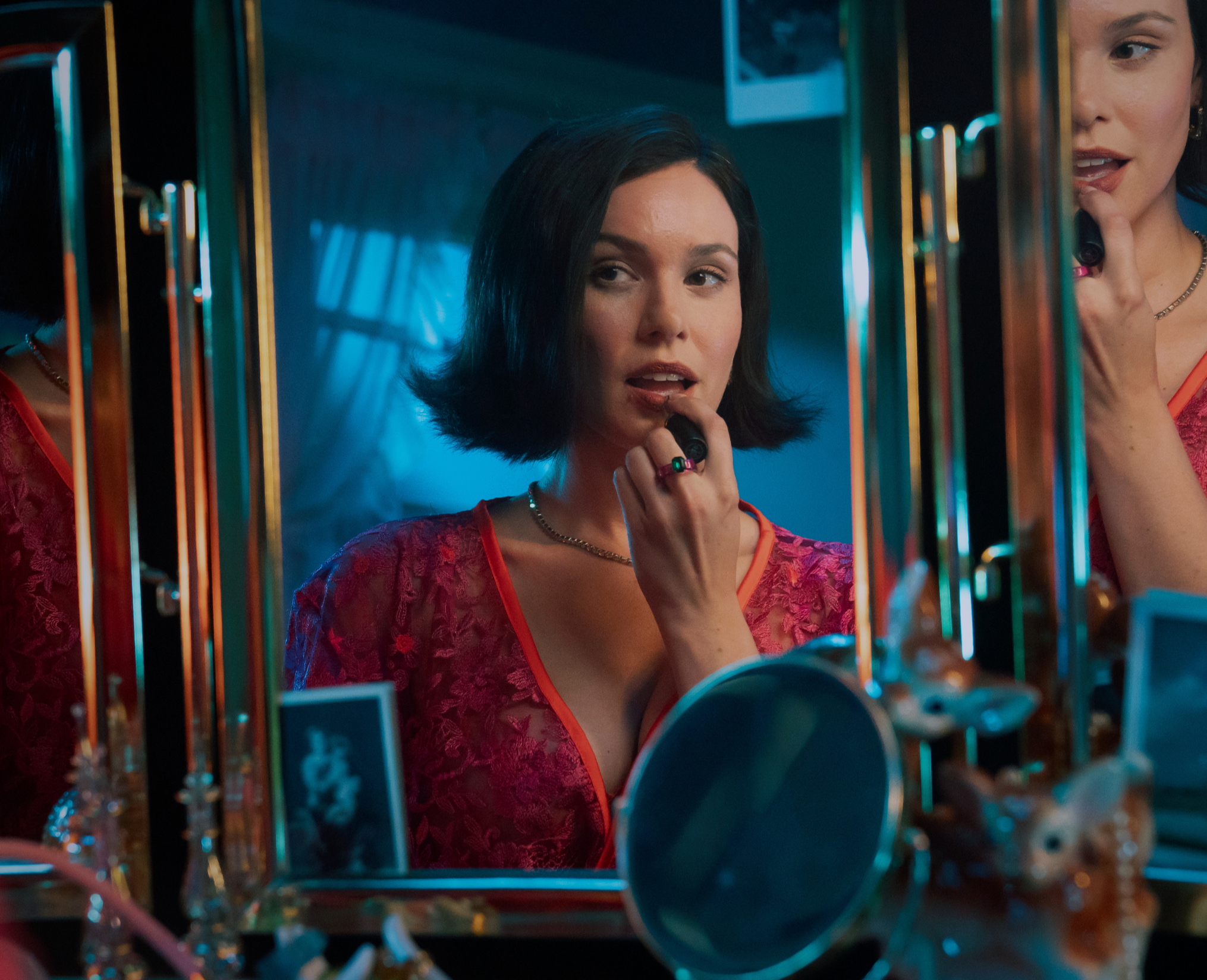
Director Nicole Bazuin leans into a bold visual style that feels like a Technicolour dream. Saturated colours, vintage costumes, and playful genre homages create a world that is both theatrical and deeply personal. The reenactments of Werhun’s stories are staged like scenes from a 1950s sex comedy, complete with exaggerated lighting and campy set design. It is intentionally goofy at times, intentionally glamorous at others, and always self‑aware. The aesthetic is not decoration. It is a tool. It disarms the viewer, poking fun at the public imagination of sex work before peeling back the layers to reveal the real people behind the caricatures.
Werhun’s confidence is the anchor. She narrates, performs, reenacts, and interviews with a clarity that makes the film feel alive. She embodies her past personas with theatrical flair, then shifts into grounded, vulnerable conversations that reveal the emotional complexity beneath the performance. She even personifies her inner critic, a character she calls Shame, giving form to the internalised stigma that shadows so many sex workers. These moments are funny, sharp, and unexpectedly moving.
The documentary is strongest when it expands beyond Werhun’s individual story to include the voices of other sex workers. Vu, SJ Raphael, Kitoko Mai, and Robin Banks join her around a table to share experiences, frustrations, and insights. Their presence widens the film’s perspective, acknowledging that sex work is not a monolith. They discuss gender presentation, racial bias, safety, and the economic realities that shape their choices. Werhun is clear about her own privilege as a white, cisgender, conventionally feminine woman, and she brings in others to complicate and enrich the narrative. These conversations are some of the most compelling in the film. They are honest, funny, and deeply human.
The film also explores the emotional labour of sex work. Werhun talks about clients who fall in love, clients who want to hear about trauma, and clients who cross boundaries. She discusses the concept of “trauma porn,” the expectation that sex workers must present themselves as victims in order to be taken seriously. The documentary pushes back against that narrative. It acknowledges harm without reducing the entire profession to suffering. It acknowledges empowerment without pretending the work is easy or safe. It holds space for contradiction, which is rare in films about sex work.
The reenactments are where the film’s visual creativity shines. Werhun plays multiple versions of herself, slipping between personas with ease. The costumes are outrageous in the best way. The lighting is bold. The editing is quick and playful. These sequences are not meant to be realistic. They are meant to reflect the performance inherent in sex work, the roles that workers adopt, and the fantasies that clients project onto them. The style is loud, but the message is subtle: sex work is labour, and labour often requires performance.
Between the stylised scenes, the documentary grounds itself with quieter moments. Werhun sits with her mother, discussing the realities of her job. She talks with her long‑term partner, revealing the emotional negotiations that come with loving someone whose work is so misunderstood. She interviews a former client, offering a rare glimpse into the dynamics of intimacy and transaction. These scenes are tender and disarming. They show Werhun not as a character but as a person, and they show the people around her as complex individuals navigating love, fear, and acceptance.
The film also makes a clear argument for the decriminalisation of sex work. Werhun speaks with the conviction of someone who has lived the consequences of stigma. She discusses safety, autonomy, and the harm caused by laws that push workers into dangerous situations. The film does not lecture. It simply presents the lived experiences of people who know the industry from the inside. Their stories speak for themselves.
What makes Modern Whore so engaging is its balance of humour and honesty. It is funny, but never flippant. It is serious, but never dour. It is stylish, but never shallow. The tone shifts effortlessly between camp and sincerity, between satire and vulnerability. The pacing is tight, the transitions between formats are smooth, and the film never overstays its welcome. It is a documentary that knows exactly what it wants to be.
Visually, it is one of the most distinctive films of the year. The colours pop. The costumes sparkle. The fonts, the framing, and the editing choices all contribute to a cohesive aesthetic that feels both nostalgic and fresh. It is a film that understands the power of style, and it uses that power to challenge assumptions rather than reinforce them.
Emotionally, it is captivating. Werhun’s presence is magnetic. She is articulate, funny, and unafraid to be vulnerable. She carries the film with ease, but she also knows when to step back and let others speak. Her confidence is not arrogance. It is clarity. She knows her story matters, and she knows how to tell it.
Modern Whore succeeds because it refuses to flatten its subject. It shows sex workers as artists, students, partners, friends, and people with dreams and flaws. It shows the industry as complex, contradictory, and deeply human. It shows that stigma is not just an idea. It is a force that shapes lives.
This is a documentary that entertains, educates, and challenges. It is visually bold, emotionally rich, and anchored by a performer who understands the power of owning her story. It is a celebration of agency, a critique of stigma, and a reminder that people are always more than the labels placed upon them.
Screening as part of Doc Edge 2026. Check out the films and screenings here
Review written by Alex Moulton
