The War Below: Restoring Hope in the Solomon Islands (2026)
Screening as part of Doc Edge 2026
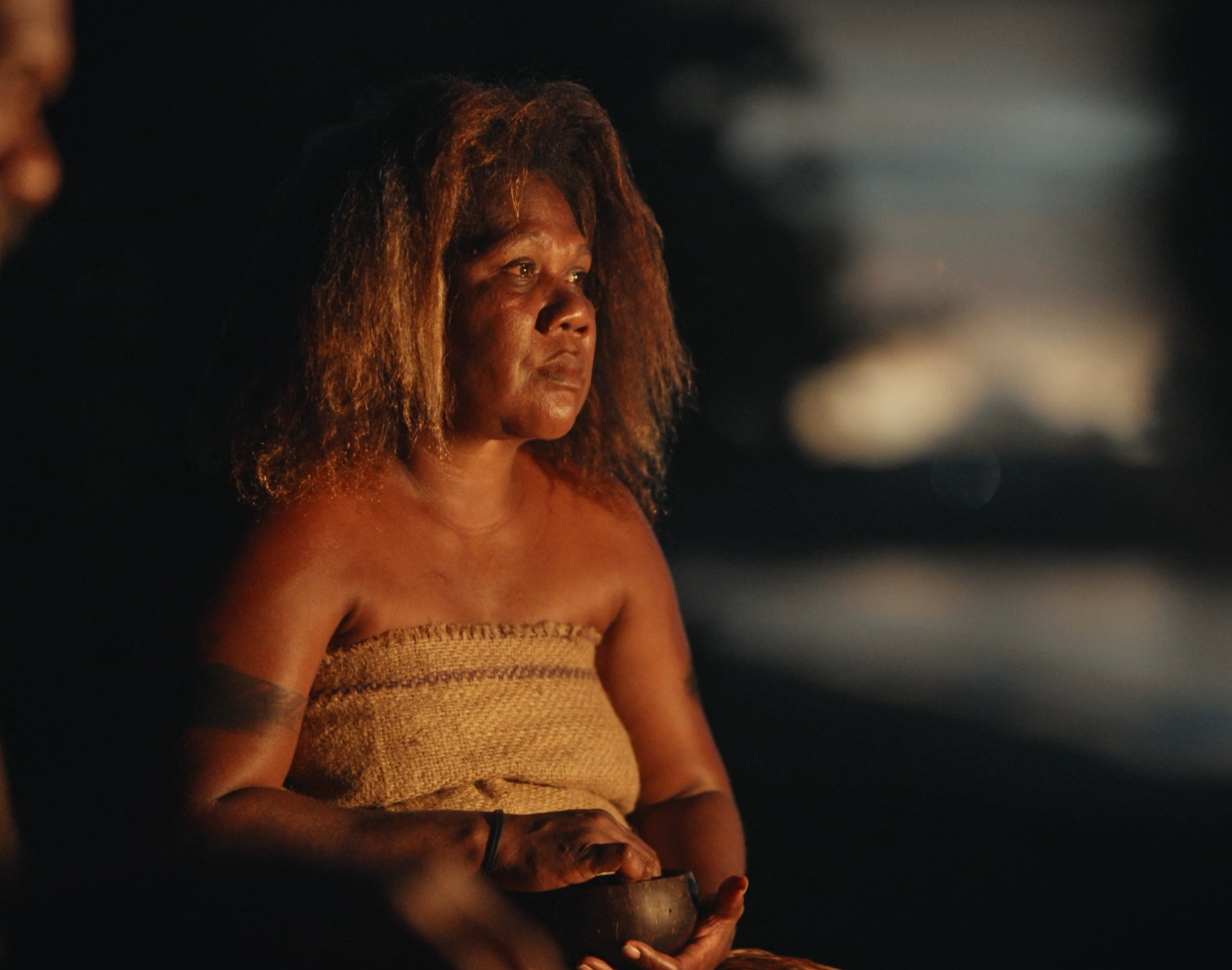
In the Solomon Islands, thousands of unexploded WWII bombs remain under homes and schools. 80 years after the war, bombs continue to kill and injure families. Lorettalyn lives with severe injuries from a blast that killed her husband and young son, now raising her remaining children while navigating long-term physical and economic hardship. Maeverlyn, who survived a separate explosion that severely injured her and killed members of her community, establishes Bomb Free Solomon Islands – a survivor-led organisation advocating for awareness, support, and long-term solutions to the ongoing threat.
The War Below: Restoring Hope in the Solomon Islands is one of those documentaries that grabs you immediately and refuses to let go. It opens with a dramatic, almost cinematic introduction that feels like the start of a war film. Explosions, maps, archival footage, and the ominous reminder that beneath the lush beauty of the Solomon Islands lies a hidden danger. Then the film cuts sharply into real life. The shift is jarring in the best way. Suddenly you are face to face with survivors whose bodies and lives have been reshaped by something most of the world has forgotten.
The documentary follows several families and community leaders living with the ongoing threat of unexploded ordnance left behind after World War II. Eighty years after the battles between Japanese and Allied forces tore through the islands, thousands of bombs remain buried under homes, gardens, schools, and roads. The war ended, but the danger never left.
One of the central voices is Lorettalyn, who survived an explosion that killed her husband and young son. Her injuries are severe and permanent. She speaks openly about the pain, the frustration, and the daily limitations she now faces. The film does not sensationalise her suffering. It simply lets her tell her story, and that honesty hits harder than any dramatic reenactment ever could. Her strength is undeniable, but so is the cost she carries.
Another key figure is Maeverlyn, a survivor of a separate blast that killed members of her community. Instead of retreating into grief, she founded Bomb Free Solomon Islands, a survivor‑led organisation advocating for awareness, support, and long‑term solutions. Her presence in the film is powerful. She is calm, articulate, and determined. She refuses to let the world forget what is happening in her homeland.
The documentary blends personal testimony with historical context. It explains how the Solomon Islands became one of the most intense battlegrounds of the Pacific war. American and Japanese forces left behind enormous stockpiles of ammunition, much of it buried or abandoned when the war ended. The film uses simple visualisations, including toy soldiers and maps, to illustrate the scale of the conflict. It is surprisingly effective. The contrast between these small, almost childlike props and the deadly reality they represent adds a layer of unsettling irony.
One of the most shocking revelations is how little responsibility the governments involved have taken. The United States and Japan have offered no meaningful support. The Solomon Islands government, under‑resourced and overwhelmed, cannot manage the crisis alone. Meanwhile, the bombs continue to deteriorate, becoming more unstable with each passing year. Expanding populations push into new areas, increasing the likelihood of accidental encounters. The danger is growing, not shrinking.
The film highlights the work of the HALO Trust, an organisation surveying land and identifying unexploded ordnance. Watching their process is fascinating. They move slowly, methodically, scanning the earth for hidden threats. They find thousands of rounds, yet it is only a fraction of what remains underground. The scale is almost impossible to comprehend.
One of the most disturbing sequences involves a school where more than two hundred bombs were found. Two hundred. The school had to shut down because it could not afford the excavation required to make the grounds safe. Children were left without classrooms because of a war that ended decades before they were born. It is horrifying, and the documentary does not soften the blow.
The film also explores the economic and social impact on families. Injuries lead to disability. Disability leads to unemployment. Unemployment leads to children being pulled out of school. Medical costs pile up. Entire communities are trapped in cycles of hardship caused by weapons that should never have been left behind. The emotional toll is immense. The physical toll is even greater.
Despite the heaviness of the subject, the documentary is incredibly engaging. It is paced well, visually strong, and emotionally grounded. The survivors are compelling, the landscapes are beautiful, and the stakes are painfully real. The film never feels exploitative. It feels like a plea for justice, a call for accountability, and a reminder that the consequences of war do not end when the fighting stops.
What stands out most is the sense of urgency. This is not a historical documentary. It is a present‑day crisis. People are still dying. Children are still being injured. Families are still grieving. The film makes you want to help because it shows you exactly what is at risk. It shows you the faces of those who are living with the aftermath of a conflict they had no part in.
The final act of the documentary focuses on hope. Not naive hope, but the kind built through community action, advocacy, and resilience. Maeverlyn’s organisation is growing. Survivors are finding strength in each other. International groups are slowly paying attention. The film does not pretend that the problem is close to being solved, but it does show that change is possible when people refuse to stay silent.
The War Below: Restoring Hope in the Solomon Islands is a powerful, painful, and deeply human film. It exposes a hidden legacy of World War II that most of the world has never heard about. It honours the survivors without pitying them. It demands accountability without preaching. And it leaves you with a sense of responsibility. Once you know what is happening, you cannot unknow it.
This is one of the most affecting documentaries of the year. It is beautifully made, emotionally resonant, and socially urgent. It is a reminder that history is not just something we read about. It is something people live with.
Screening as part of Doc Edge 2026. Check out the films and screenings here
Review written by Alex Moulton
