Middle-earth is at war. Five years have passed since the fall of Eregion. Sauron’s armies have marched across the whole of the world, conquering all in their path. Only a few isolated pockets stand between the Dark Lord and total victory – Khazad-düm, where the Dwarves are now sealed deep within their mountain halls, and the elven realms of Lindon and Rivendell, which are protected by their Three Rings. But deep in the land of Mordor, in his newly completed tower of Barad-dûr, the Dark Lord toils day and night, obsessed with harnessing a power that will bring the last of his enemies to their knees: One Ring to rule them all... Now, all the free peoples of Middle-earth – Dwarves, Elves, Men, and Wizards alike – must find a way to come together, in a race against time to prevent Sauron from achieving his goal of utter domination of all life…
There comes a point in every sprawling fantasy epic where years of world-building either begin to pay off or start feeling like an exercise in patience. Through its first six episodes, The Lord of the Rings: The Rings of Power finally finds itself on the right side of that equation. After two seasons spent establishing kingdoms, introducing key players and laying the foundations for conflicts yet to come, Season Three emerges as the most assured and dramatically engaging chapter of the series so far, delivering a story that feels less concerned with preparation and more focused on consequence.
One of the most noticeable shifts is the confidence with which the season approaches its storytelling. Where the first season often felt burdened by the enormity of its task, introducing audiences to numerous corners of Middle-earth while balancing a vast ensemble cast, Season Three benefits enormously from having already completed much of that groundwork. The result is a narrative that feels purposeful from the outset. Rather than asking viewers to invest in future possibilities, the series finally begins cashing in on the narrative investments it has spent years making.
The sense of momentum is impossible to ignore. Earlier seasons were occasionally criticised for meandering between storylines or lingering too long within individual plot threads. Here, the various narratives feel interconnected in a way that strengthens the entire production. Every kingdom, every faction and every major character appears to be moving toward the same looming conflict, giving the season a cohesion that previous instalments sometimes lacked. While the scale remains immense, the storytelling itself feels tighter, allowing the audience to appreciate the breadth of Middle-earth without becoming lost within it.
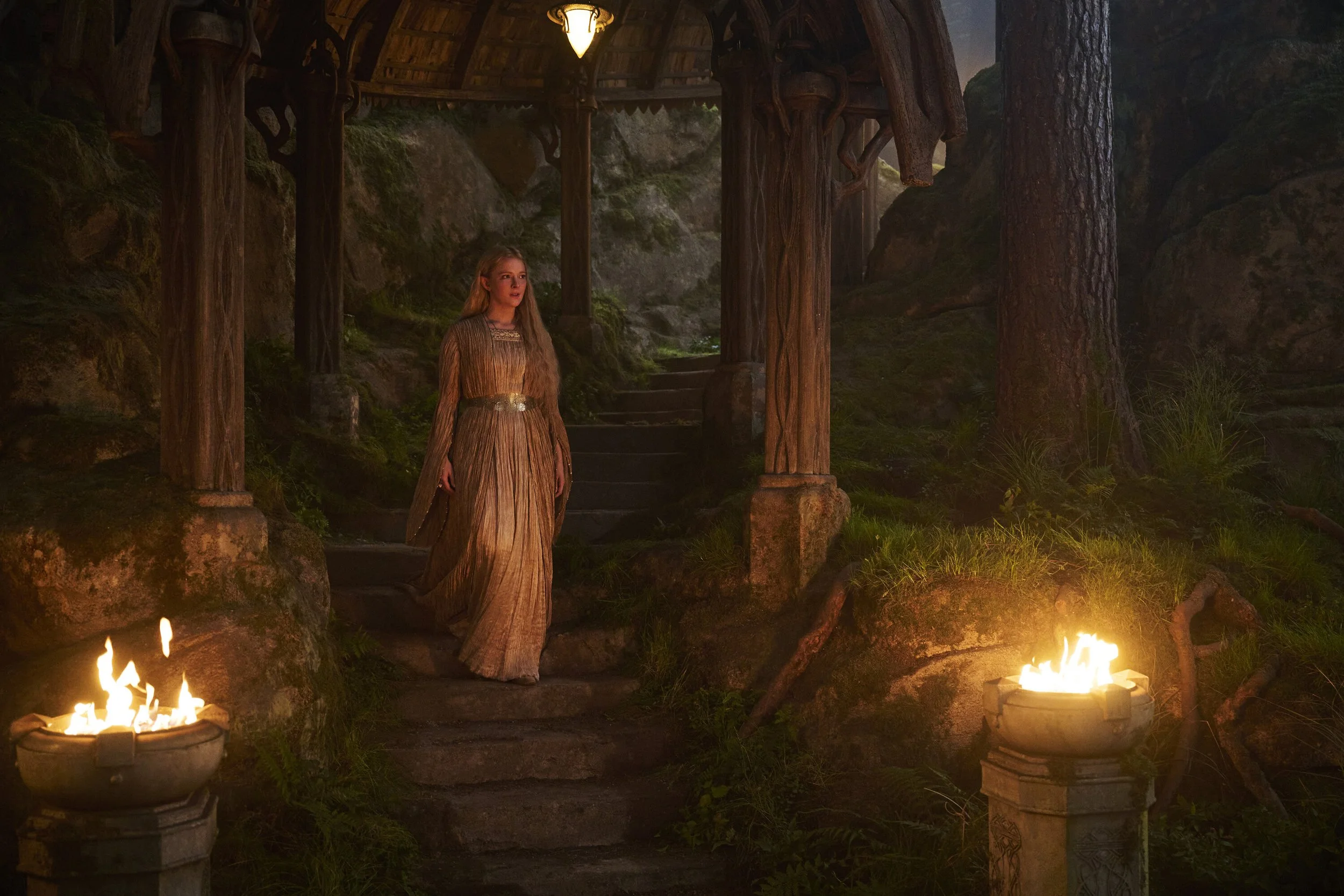
The writing reflects that improvement. Dialogue is more focused, character motivations are more clearly defined, and episodes do a better job of advancing both individual arcs and the larger narrative simultaneously. The scripts demonstrate a growing willingness to trust the audience's familiarity with the world. Exposition is far less intrusive than it once was, allowing relationships, decisions and moments of tension to develop more organically. As a result, the emotional beats land with greater impact because they emerge naturally from characters audiences have now spent years getting to know.
Perhaps the season's greatest asset remains its cast. Charlie Vickers continues to be exceptional, delivering a portrayal of Sauron that balances intelligence, menace and an almost magnetic charisma. His performance has evolved significantly across the series, and Season Three demonstrates just how important he has become to its success. Rather than functioning as a distant presence, Sauron now exerts influence over every corner of the story. Even scenes in which he does not appear often feel shaped by the consequences of his actions, giving the character a presence that extends far beyond screen time.
Morfydd Clark remains one of the emotional anchors of the series. Her interpretation of Galadriel has matured considerably over the course of the show, and this season benefits from a performance that feels more nuanced and grounded than ever. Robert Aramayo continues to bring warmth and gravitas to Elrond, while the supporting ensemble consistently rises to the challenge of juggling multiple storylines spread across an enormous world. The strength of these performances is particularly important given the scale of the production. Amid armies, kingdoms and world-altering stakes, the cast ensures the story remains fundamentally personal.
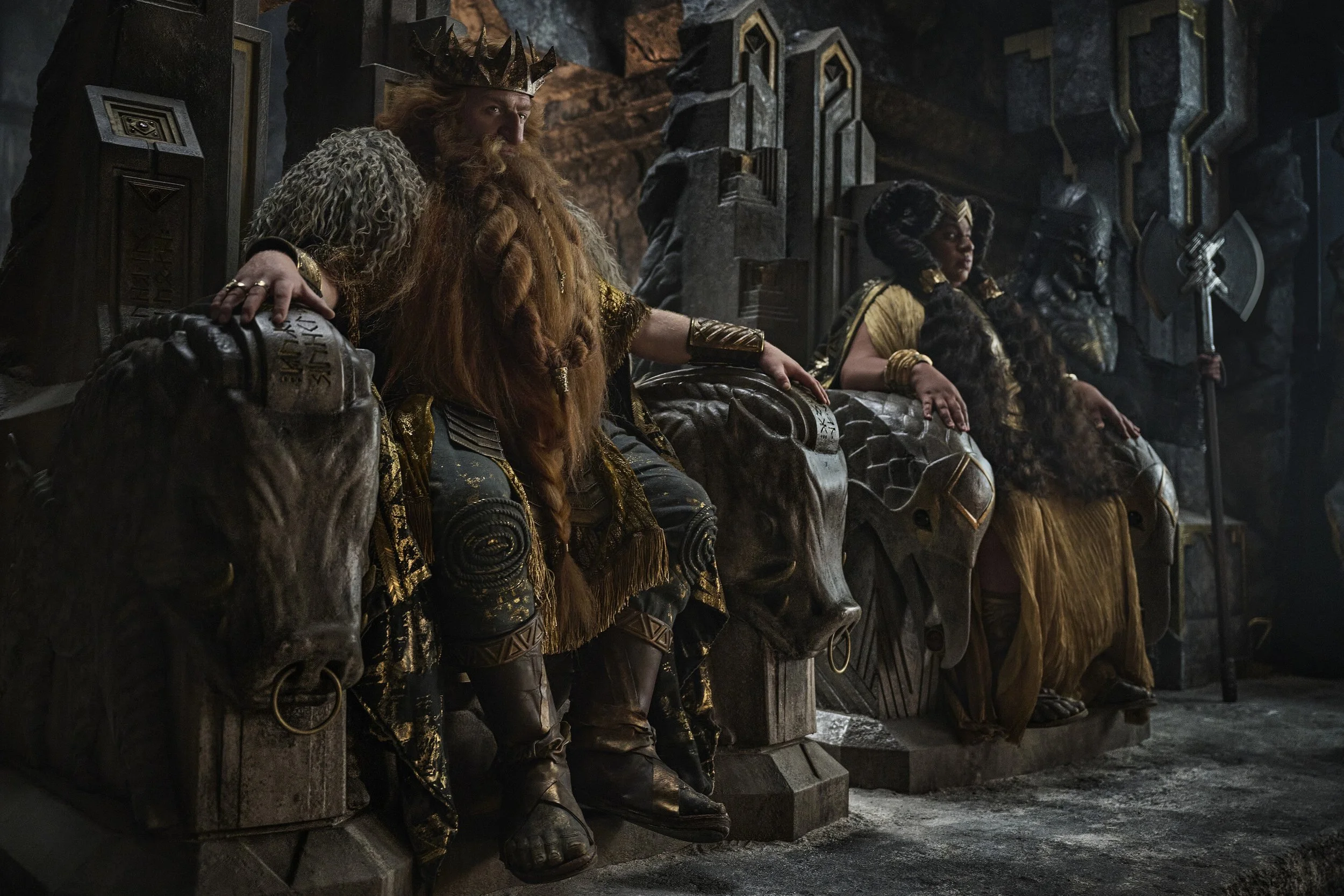
The dwarven storylines continue to stand among the show's strongest elements. There is a humanity and emotional immediacy to these scenes that often provides a welcome contrast to the grander political manoeuvring elsewhere. Family tensions, questions of leadership and cultural identity are explored with a level of care that gives these sequences genuine dramatic weight. While the series has sometimes struggled to balance spectacle and character, the material centred around the dwarves consistently manages to achieve both.
Visually, The Rings of Power remains one of the most impressive television productions ever mounted. However, what distinguishes Season Three from its predecessors is that the visual splendour now feels fully integrated into the storytelling. In earlier seasons, there were times when the breathtaking imagery threatened to overshadow the narrative itself. Here, the stunning cinematography, intricate production design and extraordinary costume work enhance the drama rather than distracting from it. Whether depicting sprawling landscapes, towering cities or intimate character moments, the visual language of the series feels more purposeful and refined.
The directing also deserves considerable credit. The season demonstrates a stronger understanding of when to embrace spectacle and when to step back. Large-scale sequences are undeniably impressive, but many of the most effective moments are surprisingly restrained. Conversations are allowed room to breathe, performances are given space to unfold, and emotional tension is frequently prioritised over sheer visual excess. It is a sign of a production increasingly comfortable in its own identity.
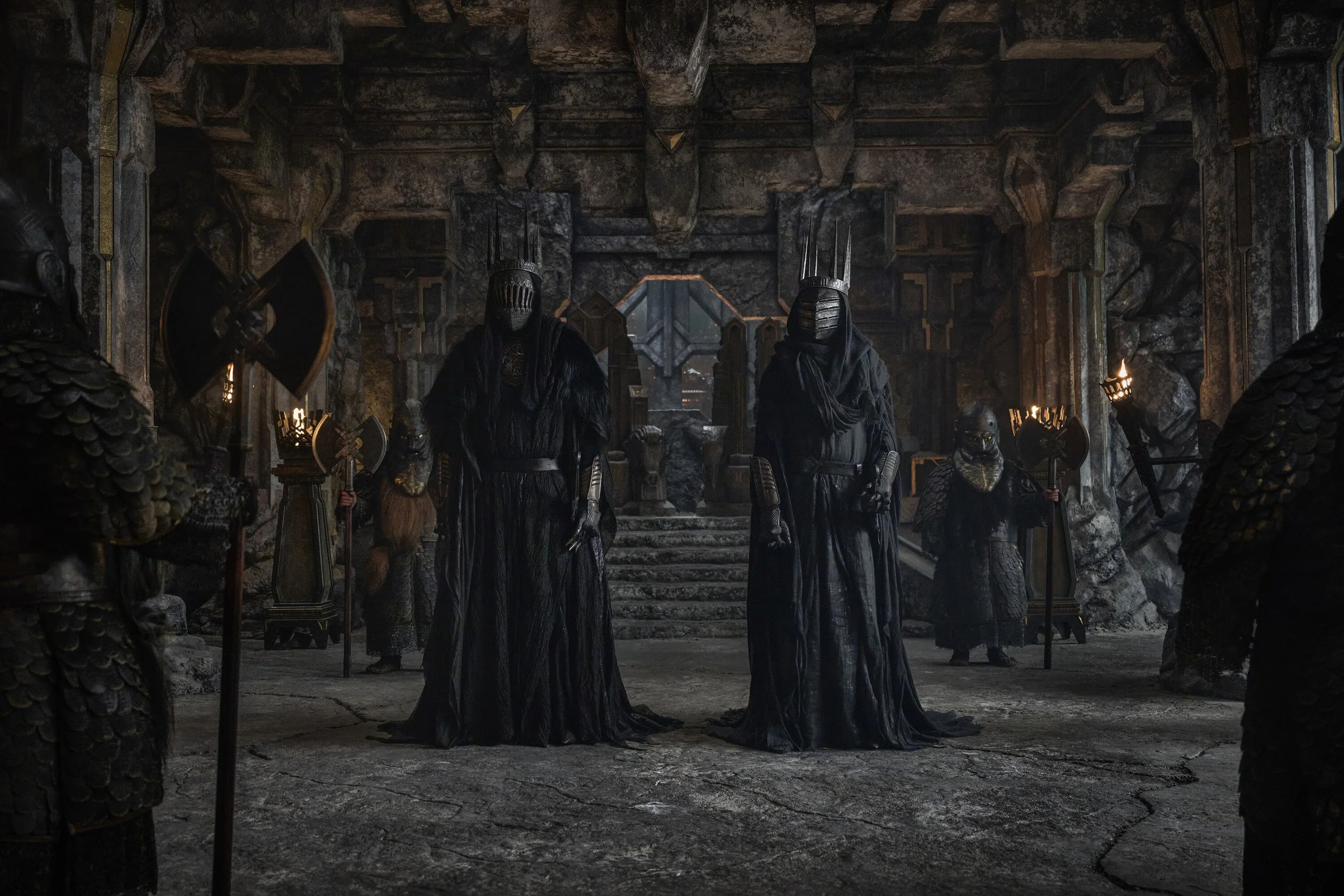
What is particularly impressive is how successfully the series now embraces the unique strengths of long-form television. Comparisons to Peter Jackson's film trilogy were perhaps inevitable when the series first launched, but Season Three increasingly feels like its own creative entity. Rather than attempting to replicate the pacing or structure of the films, the show leans into the opportunities afforded by its extended format. Political developments, personal relationships and cultural conflicts are given the time necessary to resonate, resulting in a richer and more layered interpretation of Middle-earth.
This is not to suggest the season is flawless. The ensemble remains enormous, and some storylines inevitably prove more compelling than others. Certain characters still receive less attention than they perhaps deserve, and the sheer scale of the narrative occasionally creates minor pacing imbalances. Yet these issues feel significantly less pronounced than they did in previous seasons because the overarching story now provides a clear sense of direction.
Through six episodes, The Lord of the Rings: The Rings of Power presents a series that has finally found its footing. The world-building of Season One and the escalating tensions of Season Two now combine to create a chapter that feels more focused, more emotionally engaging and more dramatically satisfying than anything that has come before. The final verdict will depend on how successfully the remaining episodes conclude the journey, but based on the season to date, The Rings of Power has never been more compelling. After years of laying the groundwork, the series is finally delivering the grand fantasy saga it always promised to be.
All sixteen episodes of the first two seasons are available to stream exclusively on Prime Video in more than 240 countries and territories in multiple languages. The final two episodes of the season, Episodes 307-308, premiere globally on Prime Video on Tuesday, November 24, 2026.
Review written by Alex Moulton
