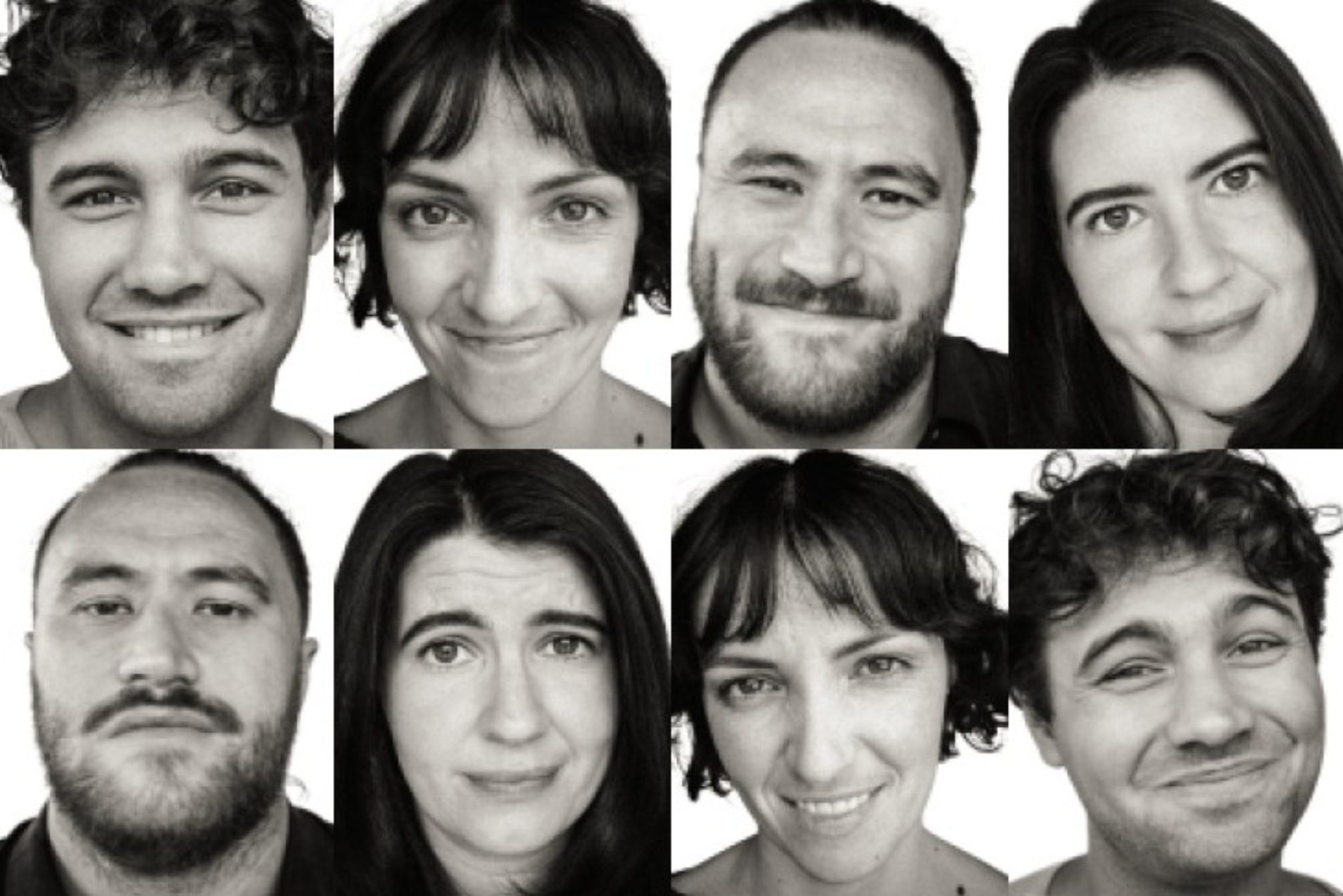
All You Had Was Fun is presented by Smoke Labours Productions
Four friends hang out. Someone brings pizza. Someone brings wine. Someone isn’t there. They’re grieving. Or remembering. Or avoiding the subject entirely. Then the night happens again. Same room. Same setup. Same four people. Different point in time. Something has shifted. Or maybe it hasn’t.
Sam Brooks’ All You Had Was Fun begins with an image so deceptively ordinary that it almost dares the audience to underestimate it. Four friends gather in a room. Pizza arrives. Wine is poured. Conversation drifts. Someone important is conspicuously absent. Then the evening begins again. The same room. The same people. The same broad shape of events. Yet every repetition reveals another fracture line running beneath the surface. What initially resembles a naturalistic portrait of friendship gradually unfolds into something far stranger and more affecting: an intricate meditation on grief, memory, identity, and the roles people inherit within their closest relationships.
Brooks has long built work around the complexities of human connection, and while All You Had Was Fun continues that interest, it shifts the focus away from romantic relationships and onto friendship itself. The result is a work less interested in dramatic revelations than in the subtle ways people construct themselves around one another over time. The absent figure at the centre of the story functions almost like a gravitational force, shaping every interaction without ever needing to dominate the narrative. Rather than asking what happened, Brooks asks what remains. How do people continue when one member of a social ecosystem has been removed? How do memories become contested territory? And how much of our own identity is quietly entangled with those around us?
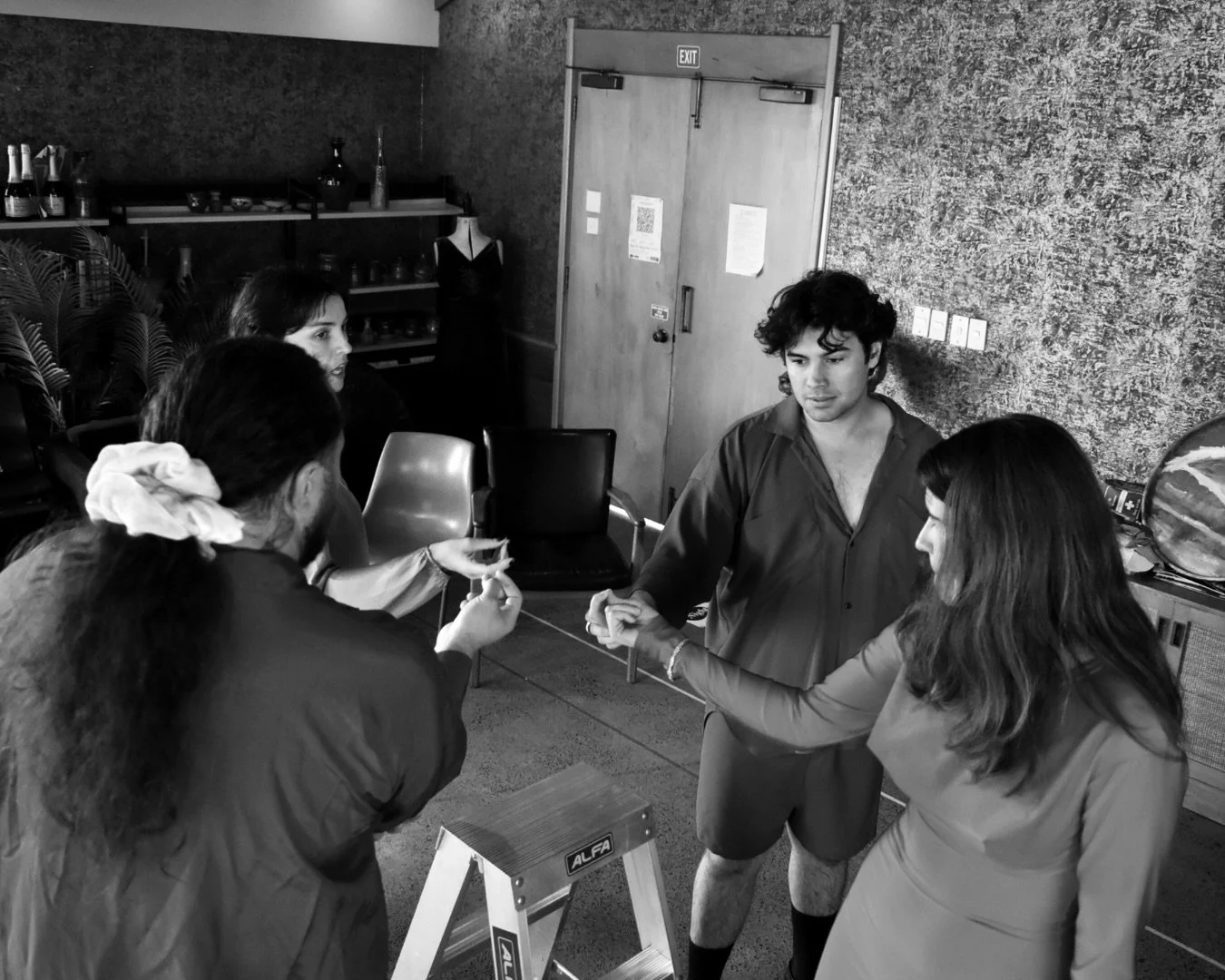
Photo credit: Nomuna Amarbat
The play’s structure is both its greatest challenge and its greatest strength. Repeated gatherings unfold across different points in time, forcing the audience to become active participants rather than passive observers. Brooks has spoken of wanting audiences to engage with a work rather than simply receive it, and that philosophy is embedded throughout every aspect of this production. Details emerge gradually. Meanings shift retrospectively. Conversations that initially seem casual gain weight as new context arrives. Every return to the room encourages the audience to reassess what they thought they previously understood. Remarkably, despite running for well over two hours, the production never feels remotely overlong. The constant process of piecing together relationships, tracking shifting perspectives, and interrogating the play’s many ambiguities creates an unusually active viewing experience. Rather than becoming aware of the clock, the audience remains busy searching for answers, and the evening seems to pass with surprising speed.
That sense of active engagement is amplified by an exceptional spatial design that completely transforms Q Theatre’s Vault. The room becomes a stark square chamber, with seating banks positioned in four corners facing inward towards a solitary table at the centre. Pathways cut between these audience sections, allowing performers to move not only through the central playing area but throughout the entire room. No audience member can possibly see everything from a single position. Focus shifts constantly depending on where one chooses to look, creating a theatrical experience built around observation, discovery, and uncertainty.
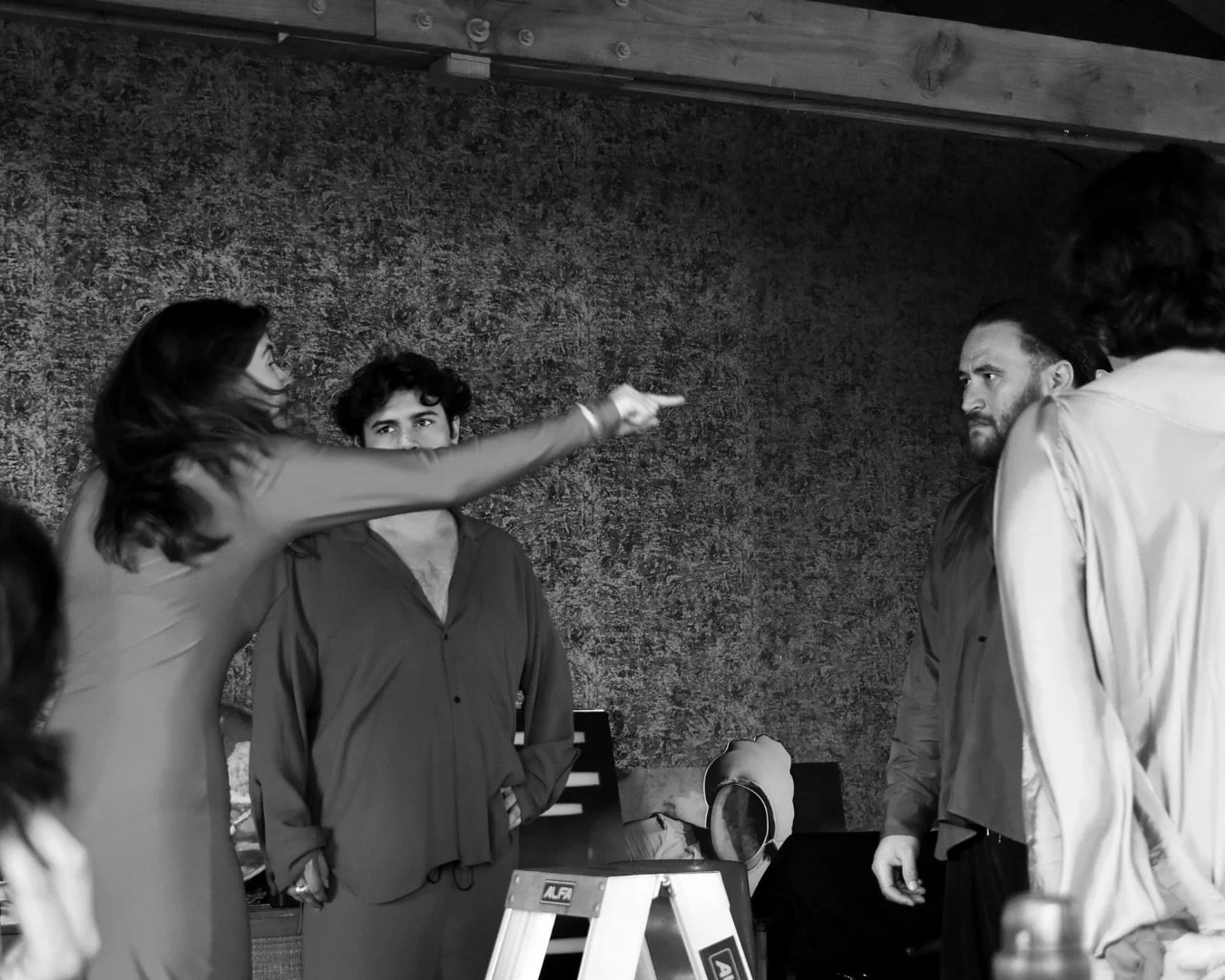
Photo credit: Nomuna Amarbat
Language itself becomes part of the architecture. Fragments of text cover the walls and structures surrounding the audience, as though the room has been built from words, memories, and conversations. The visual effect is subtle but deeply resonant. These characters exist within stories they tell themselves and each other, trapped inside narratives that continue looping long after the defining events have passed.
The production's most striking device lies in its approach to character. Brooks allows the cast to continually exchange roles through the passing of simple everyday objects. A scarf, a ring, a bangle, a hair tie become markers designating who is embodying whom at any given moment. The effect initially feels disorienting, requiring the audience to abandon traditional assumptions about character ownership. Yet as the performance progresses, the device evolves into something emotionally powerful. Grief rarely preserves people in neat, singular forms. Memories overlap and erode, perspectives collide, and people absorb parts of one another. By physically exchanging identities, the cast externalises that process.
There are moments where the system proves slightly difficult to track. Larger accessories communicate clearly across the space, while some smaller pieces, like bangles and rings, occasionally disappear from view within the staging. Fortunately, the production finds support through Kristine Crabb’s sharply considered costume design. Each performer inhabits a distinct visual identity through colour, silhouette, and style. As characters shift between bodies, movement patterns and physical posture become just as important as props. An actor may remain visually recognisable while subtly adopting another character’s mannerisms, creating a fascinating tension between appearance and behaviour. What begins as a theatrical convention gradually transforms into a sophisticated exploration of how identity itself can become fluid within close relationships.
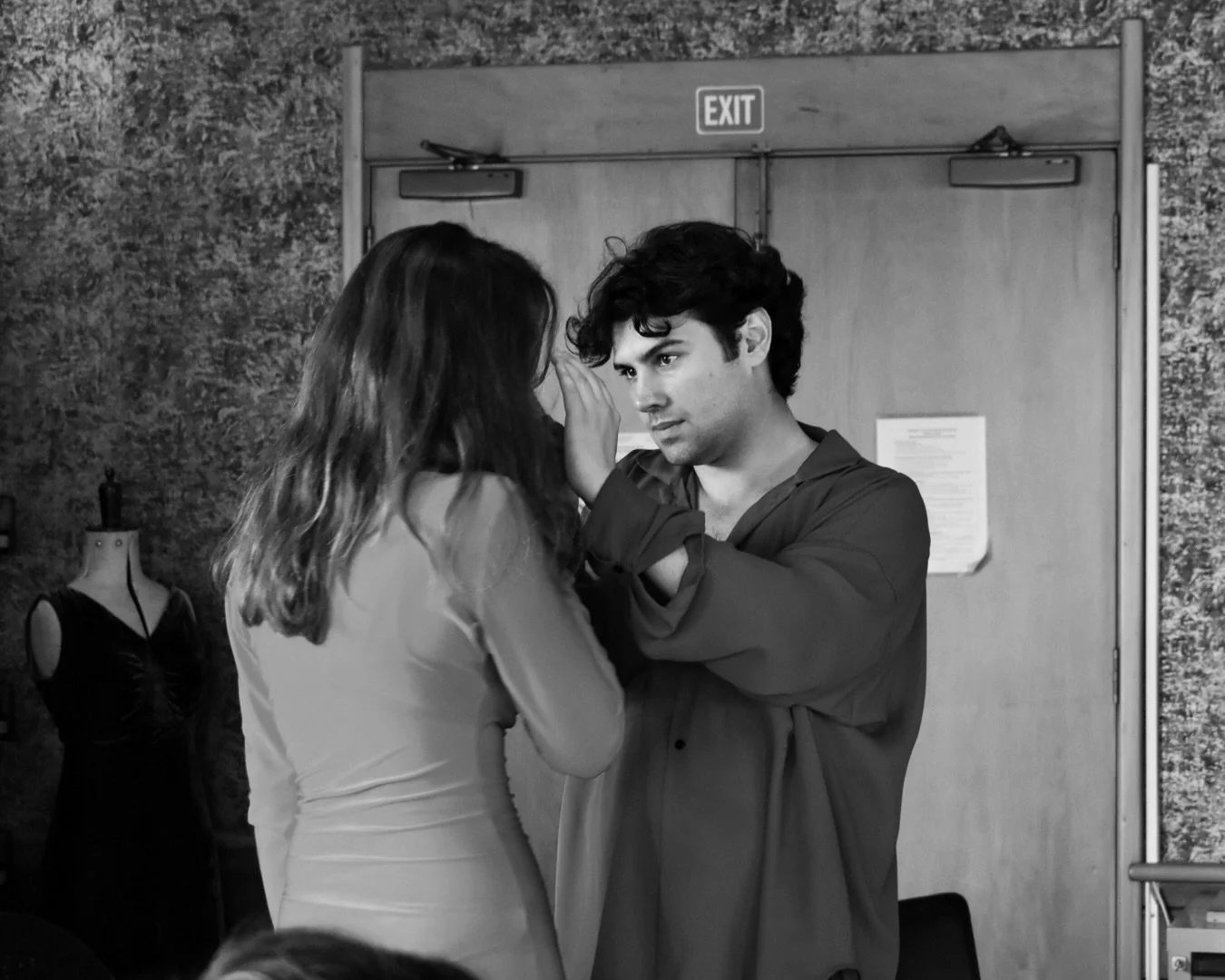
Photo credit: Nomuna Amarbat
Underneath the structural complexity sits an emotionally direct examination of mourning. Brooks understands that grief rarely follows a clean trajectory. Information arrives unevenly. Resentments emerge unexpectedly. Old wounds intersect with fresh ones. Throughout the evening, affection and frustration coexist in uncomfortable proximity. Each character carries a different version of loss, and those competing experiences repeatedly collide. As tensions rise, friendships are tested by conflicting beliefs about memory, responsibility, and healing.
The brilliance of the writing lies in its refusal to provide easy resolutions. Nobody occupies a clear moral position. Nobody processes their grief correctly. Instead, the play presents four people struggling to navigate an emotional landscape for which there is no map. Moments of tenderness sit beside bitterness. Compassion gives way to anger before returning again. The emotional journey feels messy, contradictory, and recognisably human.
The ensemble handles those complexities with remarkable assurance. Adeline Shaddick delivers a performance charged with volatility, balancing sharp defensiveness with profound vulnerability. Even at her character’s most confrontational, the hurt beneath the surface remains visible, lending every outburst emotional credibility. Tyler Wilson-Kokiri provides an effective counterweight through a performance built on supportiveness and reassurance, while subtly revealing the strain and uncertainty lurking beneath that comforting exterior.
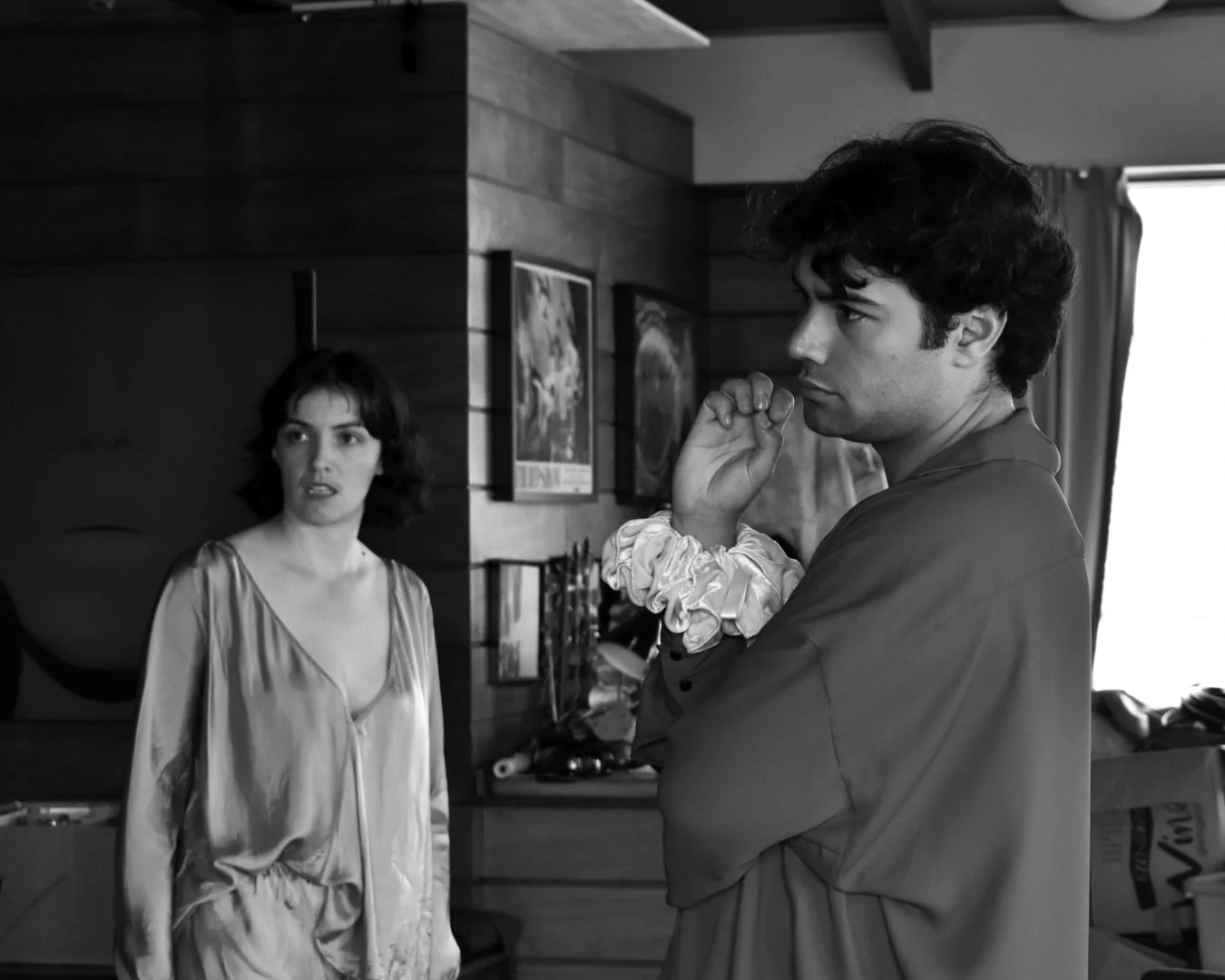
Photo credit: Nomuna Amarbat
Kate Johnstone brings particular nuance to a role defined by displacement and frustration. There is a constant sense of somebody searching for their rightful place within a story that never seems willing to provide straightforward answers. Her performance captures both anger and confusion without ever reducing either emotion to a simple character trait. Meanwhile, Max Crean offers an important grounding presence within the group. As the member least tethered to the deeper shared history, Crean introduces moments of clarity and simplicity that provide valuable breathing room amidst the play’s heavier emotional currents.
By the time All You Had Was Fun reaches its conclusion, the initial mystery has become almost irrelevant. The absent figure may be the catalyst, but the play ultimately belongs to those left behind. Brooks has created a work that challenges audiences formally while remaining deeply accessible emotionally. Its unconventional structure rewards close attention, yet its questions about friendship, loss, and identity resonate long after the details of the puzzle have been solved.
In a theatrical landscape often driven by revelation and spectacle, All You Had Was Fun finds its power elsewhere. It asks audiences to sit with uncertainty, embrace ambiguity, and recognise that grief is rarely about answers. Instead, it is about the stories people keep telling, the roles they continue playing, and the connections that endure even when someone is no longer in the room. Thoughtful, inventive, and emotionally incisive, it is a production that asks its audience to lean in and meet it halfway, rewarding that investment with a theatrical experience that remains engaging from beginning to end and lingers long after the room finally empties.
All You Had Was Fun is being performed at Auckland’s Q Theatre from 18-29 November 2026. Purchase your tickets here
Review written by Alex Moulton
