Call to Wallis
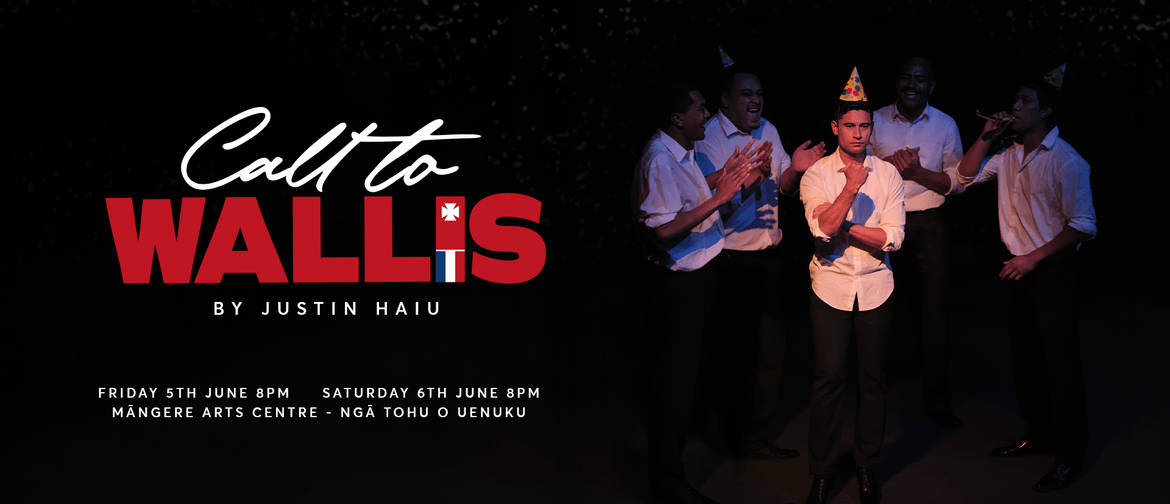
Part of the Pacific Dance Festival 2026
Call to Wallis is a contemporary dance-theatre piece by Justin Haiu that explores cultural identity, heritage, and personal roots through movement, storytelling, and music. The work follows a loosely autobiographical journey of a Pacific Island–born individual raised in Aotearoa who feels a pull toward their ancestral homeland - Wallis Island. Through a series of vivid, often playful scenes, the piece builds toward a return to cultural origins.
Call to Wallis is the kind of work that reminds you how expansive contemporary dance‑theatre can be when it refuses to sit neatly in one genre. Created by Justin Haiu and performed by a powerhouse ensemble, the show begins as something intriguing and slightly opaque before unfolding into a deeply felt exploration of identity, community, and the instinctive pull of ancestral belonging. It is a work that asks its audience to lean in, to trust the performers, and to allow meaning to emerge through movement, rhythm, and emotional resonance rather than literal explanation.
The story traces a loosely autobiographical journey of a young man raised in Aotearoa who feels disconnected from his Wallisian heritage. Through a series of vivid scenes, the production follows his father’s migration across the Pacific, his own upbringing in New Zealand, and the eventual call that draws him back toward Wallis Island. The structure is divided into three acts, each with its own tone and language, both literal and metaphorical.
The first act is the most challenging for English‑only audiences. Much of the dialogue is delivered in non‑English languages, and the performers rely entirely on their bodies to create props, environments, and emotional cues. Without linguistic anchors, the narrative becomes impressionistic. We see toil, travel, romance, hardship, and hope, but the specifics remain intentionally blurred. At first, this can feel disorienting. Yet the confusion mirrors the protagonist’s own distance from his cultural origins. The English-only speaking audience is placed in the same position he will later occupy, watching a world that feels familiar in shape but foreign in detail. It is a bold choice, and while it demands patience, it ultimately enriches the emotional payoff of the later acts.
The second act shifts into clearer territory. English becomes the dominant language, and the scenes take on a more recognisable rhythm. We see the protagonist, played with remarkable openness by Eric Ripley, navigating school, friendships, work, and the everyday routines of life in Aotearoa. These scenes are presented as a collage of skits, stitched together through movement and humour. They capture the awkwardness of adolescence, the ache of loss, and the subtle ways cultural disconnection can shape a person’s sense of self. Ripley is the only performer who plays a single character throughout the remainder of the performance, grounding the work with a steady emotional throughline.
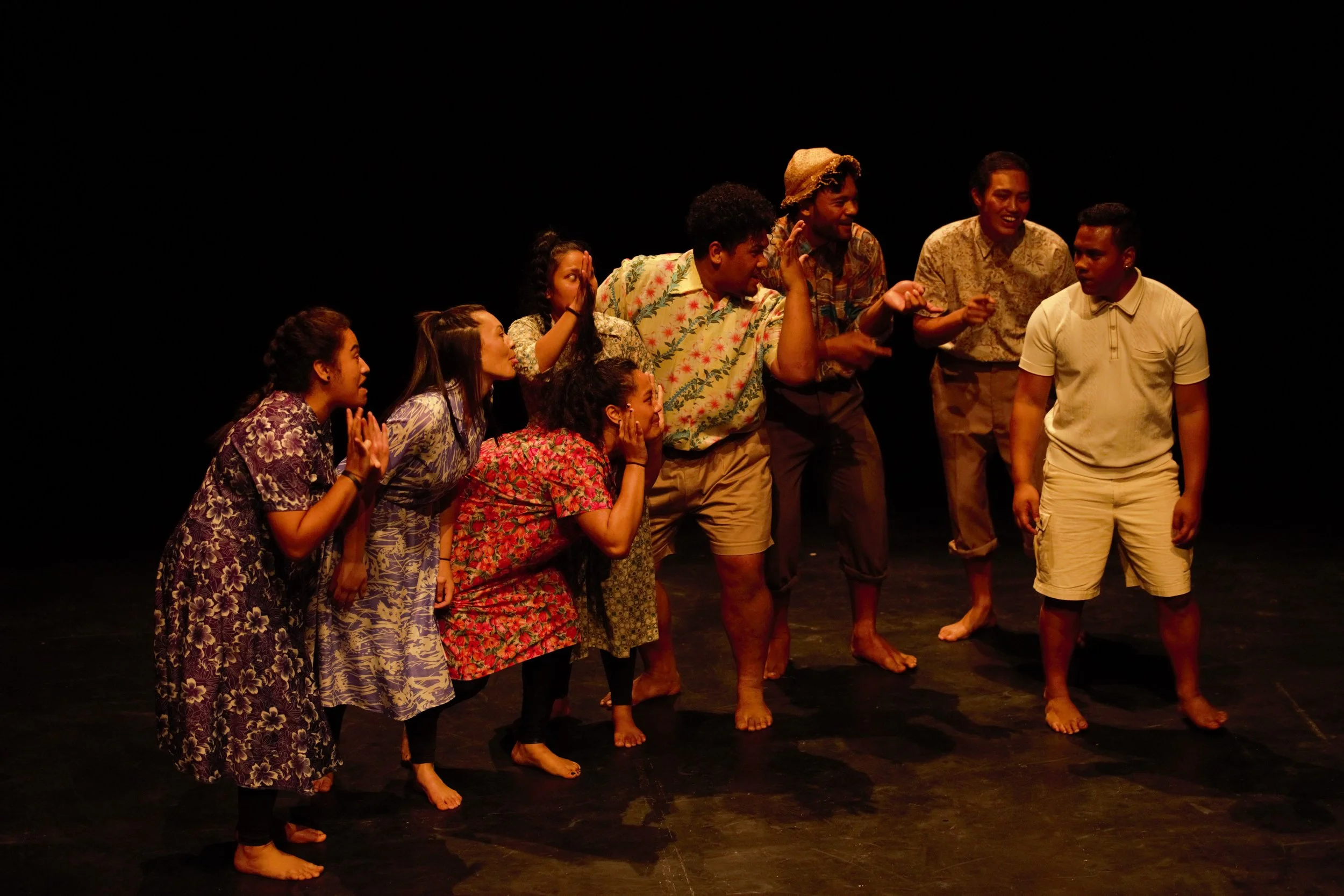
The rest of the cast shifts fluidly between roles. Aloali'i Tapu, Aisea Latu, Tupua Tigafua, Li'amānaia Tupe Lualua, and Petronilla Maletina Su'a‑Woo Ching become classmates, coworkers, family members, and community figures. Their versatility is astonishing. Aisea Latu brings a lovable eagerness to the stage, often playing characters whose enthusiasm makes them the target of gentle teasing. Li'amānaia Tupe Lualua embodies maternal strength, whether as a teacher, caregiver, or community elder. Tupua Tigafua, with his youthful energy and razor‑sharp choreography, delivers some of the most striking movement in the show. His transitions between comedy and precision are seamless.
The third act is where the emotional threads converge. The protagonist begins to feel an instinctive pull toward his heritage, expressed through sudden shifts in movement. During scenes that reference haka, breakdancing, or other styles, he veers unexpectedly into traditional Wallisian dance. These moments are sparked by the live drumming of Isitolo Alesena, whose presence becomes a kind of spiritual guide. The drumbeat cuts through the noise of modern life, awakening something ancient and familiar in the protagonist’s body. These scenes are some of the most powerful in the production, capturing the idea that cultural memory can live in muscle and instinct even when the mind has forgotten.
The physicality of the show is extraordinary. With no props, the performers create everything themselves. Beds, showers, trees, vehicles, and landscapes emerge from bodies in motion. Time passes through sliding, rolling, and shifting formations. Coconut trees grow from stacked limbs. Water flows through rippling torsos. It is playful, inventive, and often breathtaking. The choreography blends hip hop, contemporary dance, Pacific movement traditions, and theatrical storytelling, reflecting the hybrid identity at the heart of the narrative.
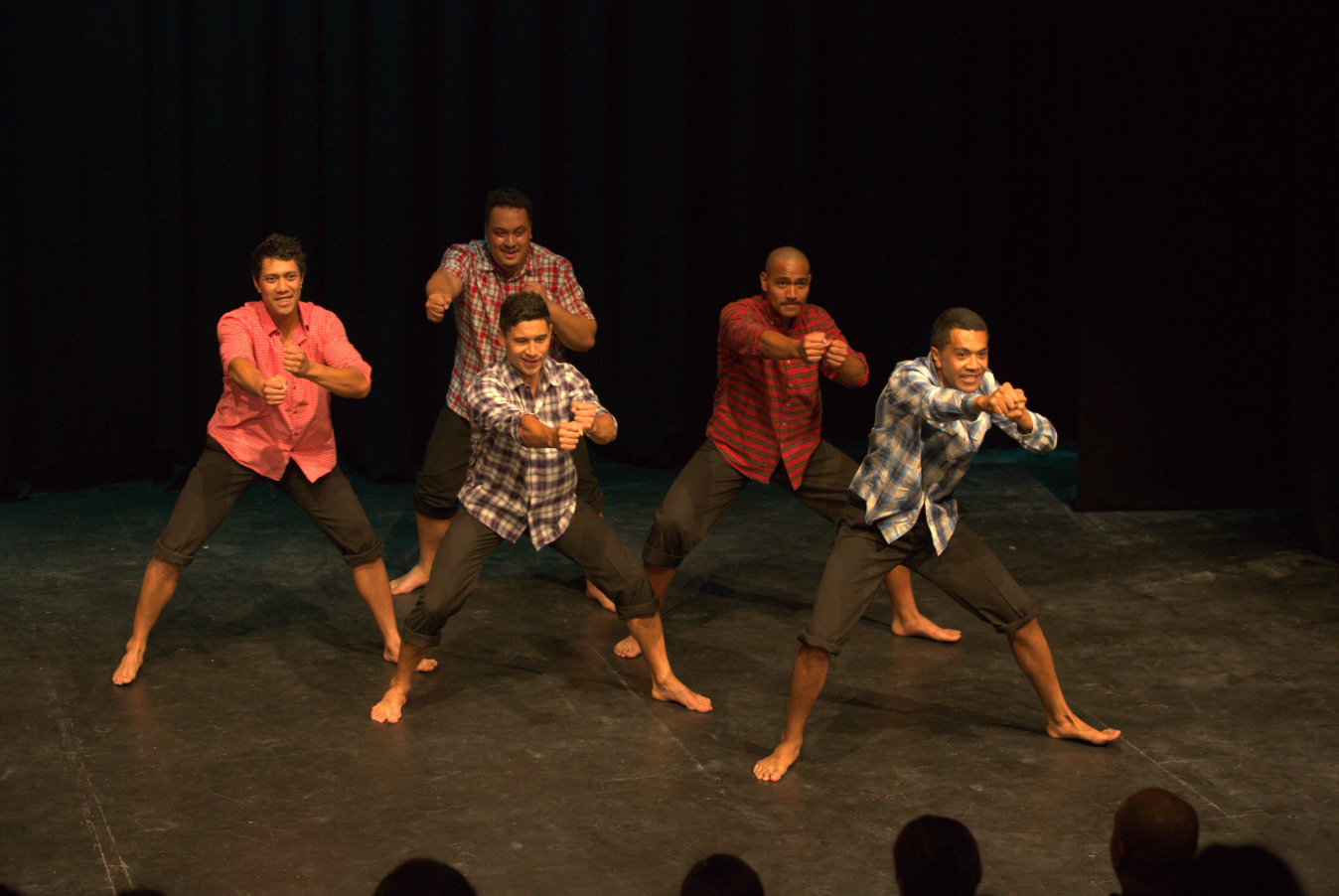
Lighting plays a crucial emotional role. Warm tones signal comfort and connection. Cool blues wash over the stage during moments of grief or uncertainty. Spotlights isolate characters during moments of introspection. The lighting design by Sam Mence becomes a silent narrator, guiding the audience through shifts in tone and meaning.
Thematically, Call to Wallis explores the complexities of cultural inheritance. It examines what is lost when a family migrates, what is carried forward, and what must be rediscovered. It acknowledges the pressures of growing up in a country where belonging is often conditional, where friendship can be tinged with mockery, and where cultural difference is both celebrated and misunderstood. It also celebrates the resilience of Pacific communities, the strength of intergenerational ties, and the transformative power of returning to one’s roots.
Call to Wallis is not always easy. It asks its audience to sit with uncertainty, especially in the first act. But the reward is a narrative that grows in clarity and emotional resonance as it progresses. By the final moments, the journey feels complete, not because every detail has been explained, but because the emotional truth has been fully realised.
This is a beautifully imagined work about identity, community, and the quiet power of returning to where you come from. It lingers long after the final beat of the drum.
Performed as part of the Pacific Dance Festival 2026. Find out more here
Review written by Alex Moulton
