
Sexy Ghost Boy brings you this holiday season’s only wordless anti-consumerist xmas-themed interactive clown burlesque comedy, celebrating the true meaning of Christmas: Dystopic Consumerism. Join in celebration of community rebellion. There will be presents.
The Sexy Ghost of Xmas Boy is the kind of show that begins long before anyone would traditionally consider it to have started. By the time George Fenn officially launches into the performance, the audience has already been enlisted, organised, confused, and set to work. Decorations have been hung, presents have been wrapped, props have been assembled, and a room full of strangers has unknowingly become part of the machinery driving the evening forward. Any expectation of sitting back and observing quietly is dismantled almost immediately. This is not a show that happens in front of its audience. It happens because of them.
Described as an interactive, wordless Christmas-themed clown comedy, The Sexy Ghost of Xmas Boy embraces absurdity with complete confidence. Fenn's presence is magnetic from the outset, relying entirely on physicality, facial expression, and an unwavering commitment to increasingly ridiculous scenarios. The lack of dialogue from Fenn never feels restrictive. If anything, it creates more space for interpretation, allowing the audience to project their own reactions and understanding onto what unfolds. In a performance built around audience participation, that flexibility proves vital.
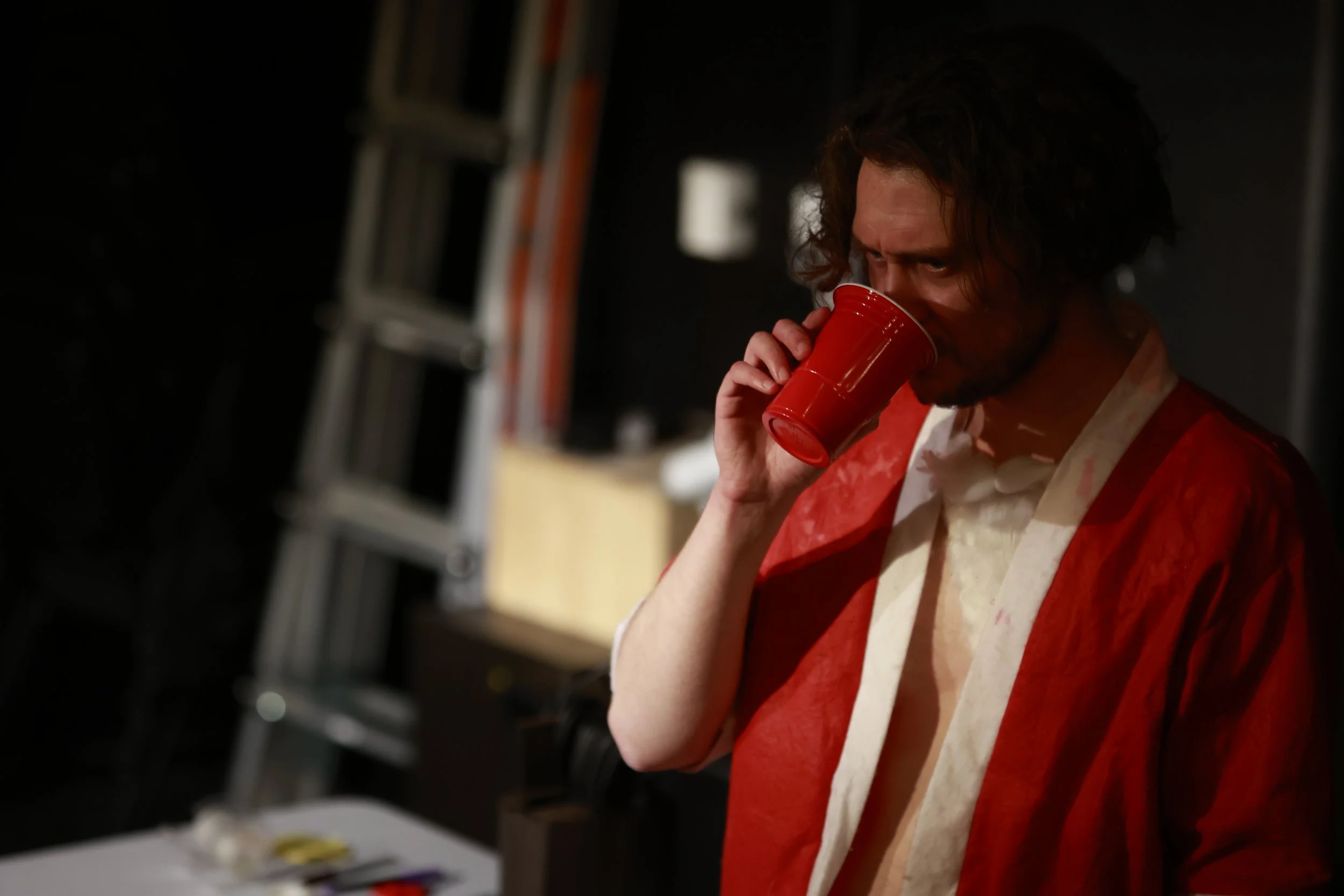
Before the first major sequence has even taken shape, Fenn has already recruited several audience members into the action. Some are selected to perform specific tasks, others become recurring characters, and a few find themselves spending an unexpectedly large portion of the show in the spotlight. Unlike productions that politely request volunteers, The Sexy Ghost of Xmas Boy operates with a far more direct approach. Audience members are largely chosen rather than invited, creating an atmosphere where nobody is entirely safe from becoming part of the entertainment.
That unpredictability becomes one of the show's greatest strengths, even when it occasionally creates challenges. Because audience participants receive minimal instruction, there are moments where confusion naturally emerges. Directions are often conveyed through mime, gestures, and implication rather than explicit explanation, leading some participants to misunderstand what is being asked of them. Occasionally, a moment is paused and restarted when someone diverges from the intended path, creating a curious dynamic where Fenn attempts to carefully guide performers who have never seen the script they are unknowingly helping to enact.
Yet those awkward moments rarely feel like failures. Instead, they contribute to the show's distinctive personality. The occasional miscommunication becomes part of the comedy, generating genuine spontaneity that scripted theatre often struggles to replicate. There is a palpable sense that anything could happen at any moment, and much of the audience laughter comes not only from what Fenn is doing but from watching fellow patrons attempt to navigate increasingly bizarre circumstances.
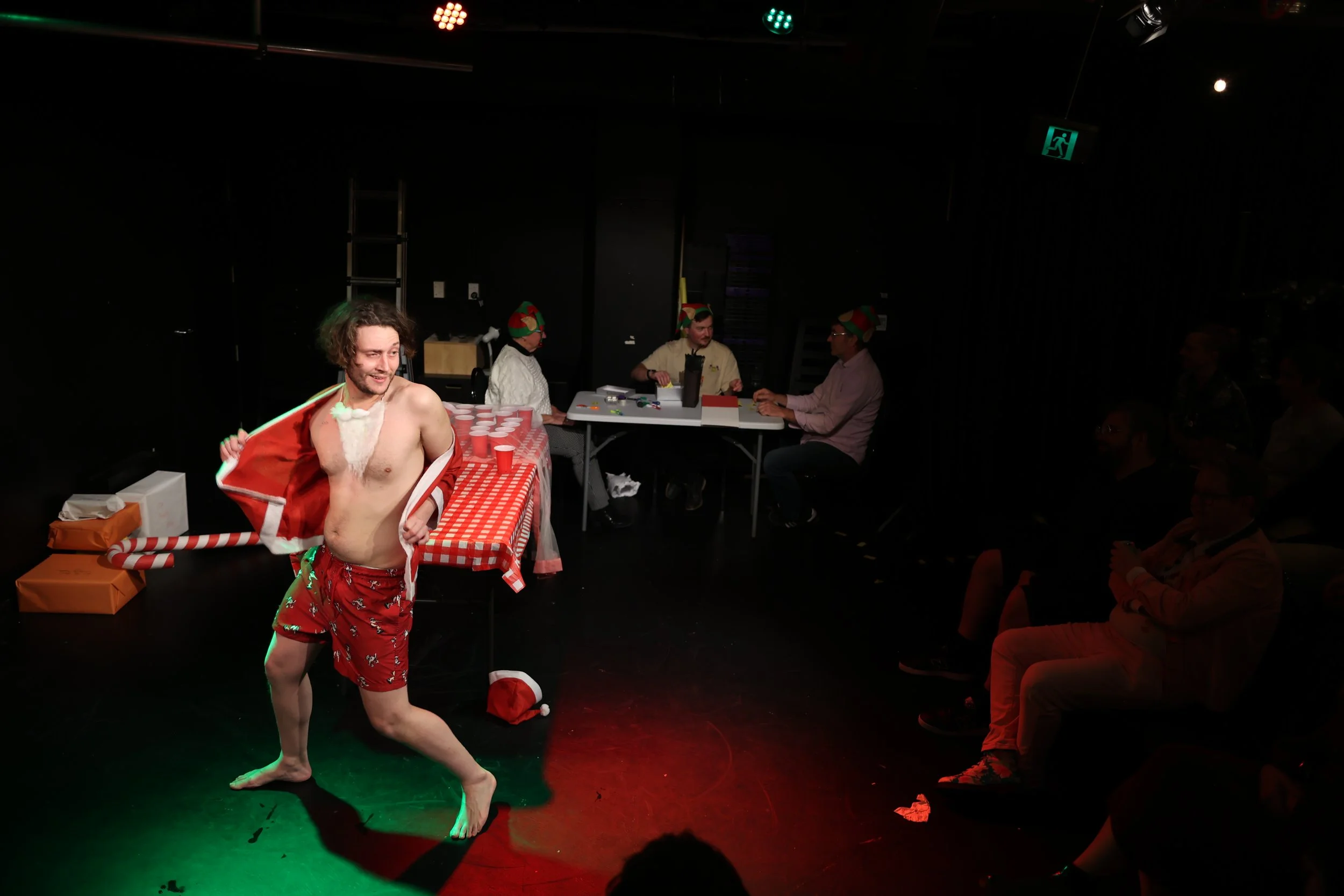
What initially appears to be a collection of disconnected sketches gradually reveals itself to be far more carefully structured than it first seems. Seemingly random props, throwaway interactions, and strange visual gags often reappear later with unexpected significance. An early joke that feels deliberately nonsensical may suddenly become central to a later sequence, rewarding audience members who have been paying close attention. Rather than delivering a straightforward narrative, The Sexy Ghost of Xmas Boy functions more like a snowball rolling downhill, gathering momentum and accumulating absurd details until everything collides in a gloriously chaotic finale.
The show's Christmas framework provides ample opportunities for satire, although the social commentary never overwhelms the comedy. Beneath the silliness lies a clear interest in examining consumer culture, holiday traditions, and the strange rituals that surround gift-giving. Fenn explores these themes through awkward encounters, physical comedy, and increasingly elaborate audience-driven scenarios rather than direct political messaging. The result is a production that encourages reflection without sacrificing entertainment value. The audience is invited to laugh at the absurdity of consumerism while simultaneously participating in exaggerated versions of its traditions.
The R18 classification is entirely warranted. Sexual humour runs throughout the performance, often surfacing in delightfully strange and unexpected ways. Partial nudity, suggestive imagery, and playful intimacy are woven into the fabric of the show, though never in a manner that feels mean-spirited or designed purely for shock value. Instead, the comedy frequently emerges from discomfort and vulnerability itself. Fenn understands how effectively tension can generate laughter and repeatedly places the audience in situations where they are unsure whether to cringe, laugh, or do both simultaneously.
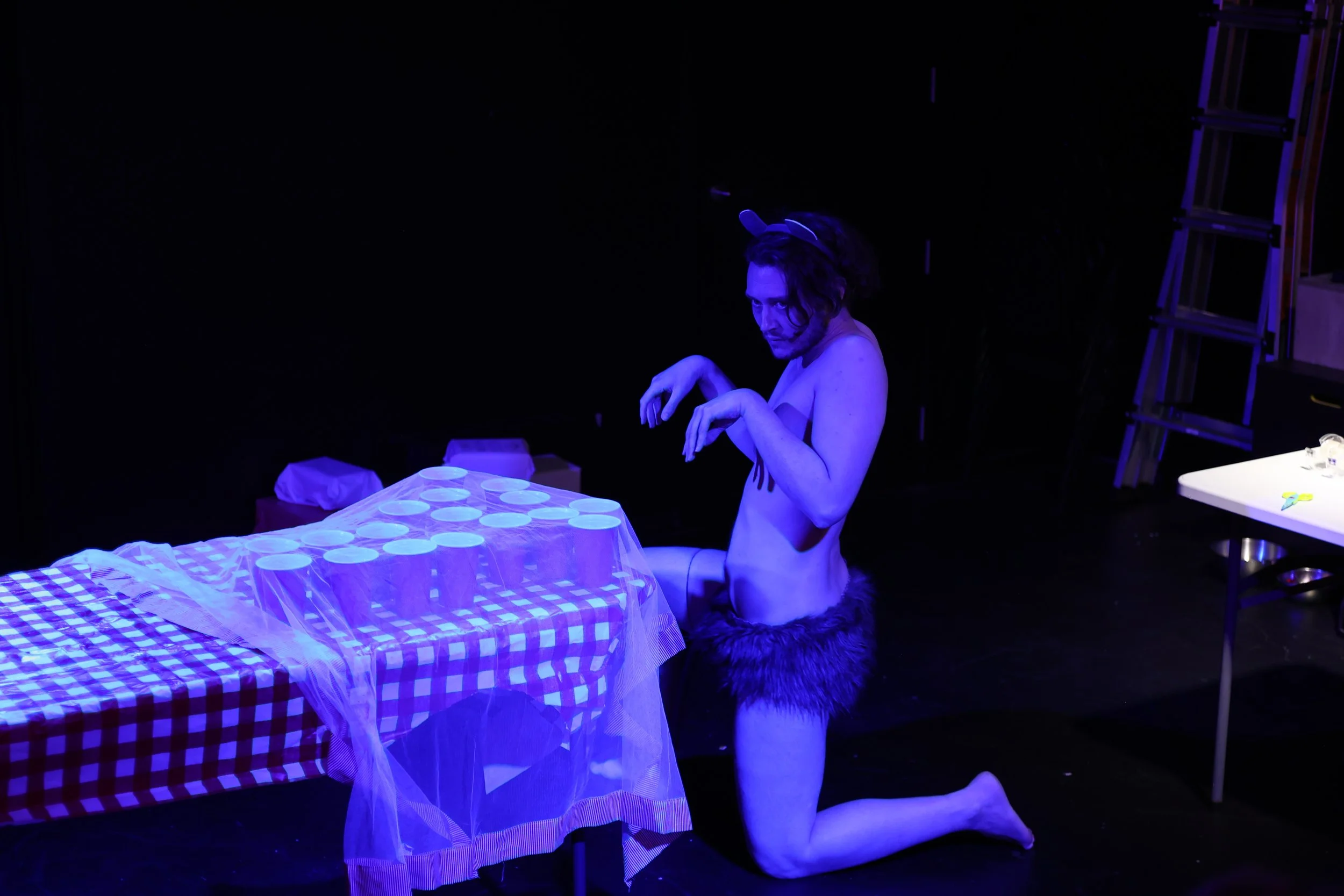
Much of the success comes from the performer's complete commitment to every ridiculous idea. Whether portraying an unlikely Christmas character, orchestrating an absurd game, or transforming everyday objects into something hilariously inappropriate, Fenn never breaks the illusion. Even the most ludicrous moments are delivered with such conviction that resistance becomes impossible. The audience may not fully understand where a particular sequence is heading, but it is difficult not to follow along.
Adding to the atmosphere is the visible presence of the show's technical operator, positioned openly within view of the crowd. In many productions, technical elements disappear into the background. Here, seeing the person driving the soundtrack react in real time adds another layer of communal enjoyment. Their obvious delight at the escalating mayhem becomes infectious, reinforcing the feeling that everyone in the room is sharing the same bizarre experience together.
Without revealing specific surprises, the performance incorporates musical sequences, competitive games, toy construction, gift wrapping, multiple costume changes, and a seemingly endless supply of audience interaction. At times, individual participants become recurring characters whose journeys continue throughout the evening. At other points, the distinction between performer and audience virtually disappears altogether as entire sections of the crowd become active participants simultaneously.
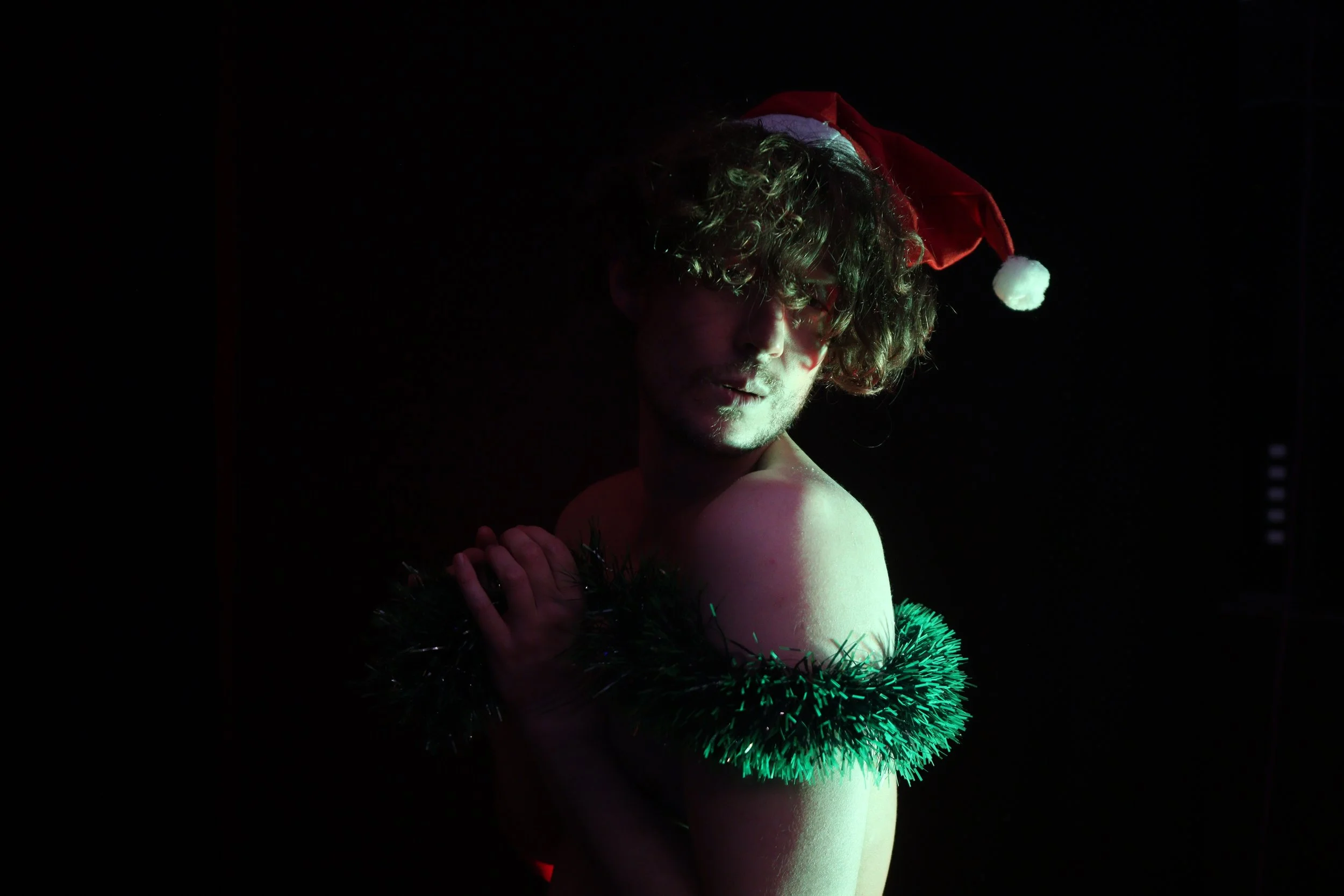
The resulting experience is undeniably messy. It is chaotic, awkward, occasionally confusing, and frequently ridiculous. Yet those qualities feel entirely intentional. The show thrives on dismantling social barriers and replacing them with collective silliness. As strangers laugh together, help one another, and survive increasingly uncomfortable assignments, a genuine sense of camaraderie begins to emerge. By the time the performance reaches its conclusion, the audience has become far more than a collection of ticket holders. They have become collaborators.
The Sexy Ghost of Xmas Boy will not appeal to everyone. Those seeking a traditional theatrical experience may find its relentless participation requirements intimidating, while audience members hoping to remain anonymous should consider themselves warned. For those prepared to embrace uncertainty, however, George Fenn has created something remarkably distinctive. Equal parts clown show, social experiment, Christmas satire, and communal celebration, it delivers an hour of joyful absurdity that leaves the audience laughing, bewildered, and strangely connected. In an era where so much entertainment encourages passive consumption, there is something refreshingly bold about a production that insists everyone get involved, whether they planned to or not.
The Sexy Ghost of Xmas Boy is being performed at various locations nationwide from 26 Nov-10 Dec 2026. Purchase tickets here
Review written by Alex Moulton
