Cora, a fugitive turned Blade Runner, partners with Olwen, a dying Replicant, to hunt a runaway in a reborn Los Angeles. Together they uncover a truth threatening to destroy their fragile city.
There's something strangely comforting about returning to the world of Blade Runner. It is a future defined by towering cityscapes, relentless rain, moral ambiguity, and enough existential dread to keep a philosophy student occupied for weeks. Decades after Ridley Scott's original film established one of science fiction's most distinctive settings, the upcoming television series wisely resists the temptation to reinvent the formula. Instead, it embraces the elements that audiences have always come to the franchise for, delivering a familiar journey through a world where technological marvels and societal collapse exist side by side.
From its opening moments, the series feels firmly rooted within the universe established by both Blade Runner and Blade Runner 2049. Humans and replicants continue their uneasy coexistence, though "coexistence" remains a generous description for a relationship still defined by mistrust, hierarchy, and exploitation. Questions surrounding identity, artificial intelligence, consciousness, and what truly constitutes humanity once again sit at the centre of the narrative. While the premise itself may not break significant new ground, that ultimately feels beside the point. Blade Runner has never been a franchise built on surprising plot mechanics. Its enduring appeal comes from atmosphere, world-building, and its ability to reflect contemporary anxieties through a future that feels both fantastical and uncomfortably plausible.

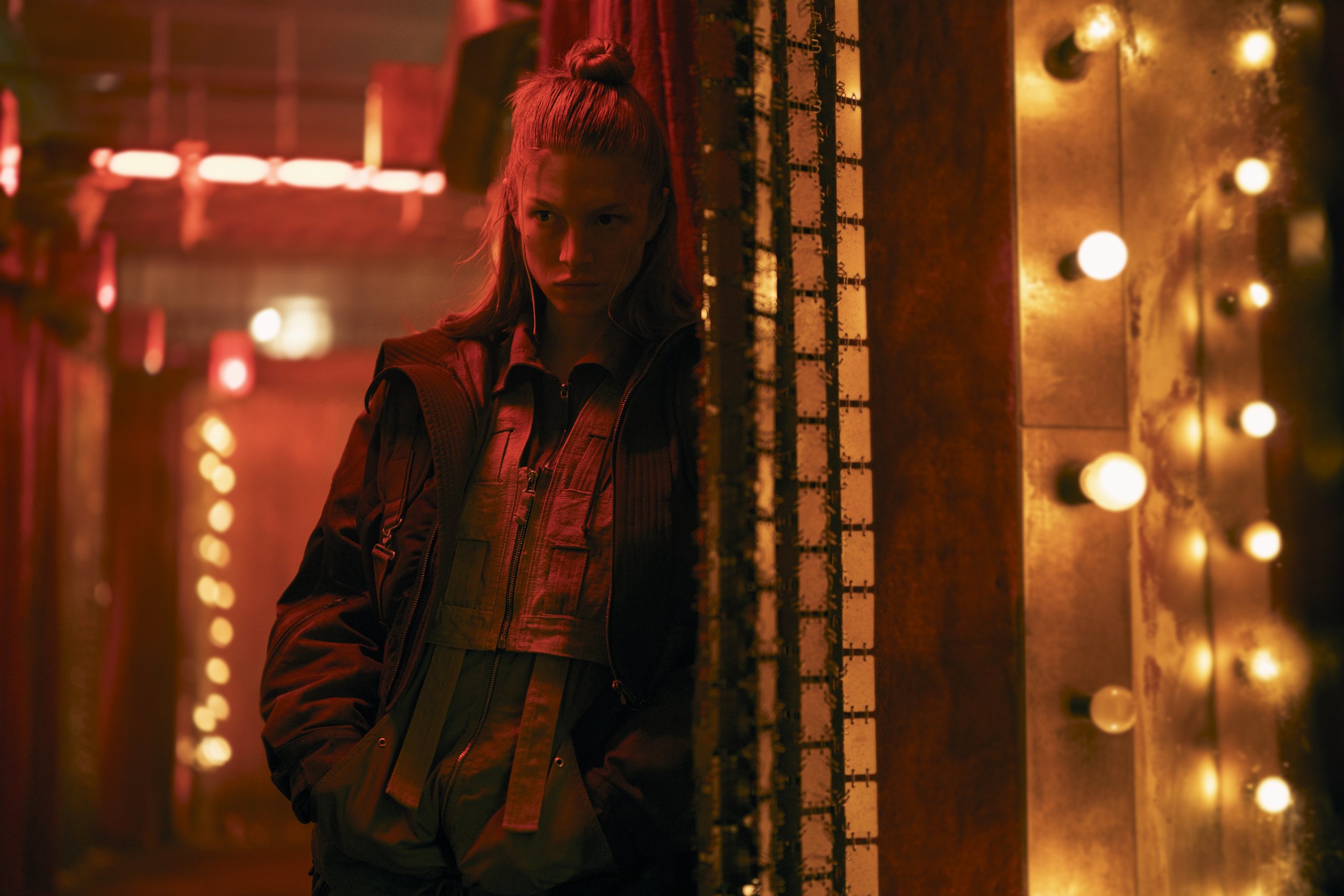
On that front, the series is highly successful. The production design is exceptional, creating a future that feels as oppressive as it is visually stunning. Every environment appears dense with history and decay, from cramped urban spaces overflowing with humanity to sterile corporate settings that exude quiet menace. The world feels genuinely lived in rather than constructed solely as a backdrop for the story. Advanced technology sits awkwardly alongside social decline, reinforcing the franchise's recurring suggestion that progress has benefited the powerful far more than the people beneath them. It is one of the defining characteristics of the Blade Runner universe, and the television series captures it beautifully.
More impressively, the visual design never feels like empty nostalgia. The familiar neon glow, industrial architecture, and oppressive atmosphere serve the storytelling rather than simply reminding audiences of the films. Every location contributes to the mood, creating an environment where characters feel trapped by forces much larger than themselves. It is a setting that communicates volumes before a word of dialogue has been spoken, and the creative team deserves considerable credit for maintaining the franchise's iconic aesthetic without allowing it to become a hollow imitation of what came before.
The cast also settle comfortably into the world, none more so than Michelle Yeoh, whose growing collection of science-fiction credits is becoming increasingly difficult to ignore. At this point, it genuinely feels as though there isn't a futuristic franchise left that she hasn't visited. Whether she is travelling through space, navigating parallel universes, or wandering through dystopian futures, Yeoh continues to bring a natural authority to every project she joins. Her presence here is no different. While it would be easy to joke that she is contractually obligated to appear in at least one science-fiction property a year, the reality is that she brings a gravitas and confidence that strengthens any production fortunate enough to secure her services.
As for the story itself, the series follows a reasonably familiar path. There are undercover operations, hidden motives, shifting loyalties, conspiracies, and characters whose true identities are gradually revealed over time. None of these elements are particularly groundbreaking, and seasoned science-fiction viewers will likely anticipate several developments long before they arrive. One mid-series revelation involving the central protagonists adds some welcome momentum to proceedings, though it never quite lands with the earth-shattering impact the narrative seems to anticipate. Even so, the storytelling remains engaging because it understands what audiences are actually invested in. The mystery is only part of the appeal. The larger draw remains the philosophical and ethical questions simmering beneath the surface.
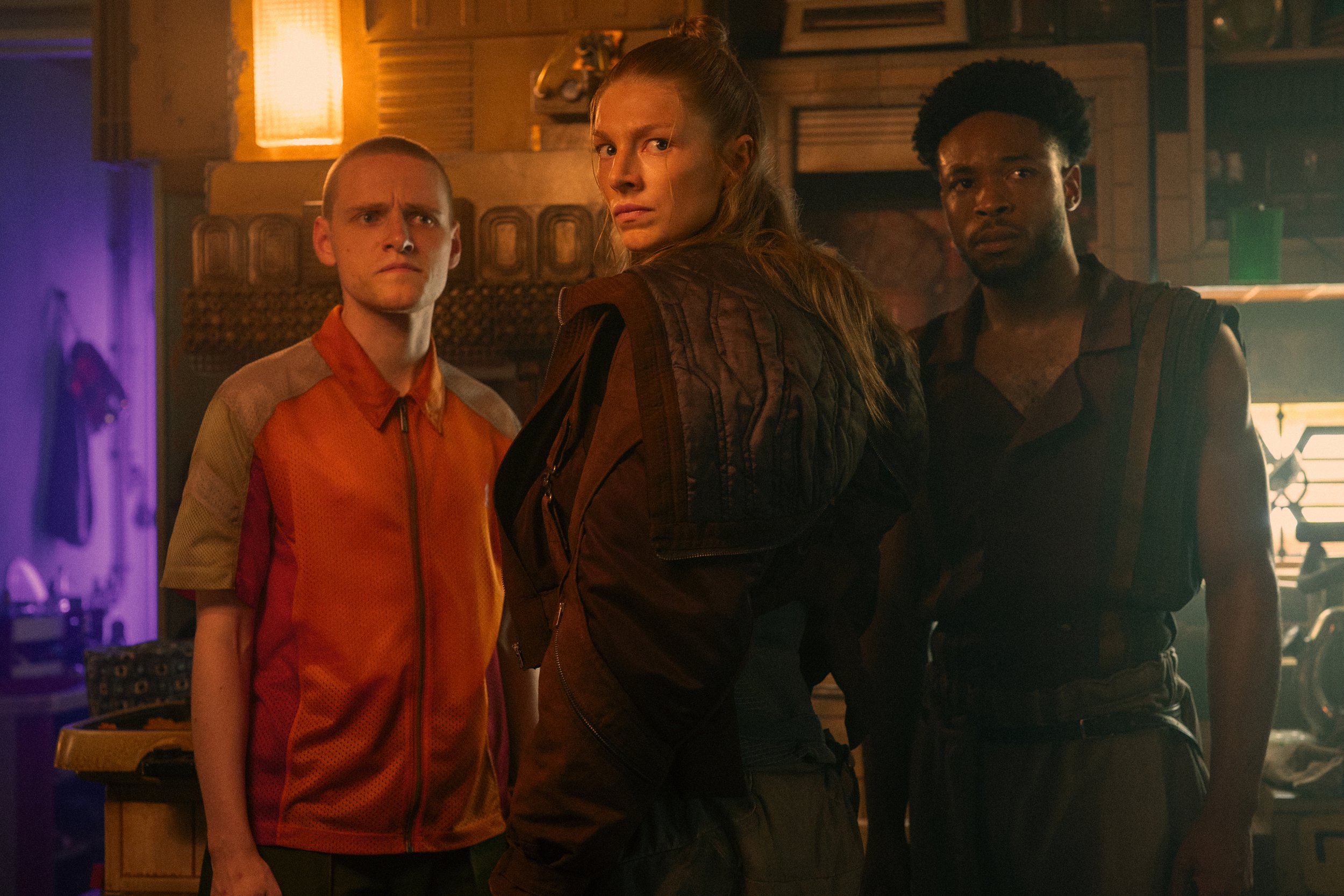
The antagonist similarly occupies familiar territory. He belongs to a long line of science-fiction villains whose intelligence has convinced them that they possess the right to reshape humanity according to their own vision. The character functions effectively within the story, but there is little about him that feels particularly fresh. Audiences who have spent any time in the genre will immediately recognise the archetype. Fortunately, his predictability does not significantly undermine the broader narrative because the series is ultimately far more interested in ideas than in villainy.
Where viewers may find themselves divided is in the pacing. Then again, pacing has always been one of the most divisive aspects of Blade Runner. Neither of the films could be accused of moving at breakneck speed, favouring atmosphere and contemplation over relentless action. The television series follows precisely the same philosophy. Long stretches are devoted to absorbing environments, listening to conversations, and reflecting upon the implications of the story rather than rushing towards the next plot point.
At its best, this approach is one of the show's greatest strengths. The slower pace allows the audience to fully appreciate the extraordinary production design and thematic depth. There is room to breathe within the narrative, to sit with ideas and absorb the atmosphere. At its worst, however, the pace occasionally drifts from deliberate to sluggish. Certain scenes linger beyond their usefulness and some story developments feel as though they take the scenic route to destinations that are relatively easy to predict.

There were periods where I found the series surprisingly easy to watch passively. You can make a coffee, answer a message, fold some laundry, and glance back at the screen without necessarily feeling as though you've missed a crucial revelation. That observation is not entirely a criticism, as it speaks to the show's confidence in its atmosphere, but there are moments where a slightly tighter edit would have benefited the overall experience.
Despite those frustrations, the series demonstrates a clear understanding of what has allowed Blade Runner to remain culturally relevant for so long. It does not attempt to transform the franchise into an action-heavy blockbuster, nor does it abandon the philosophical questions that have always defined it. Instead, it continues exploring the complicated relationship between creators and creations, authority and exploitation, humanity and artificiality. Once again, the uncomfortable possibility emerges that the replicants may possess more humanity than the humans who manufactured them.
Ultimately, this is a worthy addition to the Blade Runner universe. The story may occasionally retreat into familiar territory, and the pacing will certainly test the patience of some viewers, but the atmosphere remains impeccable, the world-building is outstanding, and the production successfully captures the DNA of its cinematic predecessors. It may play things a little too safely at times, relying on established formulas and familiar character archetypes, yet it remains an engaging return to one of science fiction's most enduring worlds.

For longtime fans, there is plenty to appreciate here. Just don't expect relentless action or constant narrative twists. Blade Runner remains committed to asking difficult questions rather than delivering easy thrills, and this series continues that tradition with confidence. Visually impressive, thoughtfully constructed, and unmistakably part of the universe that inspired it, it offers a satisfying return to a future where humanity still seems uncertain about what being human actually means. And if nothing else, it's yet another excuse to play a game of Michelle Yeoh bingo. At this point, she'd probably fit right into a galaxy far, far away too.
Blade Runner 2099 streams on Prime Video from November 25.
Review written by Jack Kemp
Edited by Alex Moulton
