Greg Focker's son, Henry, brings his girlfriend, a trained FBI hostage negotiator, home to meet the family. Greg soon gets worried when Henry tells everyone that he plans to propose to her.
Focker-in-Law arrives with a challenge that few comedy franchises survive long enough to face. Twenty-six years after Greg Focker first stumbled into the Byrnes family's orbit, the series is attempting to pass the torch to a new generation while still satisfying the audience that grew up watching Greg's endless humiliation. Rather than rebooting the formula entirely, director John Hamburg cleverly uses the passage of time as the film's central joke. Greg is no longer the anxious outsider trying to earn approval from an intimidating father-in-law. He's become the overprotective parent, staring in horror as his own son introduces a partner who threatens to upend the family dynamic all over again.
The role reversal gives Ben Stiller some of his strongest material in years. Much of the comedy comes from Greg slowly realising he has absorbed far more of Jack Byrnes' behaviour than he would ever admit. After spending decades being interrogated, doubted, and second-guessed, Greg now begins treating Henry with the exact same nervous suspicion that once drove him crazy. It is a smart evolution of the character because the conflict no longer comes solely from embarrassment. It emerges from the uncomfortable recognition that age has transformed Greg into the kind of parent he once swore he would never become.

The film's other significant challenge is introducing a new generation of characters without reducing them to pale imitations of the originals. Skyler Gisondo succeeds as Henry because he feels recognisably like Greg's son without being trapped in his father's shadow. He inherits some of Greg's awkwardness, but there is a confidence and emotional openness that reflects a very different generation. The script repeatedly contrasts Henry's outlook against Greg's tendency to catastrophise everything, creating a subtle commentary on how attitudes towards relationships, masculinity, and communication have evolved since 2000.
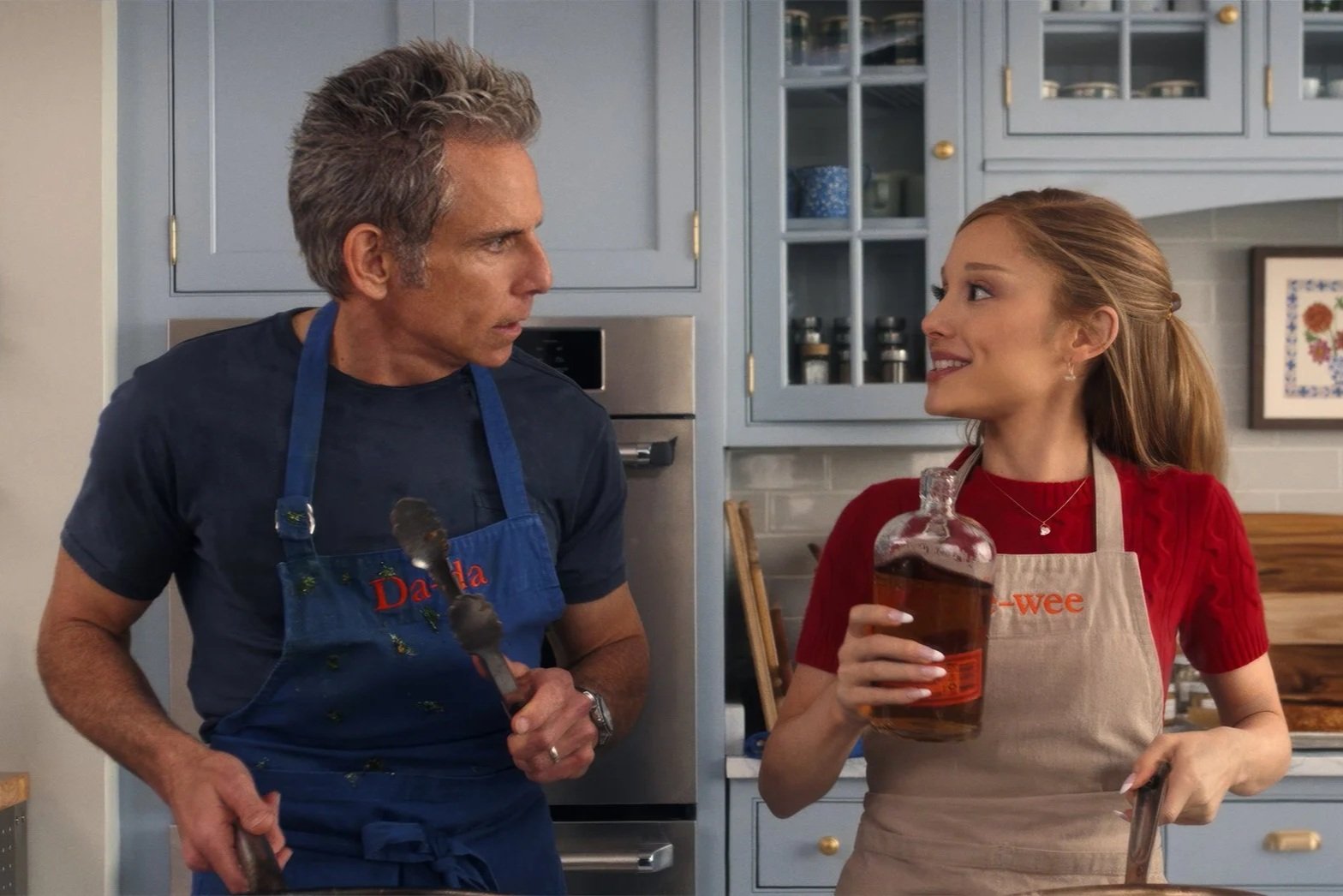
Ariana Grande's Olivia is clearly intended to represent this generational shift as well. As a former FBI hostage negotiator, she enters the story with a level of competence and confidence that immediately unsettles Greg. The joke, of course, is that Olivia handles the Byrnes family far better than Greg ever did. While Greg spent years fighting for acceptance, Olivia seems to earn Jack's respect almost immediately. Grande demonstrates unexpectedly sharp comic timing throughout the film and commits fully to the role, but the character occasionally feels a little too capable for her own good. Because Olivia rarely appears vulnerable, she sometimes functions more as a catalyst for other characters' insecurities than as a fully developed character in her own right.
That dynamic creates one of the film's most interesting fault lines. Depending on how audiences view Greg, the story plays very differently. If Greg is still the sympathetic underdog from Meet the Parents, then watching Olivia instantly receive the approval he spent decades chasing can feel slightly mean-spirited. If, however, Greg's behaviour throughout the film is viewed as the product of his own insecurities and overbearing parenting, then much of the discomfort becomes a form of karmic payback. The film never completely settles on either interpretation, making Focker-in-Law something of a Rorschach test for viewers. Whether you laugh or cringe often depends on how much patience you have for family dynamics built around embarrassment and passive-aggressive power struggles.
Robert De Niro remains the franchise's secret weapon. Jack Byrnes has always existed somewhere between loving family patriarch and domestic intelligence operative, and De Niro still plays the role with complete conviction. What makes Jack funny is not simply his suspicion of everyone around him. It is the unwavering certainty that his behaviour is entirely reasonable. The passage of time has softened some of his edges, but only slightly. He continues to view the world through a lens of risk assessment, creating an endless source of tension whenever Greg's anxiety collides with his own.
The screenplay leans heavily on nostalgia, and your tolerance for that will largely determine how much you enjoy the experience. Familiar references, returning gags, and long-running family jokes appear frequently. At their best, these callbacks feel like old family stories being retold around the dinner table. At their worst, they feel like the script mistaking recognition for comedy. Too often the film assumes that simply reminding audiences of something funny from twenty years ago is enough to generate another laugh.
Predictability becomes a double-edged sword throughout the film. The script often telegraphs its biggest comic disasters well in advance, making it easy to spot exactly where situations are heading. Yet there is a certain comfort in that familiarity. Much like returning to a favourite sitcom, audiences understand the rules of the Meet the Parents universe. Disaster is inevitable. Misunderstandings will escalate. Someone will make the worst possible decision at exactly the wrong time. The pleasure comes less from surprise and more from watching talented performers navigate the chaos.
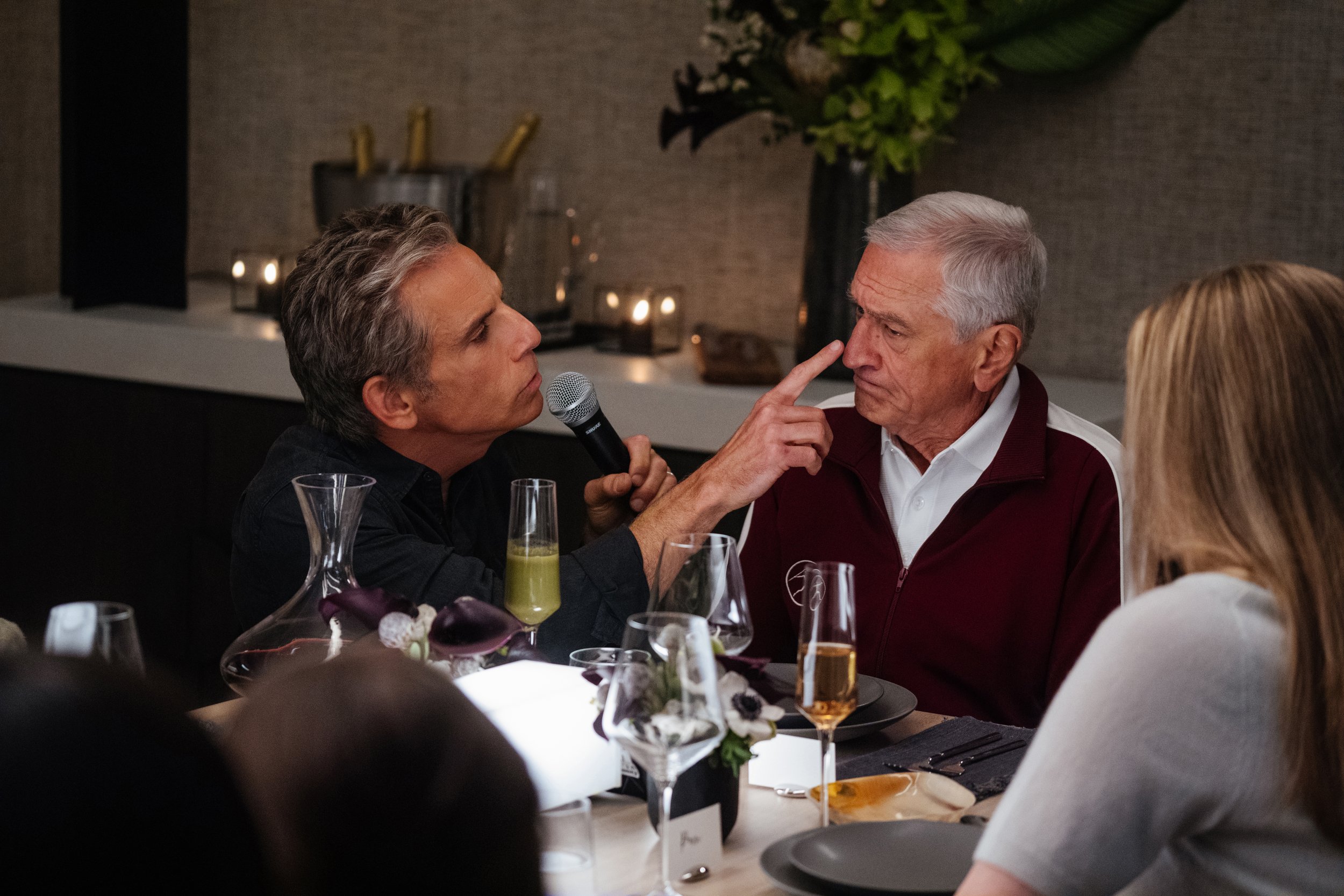
Fortunately, the cast is more than capable of carrying that burden. Stiller and De Niro still generate sparks whenever they share a scene, while Owen Wilson effortlessly slips back into Kevin Rawley's infuriatingly perfect existence. The supporting cast adds enough fresh energy to prevent the film from feeling entirely trapped by its past, even if the story occasionally struggles to escape the franchise's well-worn formula.
Focker-in-Law is unlikely to convert anyone who never enjoyed the original trilogy. The cringe-comedy formula remains intact, and the reliance on family misunderstandings continues to divide audiences between laughter and second-hand embarrassment. What the film does well is recognise that the funniest aspect of revisiting these characters after twenty-six years is not watching them repeat the same mistakes. It is watching them discover they have become the very people who used to drive them crazy.
That insight gives Focker-in-Law more substance than a simple nostalgia exercise. It may not reach the heights of the original, but it understands that growing older often means seeing yourself reflected in the people you once spent your life resisting. For a franchise built on family dysfunction, that is a surprisingly fitting place to find its next chapter.
Focker In-Law is in cinemas from November 26, 2026. Find your nearest screening here.
Review written by Alex Moulton
