Bringing Rori Riki to Life: Perspectives from Dinosaur Polo Club and Kūwaha
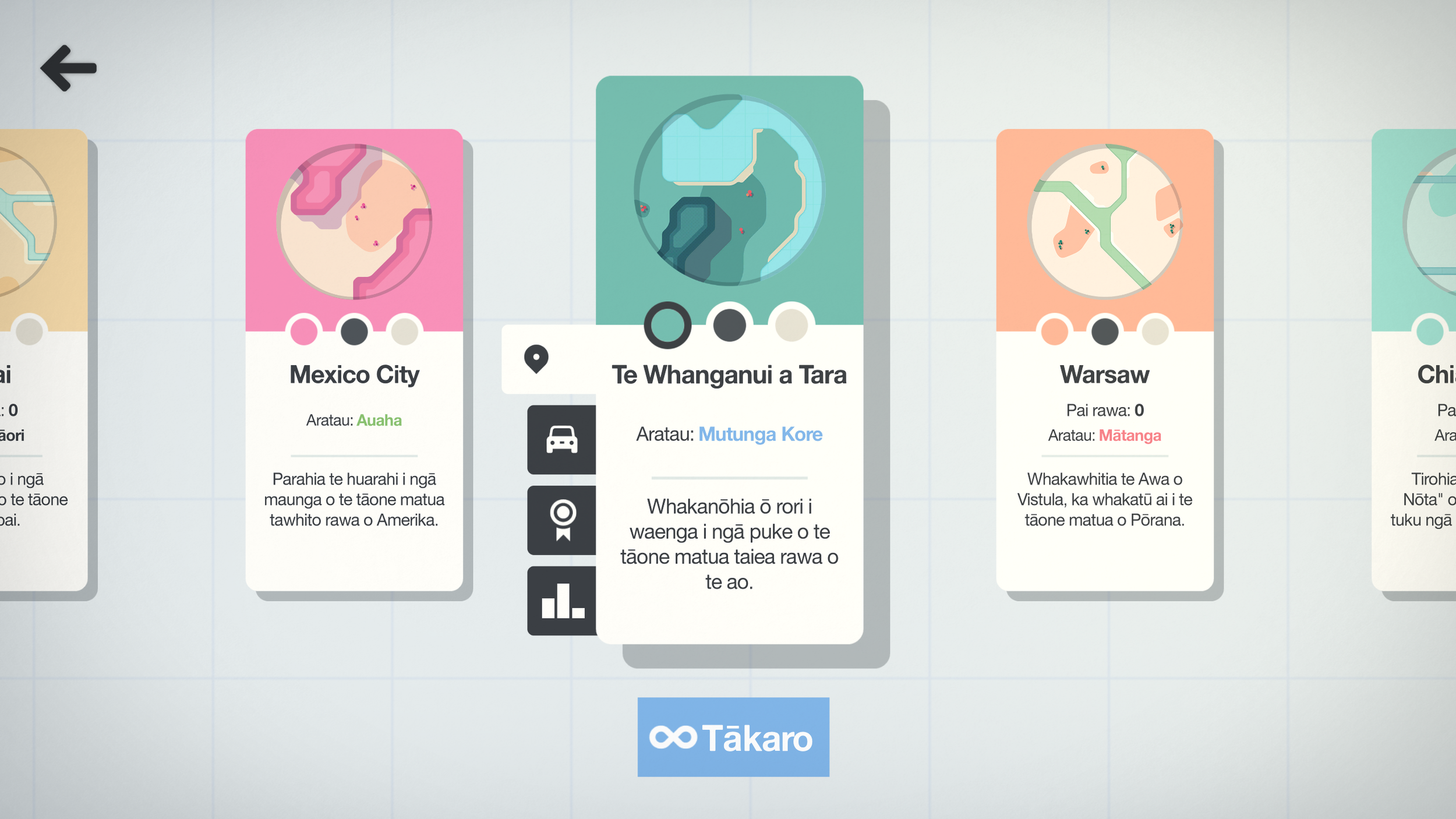
Mini Motorways introduced its full te reo Māori localisation last week, marking a major milestone for the Wellington studio. To explore how Rori Riki came to life, we’ve gathered insights from Casey Lucas Quaid, the studio’s Community and Engagement Lead, and Kristin Smith, Director of Kūwaha and the translator who shaped the game’s reo identity. Their perspectives reveal the cultural intent and partnership at the heart of this update.
Te reo Māori is described as a living language. How did that principle influence decisions about tone, phrasing, or interface design?
A living language just means a language that is spoken and used. So the principle applies to all languages you would have had translations done for. Unless you translate into Latin or Sumerian or something! Māori is a living language because people speak it. As translators, we try to ensure we are using language that actual speakers will understand, rather than out-of-use or obscure language.
I wonder if what you are thinking of is the theme of Te Wiki o te Reo this Year: “A Forever Language”? If so, then that connects to this mahi because keeping te reo accessible for the multifaceted nature of reo speakers, with different interests and communities we connect to. It’s cool to have te reo as an option for games, music, books, TV, movies, events, signs, spaces and more, now and forever!
How did tikanga Māori shape the workflow, team culture, or decision‑making during the localisation process?
At Kūwaha, we don’t claim to be tikanga experts, but we are really focused on what is tika and what is ethical. Also, as an organisation with both tauiwi and tangata whenua kaimahi, we ground our decision-making in te Tiriti – that is, the different relationships and responsibilities we hold. That’s why, alongside all our translation mahi and teaching te reo Māori, we also run workshops teaching people about the history of our relationships on this whenua, te Tiriti o Waitangi, the history of the Doctrine of Discovery, and how to hold anti-racist conversations with the people in our lives.
Mini Motorways is known for its minimalist aesthetic. How did you approach integrating te reo Māori into a design language built around simplicity and clarity?
What do you hope players unfamiliar with te reo Māori will feel when they encounter the language in the game for the first time?
We teach te reo Māori, and many of our students are newcomers to New Zealand. Our experience is that people from overseas, or people who are unfamiliar with te reo, are often really curious about Māori language and culture. We hope that when they see the Māori language in the game, they want to learn more!
Were there any concepts in Mini Motorways that were particularly difficult to translate into te reo Māori, and how did you resolve them?
Not really any concepts so much as grammatical constructions that just have different boundaries from English! Translations with numbered variables are always difficult for games, as te reo Māori has a slightly different format depending on what the number is. Also, Māori has some really long words that don’t fit as easily into character limits!
Some of the titles of challenges and prizes, etc are not direct translations either, but fun bits of language in te reo that often have a play on words or a double meaning for the player to notice (or not!)
What role do you think te reo Māori can play in global digital environments where millions of players interact daily?
Being monolingual is actually really rare across the world. In NZ, our mainstream culture sometimes can have a really aggressive commitment to monolingualism, which is a shame and often leads to further suppression of te reo Māori. So many monolingual English speakers don’t know what they’re missing! In a global digital environment, multiple languages are normal. It’s normal to speak the language of the place you live.
How do you balance creative freedom with cultural responsibility when representing Māori language and values?
Because at Kūwaha, we are not all Māori, when our tauiwi translator is working on something, she’s pretty cautious not to speak on behalf of Māori, or take up public-facing projects, or policy or decision-making projects that should sit with Māori. Translating games like Rori Riki, and staying mainly in the background, can be a good way to support access to te reo, without taking up too much space.
Also, cultural responsibility is embedded in our business practice fundamentally, as a portion of all income generated from translation work like this (and all our work!) goes towards funding free access to te reo classes, Tiriti education, translation services and other no-cost support for Māori groups and individuals.
Do you see games as a meaningful pathway for language revitalisation, especially for younger players?
Yes, absolutely, and this has been happening since the very beginning of the language revitalisation movement. As teachers of te reo, we know that games are essential to language learning. Maybe those games weren’t always available on computers or phones, but humans love to learn through play, and this game is a part of that long-standing legacy.
How might Indigenous storytelling influence future game mechanics, narratives or worldbuilding?
There are already many indigenous storytellers, both here in Aotearoa and around the world, who are continuing their own long traditions of storytelling, and some of them are already working in the games sector. We also see existing issues of cultural appropriation in the world of gaming right now that could have been avoided. We love to see indigenous peoples telling their own stories on their own terms.
In our consultation work in various sectors, we see a big positive difference where indigenous peoples are able to lead the decision-making right from the start of a project. This will, no doubt, also be true in the games sector.