Hunter’s Moon (2026)
Screening as part of Doc Edge 2026
Mountaineers Christina Lusti and Gee Pierrel are the first to summit and ski Mt Cook, in which they called their run “Hunter’s Moon.”
Hunter’s Moon is a documentary short that captures a rare kind of alpine achievement, but it does so with a rhythm that feels both breathtaking and uneven. The film follows mountaineers Christina Lusti and Gee Pierrel as they attempt something no one has done before: climb Aoraki Mt Cook via the demanding Jones Route and ski a first descent under the glow of a full moon. It is a bold premise, and the footage proves that the feat itself is extraordinary. Yet the storytelling moves so quickly that the emotional weight of the journey sometimes slips past before it can settle.
The film opens with sweeping shots of the mountain, its ridges sharp against the sky and its slopes covered in shifting snow. The cinematography is crisp, capturing the scale of the terrain with clarity. The camera lingers on the wind carving through the peaks, the clouds rolling across the summit, and the sheer exposure that defines high-altitude climbing. These early images establish the danger and beauty of the environment, reminding viewers that Aoraki is not a forgiving place.
Lusti and Pierrel appear as calm, focused figures moving through this landscape. Their partnership is built on trust, experience and a shared appetite for challenge. The documentary shows them preparing gear, assessing conditions and navigating the steep, rarely repeated Jones Route. The climb itself is demanding, requiring technical skill and mental endurance. The film conveys this through tight shots of crampons biting into ice, ropes sliding through gloved hands, and faces braced against harsh weather.
The short blends self-captured expedition footage with more cinematic shots, creating a hybrid style that feels authentic. The climbers’ own recordings show the rawness of the experience. Heavy winds, swirling snow and moments of hesitation appear without embellishment. These clips give the audience a sense of immediacy, as if they are standing beside the duo on the ridge. The more polished cinematography adds scale and beauty, offering a wider view of the mountain’s vastness.
However, the pacing of the film is relentless. The soundtrack is constant, built around a repetitive high-tempo beat that seems designed to elevate tension. Instead, it flattens it. When everything moves at the same pace, nothing stands out. The music rarely quiets, leaving little room for reflection or anticipation. The climb, the setbacks and the final descent all unfold with the same intensity, which reduces the emotional impact of each moment.
The documentary touches briefly on the failed first attempt. Wild weather forced Lusti and Pierrel to turn back, a reminder of how unpredictable alpine conditions can be. But the film does not pause long enough to let the disappointment sink in. It moves quickly to the second attempt, pushing forward without giving viewers time to absorb the significance of the setback. This choice mirrors the climbers’ perseverance, but it also limits the audience’s connection to their journey.
The second attempt is where the film’s title comes to life. Lusti and Pierrel climb again, navigating the steep route toward the Middle Peak. Their goal is not only to reach the summit but to ski down the east face, coincidentally under the full Hunter’s Moon. The idea is daring, almost surreal. Skiing a first descent in moonlight is something that sounds mythical. The documentary captures glimpses of this moment, showing the glow of the moon against the snow and the silhouettes of the skiers carving down the slope.
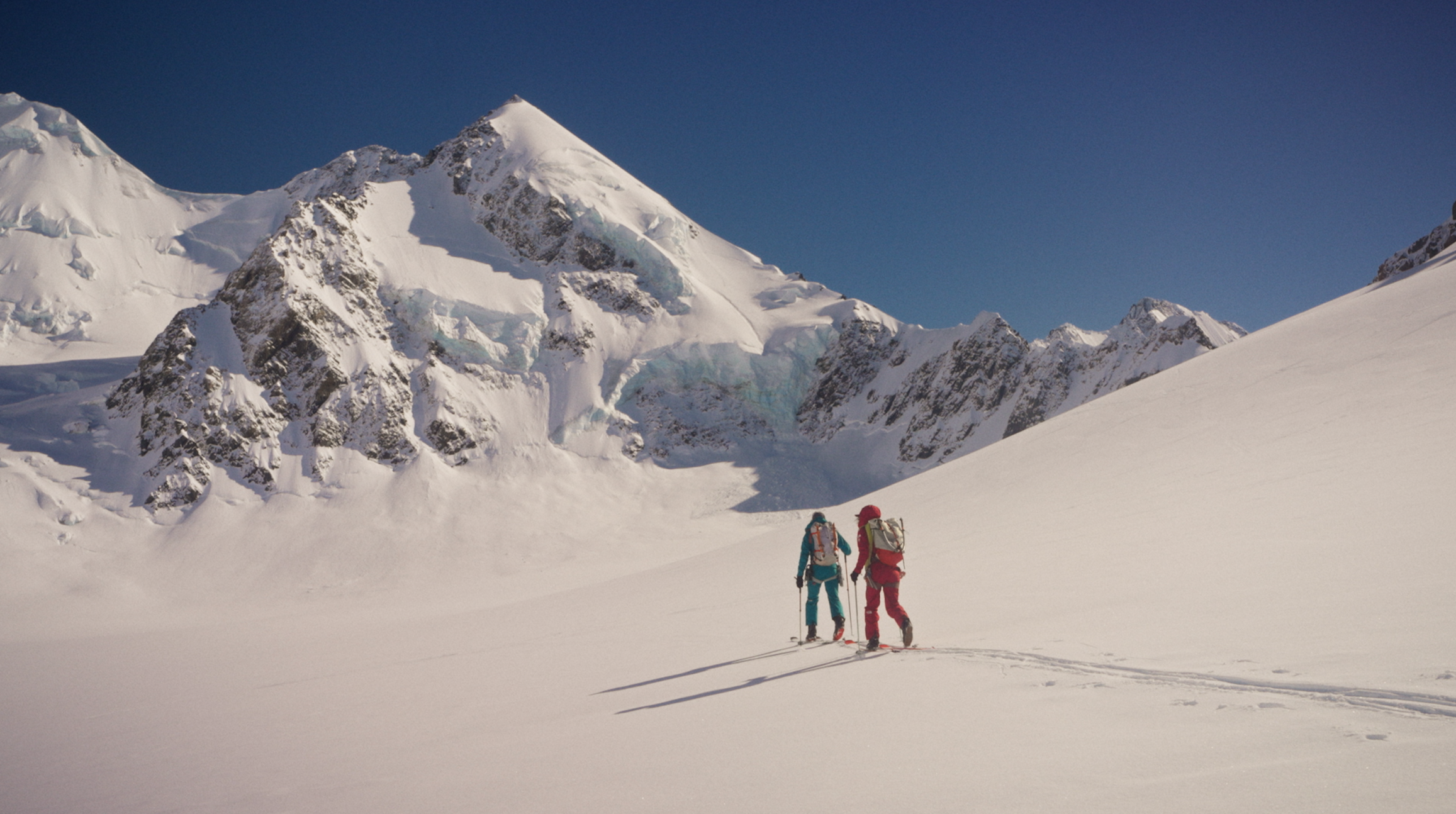
Yet the descent feels rushed. The film builds toward it, but when it arrives, the sequence is brief. The audience sees the beauty, the danger and the skill, but the moment passes quickly. It is visually stunning, but the pacing does not allow it to land with full force. The short seems eager to reach the climax, and in doing so, it moves past the emotional payoff that the journey deserves.
Despite this, the film succeeds in portraying the physical and mental demands of alpine ski mountaineering. The exposure is constant. Every step requires precision. Every turn on the descent carries risk. The documentary shows how much trust is required between partners, how much calculation goes into each decision and how much resilience is needed to attempt something so rare. Lusti and Pierrel’s determination is clear, even when the film does not linger on their internal struggles.
The scenery is one of the film’s strongest elements. The shots of Aoraki’s ridges, the swirling snow and the moonlit descent are genuinely beautiful. The mountain feels immense, almost otherworldly. The cinematography captures the textures of the snow, the sharpness of the ice and the shifting light in a way that makes the environment feel alive. These visuals elevate the short, giving it a sense of grandeur even when the pacing falters.
The documentary also highlights the unique nature of ski mountaineering. It is not simply climbing. It is not simply skiing. It is a combination that requires technical skill, physical strength and a willingness to face extreme exposure. The film shows how each turn on the descent is shaped by the terrain, the snow conditions and the climbers’ ability to read the mountain. It is a sport defined by risk, and the documentary conveys that clearly.
Where the film could have benefitted from more depth is in its emotional storytelling. The climbers’ personalities appear in glimpses, but the short does not explore their motivations or reflections. The audience sees their skill, their determination and their partnership, but not much of their inner world. A slower pace, quieter moments or more space between sequences could have strengthened the connection between viewer and subject.
Still, Hunter’s Moon is engaging. It is visually striking, technically impressive and built around a remarkable achievement. The climb and descent are real, dangerous and rare. The documentary captures the essence of that feat, even if it moves too quickly to fully explore its emotional layers. It is a short that celebrates perseverance, skill and the beauty of high-altitude adventure.
In the end, the film leaves viewers with admiration for Lusti and Pierrel. Their accomplishment is extraordinary, and the documentary honours it with stunning imagery and a sense of urgency. It is a fast-paced, visually rich look at a once-in-a-lifetime descent, even if it could have benefited from more quiet moments to let the story breathe.
Screening as part of Doc Edge 2026. Check out the films and screenings here
Review written by Alex Moulton
