Let Our Mountains Live (La Fjella Leve) (2026)
Screening as part of Doc Edge 2026
Sámi reindeer herders Sissel Stormo Holtan, Terje Haugen, and Elise Holtan Pavall have spent two decades fighting Europe’s largest wind power project, built across vital Sámi reindeer grazing lands in Norway. Before legal challenges were resolved, 151 turbines were installed. In a landmark ruling, the Supreme Court found the wind farm violated Sámi human rights, raising hopes the land would be restored. But the government refused to act, backing powerful energy interests and proposing coexistence. Now the reindeer herders face an impossible choice: accept a €14 million settlement to relocate, or continue a long legal battle.
Let Our Mountains Live unfolds like a long breath held too long, a documentary that captures not only a political standoff but the emotional fatigue of a community forced to fight the same battle again and again. Director Håvard Bustnes, working closely with Sámi filmmakers Johannes Vang and Kati Eriksen, follows the reindeer herders of Fosen as they navigate a legal maze that should have ended years ago. Instead, it stretches on, looping back on itself, leaving the people at its centre caught between hope and exhaustion.
The film opens with a jarring contrast. Snow‑covered mountains, still and ancient, fill the frame. The wind hums. Birds call. Then an explosion tears through the quiet. Rock fragments scatter. The land shakes. The sequence is simple, but it sets the tone for everything that follows. This is not a story about progress. It is a story about intrusion.
The turbines that rise from the mountains are not just structures. They are symbols of a decision made without consent. Before the courts could rule on the legality of the project, 151 turbines were installed across the only winter grazing area that does not freeze. The Supreme Court later declared the project a violation of Sámi human rights, yet the turbines remain. The ruling sits on paper. The land remains altered. The herders continue to wait.
Bustnes chooses not to narrate or editorialise. Instead, he places the audience beside the herders as they move through courtrooms, ministry offices, and protest sites. The camera lingers on faces, pauses on silences, and captures the subtle shifts in tone when government officials speak. The film trusts viewers to recognise the evasions, the contradictions, the bureaucratic dance that keeps justice at arm’s length.
The legal proceedings become the backbone of the documentary. The 2024 Oslo District Court case, The State vs Sámi Activists, is the thread that ties the narrative together. Through it, the film explores the government’s reluctance to act, the energy companies’ determination to hold their ground, and the activists’ refusal to be silenced. The courtroom scenes are gripping, not because of dramatic outbursts, but because of the quiet, calculated language used to delay, deflect, and diminish responsibility.
Yet as compelling as these institutional spaces are, they also create a sense of confinement. The film spends so much time in meeting rooms and legal chambers that the land itself sometimes feels distant. You hear about the impact on reindeer herding, but you rarely see it. The documentary explains that the turbines disrupt migration patterns, scatter herds, and destroy winter grazing land, but much of this arrives through testimony rather than observation. You want to be out on the snow with the herders. You want to see the reindeer struggling to navigate the altered terrain. You want to feel the cultural stakes, not just understand them.
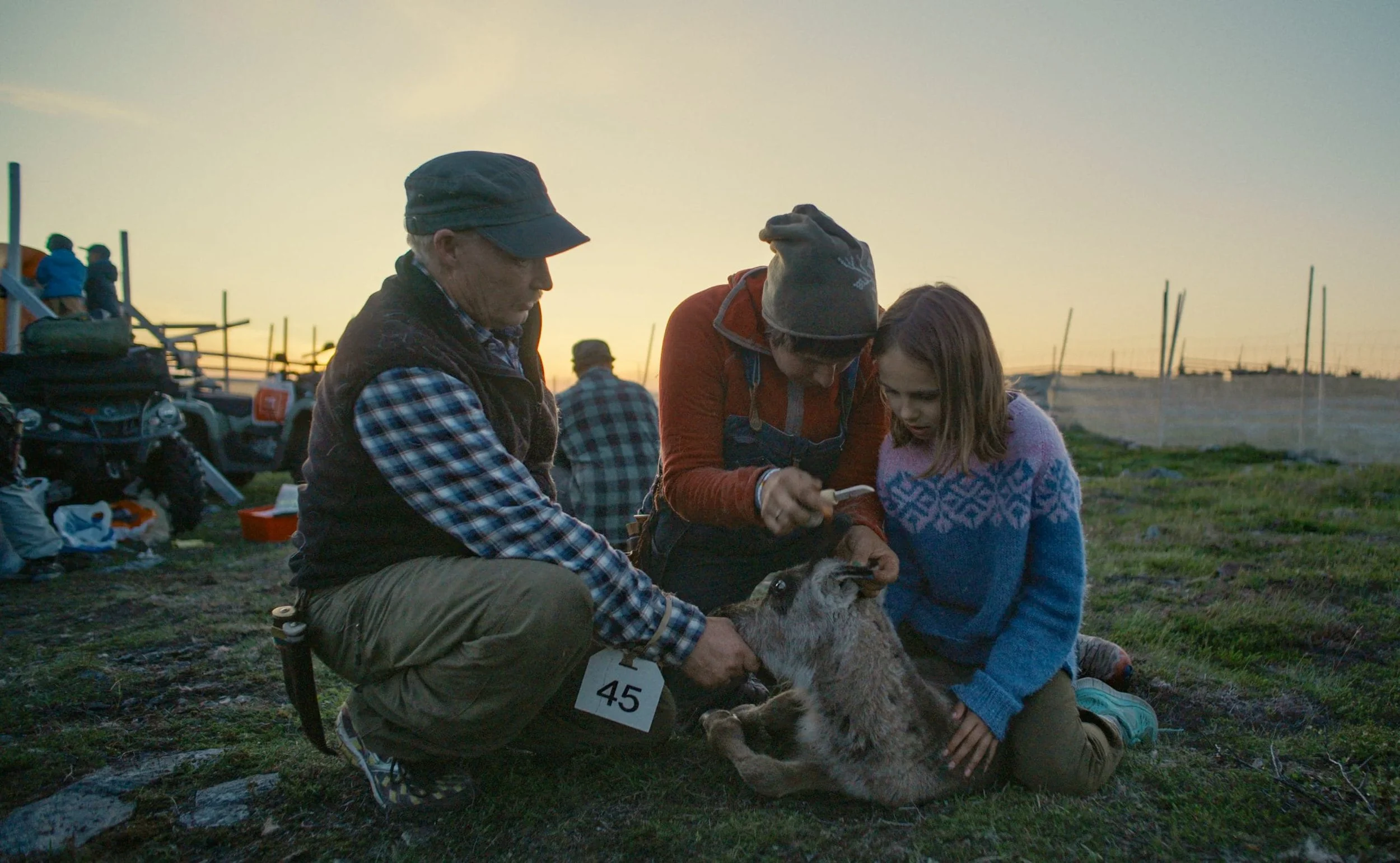
This absence becomes one of the film’s quiet frustrations. The legal fight is important, but the heart of the story lies in the relationship between the Sámi and the land. Herding is not a profession. It is a cultural inheritance, a way of life passed down through generations. The film acknowledges this, but the institutional focus sometimes overshadows it. You sense the weight of what is being lost, but you want more time with the people who live that loss daily.
Still, the documentary’s clarity is undeniable. It shows how easily rights can be pushed aside when money enters the conversation. The government’s reluctance to remove the turbines is not subtle. They are backed by major energy and banking interests. They want coexistence, a word that sounds reasonable until you realise it means the Sámi must adapt to the turbines, not the other way around. The film makes it painfully clear that legal victories mean little when the state refuses to enforce them.
The activism that emerges in response becomes one of the film’s most powerful elements. Young Sámi protestors stage sit‑ins, block entrances, and refuse to let the issue fade. Their actions are peaceful, organised, and rooted in cultural pride. The government responds by physically removing them and suing them. The irony is sharp. The state sues activists for drawing attention to a human rights violation the state itself refuses to fix.
The community’s unity is striking. Herders travel long distances to stand together. Families support each other. The protests become a gathering point for generations. The film captures the strength that comes from collective action, even when the odds feel insurmountable. There is a sense that the fight is no longer just about land. It is about dignity. It is about refusing to be erased.
Bustnes’ filmmaking team brings a strong visual sensibility to the documentary. The landscapes are captured with a vibrancy that makes the stakes feel physical. The editing gives space for pauses, glances, and unspoken thoughts. You can read frustration in the herders’ eyes. You can see the strain in their posture. The film trusts the audience to sit with these moments without explanation.
What lingers most is the sense of imbalance. The Sámi have two choices: accept a settlement that forces them to relocate, or continue a legal battle that could stretch another decade. Neither option is just. Neither option is fair. The film forces you to confront the reality that justice on paper does not guarantee justice in practice.
The documentary also raises broader questions about the cost of green energy. It does not attack renewable power. Instead, it asks viewers to consider who pays the price when sustainability is pursued without consultation. The turbines provide clean energy, but they also destroy a cultural landscape. The film argues that environmental progress cannot come at the expense of Indigenous rights.
In the end, Let Our Mountains Live is a documentary that leaves you with a knot in your stomach. It is beautifully shot, carefully constructed, and deeply informative. But it is also frustrating, because the story itself is frustrating. The herders win in court, yet nothing changes. The government acknowledges the ruling, yet refuses to act. The turbines remain. The land remains altered. The fight continues.
It is a film that forces you to sit with the uncomfortable truth that justice can be delayed indefinitely when powerful interests are involved. It is a reminder that activism is often the only tool left when institutions fail. And it is a call to recognise that even the most well‑intentioned environmental projects can become destructive when imposed without consent.
Screening as part of Doc Edge 2026. Check out the films and screenings here
Review written by Alex Moulton
