Love Birds (2025)
Screening as part of Doc Edge 2026
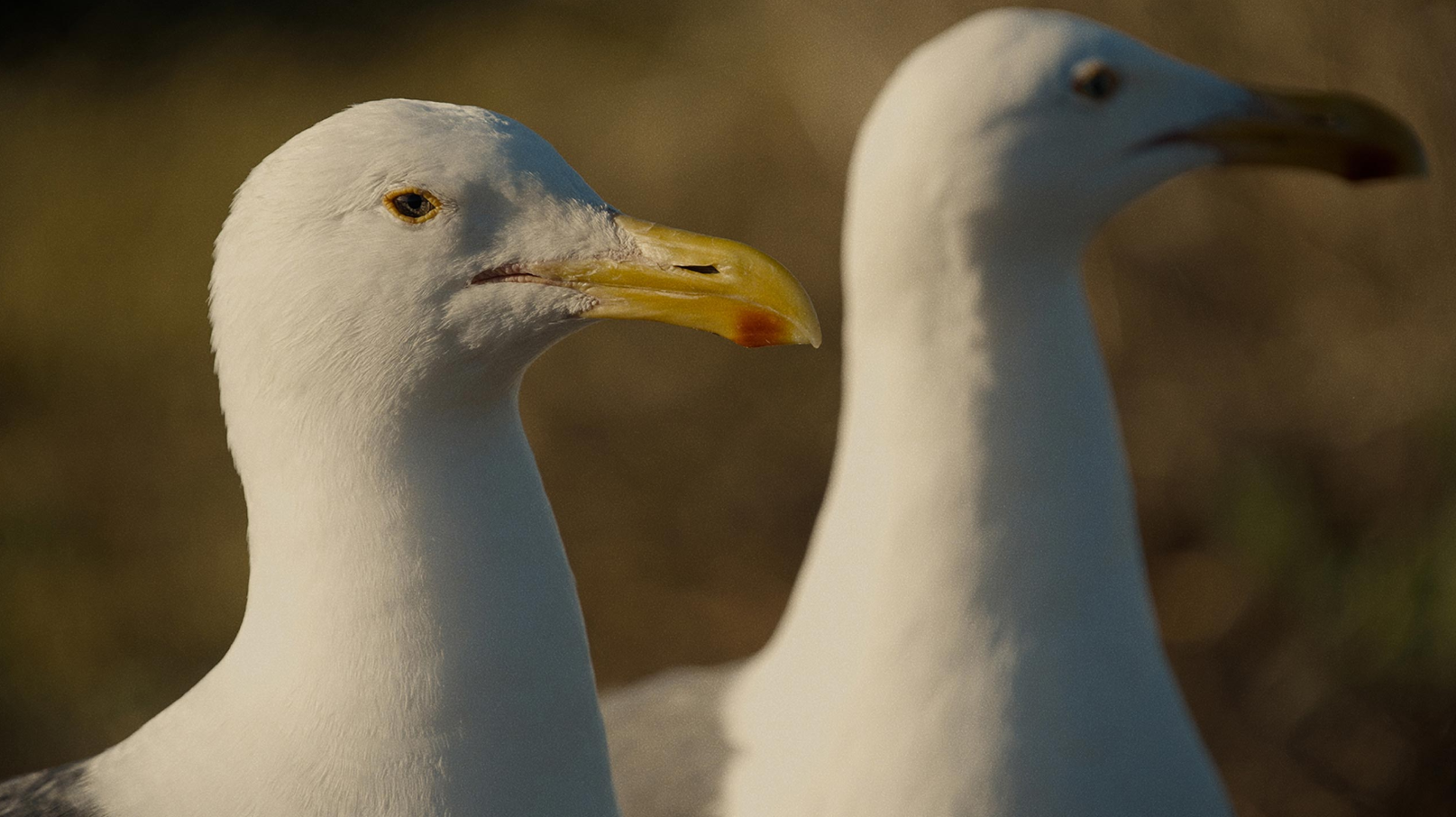
In 1972, married biologists George Hunt and Molly Warner make an unprecedented discovery while studying seagulls on one of California’s Channel Islands. To their surprise, a great number of the nesting pairs they observe are both female.
Love Birds is one of those documentary shorts that begins with a simple scientific curiosity and then spirals outward into something far stranger, funnier, and more emotionally layered than you expect. It revisits a moment in 1972 when two young biologists, George Hunt and Molly Warner, stumbled onto a discovery that would ripple far beyond the quiet Channel Islands where they were studying gull behaviour. What they found was not a rare mutation or a new species, but something far more socially explosive for the era: a surprising number of nesting pairs were both female.
The film treats this revelation with a light touch at first. Old slides flicker across the screen, the kind of sun‑bleached images that instantly place you in the early seventies. The editing leans into the charm of the archival material, letting the photographs and field notes do much of the storytelling. It is visually delightful, almost playful, and the format works beautifully. You feel like you are paging through someone’s research scrapbook, complete with scribbles, snapshots, and the occasional moment of accidental comedy.
But the documentary quickly reveals that this discovery was not just a quirky footnote in natural history. In a time when homosexuality was still widely condemned as unnatural, the existence of “gay gulls” became a cultural flashpoint. The media seized on the story. Politicians weighed in. The scientific community argued. And suddenly, two field biologists found themselves at the centre of a national conversation they never intended to start.
The film captures this escalation with humour and a bit of disbelief. The archival headlines are absurd. The interviews from the period are even more so. Yet beneath the humour lies something poignant. The discovery became a rallying point for early LGBTQ+ advocacy, a natural counterargument to the idea that queerness was a human invention. The documentary acknowledges this significance without overstating it, showing how a small ecological observation unexpectedly intersected with a much larger cultural shift.
Where the film becomes more complicated is in its attempt to weave this scientific and political story together with the personal relationship between Hunt and Warner. The documentary positions their romance as a parallel narrative, tracing how the pressures of research, media attention, and diverging career paths slowly pulled them apart. There is tenderness in the way they speak about each other now, decades later. You can sense the affection that remains, even as they recount the slow unraveling of their partnership.
But this dual‑track structure is also where the film feels stretched. The scientific discovery is fascinating. The media frenzy is wild. The queer history angle is important. And the relationship drama is compelling. Yet the short format cannot fully explore all of these threads. The result is a film that feels like three strong stories competing for space. Each one deserves more time than the documentary can give.
For example, the explanation of why so many female‑female pairs existed is delivered almost as an aside. It is scientifically interesting, but the film moves past it quickly, as if afraid to linger too long on any one idea. Similarly, the emotional strain on Molly as George’s career accelerates is touched on, but not deeply explored. You understand the tension, but you do not fully feel it. The LGBTQ+ advocacy angle is powerful, yet it too feels compressed, using multiple montages to reference, rather than unpack it.
This fragmentation does not ruin the film, but it does leave you wishing it had chosen a clearer centre. It could have been a sharp, funny exploration of queer representation in the natural world. It could have been a bittersweet portrait of two scientists whose relationship was reshaped by the pressures of their work. It could have been a cultural history of how one ecological discovery became a political symbol. Instead, it tries to be all three, and the emotional impact of each is softened as a result.
What holds everything together is the tone. The documentary is genuinely funny. The humour is gentle, never mocking, and often comes from the scientists themselves. Hunt and Warner speak with a mix of nostalgia and amusement, fully aware of how strange their story sounds in retrospect. Their affection for the gulls, for the research, and even for each other gives the film a warmth that keeps it from feeling like a dry historical recap.
The visual storytelling also elevates the material. The use of slides, field notes, and old photographs is not just decorative. It creates a sense of intimacy, as if the audience is being invited into the private world of two young researchers who had no idea their work would become a cultural lightning rod. The editing is crisp, the pacing lively, and the archival material is handled with care.
In the end, Love Birds succeeds most as a portrait of two people looking back on a moment that shaped their lives in ways they never anticipated. It is charming, funny, and unexpectedly touching. It highlights a strange chapter in scientific history while acknowledging the broader social implications. And even though the film tries to cover more ground than it can fully explore, it remains engaging throughout.
If anything, the documentary leaves you wanting more. More about the science. More about the relationship. More about the LGBTQ+ movement that embraced the discovery. Each thread is strong enough to support its own film. But as a short, Love Birds offers a lively, affectionate snapshot of a moment when nature, politics, and personal lives collided in the most unexpected way.
Screening as part of Doc Edge 2026. Check out the films and screenings here
Review written by Alex Moulton
