Music and the Mystical Experience (2026)
Screening as part of Doc Edge 2026
Musician and sound engineer Michael Sutherland takes us on a metaphorical tour of his latest musical project involving over twenty talented New Zealanders, aimed at aiding the controversial practice of psychedelic therapy. Weaving artist interviews, numerous performances, and appearances from veterans in the psychedelic field, including Chris Bache, the film gives an insight into how music enhances a psychedelic therapy session, and how much thought and effort goes into getting that music just right.
Music and the Mystical Experience is a feature documentary that follows musician and sound engineer Michael Sutherland as he attempts something unusual. He brings together a large group of New Zealand musicians to create music designed to support psychedelic therapy. The idea sounds strange at first, almost too ambitious, but the film treats it with a calm curiosity that makes the project feel both sincere and surprisingly grounded.
The documentary opens with Sutherland explaining the intention behind the music. He wants to understand how sound can shape a psychedelic session, how certain tones and rhythms can help people move through difficult emotional terrain, and how music can support the mystical experiences that often arise during psilocybin therapy. Instead of approaching this as a loose jam session, he builds the project on years of research into neuroscience, psychedelics, and sound engineering. The musicians are not just playing. They are responding to prompts, visuals, and carefully designed cues meant to guide them into a shared flow state.
The recording sessions form the heart of the film. They take place over three long days, each one shaped by ritual and intention. The musicians gather in a circle, surrounded by instruments, projection screens, and a quiet sense of purpose. Before each performance, they draw prompt cards based on research from Johns Hopkins University. These cards contain musical traits known to support mystical experiences during therapy. The musicians use them as gentle guides, choosing a few at random and letting them influence the direction of their improvisations.
The film shows how these sessions blend science with intuition. The musicians are encouraged to play freely, but they are also asked to consider how their choices might affect someone in a vulnerable state. Sudden changes in rhythm can pull a listener out of a deep moment. Sharp transitions can create anxiety. Too much structure can make the mind latch onto patterns instead of letting go. The music needs to feel open, supportive, and spacious. It needs to move without forcing anything. Watching the musicians navigate this balance is one of the most interesting parts of the film.
There is a gentle reverence in the way the sessions unfold. The musicians treat the space with care, acknowledging the purpose behind the project. The film hints at the influence of indigenous traditions, where music is often created through visionary experience and used as a form of healing. The musicians are not trying to imitate these traditions, but they are inspired by the idea that music can emerge from a place of intention and connection. The sessions feel less like performances and more like collective acts of listening.
Visually, the documentary keeps things simple. The camera moves quietly through the room, capturing small details without interrupting the musicians. The lighting is soft, often shaped by the projections used to guide the improvisations. Interviews are woven into the sessions, giving context without breaking the flow. You get the sense that filming these moments was not easy. A camera crew could easily disrupt the atmosphere, and the film seems aware of this. It shows enough to make you feel present, but not so much that it intrudes.
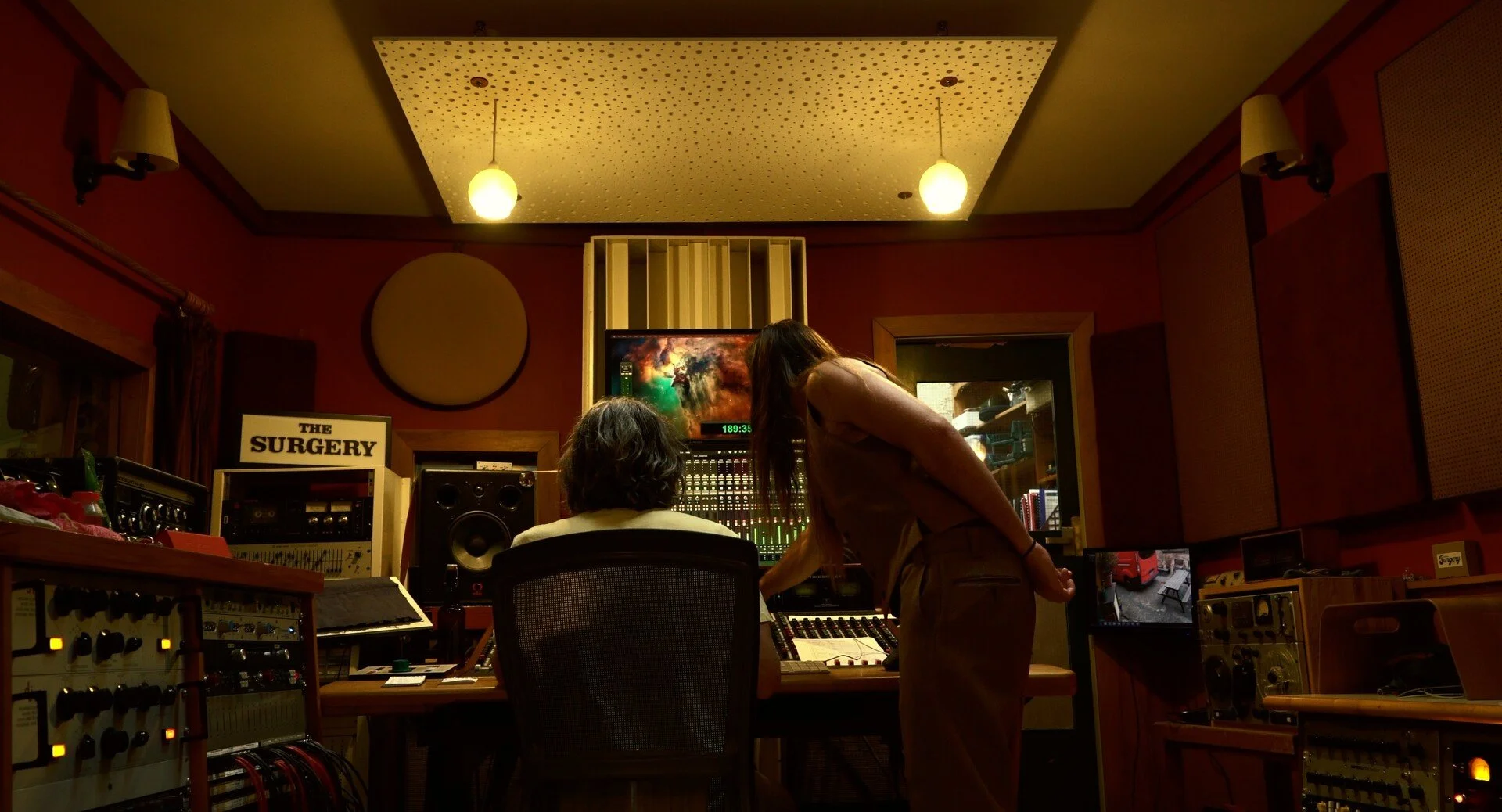
After the recording sessions, the film shifts to the long process of editing and sound design. Sutherland spends a year shaping the raw material into a six-hour album meant to accompany a full psilocybin therapy session. He studies the structure of psychedelic experiences and arranges the music to match the phases. Ambient and supportive pieces guide the listener into the session. Cinematic and intense sections carry them through the peak. Softer tones help them return. The editing process is meticulous, but the film presents it in a calm, almost meditative way.
One of the most interesting ideas in the documentary is the concept of musical cohesion. In many therapy sessions, guides change tracks frequently, which can interrupt the experience. Sutherland wants to create a continuous flow that reduces the need for intervention. The musicians use scientific data to shape their improvisations, aiming for music that feels unified even when created spontaneously. The film explains this without getting too technical. It keeps the language simple, focusing on the emotional impact rather than the theory.
There is a moment where the musicians talk about the lack of musicality in certain therapeutic tracks. It sounds counterintuitive, but it makes sense. Music that is too catchy or rhythmic pulls the mind into analysis. For people trying to relax or drift into a different state, this can be distracting. As someone who struggles with insomnia, I understand this deeply. A song that grabs your attention becomes something you think about instead of something you float through. The film touches on this idea gently, showing how the musicians try to create sound that supports rather than demands.
The documentary also explores the tension between intention and projection. The musicians insist that the project is for science and therapy, but there are moments where it feels like they are reaching for something more symbolic. This is not a criticism. It is part of what makes the film interesting. The line between genuine intention and personal projection is thin, especially when dealing with something as subjective as mystical experience. The film does not try to resolve this tension. It simply shows it and lets the viewer decide how they feel.
By the end, Music and the Mystical Experience becomes a quiet reflection on creativity, healing, and the strange ways music interacts with consciousness. It is not flashy. It is not dramatic. It is patient and thoughtful, shaped by people who care deeply about their craft. The film leaves you with a sense of curiosity about the six-hour album. You want to hear how all these ideas come together. You want to know what it feels like to listen to music designed for transcendence.
It is an intriguing feature, one that stays with you long after it ends. It shows how sound can become a bridge between science and spirituality, and how musicians can create something meaningful when they listen closely to each other and to the purpose behind their work.
Screening as part of Doc Edge 2026. Check out the films and screenings here
Review written by Alex Moulton
