Gloria (2026)
Screening as part of Doc Edge 2026
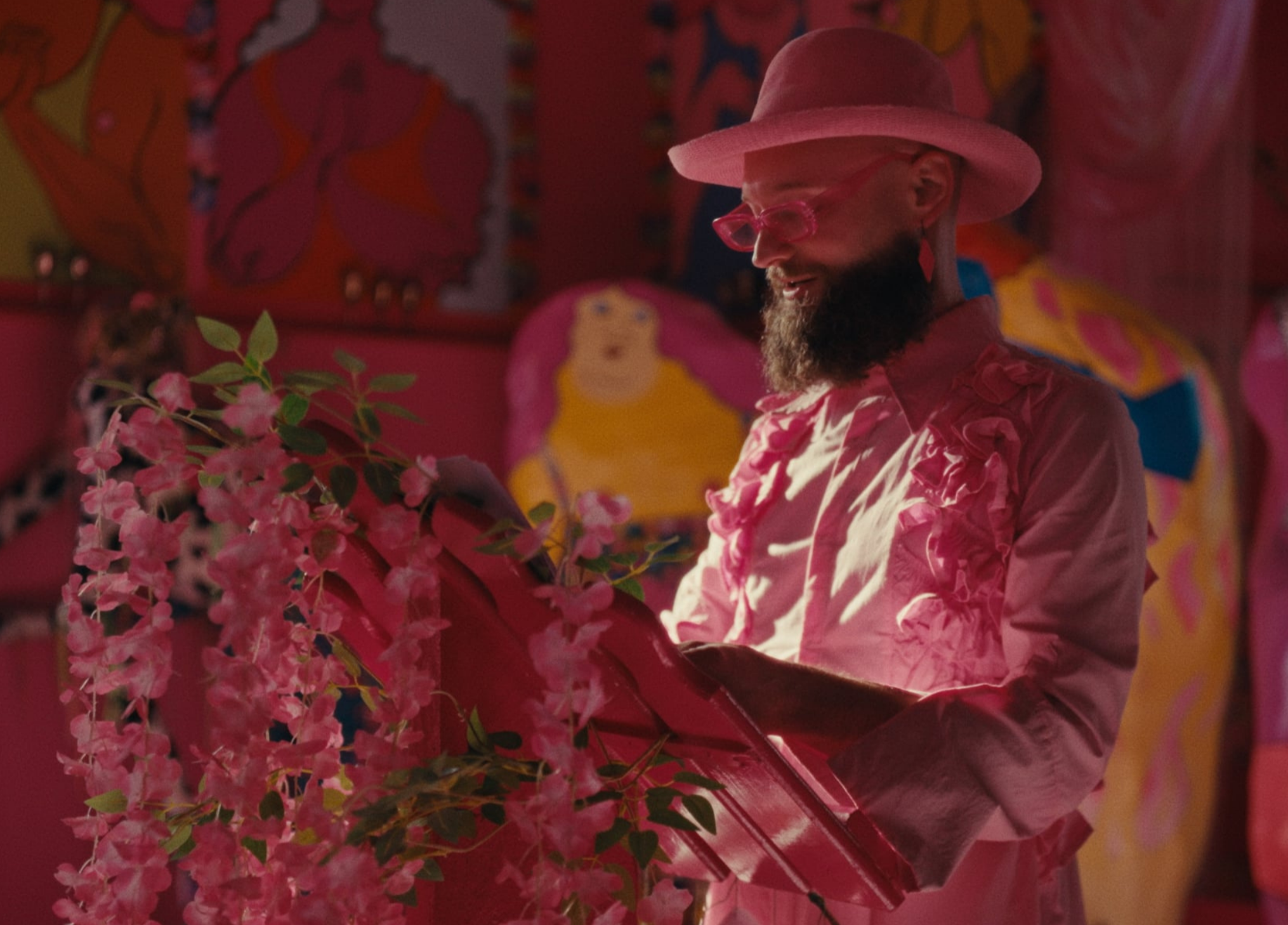
In Greymouth, Sam, a queer artist, paints a church pink and fills it with paper-mâché parishioners. Is art ever truly finished, or does it keep evolving like the people who make it?
Gloria is a quiet, eccentric, and unexpectedly moving portrait of one artist’s attempt to build a world that reflects who he is, even when the world around him does not. Set in Greymouth, a small and conservative town on the West Coast, the documentary follows Sam, a queer artist who has spent years transforming an old Anglican church into a shimmering pink sanctuary. The building is no longer a place of worship in the traditional sense. It is a home, a studio, a refuge, and a living artwork that keeps shifting as Sam shifts.
The premise is simple. Sam paints the church pink. Not a soft pastel pink, but a bold, unapologetic, hot pink that radiates from the screen. Inside, he fills the space with paper‑mâché parishioners, each one handmade, each one a companion of his own creation. They sit in the pews, they populate the corners, they watch over him as he works. The effect is both whimsical and haunting. It is a church full of people who will never judge him, never reject him, never leave.
The film is not interested in explaining Sam. Instead, it lets him talk. He reflects on colour, on loneliness, on identity, on the strange power of pink. He wonders why pink is so divisive, why it carries so much cultural baggage, why it can be both joyful and threatening depending on who sees it. He talks about art as a full‑time job, not in the sense of career ambition, but in the sense that self‑expression is something he cannot switch off. He talks about isolation, and the difference between choosing to be alone and feeling lonely anyway.
The documentary’s strength lies in its restraint. It does not push Sam toward a narrative arc. It does not try to resolve his questions. It simply observes him as he works on Gloria, a project that has consumed four years of his life and still refuses to be finished. The church is a living thing. When one idea ends, another begins. When one layer dries, he adds another. The film asks whether art is ever truly complete, or whether it evolves alongside the person who makes it.
The church itself becomes a metaphor for identity. A traditional Anglican building, repainted in a colour that many people still associate with femininity, queerness, or frivolity. A place once meant for communal worship, now inhabited by a single man and a congregation of paper figures. A structure rooted in history, transformed into something defiantly personal. Sam’s Gloria is not a rebellion so much as a reclamation. It is a space where he can exist without compromise.
The paper‑mâché parishioners are some of the most striking elements of the film. They are crude, charming, slightly uncanny. They fill the silence. They give Sam company in a town where he often feels like an outsider. They are also a reminder that community can be created, not just inherited. Sam builds the people he wishes he had around him. He gives them shape, posture, personality. They are not substitutes for real connection, but they are symbols of the connections he longs for.
The documentary also touches on the tension between solitude and social interaction. Sam lives alone, but he is not cut off. He goes out. He observes people. He reflects on how he feels in public spaces. He notices how others respond to him. The film captures the complexity of being someone who enjoys solitude but still feels the ache of isolation. It is a delicate balance, and the documentary handles it with sensitivity.
What makes Gloria compelling is its refusal to sensationalise. It does not frame Sam as tragic or heroic. It does not turn his queerness into a spectacle. It simply presents him as a person navigating his life through art. His reflections are thoughtful, sometimes humorous, sometimes melancholic. He questions himself. He questions his choices. He questions the meaning of the space he has created. The film allows these questions to sit unanswered.
If you let someone talk long enough, they reveal who they really are. The documentary takes this idea to heart. It gives Sam time. It gives him silence. It gives him room to contradict himself, to circle back, to reconsider. Through this, the audience begins to understand him not through explanation, but through presence.
The cinematography is simple but effective. The pink walls glow softly in natural light. The paper figures cast long shadows. The church feels both intimate and cavernous, depending on the moment. The camera lingers on textures: peeling paint, drying glue, fabric scraps, glitter. These details reinforce the sense that Gloria is always in progress, always becoming.
The film also acknowledges the community around Sam. Gloria is not just his sanctuary. It is an invitation. A place where others can come to express themselves without judgement. A space that encourages play, experimentation, and vulnerability. The documentary suggests that while Sam built Gloria for himself, it has become something larger, something that offers others the freedom he had to carve out for himself.
In the end, Gloria is not a story about a pink church. It is a story about the ongoing process of becoming. About the ways art can hold a person together. About the tension between solitude and connection. About the courage it takes to create a world that reflects who you are when the world around you does not.
It is gentle, strange, and quietly profound. A portrait of a man, a space, and the evolving relationship between them.
Screening as part of Doc Edge 2026. Check out the films and screenings here
Review written by Alex Moulton
