The Weight of the World (2026)
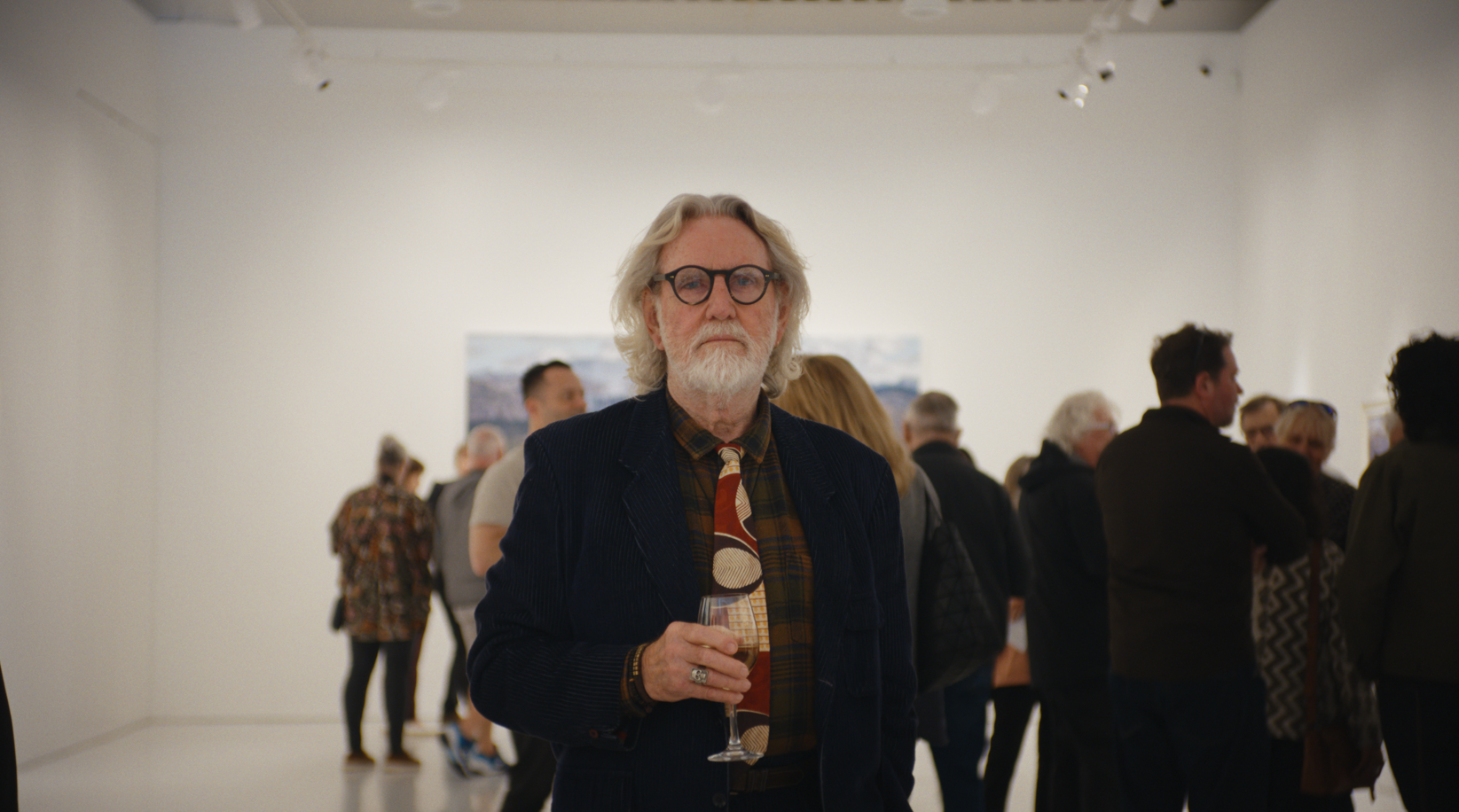
Screening as part of Doc Edge 2026
From first pencil line to gallery unveiling, this film follows iconic New Zealand artist Dick Frizzell as he creates a new landscape painting — revealing his process, his wit, and the weight of making art that matters.
Some artists carry their reputations like armour. Others carry them like a joke they are still enjoying. The Weight of the World, a short documentary following Dick Frizzell as he builds a new landscape painting from scratch, reminds us that Frizzell has always been both kinds of artist at once. The film is small, gentle, and deceptively simple, offering a close look at a painter who has spent decades slipping between high art and pop culture with a grin that suggests he never fully believed in the boundaries anyway.
The documentary begins with a blank canvas. Frizzell stands in front of it, talking about memory, place, and the strange pressure that comes with starting something new. He has painted everything over the course of his career: landscapes, cartoons, fish‑tin labels, abstract works, parodies of Picasso, riffs on McCahon, and Kiwiana motifs that became part of New Zealand’s visual vocabulary. He has been a commercial artist, a fine artist, a pop‑culture figure, and a painter who refuses to sit neatly in any category. The film captures this history not through exposition, but through the way he approaches the canvas.
Watching Frizzell paint is oddly intimate. The documentary feels less like a formal portrait and more like sitting in his studio while he chats. He moves between brushes, sketches, colour mixing, and small decisions that seem instinctive. There is no narration explaining technique. No academic framing. No attempt to turn his process into a lesson. Instead, the camera simply observes. His brushwork is quick, confident, and occasionally chaotic. His palette is a mess of colours that somehow make perfect sense once they land on the canvas.
This casual tone is part of the film’s charm. Frizzell has always played with the idea of seriousness in art. To the art world, he is the painter who makes light of tradition. To the public, he is the painter who makes art feel accessible. The documentary leans into this duality. It shows him joking, reflecting, and occasionally poking fun at himself. It also shows the weight he carries as someone who has spent a lifetime reinventing his practice. Reinvention is not effortless. It is a kind of burden, even when approached with humour.
The film touches lightly on Frizzell’s history. Born in 1943, he spent years in commercial art before shifting into fine art in the 1970s. His early works were cheeky, irreverent, and full of pop references. He painted comic‑book frames, fish tins, and mock‑heroic portraits. He blurred the line between commercial imagery and high art, challenging the idea that painting had to be solemn to be meaningful. Over time, he expanded into landscapes and more traditional subjects, but even those carry his unmistakable sensibility. His landscapes are not quiet pastoral scenes. They are bold, bright, and full of personality.
The Weight of the World does not attempt to summarise all of this. Instead, it lets Frizzell’s personality do the work. He talks about memory and place with a mixture of sincerity and mischief. He acknowledges the pressure of the blank canvas, but he also shrugs at it. He has been doing this long enough to know that the weight of expectation is part of the job. The film’s title hints at this tension. Painting is both a joy and a responsibility. It is a way of engaging with the world, and sometimes the world feels heavy.
The documentary’s strength lies in its specificity. We see the brushes he prefers. The way he lays out his palette. The way he sketches the first lines. The way he shifts between detail and broad strokes. These small choices reveal more about his practice than any biography could. They show how much of his work is instinctive, shaped by decades of experimentation. They also show how much of his identity as an artist is tied to playfulness. Even when he is serious, he is not solemn.
There is a warmth to the film that feels like catching up with an old friend. Frizzell speaks openly, without pretense. He reflects on the places that shaped him, the images that linger in his mind, and the odd responsibility of being considered an iconic New Zealand artist. He does not treat the title lightly. He knows what it means to be part of the country’s cultural landscape. But he also knows that the best way to carry that weight is to keep painting, keep experimenting, and keep laughing at the absurdity of it all.
The documentary also gestures toward the tension between art and commerce that has defined Frizzell’s career. He has always moved between the two worlds, sometimes blurring them so thoroughly that critics did not know how to categorise him. He made commercial work that looked like fine art. He made fine art that looked like commercial work. He played with branding, iconography, and nostalgia. He challenged the idea that art had to be separate from everyday life. The film does not analyse this directly, but it is present in every brushstroke.
What makes The Weight of the World compelling is its refusal to turn Frizzell into a myth. It does not present him as a genius or a legend. It presents him as a working artist, still curious, still restless, still willing to start again with a blank canvas. The film’s intimacy comes from this honesty. It shows the process, not the pedestal.
The final moments of the documentary reveal the completed painting. It is recognisably Frizzell: bold, colourful, and full of life. But the journey to get there is what matters. The film invites viewers to appreciate the act of creation, the small decisions, the humour, the frustration, and the quiet satisfaction of making something new.
The Weight of the World is not a grand retrospective. It is not a deep dive into art history. It is a gentle, affectionate portrait of a man who has spent his life painting, thinking, and reinventing. It is a reminder that art does not always need to be explained. Sometimes it just needs to be watched.
Screening as part of Doc Edge 2026. Check out the films and screenings here
Review written by Alex Moulton
