The Place Where Memories Hide (2026)
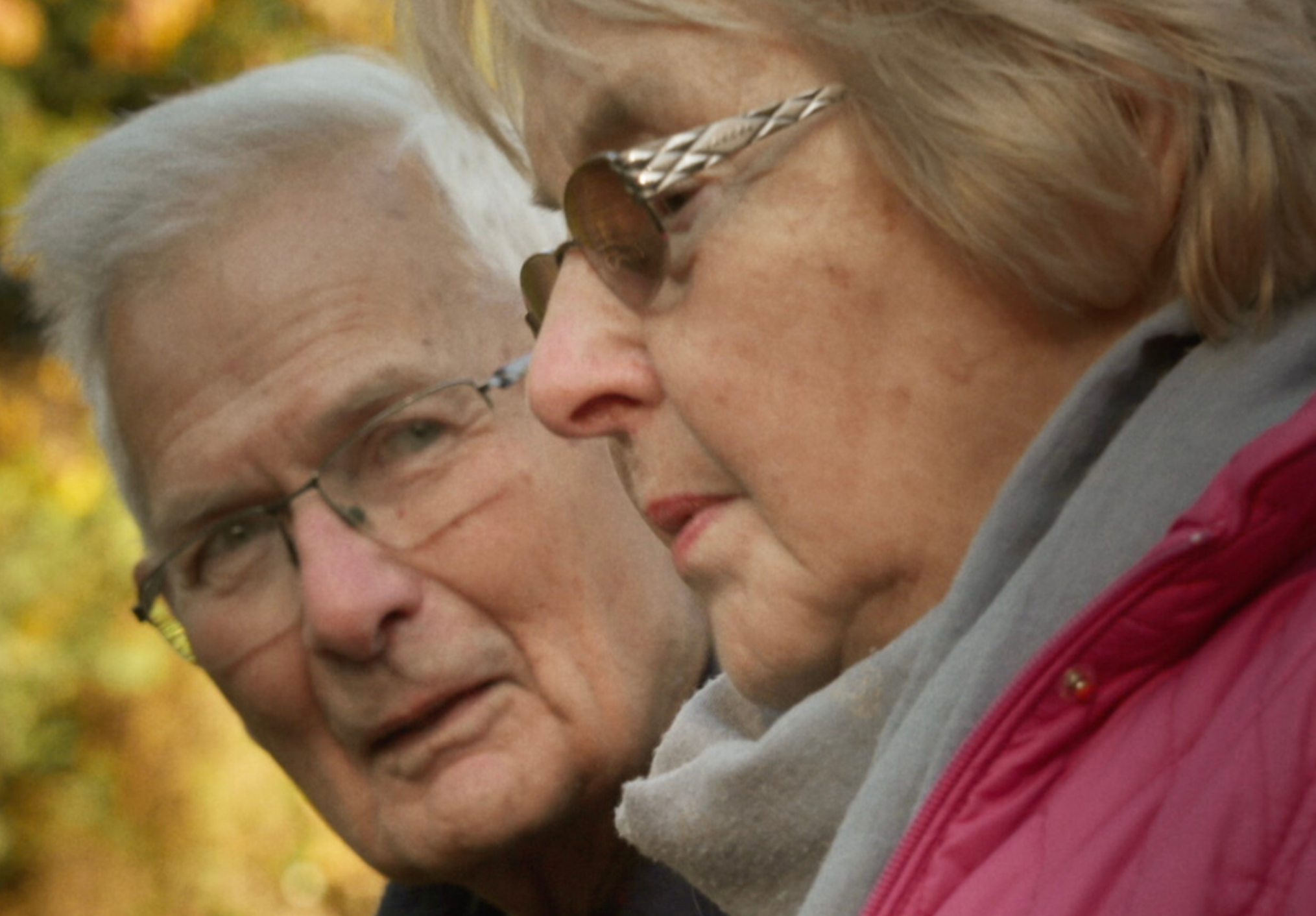
Screening as part of Doc Edge 2026
Sixty years of love, ten years of Alzheimer’s. As David fills diaries trying to hold onto his memories, his wife Maureen faces an impossible choice. Their granddaughter, Director Jenny Barruol, captures an intimate, devastating portrait of love and letting go.
The Place Where Memories Hide is a small, quiet film that carries an emotional weight far larger than its runtime. Directed by Jenny Barruol, the documentary follows her grandparents, David and Maureen, through the slow unravelling of memory brought on by Alzheimer’s. It is not a clinical portrait of the illness. It is a deeply personal one, shaped by the rhythms of a home, the fragments of a life, and the ache of watching someone you love slip away in real time.
The film opens with something deceptively simple: the act of looking at old photographs. David studies the images with a kind of searching intensity, trying to place faces, places, and moments that once belonged to him. The audio is slightly discordant, almost eerie, as if the world around him is out of sync with his internal landscape. It is a subtle but effective way of showing how disorienting memory loss can feel from the inside.
Barruol’s camera moves slowly through the house, drifting from room to room as if following the traces of a life that is still present but fading. Excerpts from David’s diaries appear on screen, revealing his attempts to document everything he can no longer hold in his mind. He writes down names, routines, small details, and reminders. The heartbreaking part is that he often forgets why he is writing them. The act of recording becomes both a lifeline and a reminder of what is slipping away.
The film captures the emotional contradictions of Alzheimer’s with honesty. There are moments of clarity where David’s personality shines through, where he jokes, remembers, or connects with Maureen in a way that feels like the man he used to be. Then the fog returns. Confusion. Frustration. Denial. A sudden change in mood or tone. The complete shift in personality that can happen without warning. Barruol never dramatizes these moments. She simply lets them unfold, which makes them feel even more real.
Maureen’s presence is equally important. She is the quiet centre of the film, carrying the weight of care with a mixture of patience, exhaustion, and love. The documentary shows the repetitive nature of caregiving: reteaching the same things, labelling objects, explaining routines, guiding someone through tasks they once did effortlessly. It is a life built on repetition, and the film honours that reality without pity. You feel the strain, but you also feel the devotion.
One of the most affecting threads is the question of independence. David’s world is shrinking, and the film captures the painful tension between wanting to protect him and wanting to respect the person he has always been. The decision of whether to move him into care hangs over the story like a quiet storm. It is never framed as a failure. It is framed as an impossible choice that families face when love and safety collide.
What makes the documentary so powerful is its restraint. It does not rely on interviews or exposition. It trusts the audience to sit with the silences, the small gestures, the half‑finished sentences. The emotional impact comes from the accumulation of these moments. A hand on a shoulder. A confused glance. A diary entry that trails off. A photograph that sparks nothing. A photograph that sparks everything.
The film also avoids romanticising the illness. It acknowledges the sweetness of long‑term love, but it does not shy away from the grief that comes with watching someone disappear in slow motion. The tenderness is always balanced by the reality of decline. That balance is what makes the film feel honest rather than sentimental.
Visually, the documentary is gentle and observational. The house becomes a character in its own right, filled with memories that David can no longer access. The camera lingers on objects that once held meaning: books, trinkets, framed photos, handwritten notes. These items become anchors for the audience, even as they lose their meaning for David.
The sound design is particularly striking. The slightly off‑kilter audio creates a sense of disconnection, mirroring the way Alzheimer’s distorts perception. It is subtle enough not to distract, but present enough to unsettle. It places you inside the experience rather than outside it.
By the end of the film, what remains is a portrait of love stretched across time. Sixty years of partnership. Ten years of decline. Countless moments of care, frustration, humour, and heartbreak. Barruol captures all of it with a sensitivity that never feels intrusive. The film is a tribute not only to her grandparents but to the countless families navigating similar journeys.
The Place Where Memories Hide is small in scale but enormous in emotional resonance. It is a reminder that memory is fragile, that identity is layered, and that love often shows itself most clearly in the quiet, repetitive acts of care that no one else sees. It is a film that stays with you because it understands that the hardest part of losing someone to Alzheimer’s is not the moment they forget you. It is the long, slow process of watching them forget themselves.
Screening as part of Doc Edge 2026. Check out the films and screenings here
Review written by Alex Moulton
