The Love Hypothesis (2026)
Based on the New York Times best-seller, The Love Hypothesis follows Olive (Lili Reinhart), a Ph.D. candidate who impulsively kisses her department's most intimidating professor, Adam Carlsen (Tom Bateman). Their mutual need for a fake relationship turns into an experiment in chemistry that might actually solve for love.
The Love Hypothesis, Prime Video’s adaptation of Ali Hazelwood’s best‑selling novel, arrives with a clear sense of what it wants to be. It is a soft, quirky, academically themed rom‑com built around fake dating, awkward chemistry, and the slow realisation that two people who should not work together might actually fit. It is predictable, safe, and occasionally childish, yet it also has moments of genuine charm. For viewers who enjoy the genre’s familiar beats, it delivers exactly what they expect.
The series follows Olive, played by Lili Reinhart, a dedicated PhD candidate whose life revolves around her research and her future in academia. Olive is earnest, anxious, and determined to protect her best friend Ahn, even when that means making questionable choices. When she impulsively kisses Adam Carlsen, an intimidating professor played by Tom Bateman, she sets off a chain reaction that leads to a fake relationship with rules, boundaries, and a mutually beneficial agreement. The premise is shaky at first, and the first half leans heavily into cringe and forced awkwardness. Yet that awkwardness is intentional, and once the show settles into its rhythm, the dynamic between Olive and Adam becomes more natural.
Reinhart plays Olive with a mix of sincerity and comedic discomfort. She leans into the fish‑out‑of‑water energy that defines the character, especially in the first half of the series. Olive is someone who overthinks everything, who wants to be taken seriously, and who struggles to navigate the emotional chaos that comes with pretending to date someone she barely knows, who is technically her senior. Reinhart captures this with a light touch, making Olive’s awkwardness feel relatable rather than grating. Her strongest scenes are those that highlight Olive’s academic ambition. The film makes her career goals a central part of her identity, giving the story more depth than a simple romance.

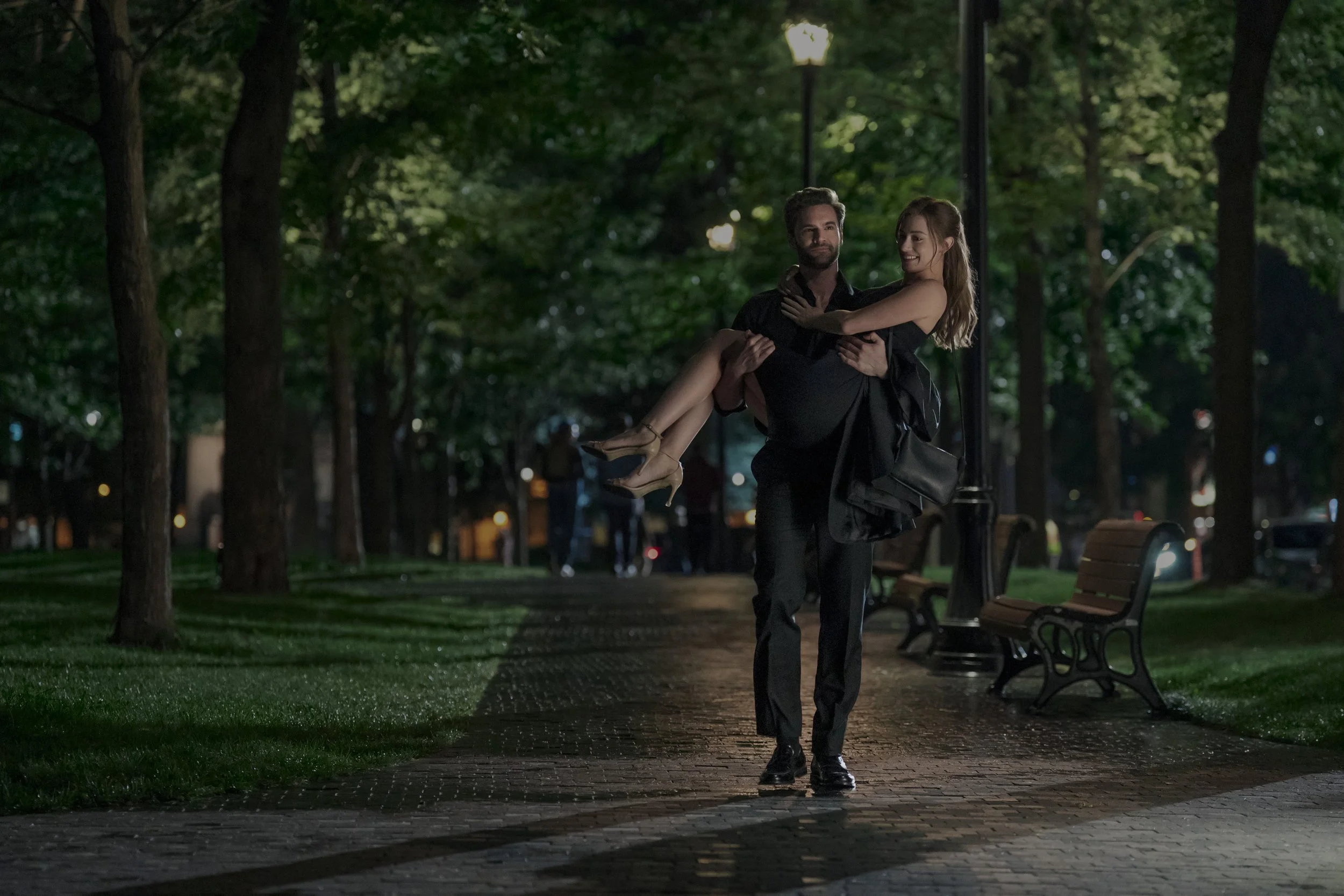
Bateman’s Adam is the classic brooding academic: quiet, stern, and difficult to read. He gives off a vibe reminiscent of the dark, pretentious male leads of early 2000s rom‑coms, paired with the polished charm of modern streaming protagonists. The chemistry between Reinhart and Bateman is not explosive, but it is steady. They look good together, and their personalities complement each other in a way that feels familiar. The film leans into the contrast between Olive’s bright, cutesy energy and Adam’s reserved seriousness, creating a dynamic that fans of the genre will recognise immediately.
The supporting cast adds texture to the world. Rachel Marsh’s Ahn brings warmth and sincerity, while Nicholas Duvernay’s Jeremy plays the well‑meaning crush who inadvertently sets the plot in motion. Jaboukie Young‑White and Arty Froushan round out the ensemble with comedic beats that help balance the more dramatic moments. This is very much Olive’s perspective, however. Adam’s backstory is limited, with only one scene offering a glimpse into his vulnerability. This imbalance keeps the story focused but also limits the emotional weight of their relationship.
The pacing is quick, moving from scene to scene without lingering too long on any one moment. This keeps things light and digestible, but it also means the emotional development between Olive and Adam feels rushed. The first half is dominated by awkward encounters, misunderstandings, and the mechanics of fake dating. While these moments are fun, they minimise the time spent building genuine intimacy. As a result, the more romantic scenes in the second half, though warm and occasionally steamy, do not land with the full impact they could have had.
The show’s tone is quirky and playful. It embraces the cutesy tropes of modern rom‑coms, sometimes to a fault. Viewers who prefer grounded storytelling may find it too simplistic or too sweet. The premise of the fake relationship is thin, and the series does not attempt to disguise that. Instead, it leans into the absurdity, trusting that audiences will accept the contrivance as part of the genre’s charm. For many, that will be enough.
The third act introduces a heavier narrative thread involving harassment and misogyny in academia. This storyline is inherited from the source material, and its inclusion was likely unavoidable. However, the execution is uneven. The issue is serious, yet it is treated inconsistently. Earlier jokes undermine the gravity of the later conflict, and the resolution feels incomplete. The storyline exists primarily to create tension between Olive and Adam, rather than to explore the issue with the depth it deserves. It is a misstep that may frustrate viewers who expect more thoughtful handling of such themes.
Despite this, the series maintains a sense of comfort. It is predictable in a way that feels intentional. The romance is safe, the stakes are manageable, and the emotional beats are familiar. It is the kind of show that viewers can watch without worrying about unexpected tonal shifts. The drama is mild, the humour is gentle, and the characters are likeable enough to carry the story through its weaker moments.
Director Claire Scanlon keeps the tone consistent, balancing comedy with light drama. The visual style is clean and bright, matching the film’s overall softness. Sarah Rothschild’s script captures the spirit of Hazelwood’s novel while streamlining the narrative for the screen. The adaptation does not attempt to elevate the material beyond its genre. Instead, it embraces the tropes and delivers a rom‑com that feels comfortable and accessible.
Ultimately, The Love Hypothesis is a light, enjoyable rom‑com that knows exactly what it is. It is not groundbreaking, and it does not aim to be. It is predictable, occasionally childish, and built on a premise that requires suspension of disbelief. Yet it is also fun, safe, and filled with moments of genuine charm. For viewers who enjoy fake dating, academic settings, and slow‑burn chemistry, it offers a pleasant escape.
Streaming Wednesday, 23 September on Prime Video globally
Review written by Alex Moulton
