Tied with the Tides (2026)
Screening as part of Doc Edge 2026
Tuvalu is one of the world’s most vulnerable island nations. It is sinking. For its young people, climate change is forcing them to make an impossible choice: leave for a future elsewhere, knowing you may never return, or stay and fight for a home the ocean is claiming.
Tied with the Tides is a quiet, affecting documentary short that manages to say something enormous in only ten minutes. Directed by Andy Hui, the film turns its lens toward Tuvalu, one of the most vulnerable nations in the world, and focuses not on statistics or sweeping political statements, but on the young people who are living through the slow disappearance of their homeland. It is a film that understands scale. The ocean is vast, the crisis is global, but the story is personal.
The documentary opens with images of everyday life in Tuvalu. There is a calmness to the scenes, a sense of routine and community. Fishing, gathering, farming, moving through familiar spaces. These moments are not presented as idyllic. They are simply honest. The film shows what is at stake by showing what exists now. The island feels alive, but fragile. The water is always present, always close, always rising.
Hui’s approach is restrained. He does not overload the short runtime with heavy narration or dramatic framing. Instead, he lets the voices of Tuvaluan youth guide the story. Their reflections form the emotional core of the film. They speak about identity, belonging and the future with a clarity that feels both hopeful and heartbreaking. The central tension is simple: stay or leave. Fight for a home that is slipping beneath the waves, or move somewhere else and begin again as a climate-displaced minority. The film treats this not as a theoretical dilemma, but as a lived reality.
The contrast between lifestyles is one of the strongest elements of the documentary. On one side is the traditional rhythm of Tuvaluan life. It is peaceful, communal and grounded in the land and sea. It is a way of living that has sustained generations. On the other side is the world that young people may be forced to enter. A world shaped by education systems, rent, mortgages, fees, wages and the constant pressure of the Western rat race. Hui presents these two paths without judgement, but the difference is stark. One is familiar. The other is foreign. Neither feels entirely like a choice.
The film highlights how climate change is stripping away agency. The youth speak about staying, but the island continues to sink. They speak about leaving, but leaving means becoming outsiders in places that may not understand their culture or their history. The documentary frames this as a decision, but it also shows how that decision is being eroded day by day. Rising sea levels, stronger storms and more frequent climate events make the future uncertain. The ocean is not a distant threat. It is already reshaping the land.
Visually, Tied with the Tides is striking. Hui uses simple, clean imagery to show the relationship between the island and the water. The shots are not dramatic, but they are powerful. The ocean feels close enough to touch. The land feels thin. The horizon feels heavy. The film does not rely on disaster footage or extreme visuals. Instead, it uses quiet moments to show how climate change is already present. The absence of dramatic scenes is intentional. It reinforces the idea that the crisis is slow, constant and relentless.
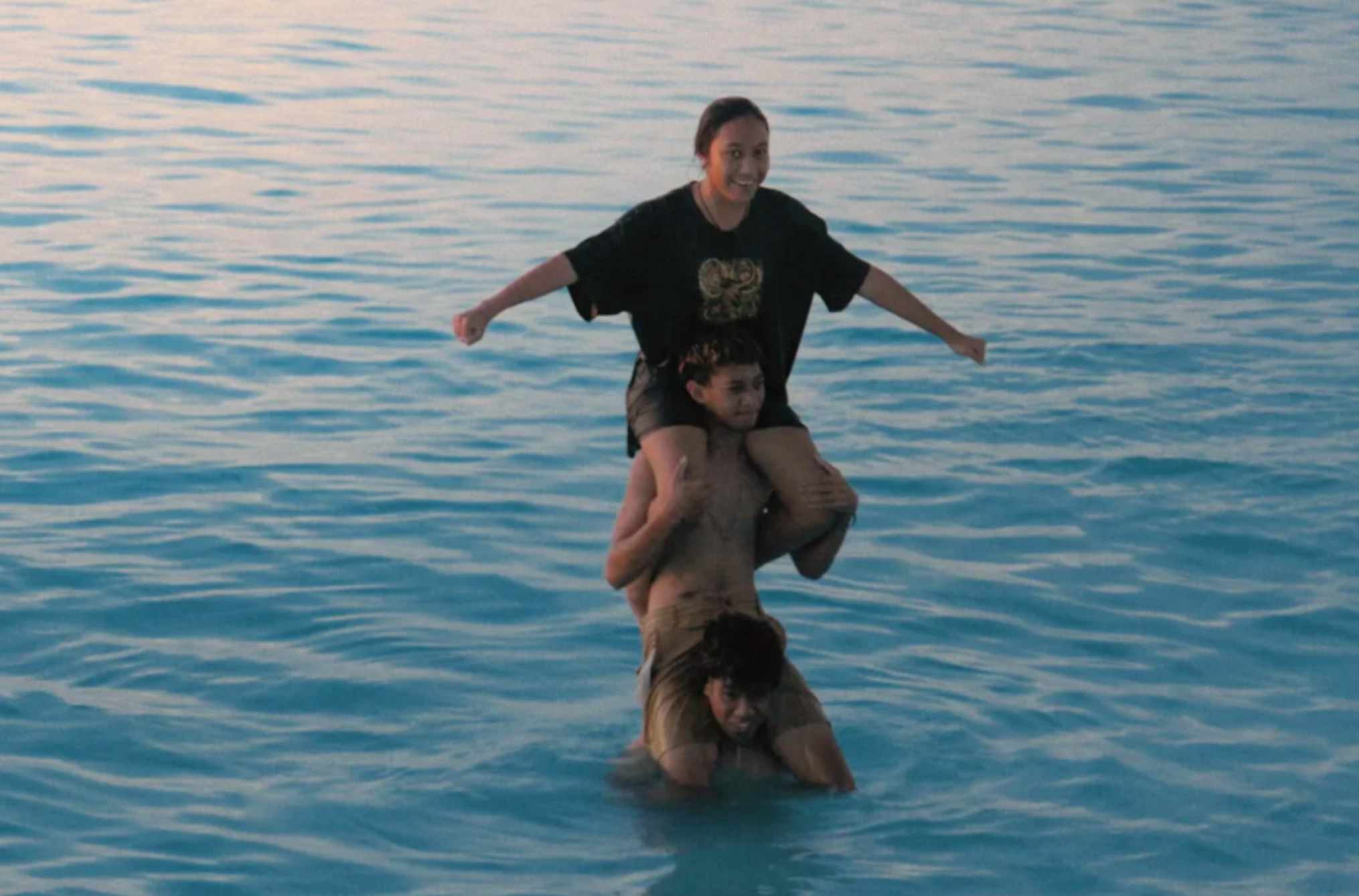
The documentary’s focus on youth is one of its greatest strengths. By using young voices, Hui frames the issue as something urgent and immediate. These are the people who will live through the consequences. They are the ones who will have to decide whether to stay or leave. Their reflections make the film feel grounded and human. They speak about hope, fear, responsibility and identity with a sincerity that gives the short its emotional weight.
There is a subtle frustration woven through the film. The idea of leaving Tuvalu is discussed as a possibility, but that possibility can be used by the global community as an excuse to look away. If relocation is an option, then the world can avoid confronting the long-term consequences of climate change. It becomes easier to offer temporary aid after storms than to address the structural issues that are causing the island to sink. Hui does not state this directly, but the implication is clear. The burden of survival is being placed on the people least responsible for the crisis.
The documentary could have benefited from more visual context, such as maps or diagrams showing land loss, or footage of flooding events. These additions might have strengthened the sense of urgency. However, the choice to focus on youth rather than data gives the film a different kind of power. It becomes a story about people rather than numbers. It becomes a reminder that climate change is not abstract. It is personal.
The pacing of the film is gentle. Hui allows moments to breathe. The short runtime means every scene matters, but nothing feels rushed. The transitions between traditional life and reflections on the future are smooth. The film moves between present and possibility with quiet confidence. The simplicity of the structure makes the emotional impact stronger.
The documentary also highlights a different kind of displacement. When people think of refugees, they often think of war or conflict. Tied with the Tides shows a different reality. These young people are not fleeing violence. They are facing the slow disappearance of their home. Their potential displacement is caused by environmental change rather than political conflict. This distinction matters. It expands the conversation about what it means to lose a homeland.
The final moments of the film leave a lingering sense of urgency. The youth speak about their hopes and fears, but the ocean remains in the background, rising quietly. The film does not offer solutions. It does not pretend that the situation is simple. Instead, it asks the audience to consider the human cost of climate change. It asks viewers to see Tuvalu not as a distant place, but as a community facing an impossible future.
Tied with the Tides is a small film with a large impact. It is thoughtful, restrained and deeply human. Hui distils a global crisis into a personal story without losing the scale of the issue. The documentary is visually striking, emotionally grounded and quietly powerful. It is a reminder that climate change is not just about numbers or predictions. It is about people, culture and the possibility of losing a home forever.
Screening as part of Doc Edge 2026. Check out the films and screenings here
Review written by Alex Moulton
