Marewen Kiribati Youth Group - The Voices of Our Ancestors
Part of the Pacific Dance Festival 2026
Performed by the Marewen Kiribati Youth Group
A vibrant, soul‑stirring celebration of Kiribati identity, pride, and intergenerational storytelling. The Voices of Our Ancestors brings the raw power of Kiribati movement, song, and theatre to the stage — honouring the past while uplifting the next generation.
The Voices of Our Ancestors, performed by the Marewen Kiribati Youth Group, was one of the most powerful and emotionally charged works of the entire 2026 Pacific Dance Festival. The anticipation in the theatre was unmistakable. A sold out audience buzzed with excitement, and there was a shared sense that this performance carried something bigger than entertainment. It held history, grief, pride, and the future of a people whose homeland is slowly being swallowed by the moana. For many of us, this was the show we were waiting for.
The performance opened with a jolt of truth. A video sequence filled the screen, showing archival footage of nuclear testing carried out by the United States and the United Kingdom in the Pacific during the 1970s. The images were stark and unflinching. Explosions. Contaminated waters. Abandoned landscapes. The aftermath left behind for Pacific communities to endure. The room fell silent. You could feel the weight of it settle across the audience. It was raw, painful, and deeply human. The youth on stage were not just dancing. They were carrying the stories of their ancestors, and they were asking us to witness.
From that moment, the work unfolded as a bridge between generations. Through traditional song, movement, and ceremony, the performers invited us into a living conversation with the past. The voices of their ancestors were not distant echoes. They were present, guiding, shaping, and reminding us that heritage is not something stored away. It is alive. It breathes through the bodies of those who carry it forward. The choreography, crafted by Timoara Tonganibeia, honoured this idea with clarity and heart.
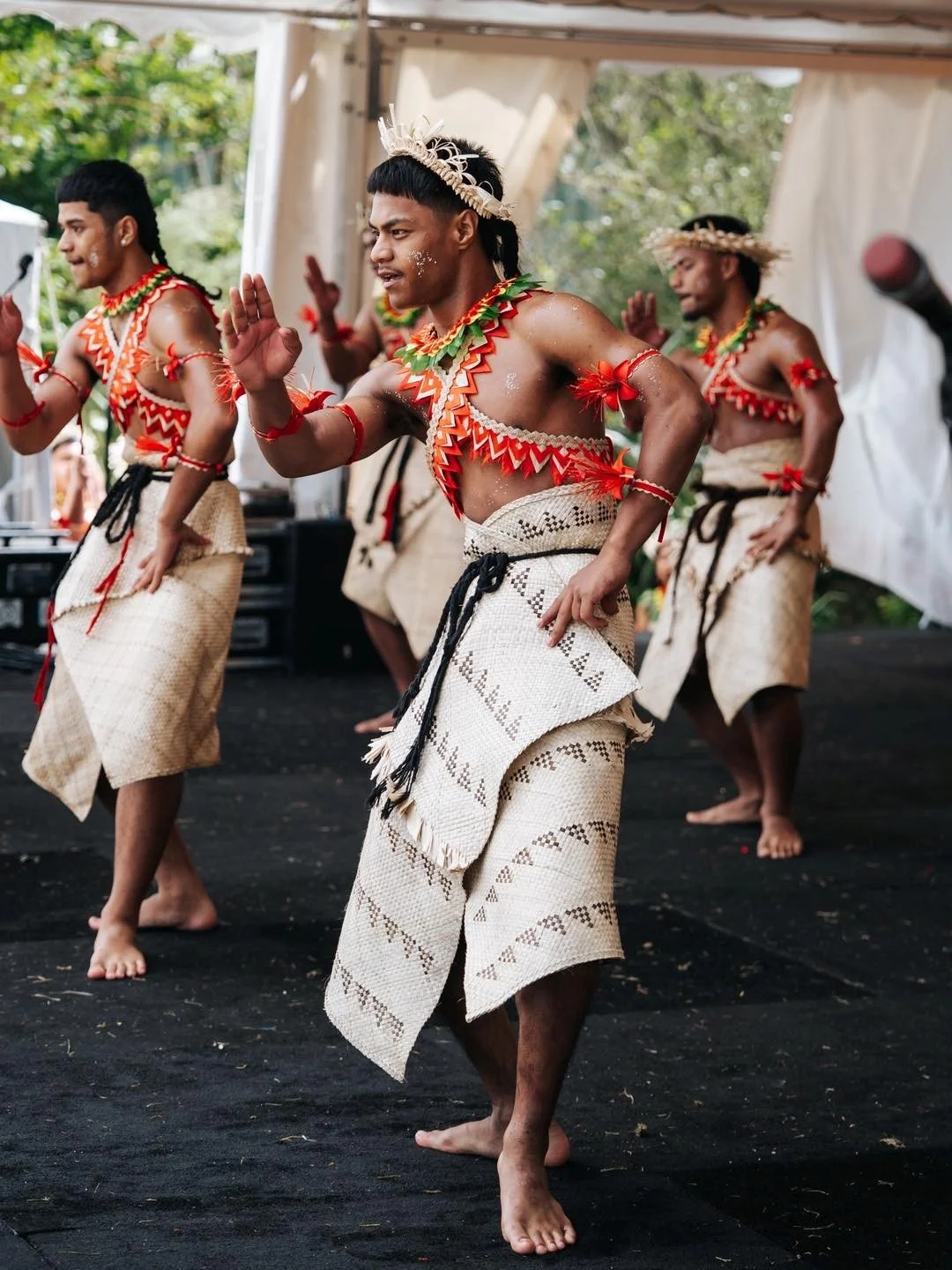
The Marewen Kiribati Youth Group moved with a confidence that felt both grounded and soaring. Their steps were rooted in tradition, yet their energy carried the urgency of the present moment. Watching them, you could see young people standing firmly on the shoulders of their ancestors, reaching toward a future that is uncertain but fiercely claimed. This connection to lineage was not just symbolic. It was embodied. Every gesture, every chant, every formation spoke of resilience and pride.
Visually, the performance was breathtaking. The colours of Kiribati culture glowed under the stage lights. Costumes shimmered with reds, golds, and ocean blues. The choreography shifted between ceremonial sequences and contemporary expression, creating a living tapestry of past and present. The dancers moved as one heartbeat, then broke into smaller groups that told their own stories. The transitions were seamless, and the emotional impact was immediate.
What made the work so compelling was its ability to hold multiple truths at once. It was joyful and heavy. It was celebratory and mournful. It was a reminder of what has been lost and a declaration of what will not be forgotten. The youth carried these contrasts with remarkable maturity. Their performance was not polished in a commercial sense. It was polished in spirit. It felt lived in, honest, and deeply connected to who they are.
Throughout the piece, the theme of climate displacement hovered like a shadow. Kiribati is one of the nations most threatened by rising sea levels. The whenua of their ancestors is slipping back into the ocean. The performance did not need to state this outright. It was felt in the urgency of the movement, in the strength of the voices, in the determination of the dancers to hold onto something precious. The work became a reminder that culture is not tied to land alone. It lives in people. It travels with them. It adapts, survives, and continues.
One of the most moving aspects of the performance was the sense of community it created. The youth were not performing for applause. They were performing for their elders, for their families, for their ancestors, and for each other. The audience became part of that circle. You could feel the collective heartbeat of the room. You could feel the mana rising. It was impossible not to be moved.
The choreography itself was bold and electrifying. Traditional movements were woven with contemporary shapes, creating a dynamic interplay between old and new. The dancers used their bodies to tell stories of migration, survival, and identity. They stomped, they swayed, they chanted, they lifted one another. The stage became a living archive. A place where memory and movement collided.
What stood out most was the celebration of identity. The performance reminded us that culture is not static. It evolves through those who carry it. The Marewen Kiribati Youth Group showed us what it looks like when young people step into their heritage with pride and purpose. Their artistry was undeniable, but it was their connection to their roots that made the work unforgettable.
As someone watching from Aotearoa, the performance also carried a responsibility. These young people are carving out a new home here as their ancestral lands disappear. As kaitiaki of this whenua, it is our duty to uplift them, to hear their stories, and to honour their presence. The performance made that responsibility feel immediate and personal. I heard the voices of their ancestors, but I also heard the voices of the future of Kiribati. Strong. Clear. Unafraid.
The evening ended not with spectacle, but with a sense of deep gratitude. It felt like a privilege to witness the dance, the traditions, and the kai of Kiribati. This was not just a performance. It was a moment that imprints itself on the heart. A reminder that culture survives through people who choose to carry it forward.
The Marewen Kiribati Youth Group will perform again in July in Tauranga to celebrate Kiribati Independence Day. I will absolutely be there. After witnessing The Voices of Our Ancestors, how could I not.
Performed as part of the Pacific Dance Festival 2026. Find out more here
Review written by Josh McNally
Edited by Alex Moulton
