The Circle
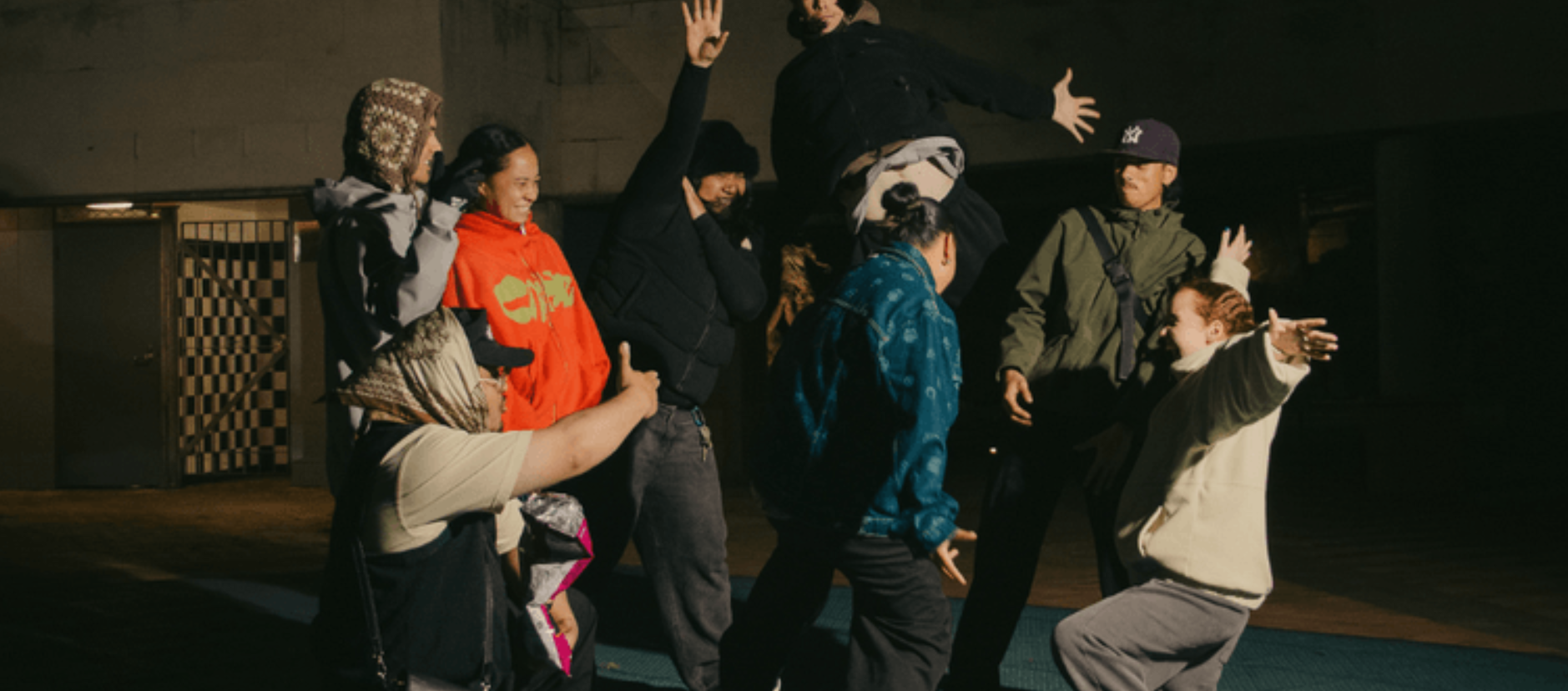
Part of the Pacific Dance Festival 2026
Performed by Shifting Centre
The Circle is a dance theatre work set in an alternate present, following a community of characters as they journey through their shared world in search of Utopia.
The Circle, performed by Shifting Centre as part of the 2026 Pacific Dance Festival, is one of those works that resists easy categorisation. It is contemporary Indigenous dance, but it is also breakdance, theatre, freestyle, ritual, and something closer to a living pulse than a narrative. For an hour, the stage becomes a shifting ecosystem of bodies, rhythms, and energies that loop, collide, and reform. I walked out unsure how to “explain” what I had seen, but absolutely certain that I had felt it.
Directed by Sefa Tunupopo and produced by Tamia Filipo, The Circle imagines an alternate present where a small community journeys together in search of Utopia. That premise is not delivered through literal storytelling. Instead, it is expressed through movement that rises and falls like breath. The work is built on the idea that liberation is not only found in surviving hardship but in celebrating one another along the way. That philosophy becomes the backbone of the performance.
The first thing that strikes you is the sheer variety of movement vocabularies. One moment the dancers are locked into sharp, competitive footwork reminiscent of street battles. The next, they melt into fluid duets that feel almost ceremonial. There are sequences that echo hip hop, others that lean into Pacific grounding, and others that feel like pure contemporary improvisation. It should feel chaotic, but it never does. The performers move as if they are part of the same organism, each limb responding to the next.
The soundscape, created by Grayson Ziogas, plays a huge role in shaping the atmosphere. The music often loops in repeating four‑line patterns that evolve slowly over time. At first, it seems simple, even repetitive, but the repetition becomes a kind of engine. It gives the dancers something to push against, something to build momentum from. The movement grows with the music, then shifts when the sound shifts, revealing just how tightly choreographed the entire work is. It may look like freestyle, but it is crafted with precision.
What I found fascinating was how the work balances spontaneity with structure. There are moments that feel like the dancers are responding to each other in real time, feeding off the energy in the room. Then the music changes, and suddenly the entire group pivots into a new formation with perfect synchronicity. It is a reminder that even the most free‑flowing movement can be the result of careful design.
The cast (Kōwhai Deuchars, Kaysee Savali, Levi Siaosi, Montell Nickel, Oto Lupo, and Tamia Filipo) bring distinct physical languages to the stage. Some dancers move with sharp, jagged precision, slicing through the air with speed and attack. Others carry a softer, more expansive quality, bending and extending with a kind of oceanic flow. Watching these contrasting styles weave together is one of the most compelling aspects of the work. It becomes a visual metaphor for community: different strengths, different rhythms, all contributing to the same collective heartbeat.
While I struggled to identify a clear narrative thread, the emotional through‑line is unmistakable. The Circle is about support. It is about celebration. It is about the ways communities hold each other through change. You see it in the way dancers lift one another, in the way they form protective shapes around a single body, in the way they break apart only to return to the centre. Even when the movement becomes frenetic, there is always a sense of connection. No one is left behind.
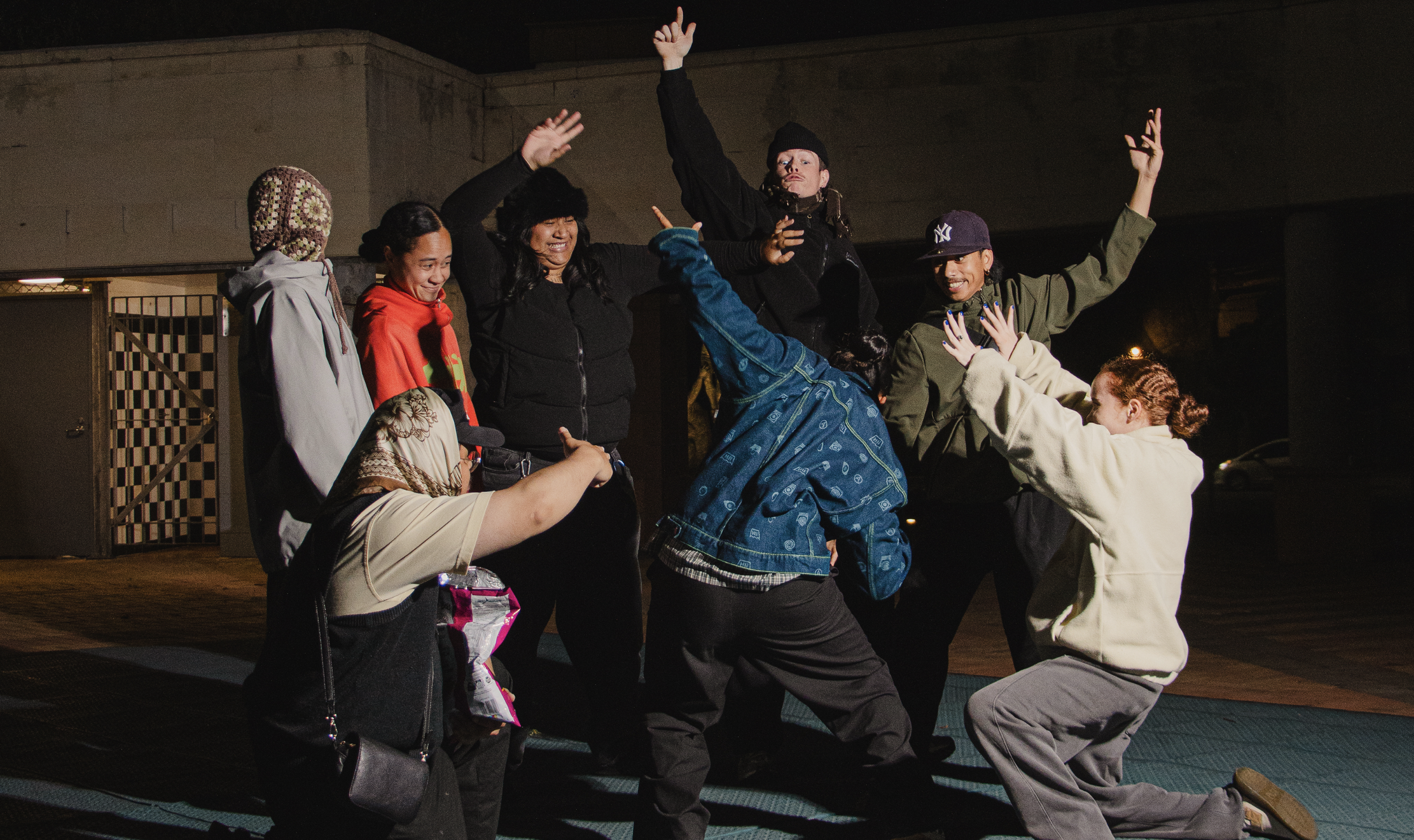
There is also a strong feeling of acceptance woven through the work. The dancers move with a confidence that suggests they are not performing for approval but expressing something essential. The atmosphere in the theatre reflects that. The audience feels invited into the space rather than positioned outside it. You can sense the warmth, the openness, the idea that everyone belongs in the circle.
The lighting design by Isadora Lao enhances this sense of shifting worlds. Pools of light isolate duets, then widen to reveal the full ensemble. Shadows stretch across the floor, creating a sense of depth and mystery. At times, the stage feels like a street corner. At others, it feels like a sacred space. The transitions are subtle but effective, guiding the audience through emotional landscapes without ever dictating how we should feel.
What impressed me most was how the work handles the idea of liberation. It is not presented as a single moment of triumph. Instead, it is shown as an ongoing process. Sometimes liberation looks like breaking free. Sometimes it looks like holding someone up. Sometimes it looks like celebrating a small victory. The Circle understands that freedom is collective, not individual. The dancers embody that truth with every shift in formation.
There are moments where the energy slows, almost to stillness. These pauses allow the audience to breathe, to reflect, to absorb the emotional weight of what has come before. Then the tempo rises again, and the dancers surge forward with renewed force. The ebb and flow creates a rhythm that feels organic, like tides or seasons. It mirrors the cycles of community life: struggle, rest, renewal, celebration.
Even though this style of dance is outside of my usual scope of reviews, the work’s emotional clarity cut through any unfamiliarity. I may not have grasped every symbolic gesture, but I felt the intention behind them. The themes of connection, resilience, and collective care are communicated through the body in ways that transcend literal interpretation. You do not need to understand the technique to understand the feeling.
By the end of the performance, the stage feels transformed. The dancers have created a world that is both imagined and deeply real. A world where people move together, fall together, rise together. A world where liberation is not a destination but a shared journey. The final image lingers long after the lights fade, a reminder that community is not something we watch from a distance. It is something we build.
The Circle is bold, heartfelt, and unapologetically alive. It is a celebration of Indigenous creativity, of movement as language, of dance as a vessel for collective dreaming. Even if you cannot articulate every idea it presents, you feel its truth. And sometimes, that is the most powerful kind of storytelling.
Performed as part of the Pacific Dance Festival 2026. Find out more here
Review written by Alex Moulton
