A War on Women (2026)
Screening as part of Doc Edge 2026
Triggered by Mahsa Amini’s death in morality police custody, the film looks beyond headlines to uncover Iranian women’s forty-year struggle against the theocratic regime. Through interviews, archival material, and rare footage from inside Iran, the film traces an unbroken resistance shaped by prison, exile, and courage across generations and borders. Historical and urgent. Personal and political. A testament to the enduring spirit of Iranian women and a call to stand with them.
A War on Women, directed by Raha Shirazi, is a film that refuses to soften its edges. It does not offer comfort. It does not dilute its message. Instead, it presents an unbroken, forty‑year continuum of feminist resistance in Iran, tracing a lineage of courage that stretches from pre‑revolution activism to the global uprising sparked by the death of Mahsa Amini. The result is a documentary that feels both historical and painfully current, a reminder that the struggle for bodily autonomy and political freedom is never confined to a single moment.
The film opens by situating viewers in the Iran of the 1960s, a period often forgotten in Western narratives. Women were gaining political ground, securing the right to vote, expanding access to education, and pushing for constitutional reform. Shirazi does not romanticise this era, but she does highlight its significance. It becomes the foundation for everything that follows. The film makes clear that Iranian women were not passive recipients of rights. They fought for them. They organised. They built movements. There were to be world leaders for the UN regarding women’s rights and equality. They shaped the country’s social fabric long before the revolution altered its trajectory.
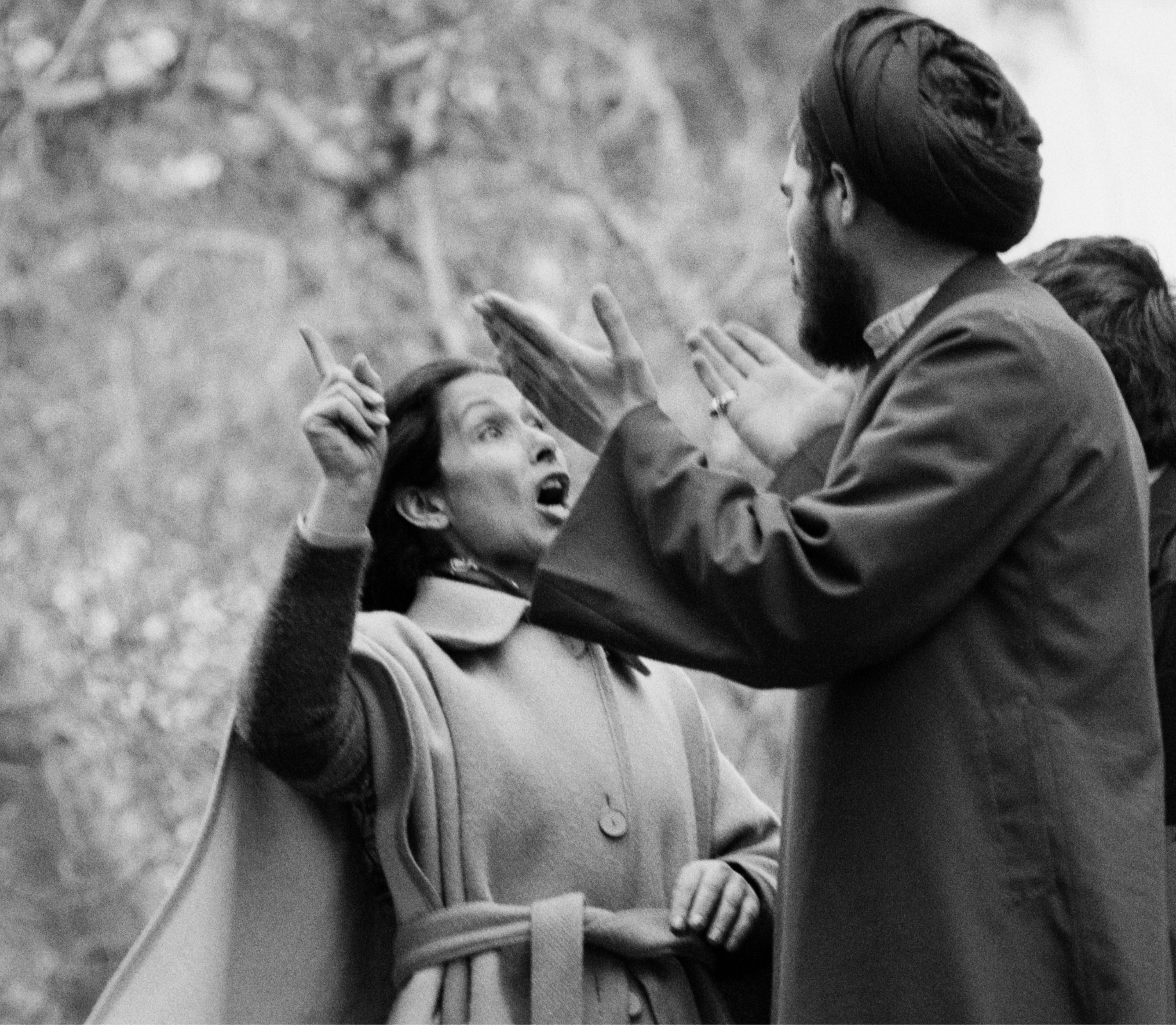
The shift in tone after 1979 is stark. Archival footage shows the rapid imposition of compulsory veiling, gender segregation, and legal restrictions that stripped women of autonomy. Shirazi handles this transition with precision, allowing the footage to speak for itself. The images are jarring. Crowds of women march in protest, refusing to accept the new laws. Their chants echo through the decades. The film positions these demonstrations not as isolated events, but as the first chapter in a resistance that has never stopped.
The documentary’s strength lies in its intergenerational approach. Shirazi brings together seven women whose lives intersect across time, geography, and political context. Among them are Golshifteh Farahani, the internationally acclaimed actor forced into exile; Mahnaz Afkhami, Iran’s former Minister of Women’s Affairs; and Masih Alinejad, a prominent activist known for her fearless advocacy against compulsory hijab laws. Their stories are not presented as parallel threads. They are woven together, forming a tapestry of resistance that spans continents and generations.
Shirazi avoids constructing a purely analytical narrative. Instead, she foregrounds personal testimony. The political context emerges organically through lived experience. Each woman speaks with clarity, anger, grief, and determination. Their voices carry the weight of exile, imprisonment, loss, and hope. The film’s emotional power comes from this intimacy. It is not a lecture. It is a conversation across time.
One of the most striking elements of the documentary is its use of clandestine footage from inside Iran. Shot by anonymous collaborators who risked their safety, these clips reveal the brutality of state violence and the courage of everyday citizens. The screams, the chaos, the bewildering rage directed at women who simply refuse to comply with discriminatory laws. These moments are difficult to watch, but Shirazi does not sensationalise them. She presents them as evidence, as testimony, as truth.
The film also challenges Western assumptions about Iranian women. Too often, they are portrayed as victims without agency. Shirazi dismantles this narrative. She shows women organising underground networks, leading protests, documenting abuses, and shaping global movements. The documentary reframes Iranian women not as passive sufferers, but as the frontline of resistance against a regime that has systematically targeted them for decades.
The historical arc of the film culminates in the 2022 uprising, known globally as the “Woman, Life, Freedom” movement. The death of Mahsa Amini in morality police custody ignited protests that spread across Iran and beyond. Women removed their headscarves, cut their hair, and marched in defiance of laws designed to control their bodies. Shirazi presents this uprising not as a spontaneous eruption, but as the inevitable continuation of a struggle that began long before Amini was born. The film’s intergenerational structure makes this clear. The young women of today carry the stories of their mothers and grandmothers. They know what was lost. They know what must be reclaimed.
The documentary’s pacing is brisk but never rushed. It moves through decades with clarity, showing how each wave of activism responds to deepening restrictions. The interviews are candid and moving. The archival footage is essential and often devastating. The film’s emotional impact builds gradually, culminating in a montage of unveiled Iranian women dancing freely in public spaces. These images are joyful, defiant, and profoundly symbolic. They represent not victory, but possibility.
Shirazi’s direction is steady and intentional. She does not shy away from the horrors inflicted by the regime, but she also refuses to let violence define the narrative. The focus remains on resilience. On continuity. On the refusal to be silenced. The film acknowledges the human rights abuses committed by Iran’s theocratic government, including gender‑based violence, political imprisonment, and suppression of dissent. It does so with clarity and without sensationalism, grounding its critique in documented evidence and lived experience.
The documentary also explores the evolution of feminist strategy. Earlier generations often believed in gradual reform within the system. Today’s activists reject that approach. They demand structural change. They refuse compromise. Shirazi highlights this shift without judgment, presenting it as a natural response to decades of failed promises and escalating repression.
What emerges is a portrait of a movement that is both fractured and unified. The women in the film come from different backgrounds, hold different beliefs, and have lived different lives. Yet they share a common thread: the conviction that freedom is not negotiable. Their stories reveal the cost of resistance, but also its necessity.
The film’s emotional resonance is undeniable. It forces viewers to confront uncomfortable truths about gender discrimination, state violence, and the global responsibility to stand with oppressed communities. It also highlights the danger of complacency. The footage from the 1970s is particularly haunting. Women who once lived freely are shown losing their rights overnight. The contrast between past and present is a stark reminder of how quickly progress can be undone.
By the time the documentary ends, the viewer is left with a mixture of grief, admiration, and urgency. A War on Women is not a film that leaves you unchanged. It is a call to attention. A call to solidarity. A call to remember that resistance is not a moment, but a continuum. All tha tneeds to happen for evil to win is for the good to do nothing.
Shirazi has created a work that is both historical and immediate, personal and political, devastating and hopeful. It is a testament to the enduring spirit of Iranian women and a reminder that their fight is far from over.
Screening as part of Doc Edge 2026. Check out the films and screenings here
Review written by Alex Moulton
