Hope (2026)
It's coming for us. In the remote South Korea village of Hope Harbour, police chief Bum-seok (Hwang Jung- min) and officer Sung-ae (Hoyeon) are called to find a mysterious creature that has wreaked havoc on the village. In the nearby forest, a coterie of hunters, including Sung- ki (Zo In-Sung) set out to track the beast and find themselves hunted instead. But all is not as it seems, and perceptions can be misleading. What begins as ignorance plants the seed of disaster, escalating through human conflict into a tragedy of cosmic proportions.
Na Hong-jin’s Hope begins with such ferocity that it feels like the director is daring the audience to keep up. The opening hour is a breathless barrage of carnage, panic, and pitch‑black comedy, unfolding in a rural South Korean mining town that becomes ground zero for a mysterious and devastating attack. It is raucous, propulsive, and visually astonishing, the kind of first act that makes you think you are watching a modern action classic take shape. Then the film shifts, gradually layering in mythology and backstory, and the momentum begins to slip. What starts as a relentless creature‑driven spectacle becomes something more sprawling, more ambitious, and ultimately less effective.
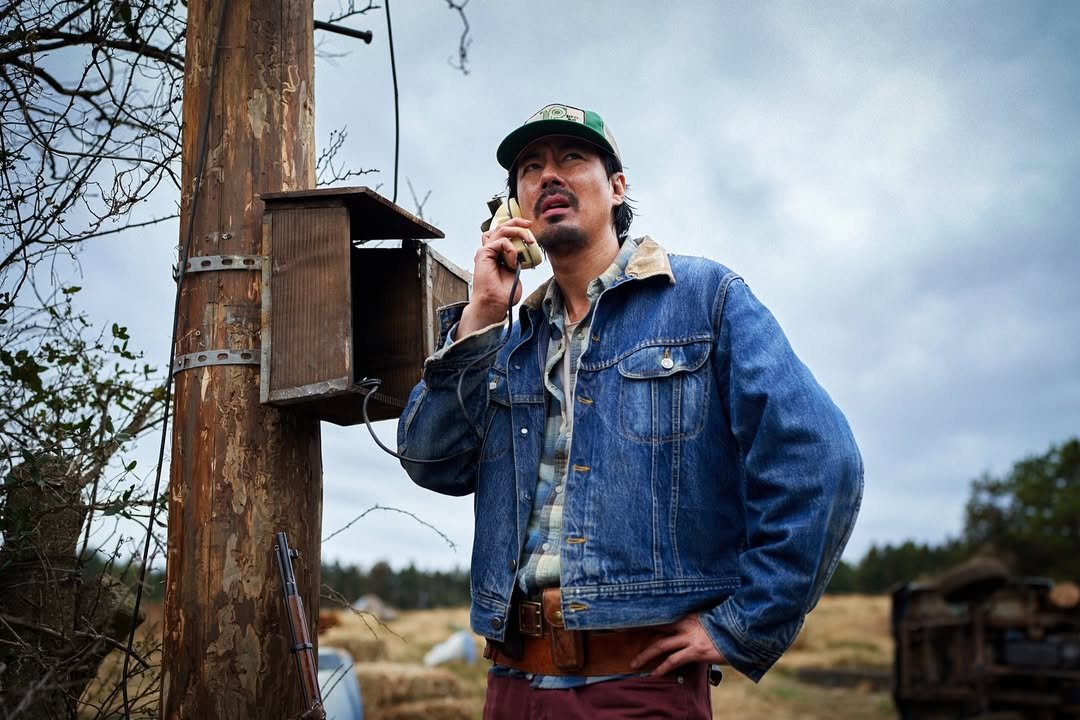
The film opens with police chief Bum-seok, played by Hwang Jung-min, receiving a call from his cousin Sung-ki about a mutilated bull lying in the middle of the road. The animal is torn apart, covered in flies, and marked with deep wounds. When Bum-seok returns to town, he finds bodies scattered across narrow streets and buildings ripped open as if a storm has passed through. The destruction is shocking, and Na Hong-jin refuses to reveal the creature responsible until nearly an hour in. This extended concealment is one of the film’s greatest strengths. The dread builds through aftermath rather than direct confrontation, and the cinematography captures the devastation with painterly precision. The remote locations are gorgeous, the production design is intricate, and almost every frame looks like a work of art.
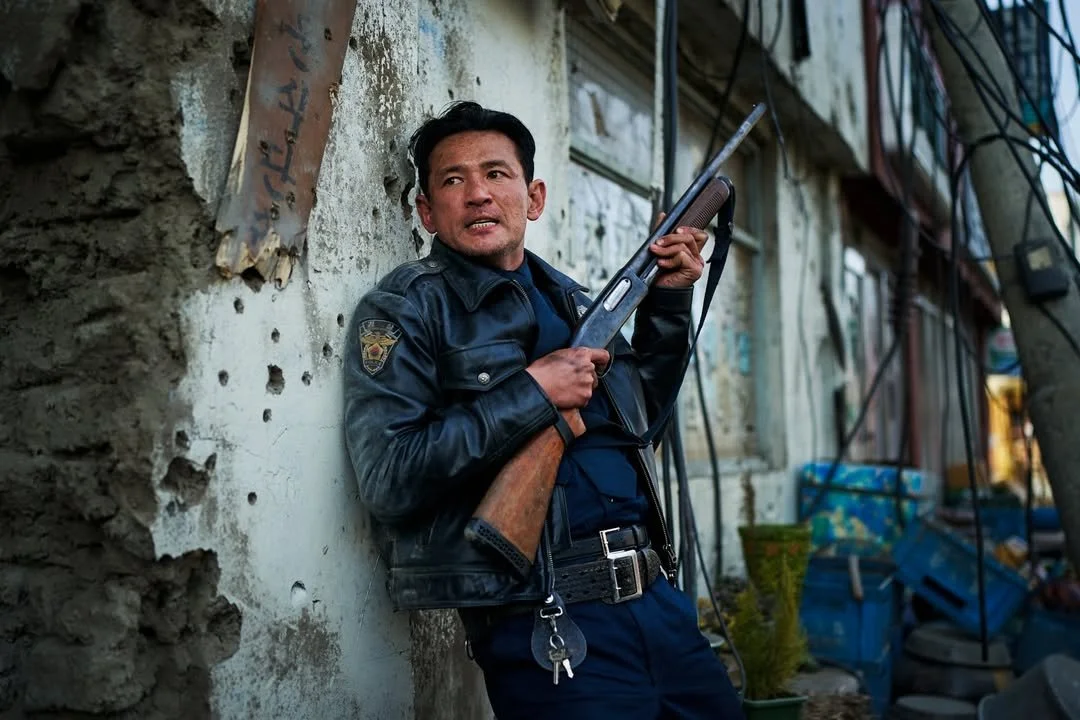
The first hour is structured around two parallel threads. Bum-seok races through Hope Harbour, always arriving seconds too late, hearing gunfire and screams but never catching up. His perspective is frantic and immersive, and the sound design amplifies the chaos with explosions, collapsing structures, and distant roars. Meanwhile, Sung-ki and a group of hunters venture into the forest, searching for answers with a mix of bravado and incompetence. Their scenes lean into physical comedy, including an extended monologue about encountering the creature while relieving himself in the woods. This blend of gnarly action and absurd humour becomes a defining feature of Hope, and Na Hong-jin balances the tones with surprising finesse.
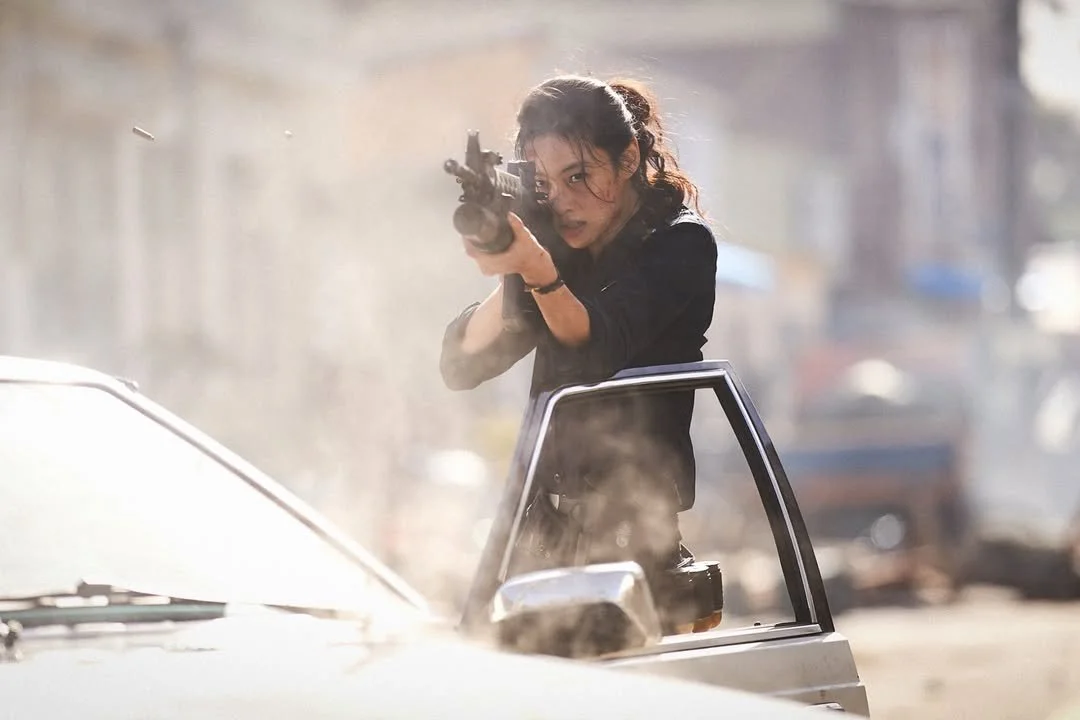
The ensemble is small but memorable. Hoyeon, in her first film role, steals the show as Sung-ae, a pedal‑to‑the‑metal officer who arrives in moments of crisis with calm precision. She wields weapons with confidence, grounds scenes with her steady presence, and becomes the film’s most compelling human character. Sung-ki, played by Zo In-sung, provides charisma and reckless enthusiasm, charging into danger with irrational fearlessness. Their dynamic with Bum-seok creates a comedic rhythm, especially as the film reveals that nearly every resident of Hope Harbour secretly owns an arsenal of firearms despite strict national laws. This running gag becomes one of the film’s funniest elements, turning the town into an unlikely frontier settlement.
When the creature finally appears, the reveal is explosive. The practical effects used for gore, dead bodies, and environmental destruction are outstanding. The alien design is tactile and varied, giving the creature a sense of physical presence. The action sequences that follow are enormous, including a massive set piece where citizens and colossi collide in a frenzy of crashed cars, galloping horses, and emptied clips. Na Hong-jin does not save the spectacle for the finale. He unleashes it early and often, escalating the chaos rather than treating the first act as a slow buildup.
But once the film begins to peel back the mythology, the momentum falters. The introduction of Ma’veyyo, played by Michael Fassbender, and J’aur, played by Alicia Vikander, shifts the film into a new perspective. Their tragic backstory is only teased, clearly meant to set up a continuation, but the sudden pivot toward lore feels intrusive. The film begins expanding its world, opening new corridors of information, then opening even bigger ones behind them. The narrative keeps turning corners without arriving anywhere. The mythology becomes more prominent just as the action becomes more repetitive, and the combination drains the urgency from the story.
The pacing issues are not about length so much as the film’s insistence on stretching tension long past its breaking point. The first act switches repeatedly between Bum-seok’s recon efforts and Sung-ki’s tracking, and while the near misses are initially thrilling, they eventually become exhausting. The film keeps teasing confrontation, then delaying it, and the audience can only hang on for so long before the anticipation turns into impatience. When the massive battle finally arrives, it is spectacular, but the lead‑up is so prolonged that the impact is softened.
The second half introduces more characters, more chases, and more destruction, but the action begins to feel redundant. Several sequences stretch on without adding new information, and the film’s sinister undertones about outsiders and invasion are not developed enough to give the chaos deeper meaning. The humans are intentionally underwritten, defined more by their actions than their personalities. This works in the first half, where characterisation through behaviour feels sharp and efficient, but becomes less effective once the film shifts toward lore.
The biggest issue is the CGI. While the practical effects are extraordinary, the digital creatures that appear in the final stretch are distracting. They look dated, awkward, and out of place in a film that otherwise excels in physical craftsmanship. The contrast between the tactile gore and the digital aliens is stark, and the CGI undermines the emotional weight of the scenes it occupies. It is a small percentage of the runtime, but it leaves a noticeable dent.
The film ends abruptly, unresolved, and clearly designed to set up a sequel. After nearly three hours of buildup, the sudden stop is jarring. The worldbuilding is only partially explored, the creature lore is barely unpacked, and the new perspective introduced by Fassbender and Vikander feels like the beginning of a different movie. The abruptness makes the final act feel incomplete, as if the film is withholding its most interesting developments for later.
Despite its flaws, Hope remains a vivid, breathless, and frequently hilarious action-horror spectacle. The cinematography is brilliant, the practical effects are outstanding, and the first hour is extraordinary. The film loses power once backstory intrudes, and the CGI distracts from the craftsmanship, but the sheer audacity of Na Hong-jin’s vision makes Hope an unforgettable experience. It is messy, ambitious, and unapologetically chaotic, a film that thrives on sensation even when its storytelling stumbles.
Hope is in NZ cinemas on 17 September 2026. Find your nearest screening here
Review written by Alex Moulton
