If You Don’t Like It, Look Away (Au bain des dames) (2025)
Screening as part of Doc Edge 2026
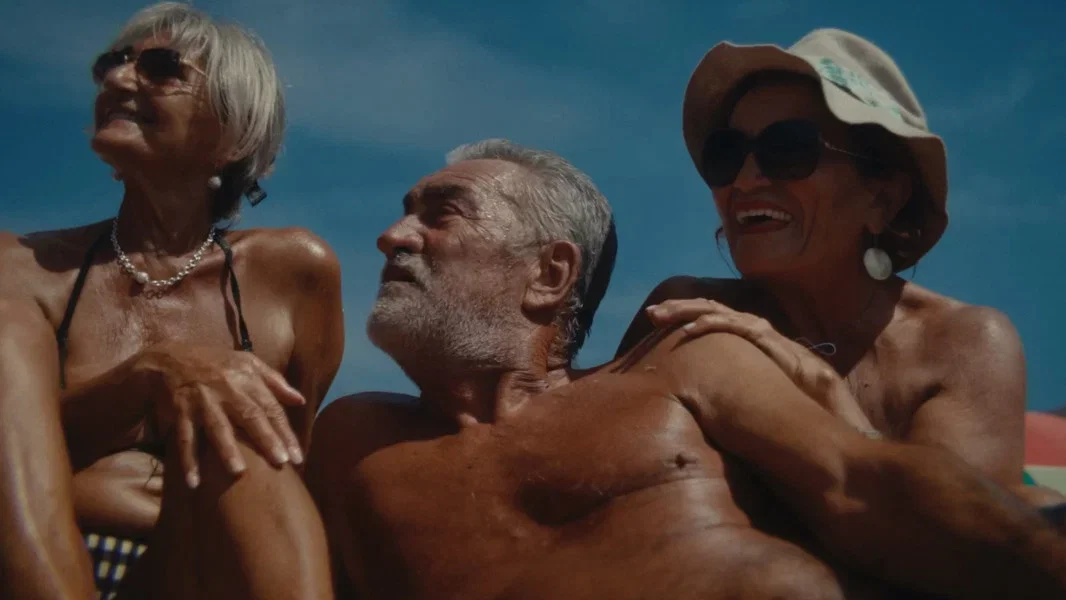
Every day, Joëlle meets her retired friends on Bain des Dames’s beach in Marseille. As if in an open-air theatre, they laugh; talk about love, sex, aging bodies; and remake the world with the freedom of those who have nothing left to prove.
If You Don’t Like It, Look Away is one of those rare documentary shorts that feels effortless on the surface yet quietly radical underneath. Set on the Bain des Dames beach in Marseille, the film observes a small community of older women who gather each day to sunbathe, gossip, tease one another, and simply exist without apology. What unfolds is not a traditional narrative, but a portrait of freedom. A portrait of women who have lived long enough to stop caring about how the world thinks they should behave.
The beach becomes a kind of open‑air stage. Joëlle and her circle of retired friends drift in and out of frame, their conversations floating between flirtation, nostalgia, irritation, and philosophical musing. They talk about love, sex, aging, and the absurdities of daily life with a frankness that feels refreshing. Their bodies, their laughter, their complaints, their memories all take up space in a world that often tries to shrink older women into invisibility. The title becomes a challenge. If their presence bothers you, look away. They certainly will not.
The dynamic between the women feels completely authentic. They are funny, sharp, poetic, and occasionally chaotic. They complain about loud music. They reminisce about old lovers. They mourn the past and joke about the future. They swim, they sunbathe, they flirt, they bicker. Dogs wander through the frame. Boobs are out. Nothing is hidden. Nothing is sanitised. The beach is theirs, and the world beyond the shoreline fades into irrelevance.
Visually, the film is gorgeous. The cinematography captures the brightness of the Mediterranean coast with vivid clarity. The blue of the sky, the warmth of sun‑tanned skin, the shimmer of the water, the salt in the air. Everything feels tactile. You can almost smell the sunscreen and hear the grit of sand underfoot. The camera lingers on textures and colours, giving the short a dreamy, sun‑drenched quality. It is observational filmmaking at its most inviting.
There are moments where the editing leans into comedy. A hazy, romantic montage here. A sudden cut to a blunt comment there. These choices give the film a playful rhythm, reminding the viewer that aging does not erase humour or desire. The women are fully alive, and the film embraces their contradictions. They can be tender one moment and brutally honest the next. They can be reflective, then suddenly annoyed, then laughing again. The tonal shifts feel natural because they mirror the ebb and flow of real conversation.
The film does not follow a clear narrative arc, and that is both its strength and its limitation. As an observational piece, it excels. It captures a slice of life with intimacy and respect. But viewers looking for a more structured progression may find themselves wondering where the short is heading. The film drifts, much like the tide, moving between lighthearted banter and heavier reflections without settling into a single direction. Yet this looseness feels intentional. The beach is not a place of order. It is a place of release.
One of the most striking aspects of the film is how it reframes the act of simply being in public. Lying in the sun, taking up space, letting the body be seen without shame becomes a quiet act of resistance. Director Jeanne Fournier understands that joy can be political. The women’s presence on the beach is a declaration that aging does not diminish worth. Their comfort in their own skin becomes a form of survival, a way of holding onto pleasure in a world that often denies it to older bodies.
The film also touches on the emotional weight that comes with age. There are moments of grief, of longing, of uncertainty about the future. These heavier beats never overwhelm the film, but they add depth. The women are not caricatures of carefree retirees. They are complex individuals navigating the realities of time. The documentary allows them to be messy, contradictory, and fully human.
By the end, the viewer feels as though they have spent an afternoon on the beach with these women. The sun has warmed the skin. The waves have softened the edges of thought. The conversations have lingered. The film leaves you with a sense of tenderness and admiration. These women are living their best lives, not because everything is perfect, but because they have chosen joy, connection, and honesty.
If You Don’t Like It, Look Away is a celebration of aging, friendship, and the freedom that comes from no longer caring about external judgment. It is light, funny, occasionally heavy, and always sincere. A small but powerful reminder that life does not shrink with age unless you let it.
Screening as part of Doc Edge 2026. Check out the films and screenings here
Review written by Alex Moulton
