Return to the Strange Land (2026)
Screening as part of Doc Edge 2026
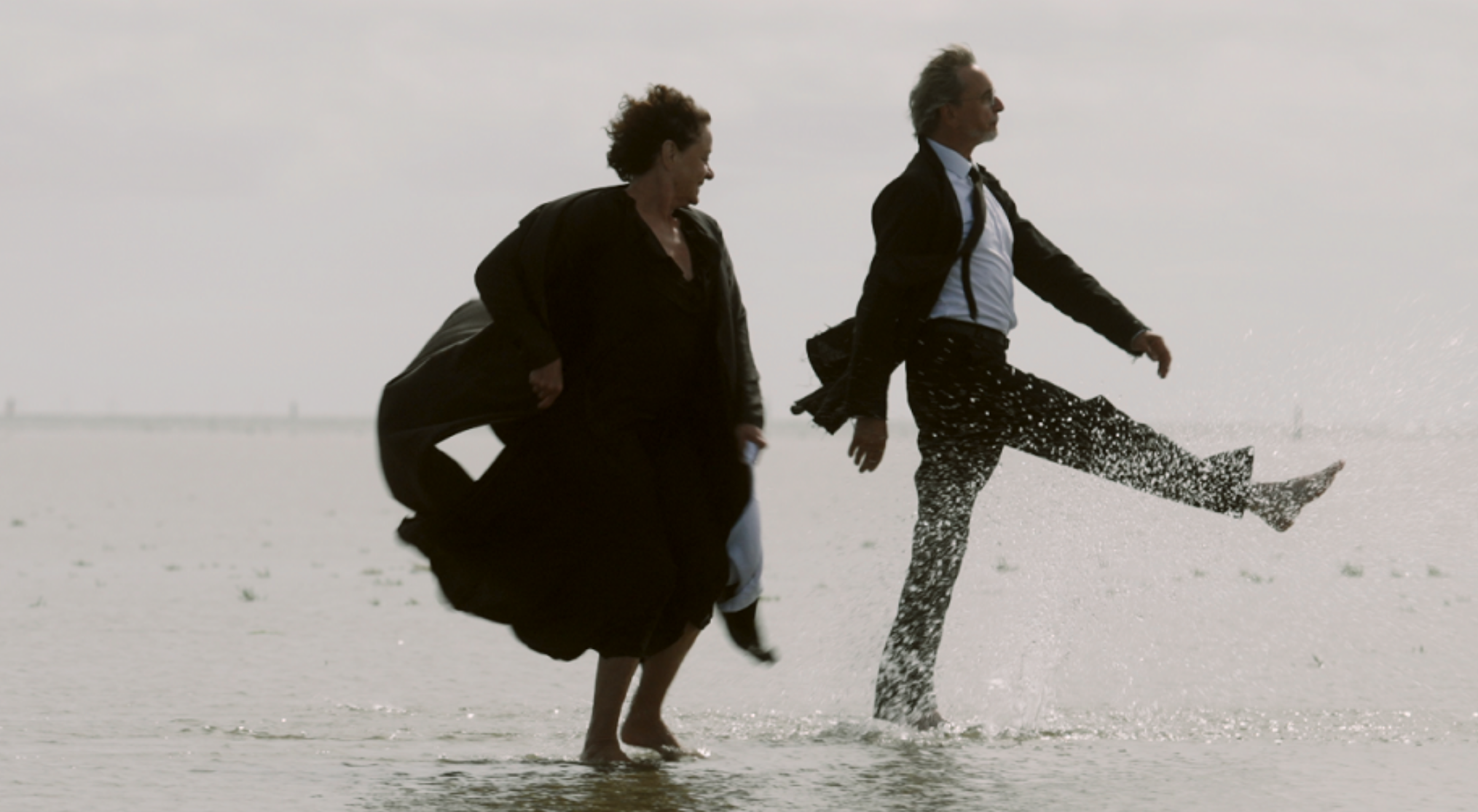
Renowned choreographer Jiří Kylián’s craft has always reflected his own life. His final choreography made for his lifelong love and collaborator, Sabine Kupferberg, is a deeply personal performance that celebrates love, creation, and the ephemeral nature of life. Set against the raw, windswept beauty of the Dutch island of Terschelling, the shifting light and landscape mirror the fragile boundary between life and its end. Blending movement and memory with a subtle sense of the tragicomic, the film becomes an intimate meditation on longing, love and the fleeting nature of existence.
There is a tenderness at the heart of Return to the Strange Land, a feeling that you are watching two lives trace their history through the language of the body. From the first frame, directors Olga Malířová and Jiří Kylián invite you into something intimate and unguarded, a space where movement becomes memory and memory becomes a kind of quiet truth.
At its centre is Jiří Kylián, one of the most influential choreographers of the last half century, and his lifelong partner and muse, Sabine Kupferberg. Their partnership spans more than fifty years, shaped by displacement, loss, and a shared devotion to dance as a way of understanding the world. This film, built around Kylián’s final choreography created specifically for Kupferberg, becomes both a love letter and a farewell.
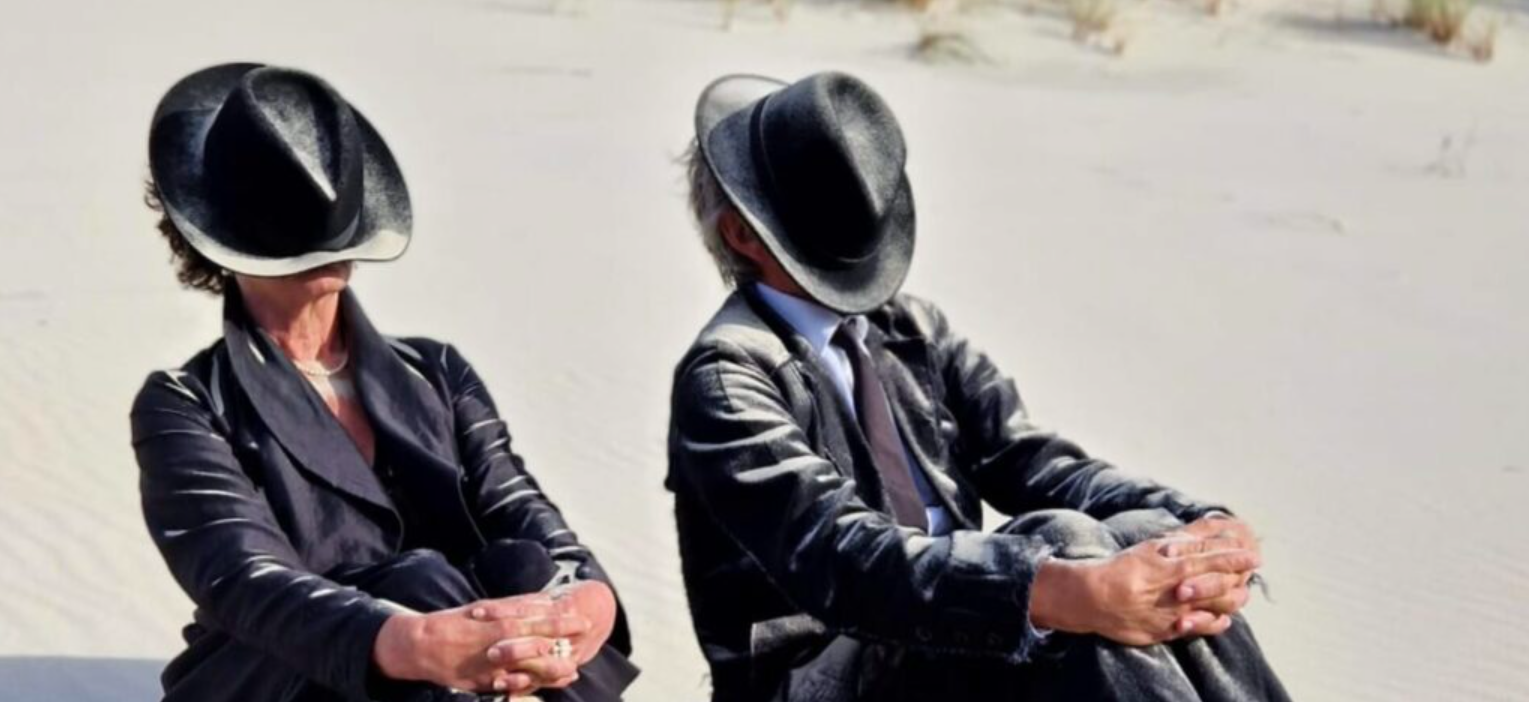
The work unfolds on the Dutch island of Terschelling, a place of wind, sand, and shifting light. The landscape is not a backdrop. It is a collaborator. Cinematographer Olga Malířová captures dunes that seem to breathe, grass bending under relentless gusts, and a horizon stretching into a pale, endless distance. The island mirrors the film’s themes: fragility, impermanence, the thin line between presence and disappearance.
Kupferberg moves through this environment with a quiet intensity. Her gestures are small, deliberate, and deeply human. There is no attempt to disguise age. Instead, the film honours it. Her body carries decades of experience, and every movement feels like a conversation with time itself. She dances not to impress, but to remember.
The film drifts between these present‑day sequences and archival footage from Kylián and Kupferberg’s earlier works. Editor Šárka Sklenářová shapes these transitions with fluidity, allowing the past to seep into the present without explanation. One moment we see Kupferberg now, her movements shaped by age and reflection. The next, we see her decades earlier, fierce and fluid, a dancer in full bloom. The contrast is not mournful. It is honest. Dance is ephemeral, and so is life. The film embraces that truth with grace.
Kylián’s own history is woven through the narrative with quiet clarity. In 1968, when Soviet tanks entered Prague, he was forced to leave his home and family behind. He became, in the eyes of the regime, a traitor. The sense of dislocation that followed shaped his artistic voice. He speaks of that time with a mixture of sorrow and acceptance, describing the feeling of having no country as akin to losing one’s limbs. Creativity became his anchor, the place where he could rebuild himself.
Kupferberg’s story carries its own shadows. She lost her mother as a child and spent years in an orphanage. Dance became her refuge, the place where she could reclaim a sense of identity and belonging. The film does not dwell on these traumas, but it acknowledges them as the soil from which their artistry grew. Their partnership is portrayed not as a romantic ideal, but as a collaboration forged through resilience.
What makes Return to the Strange Land so compelling is its refusal to explain itself. Screenwriter Olga Malířová avoids tidy commentary or over‑articulated themes. Instead, the film invites the viewer to sit with the images, the gestures, the fragments of conversation. The choreography filmed on Terschelling is sparse and contemplative. Kupferberg moves through the landscape as if in dialogue with it. Her body becomes a marker of time, a reminder that even the most disciplined craft cannot escape the inevitability of change.
The cinematography is breathtaking. The camera lingers on textures: sand slipping through fingers, fabric catching the wind, the lines of an aging hand. The sound design by Tomáš Kubec shifts between ethereal and orchestral, creating a sense of expansiveness that contrasts with the intimacy of the movement. The film feels both vast and small, like a memory unfolding.
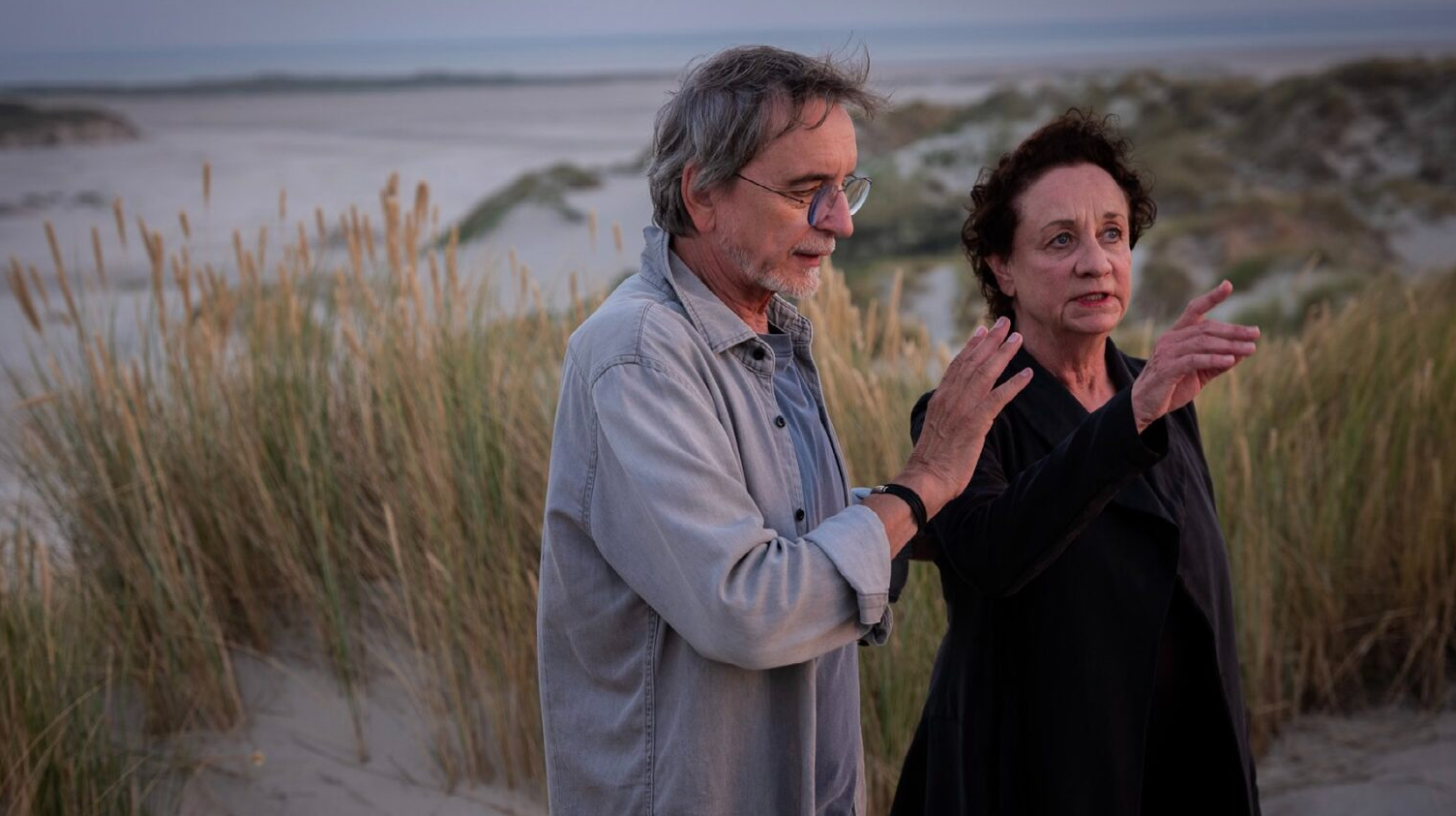
For viewers unfamiliar with dance, the film offers a rare glimpse into the creative process. It shows the repetition, the refinement, the slow shaping of an idea into something that lives in the body. It reveals the trust required between choreographer and dancer, especially when the dancer is also a life partner. There is a tenderness in the way Kylián watches Kupferberg rehearse, a quiet understanding that this final work is both a farewell and a continuation.
The archival footage enriches the narrative. We see the evolution of their artistry, the shifts in style, the experiments, the risks. We see the young dancers they once were, full of fire and ambition. And we see how those early impulses have softened into something more reflective. The film does not present aging as decline. It presents it as transformation.
There is humour, too. Kylián’s wit surfaces in small moments, balancing the film’s contemplative tone. Kupferberg’s expressions carry a playful spark that cuts through the solemnity. The tragicomic quality of their work is present throughout, a reminder that life is rarely one thing at a time.
The film’s philosophical undercurrent is subtle but persistent. It asks what it means to create when time is running out. It asks how art can hold the weight of a life. It asks how two people can build something lasting out of something as fleeting as movement. The answers are not spoken. They are danced.
What lingers after the film ends is not sadness, but a sense of clarity. Return to the Strange Land is not about mourning the past. It is about honouring it. It is about recognising that beauty often exists in the spaces between things: between youth and age, between presence and absence, between the body and the landscape that surrounds it.
Produced by Jiří Kylián, Carmen Thomas, Michal Sikora, and Viktor Tauš, and created through Kylian Productions and Lonely Production, the film is distributed internationally by ANTIPODE Sales International. It stands as a contemplative, visually stunning, emotionally resonant work. It asks you to slow down, to breathe, to watch closely. It is a meditation on love, on loss, on the strange and beautiful journey of being human. And like the best works of art, it stays with you long after the final frame fades.
Screening as part of Doc Edge 2026. Check out the films and screenings here
Review written by Alex Moulton
