Sukundimi Walks Before Me (2026)
Screening as part of Doc Edge 2026
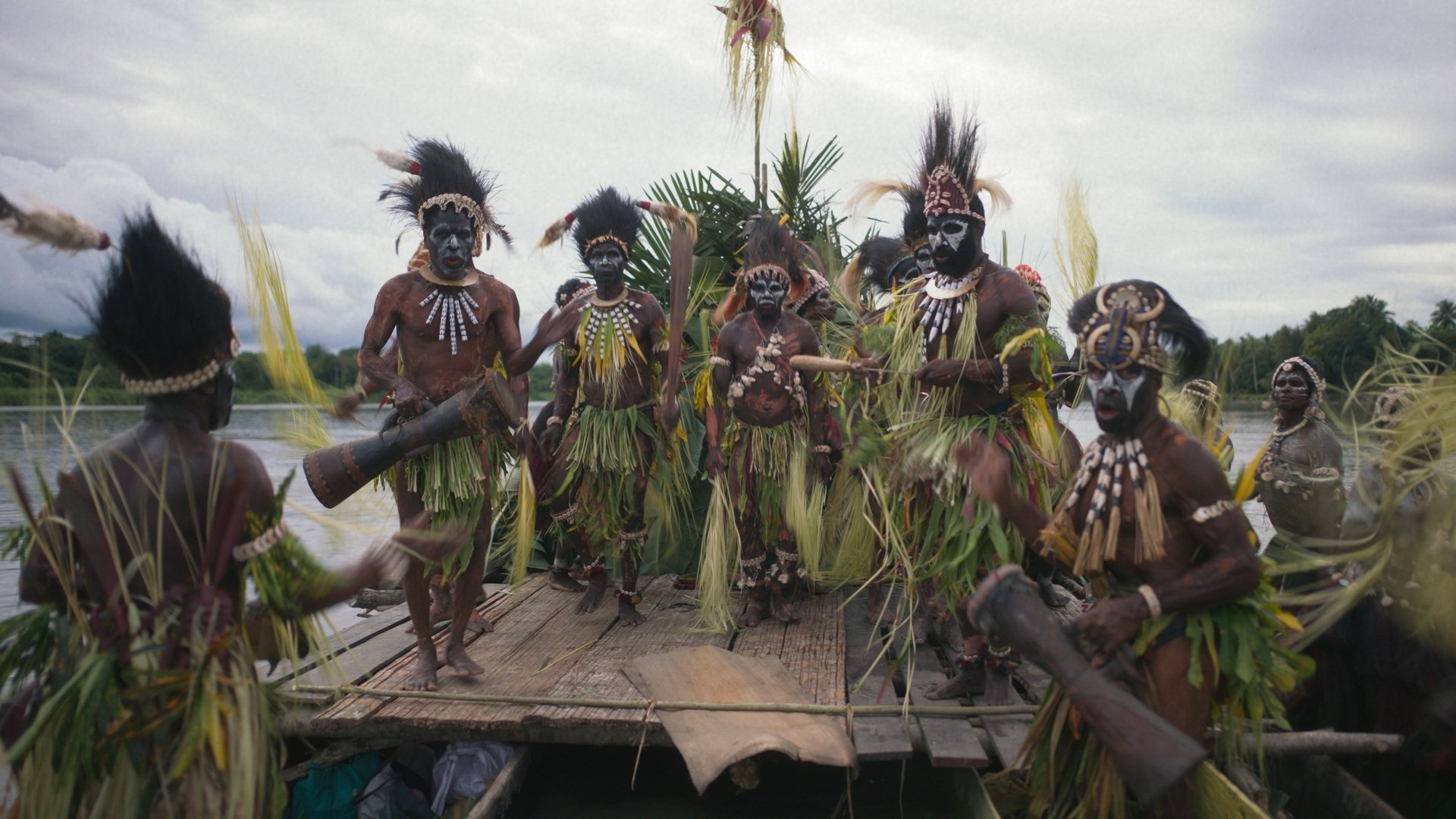
The Sepik River is the mother line for Papua New Guinea communities. Winding through mountains and rainforests, she is the crucial vertebrae connecting and supporting the region’s rare biodiversity and spiritual consciousness. But her livelihood and her communities are threatened by the proposal of a copper-gold mine being built near at her headwaters, which could extract, erode and pollute an environment that she has sustained for millennia. The children of this river, led by Manu Peni, create a grassroots campaign to stop the mine from being built, resisting the forces of colonial bureaucracy and Western narratives of ‘development’ by invoking the Spirit of the river and indigenous knowledge. Sukundimi Walks Before Me, explores this existential fight through lyrical expressions of existence, resistance and life along the mother river.
Sukundimi Walks Before Me refuses the outsider’s gaze, choosing instead to root itself inside the Sepik River’s living world. The result is an intimate, slow‑burning portrait of guardianship, resistance, and the profound relationship between people and the river that shapes their existence.
The Sepik is not treated as scenery. She is a presence. A force. A being. The film positions her as the central character, with the story unfolding through the perspective of Sukundimi, a river spirit woven into ancestral knowledge. This choice shifts the documentary away from conventional environmental storytelling. Instead of focusing solely on the threat of mining, it foregrounds the cosmology that binds the Sepik communities to their river. The camera lingers on her surface, her currents, her moods. She is shown in morning stillness, in afternoon heat, in the soft glow of dusk. Her voice is felt even when not heard.
The narrative follows Emmanuel Peni, known as Manu, a coordinator of Project Sepik and one of the most visible leaders in the resistance against the Frieda River Copper‑Gold Project. Manu travels along the river, visiting Haus Tambarans, speaking with elders, and gathering support for a campaign that must be built from the ground up. His journey is not framed as heroic. It is framed as necessary. He is one thread in a much larger fabric of community‑based leadership.
The film’s pacing is unconventional. It moves between long, contemplative sequences of daily life and sudden, jarring glimpses of violence and political tension. One moment, the audience watches a woman preparing food, her hands moving with practised rhythm. Next, the screen cuts to footage of gunfire or bloodshed, reminders of the broader instability that shadows the region. This contrast is deliberate. It underscores the fragility of the systems that sustain Sepik life and the urgency of protecting them.
The documentary’s visual language is one of proximity. The camera stays close to bodies, hands, tools, and textures. Fishing nets being cast. Wood being carved. Canoes gliding across water. Children playing near the riverbank. These moments are not filler. They are the foundation of the film’s argument. They show what is at stake. They show the everyday brilliance of community‑based systems that have sustained the Sepik people for generations. They show a world that does not need “development” to be whole.
The Frieda River Project looms over the film like a shadow. The proposed mine, driven by PanAust, a Brisbane‑based and Chinese‑owned company, would require a tailings dam of staggering scale. Seventeen times the volume of Sydney Harbour. Built in a region of extreme rainfall and seismic activity. The implications are devastating. If the dam fails, the Sepik River would be poisoned. Entire ecosystems would collapse. Communities would lose their livelihoods, their food sources, their cultural anchors, and their spiritual foundations.
The film does not rely on experts to explain this. Instead, it allows Sepik community members to articulate their fears, hopes, and questions. Some speak of compensation. Some speak of jobs. Some speak of promises made by developers. Manu listens, then gently dismantles the illusions. He explains taxes, investors, historical patterns of underpayment, and the reality that benefits rarely reach the communities most affected. The mask is removed. The audience sees clearly that the mine’s rewards flow outward, while the risks remain local.
One of the film’s strengths is its refusal to impose a Western narrative structure. There is no omniscient narrator. No external commentary. No attempt to simplify the complexities of Sepik life. Instead, the documentary allows the community to speak for itself. This approach honours sovereignty in storytelling. It ensures that the Sepik people are not framed as victims, but as guardians, strategists, and leaders.
The film also grapples with the broader discourse of “development.” It asks what development means, who defines it, and who benefits from it. Through conversations and lived examples, the audience sees how colonial undertones shape development rhetoric. The promise of progress often masks extraction. The language of opportunity often hides exploitation. The film invites viewers to question these narratives and to recognise the strength of Indigenous economic and political systems that have existed long before foreign developers arrived.
The documentary’s emotional core lies in its portrayal of ancestral responsibility. The Sepik River is not simply a resource. She is kin. She is history. She is future. The fight to protect her is not framed as environmental activism. It is framed as guardianship. As duty. As love. The film captures this through lyrical sequences that blend movement, water, and sound. These moments feel almost spiritual, reminding the audience that resistance is not only political. It is existential.
The film’s structure is intentionally loose. Some viewers may find the pacing uneven. The slow panning shots, the extended scenes of daily life, and the lack of explanatory narration can feel disorienting. But this is part of the film’s integrity. It refuses to rush. It refuses to simplify. It refuses to translate Sepik life into a format designed for external consumption. Instead, it invites viewers to slow down, to observe, and to understand the rhythm of a community that lives in deep relationship with its river.
The documentary’s most powerful moments come from its quietness. A man repairing a canoe. A woman washing clothes. Children laughing. These scenes reveal the everyday intimacy between people and place. They show why the mine is not simply a threat to land, but a threat to identity. A threat to continuity. A threat to the systems that hold communities together.
When the film shifts back to political tension, the impact is sharp. Footage of violence, anger, and fear reminds the audience that resistance is dangerous. The Sepik people are not fighting an abstract idea. They are fighting a multinational corporation backed by political power. They are fighting a narrative that frames extraction as progress. They are fighting for their right to exist on their own terms.
By the time the documentary reaches its final act, the audience has travelled alongside Manu and the communities he visits. The resistance feels grounded, collective, and deeply rooted in ancestral knowledge. The film does not offer closure. It does not pretend the fight is over. Instead, it ends with a sense of ongoing movement. Sukundimi walks before them. The river guides them. The struggle continues.
Sukundimi Walks Before Me is a contemplative, visually rich, and politically urgent documentary. It is a testament to the Sepik people’s sovereignty, resilience, and unwavering commitment to protecting their river. It is a reminder that development is not always progress, and that some places must be defended not for profit, but for life.
Screening as part of Doc Edge 2026. Check out the films and screenings here
Review written by Alex Moulton
