War (2026)
WAR follows two of London’s most prestigious rival firms – Cathcarts and Taylor & Byrne – as they go head-to-head in the divorce case of the century. Each side is certain they’ll win. But as the case spirals and loyalties fracture, reputations are on the line, and everyone’s playing to win.
War arrives disguised as a divorce drama, but that description only tells part of the story. While the breakdown of the marriage between tech billionaire Morgan Henderson and film star Carla Duval provides the catalyst for everything that follows, the series is far more interested in the machinery that surrounds them. This is a story about lawyers, ambition, reputation, power, and the extraordinary lengths intelligent people will go to when winning becomes more important than doing the right thing. George Kay's script wraps all of that up in an entertaining package filled with sharp dialogue, shifting allegiances, and enough twists to keep the narrative constantly moving.
The series opens with a situation that feels familiar. A wealthy, high-profile marriage collapses after infidelity comes to light, and a spectacularly expensive divorce suddenly becomes inevitable. What initially appears to be a battle between husband and wife quickly evolves into something much larger. Morgan and Carla may be the clients, but the true conflict lies between the rival legal firms representing them. Before long, the divorce itself almost feels secondary to the egos, rivalries, and professional grudges motivating the people being paid to fight on behalf of others.

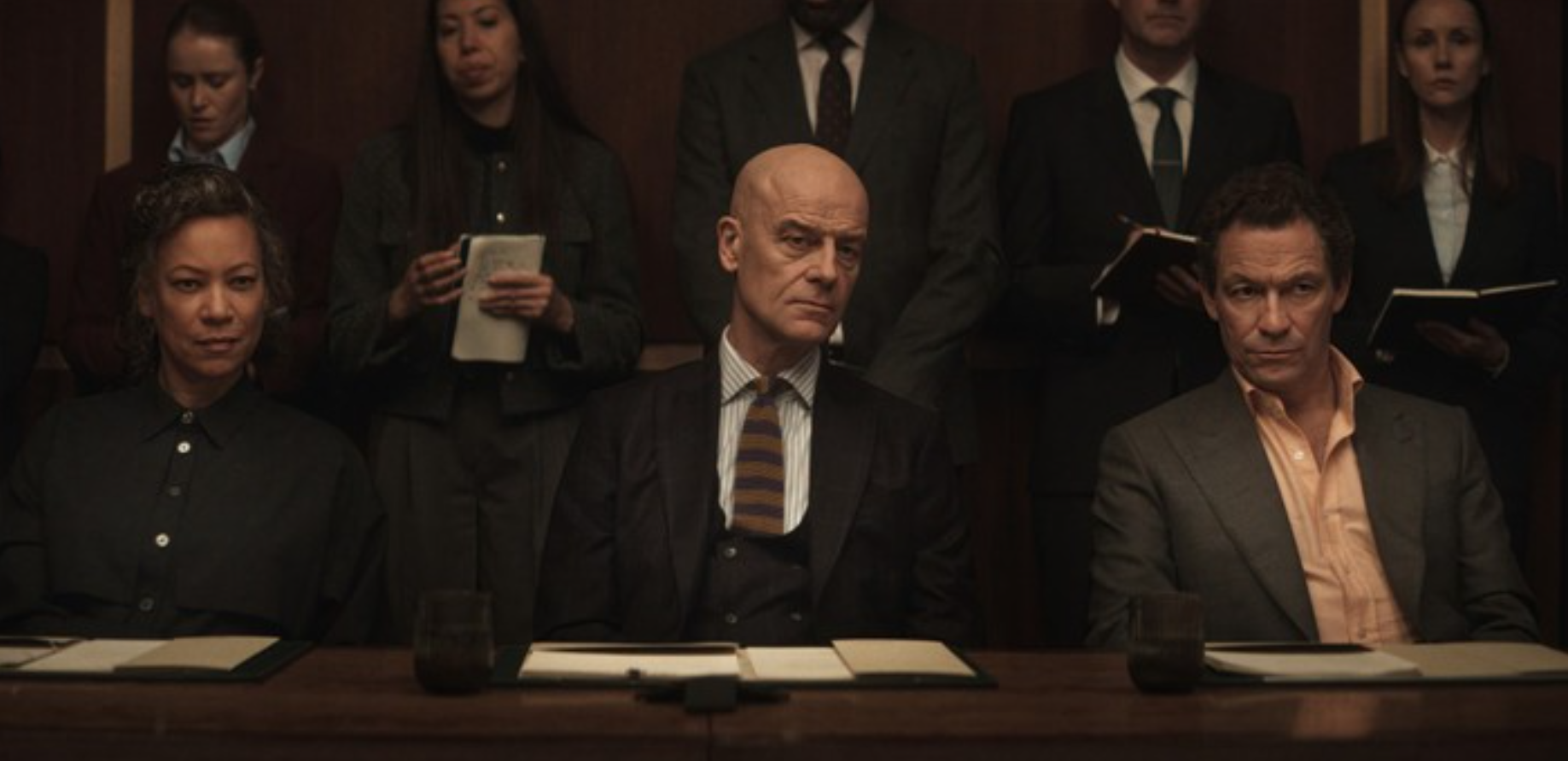
The legal firms are among the show's greatest strengths. Cathcarts carries itself with the confidence of an institution that has existed forever. Everything about the firm feels entrenched in tradition, from its dark wood interiors to its almost aristocratic certainty that victory is simply a matter of time. Across town, Taylor & Byrne presents itself as a modern alternative. The offices are brighter, more welcoming, and seemingly built around a more ethical view of legal practice. What War understands, however, is that no workplace remains idealistic forever once enough money, prestige, and opportunity are introduced into the equation.
The further the case progresses, the more difficult it becomes to separate professional ambition from personal ethics. Every supposedly reasonable offer contains an implied threat. Every strategic compromise creates another moral line waiting to be crossed. The lawyers repeatedly convince themselves that the next questionable decision is justified because it serves some greater purpose, only to find themselves pushed further than they ever intended. The beauty of the writing is that nobody sees themselves as the villain. Every character can explain exactly why they are right, even when they are behaving terribly.
The performances across the board are excellent. Dominic West and Sienna Miller could easily have been reduced to little more than wealthy people making bad decisions, but both actors bring enough humanity to their roles that the audience can still see traces of the relationship that once existed beneath the resentment. War is at its strongest when it acknowledges that Morgan and Carla are not simply enemies. There are still moments of self-awareness, regret, and lingering affection beneath the legal chaos. That emotional complexity helps elevate the material beyond a simple battle for money.
The show's most compelling relationships, however, often belong to the lawyers themselves. Phoebe Fox and James McArdle are particularly good as Serena Byrne and Nicholas Taylor. Their marriage provides a grounded emotional centre amid the increasingly cutthroat legal manoeuvring. While other relationships throughout the series are built on transactions, opportunities, and strategic alliances, theirs feels authentic. Yet even that relationship isn't immune to pressure. The demands of a major case slowly seep into every corner of their lives, and both performers convincingly portray the exhaustion that comes from trying to balance professional excellence with personal happiness.
Pip Torrens appears to be having an enormous amount of fun as St John Smallwood. Every scene he enters immediately becomes more entertaining. His ability to deliver cutting observations with effortless confidence makes him one of the most enjoyable presences in the series. Nina Sosanya is equally effective as Queen Bea, creating a character whose warmth and pleasantness disguise an exceptionally sharp instinct for survival. Together, they become formidable representatives of an industry that often rewards ruthlessness disguised as professionalism.
While the series is marketed heavily around the divorce itself, Archie Renaux ultimately emerges as one of its most important figures. Johnny Warren enters this world from the outside, desperately trying to establish himself within an environment built on prestige, connections, and status. His ambition makes him instantly relatable, even when his decisions become increasingly questionable. Through Johnny, the series explores class in a way that many prestige dramas avoid. The legal industry repeatedly talks about merit, talent, and opportunity, but Johnny's journey constantly exposes the invisible barriers faced by those who were not born into privilege.

That class commentary runs quietly underneath much of the story. The wealthy clients remain surrounded by extraordinary luxury, but War never glamorises their existence. Expensive offices, designer wardrobes, and lavish apartments are certainly on display, yet the series repeatedly demonstrates how money distorts priorities and corrodes relationships. The further the conflict escalates, the less anyone seems interested in practical outcomes. Pride, validation, ego, and reputation become far more valuable than any financial settlement. The irony, of course, is that nearly everyone involved could walk away comfortably at almost any point. They simply choose not to.
One of the more impressive aspects of War is its ability to make legal process feel exciting. Mediation sessions are staged like tactical negotiations. Arbitration becomes a battle of endurance. Strategy meetings resemble military briefings. Characters speak about cases the way generals might discuss campaigns. By treating each stage of the process as a new battlefield, the series injects momentum into situations that could otherwise feel procedural. Even when conversations are happening inside conference rooms, there is a constant sense that something significant is at stake.
The dialogue contributes enormously to that momentum. War is packed with clever observations, biting humour, and moments of dark comedy that help break up the tension. The writing understands that these characters often use wit as a weapon, and some of the most entertaining moments come from seemingly civil exchanges loaded with hidden hostility. It also prevents the series from becoming overwhelmingly serious despite dealing with some fairly ugly behaviour.

The show occasionally struggles under the weight of its own ambition. As the cast expands and subplots multiply, not every storyline receives the same level of attention. Some supporting characters are more compelling than others, and there are moments where the emotional fallout of the divorce feels slightly overshadowed by the mechanics of the legal battle. The series is often more interested in the warfare than the wound itself. For some viewers, that may leave the central relationship feeling less developed than it could have been.
Even so, War remains consistently engaging because it understands exactly what kind of story it wants to tell. It is smart, polished, sharply acted, and wonderfully cynical about the systems it depicts. Beneath the glamorous surface sits a story about people convincing themselves that happiness lies on the other side of victory, only to discover that winning often costs more than they were prepared to pay. The result is an entertaining, adult drama that turns legal strategy into psychological warfare and makes every negotiation feel like a battle for something far more valuable than money.
War streams only to Hayu from October 4th (with new episodes dropping weekly)
Review written by Alex Moulton
