Enamoured
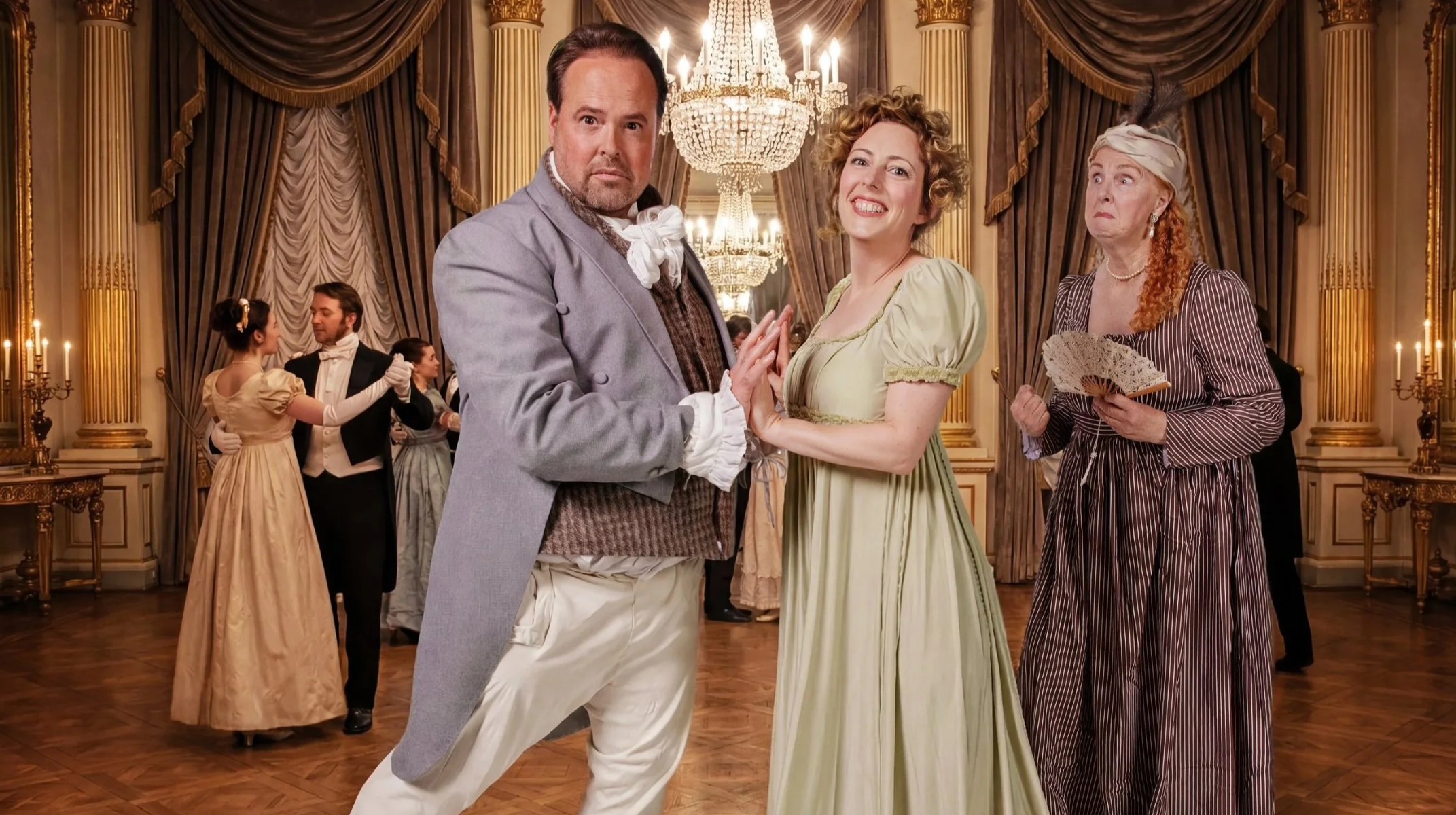
Step into Enamoured, an unscripted period romcom inspired by the romance of Bridgerton and the wit of Jane Austen. Our quick-thinking cast spins a brand-new love story each night, fuelled by your prompts. Expect scandal, longing glances, sharp tongues, and delightfully awkward encounters as hearts flutter and reputations hang in the balance. Will true love prevail, or will chaos reign in the drawing room?
Enamoured takes the conventions of a Regency romance and hands them over to a cast of improvisers with only a handful of audience suggestions to guide them. Inspired by the romantic melodrama of Bridgerton and the sharp social comedy of Jane Austen, the show creates a completely original story every night, meaning no two performances are ever the same. What follows is less about delivering a perfectly crafted narrative and more about watching talented performers build one from scratch in real time.
The evening begins with Kevin Barron, who serves as both an inquisitive neighbour and the show's master of ceremonies. As the only performer who directly addresses the audience, he establishes the format, explains what lies ahead, and keeps proceedings moving smoothly. His role creates a welcoming atmosphere and helps bridge the gap between audience and performers before the story itself gets underway.
The narrative is launched by Mrs Beatrice Fanshawe, played by Elle Bell, who opens the show by writing a letter aloud. It is an effective storytelling device that introduces the setting and key characters while immediately establishing the period flavour of the production. From there, the cast begins weaving together a story inspired by audience contributions, which on this occasion centred around gambling debts and the purchase of a horse.
One of the strengths of Enamoured is its structure. Rather than focusing on a single central pairing, the show constantly rotates characters through different combinations of scenes. Relationships are built through a variety of interactions, allowing every character to connect with every other member of the cast in some way. Characters frequently overlap as scenes transition, creating an organic flow that helps the world feel larger than the small cast would otherwise suggest.
Because the performers are clearly familiar with the format, there is confidence in the way they approach the material. While the production embraces the conventions of period romance, it is equally comfortable pushing beyond them. Characters may begin as recognisable archetypes, but the cast regularly takes scenes in unexpected directions, finding increasingly creative and absurd ways to develop both relationships and storylines.
Comedy ultimately becomes the show's greatest asset. Rather than relying on predetermined jokes, the performers remain alert to what is generating laughter on the night and willingly build upon it. Some of the biggest laughs come from moments that appear completely accidental.
Phillip Rice proves particularly adept at turning mistakes into comic gold. Several slips involving character names evolve into an ongoing joke, with his character accumulating an increasingly elaborate history of concussions, injuries and memory problems to explain every inconsistency. Rather than ignoring these mistakes, Rice embraces them, transforming simple errors into some of the evening's most reliable sources of humour.
Richard Lambert also finds himself at the centre of one of the night's strongest running jokes. What begins as an offhand observation concerning his character's leg develops into an increasingly absurd recurring gag that is enthusiastically adopted by the rest of the cast. Each return earns bigger laughs than the last, highlighting how quickly improvised theatre can turn a throwaway detail into a defining feature of the performance.
The audience suggestions are integrated throughout the evening, particularly the horse, which repeatedly becomes a source of comic escalation. Not every prompt receives equal attention, however. While the gambling debt storyline appears poised to become a major source of conflict early on, it gradually fades into the background as the cast collectively settles on a different direction for the narrative. Given that significant sums of money are introduced later in the story, there were opportunities to revisit this thread that never quite materialised. It is a minor disappointment, particularly as it felt rich with comic and dramatic potential.
Structurally, the show falls into three distinct phases. The first act focuses on introducing characters and establishing humour. The second begins exploring romance and conflict, while the third becomes an increasingly frantic effort to resolve every outstanding storyline before time runs out.
The first act is comfortably the strongest from a narrative perspective. Characters are introduced clearly, motivations are established and relationships begin to take shape naturally. The performers have room to explore ideas and discover which threads are worth pursuing.
The second act introduces greater emotional stakes as various suitors compete for Mrs Fanshawe's affection. Bell's performance plays a major role here. Rather than making matters easy, she consistently refuses to be impressed by those pursuing her, forcing the other performers to work harder to create romantic momentum. It keeps the narrative unpredictable but occasionally results in convenient plot devices being introduced to move events forward.
By the third act, the cast is juggling a growing number of unresolved storylines while racing toward an ending. Letters often arrive at just the right moment, helping untangle complications that might otherwise have consumed more stage time. Narratively, this section feels rushed as emotional developments and revelations arrive in quick succession. Yet it is also where some of the strongest comedy emerges.
The audience is able to watch the performers desperately attempting to reconcile contradictions, forgotten details and accidental comments from earlier scenes. Timelines stop making sense, relationships become confusing, and seemingly incompatible versions of events need to be explained. Rather than hiding these problems, the cast leans into them.
The more outrageous the solutions become, the funnier the show gets. Whether attempting to explain impossible travel arrangements, multiple relatives sharing the same name or conflicting recollections of previous scenes, the performers repeatedly transform their own mistakes into fresh opportunities for laughter. There is a unique pleasure in watching skilled improvisers scramble to justify increasingly ridiculous developments while remaining fully committed to the world they have created.
Among the ensemble, Barron and Kay Hammond often serve as anchors for the show's romantic elements, helping maintain focus on the central relationships whenever the comedy threatens to overwhelm the narrative. Bell provides an effective counterbalance by continually resisting easy resolutions, while Yoong Ru Heng works as a mediator of sorts, helping steer interactions between competing characters and motivations. Rice and Lambert contribute much of the show's comic energy, consistently finding ways to expand small ideas into memorable recurring jokes.
The characters themselves remain relatively simple, but that never becomes a major issue. The enjoyment comes less from deep character study, and more from watching these personalities collide in unexpected ways. Their interactions are entertaining enough to carry the production through occasional narrative shortcomings.
Enamoured is ultimately at its best when it embraces the unpredictable nature of improvisation. The story itself may occasionally feel rushed or uneven, but the process of creating it is consistently engaging. Watching performers think on their feet, solve problems in real time and turn mistakes into opportunities proves just as entertaining as the romance at the centre of the narrative.
It may not always achieve the elegance of the period dramas that inspired it, but it delivers something those stories cannot: the excitement of knowing that absolutely anything might happen next. Filled with charm, quick wit and delightfully escalating chaos, Enamoured succeeds as both a romantic comedy and a celebration of the unique thrills that only live improvisational theatre can provide.
Enamoured performances run on selected dates between October 2 and December 5, 2026, at Covert Theatre. Purchase tickets here.
Review written by Alex Moulton
