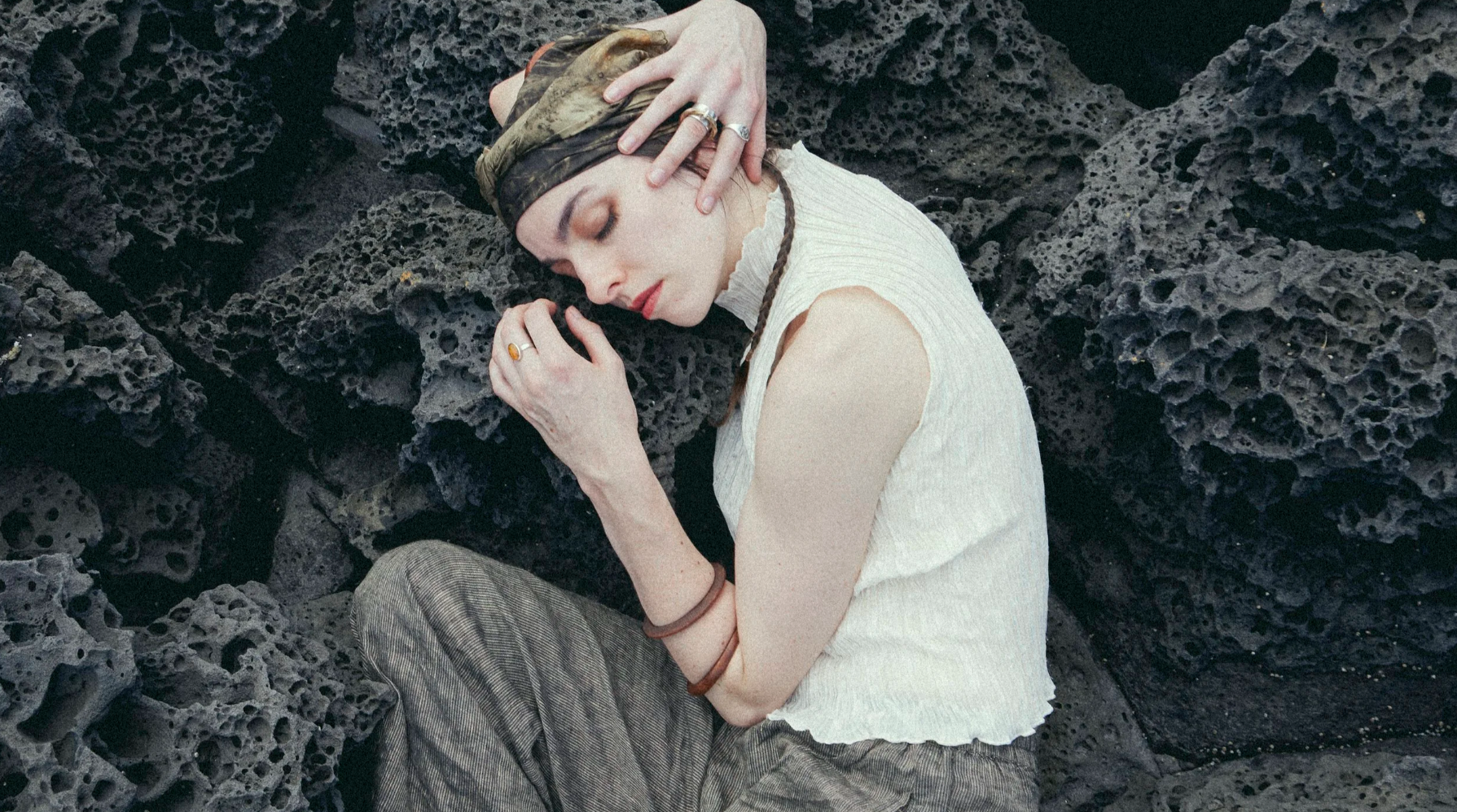
Performed as part of the Tempo Dance Festival
Presented by Ctenophora Co.
When do we hold things dear, and when do we allow ourselves to let go? Contorted postures and lashing appendages permeate three bodies as they melt towards collapse. Against the backdrop of a world turned sideways, how much pressure can our flow of life withstand? Operamoth pries open fossilised remains in a gathering of movement, wax, and sinew tethers. A tangle of holding self, holding together, and holding nothing; folding audiences into a dreamlike vista.
Ctenophora Co.’s Operamoth begins with an image of attachment already under strain. In the flexible intimacy of Basement Theatre’s Studio, the audience sits along two adjoining sides of the performance area, close enough to register every contraction, tremor and laboured breath. A narrow passage cuts through the space, marked by small clay figures that resemble artefacts from an invented natural history. Nearby, one performer attends carefully to these miniature creatures while the other two cling to each other. Their embrace repeatedly weakens, collapses and reforms, establishing a cycle of connection and separation that becomes the foundation of this strange and compelling contemporary dance work.
Created and performed by Jake Starrs, Stella Grace Seawright and Sydney Magnus, the 45-minute piece explores the contradictory impulses contained within intimacy. Its three dancers appear driven by a desire to preserve themselves, remain connected and surrender everything at once. These needs do not unfold as clearly separated ideas. Instead, they overlap and interfere with one another, leaving each performer caught between independence and dependence. The result is less a conventional narrative than a shifting emotional ecosystem, one in which every touch can offer comfort, impose a restriction or signal an imminent loss.
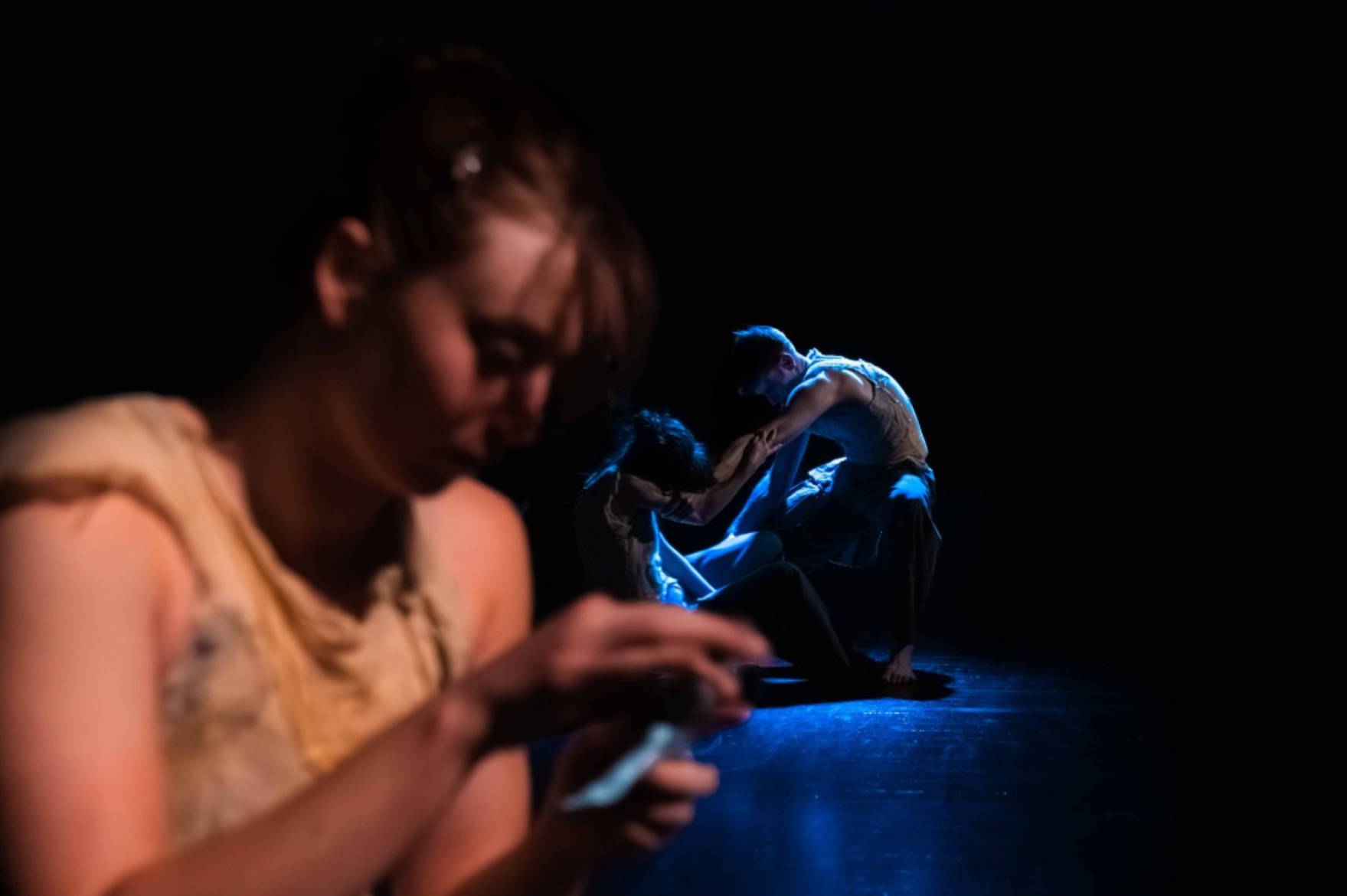
The opening duet is deceptively simple. Two bodies hold, loosen, descend and reunite, repeating the pattern until tenderness begins to resemble compulsion. As the sequence accelerates, fatigue becomes visible, and the embrace takes on an increasingly desperate quality. There is something haunting in the performers’ persistence. They seem unable either to sustain contact or to abandon it, yet the failures never settle into frustration. Instead, each collapse produces the energy required for the next attempt. The choreography turns repetition into a form of emotional pressure, gradually exposing the physical cost of maintaining a bond that cannot remain stable.
Across the space, the third dancer’s concentration on the clay objects creates a quieter counterpoint. The figures appear both ancient and newly made, like specimens from a half-remembered mythology. When one is compressed back into shapeless material, the action suggests creation and destruction occurring through the same touch. This understated moment introduces the performance’s wider fascination with transformation. In Operamoth, form is never secure. Bodies, relationships and objects are continually moulded, damaged and reassembled, as though change is not a dramatic event but an unavoidable condition of being alive.
Once all three dancers converge, the choreography develops its most distinctive physical language. Their bodies join into temporary organisms, producing clusters of limbs that evoke roots, insects, plants and unfamiliar animals. These configurations have an organic logic, but seeing human anatomy arranged in such ways makes them deeply uncanny. A shoulder becomes a joint in some larger creature, while an arm or leg seems to function as an antenna, tendril or defensive appendage. The performers’ contorted shapes do not merely imitate the natural world. They suggest humanity being absorbed back into it, stripped of social polish and returned to something instinctive.
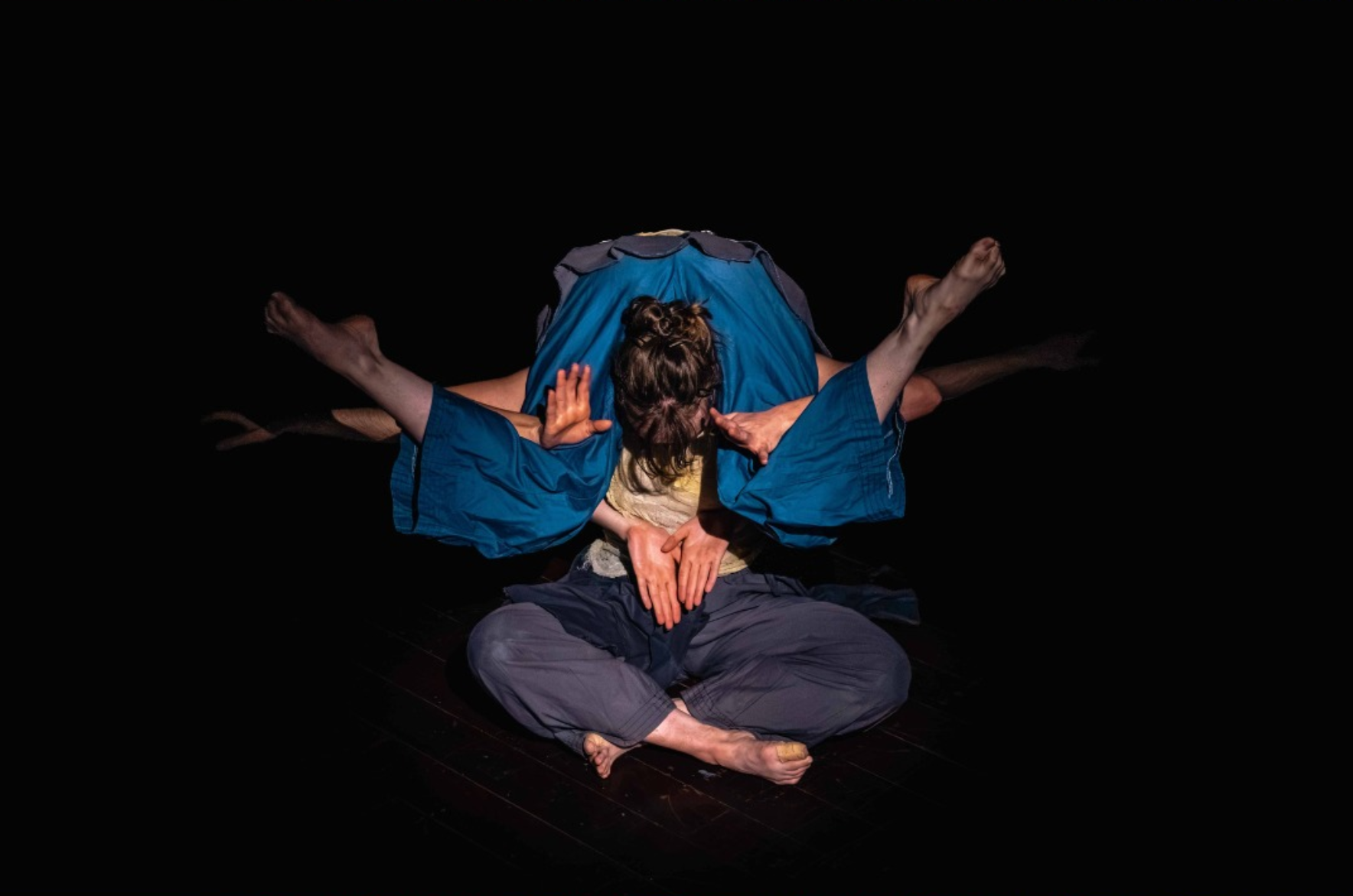
The trio’s assemblages are also where the emotional complexity of the work becomes clearest. Each body must alternately bear weight, relinquish control and threaten the balance of the others. Support can become resistance in an instant, and an act of rescue may look almost indistinguishable from restraint. The choreography repeatedly asks how much pressure a shared structure can endure before it breaks. These negotiations create a tangle of fragile interdependence, in which the dancers appear safest when joined together and most endangered by the very closeness that protects them.
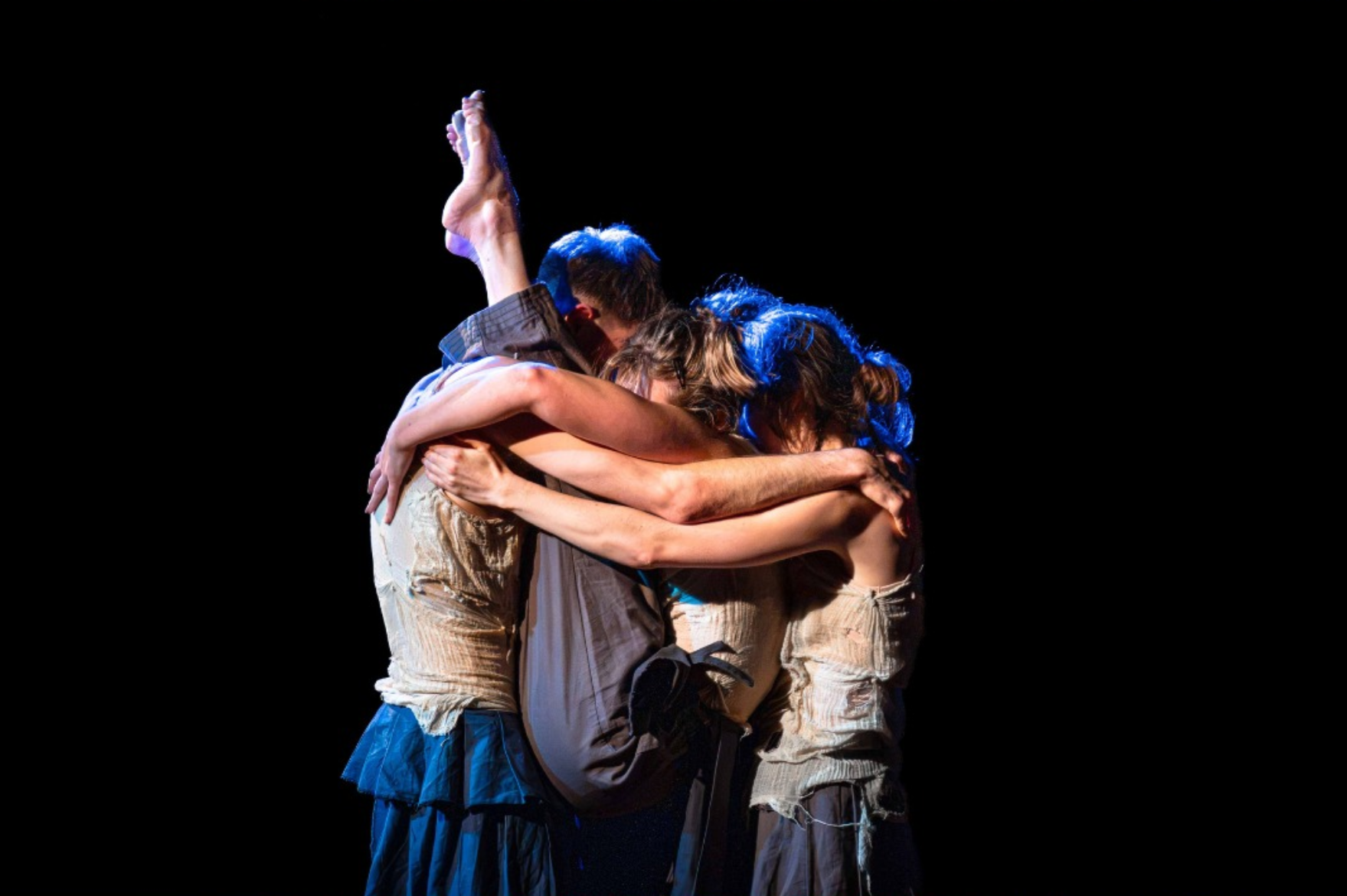
Despite the work’s darker undercurrents, its movement retains a playful curiosity. The performers test one another, rearrange themselves and pursue fleeting partnerships with an almost childlike immediacy. Pairings form and dissolve as each dancer attempts to secure affection, escape exclusion or enter an intimacy already occupied by somebody else. The movement feels primal rather than calculated, as though every reach, recoil and sudden rise originates in impulse. A particularly accomplished passage sees two performers facing one another with their arms linked while the third, lifted above the floor, threads through the narrow structure they have created. It is an image of remarkable trust and precision, but also one of vulnerability, with the suspended body entirely dependent on the others maintaining their hold.
Katrina Marks’ costumes deepen this sense of bodies undergoing an unfinished biological process. Their rough, organic surfaces resist decorative neatness, giving the performers the appearance of beings partly formed from husk, fibre and skin. Wax and sinew-like bindings extend this visual language, suggesting both protective casing and restrictive tether. The central cocoon metaphor is effective because it remains ambivalent. A cocoon may be a refuge in which transformation becomes possible, but it is also an enclosure that must eventually be ruptured. Operamoth recognises that the bonds sheltering us at one stage of life may become the very structures from which we later need to escape.
Ruben Ćirilović’s textural score is essential to the atmosphere. Gentle guitar and rushing water give way to whispers, reversed speech and overlapping voices from which recognisable language has been removed. Later, rasping, grinding, picking and slurping sounds introduce an uncomfortable human physicality into the more spacious sonic environment. The audio moves fluently between near-silence and dense, visceral noise, matching the dancers’ transitions from delicate contact to frantic exertion. Sounds of nature do not provide tranquillity so much as place the performers within a world of continuous biological activity, where growth involves friction, pressure and decay.
The work’s surreal imagery is often grotesque, but rarely gratuitous. Its distorted shapes and lashing limbs express experiences that ordinary gesture would struggle to contain. Rather than presenting transformation as graceful progress, Operamoth makes it awkward, exhausting and uncertain. The dancers melt towards collapse, then gather themselves into another unstable arrangement. Their resilience lies not in remaining intact but in repeatedly adapting after each configuration fails. This gives the performance an emotional generosity beneath its harsher textures. It understands that surrender can be frightening without being defeat, and that letting go may require as much strength as holding on.
Operamoth is most affecting when it refuses to resolve the tension between connection and autonomy. Its metamorphosis offers no clean emergence into a perfected new form. Instead, Starrs, Seawright and Magnus present growth as a continual negotiation between the bonds that sustain us and the freedom that threatens them. Engrossing, unsettling and unexpectedly playful, the work turns three bodies into an evolving landscape of desire, dependence and release. What remains is not the certainty of transformation completed, but the vivid sensation of lives pressing against their limits, searching for a shape spacious enough to hold both intimacy and change.
Review written by Alex Moulton
