Performed as part of the Tempo Dance Festival
Presented by Movement of the Human
Acclaimed choreographer and director Malia Johnston returns with Tōrua, a captivating immersive urban dance experience. Performed by an outstanding ensemble of dance artists including Sefa Tunupopo, Xin Ji, Jemima Smith, Ella Williams, Veronica Lyu, Andre Busby, Petronilla Su'a, Montell Nickel and Nate Gacusan.
Tōrua transforms central Auckland into both stage and collaborator, inviting audiences to experience the city through a constantly shifting interplay of movement, sound and perspective. Created by choreographer Malia Johnston, this immersive dance work abandons the conventions of theatre and instead guides its audience through the streets surrounding Te Waihorotiu Station, revealing familiar public spaces as sites of wonder, play and unexpected intimacy. Equipped with wireless headsets and encouraged to follow the performers through the city, viewers become participants in an experience that is as much about observation as it is about rediscovery.
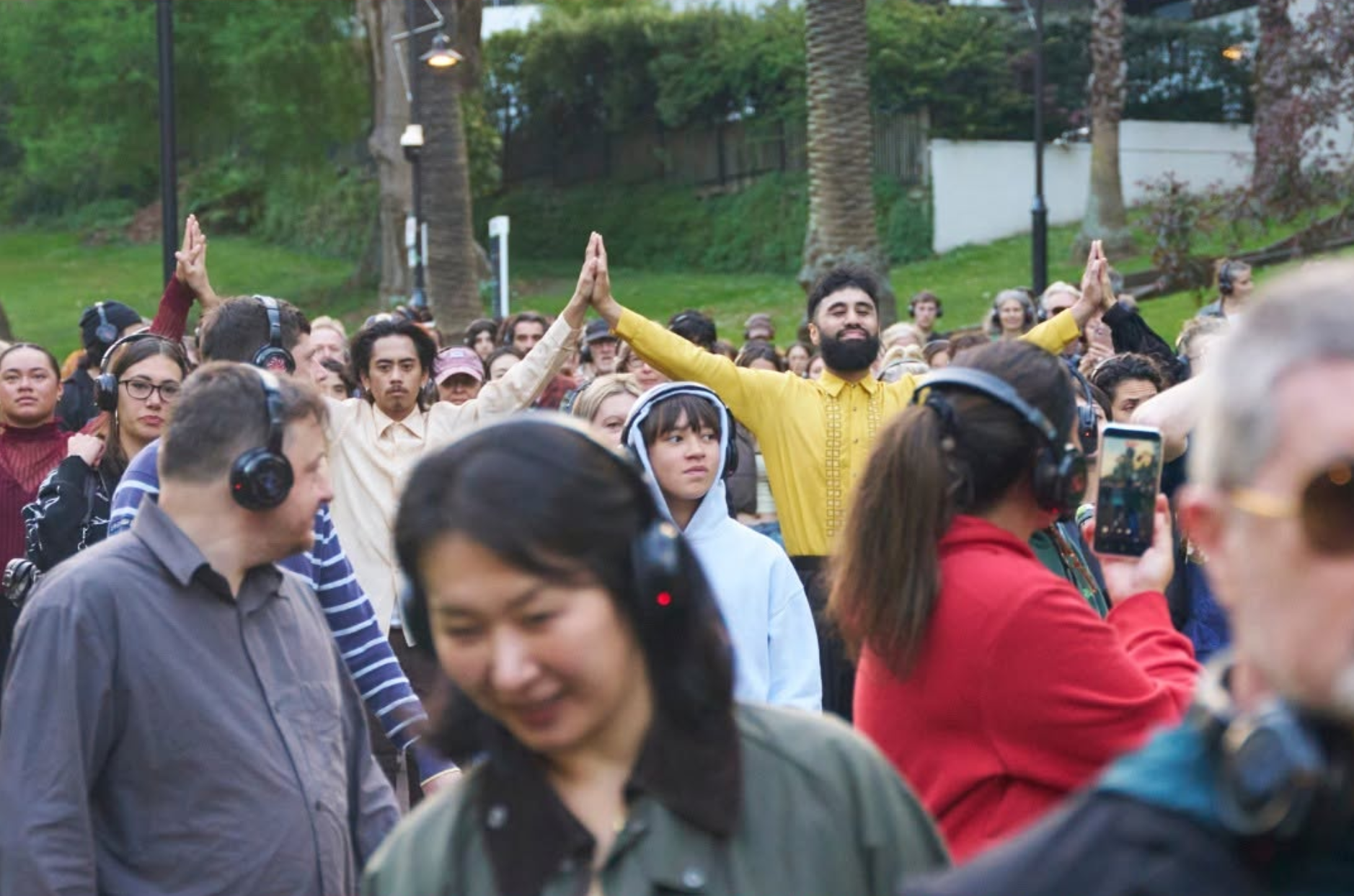
From the outset, Tōrua establishes that movement extends well beyond the dancers themselves. The audience is gently drawn into the choreography simply by travelling through the urban environment, navigating footpaths, plazas and city corners as part of a collective body. The act of walking becomes performance, and everyday commuters become accidental cast members within a carefully orchestrated encounter. It is an approach that fundamentally changes the relationship between performer and audience. Rather than sitting at a comfortable distance, viewers occupy the same space as the dancers, sharing the same concrete surfaces, negotiating the same obstacles and witnessing the city through a newly heightened lens.
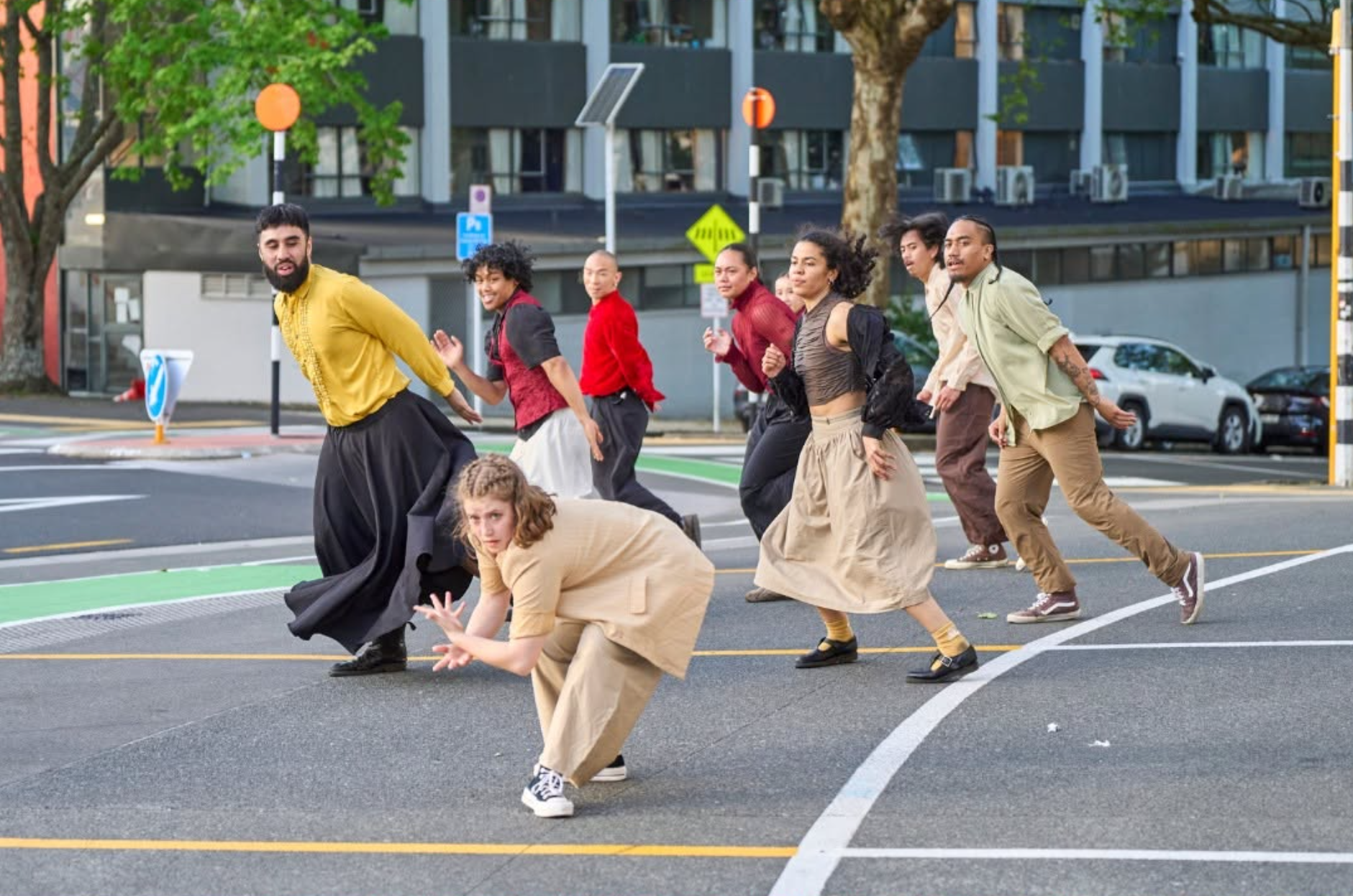
The use of headsets proves central to the work's effectiveness. Not only do they provide an immersive soundtrack composed by Eden Mulholland and Anna Edgington, but they also create a strange duality. The city remains visible and active, with traffic, pedestrians and construction continuing around the performance, yet the music creates a private emotional landscape layered on top of the physical environment. The result feels almost cinematic at times, as though the audience has stepped into a carefully edited film unfolding in real time.
An especially compelling aspect of the headset design is the ability to switch between channels. The changes are often subtle rather than dramatic, but they can significantly alter the emotional texture of a sequence. A passage that feels reflective through one soundscape may suddenly take on a more urgent or playful quality through another. This creates a unique level of agency for audience members, allowing individuals to shape aspects of their own experience without disrupting the shared nature of the performance.
The city itself becomes one of Tōrua's most fascinating performers. Te Waihorotiu Station and its surrounding precinct are not merely backdrops but active participants in the choreography. Stairs, pathways, pillars and open plazas become structural elements that the dancers interact with, challenge and transform. The work continuously reveals new possibilities hidden within familiar architecture. Spaces that might usually be crossed without notice suddenly become sites of tension, connection or beauty.
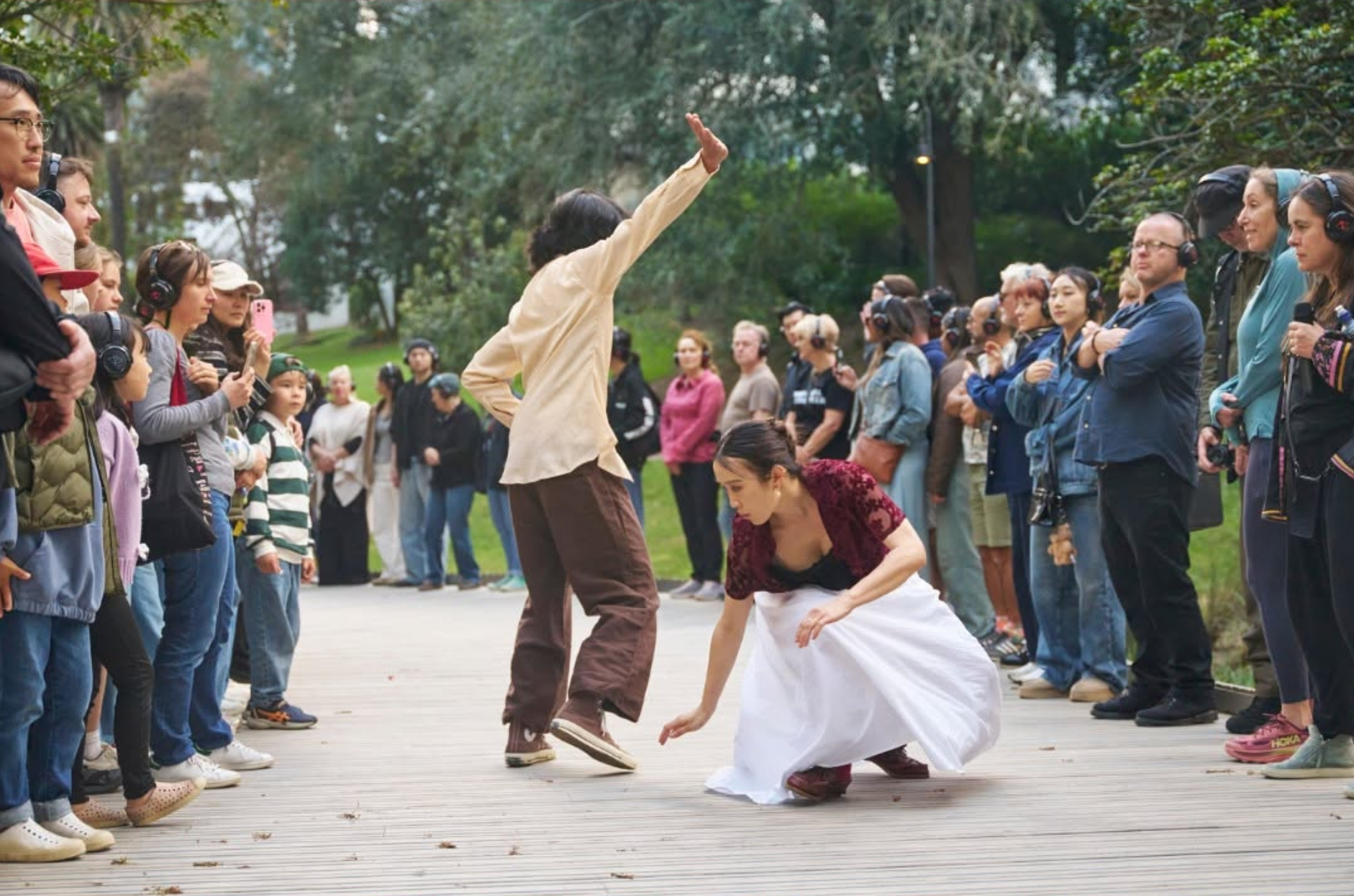
Johnston's choreography demonstrates a remarkable understanding of site-specific performance. Rather than imposing movement onto the environment, the dancers appear to draw movement from it. The choreography absorbs the rhythms of the city and responds to them organically. Crowded intersections, passing pedestrians and unexpected distractions never feel like intrusions. Instead, they become part of the work's living texture.
The movement language itself is rich and varied. Contemporary dance provides the foundation, but influences from street dance, physical theatre and community-oriented movement practices flow seamlessly through the performance. There is an ever-present sense of conversation between contrasting styles and energies, reflecting the ideas of duality suggested by the work's title.
Hip hop influences are particularly prominent throughout the performance. Grounded footwork, rhythmic precision and moments that evoke cypher culture inject a raw energy into the choreography. Yet these elements are balanced by fluid contemporary movement and moments of striking stillness. The dancers frequently shift between explosive physicality and quiet restraint, creating an engaging dynamic that continually holds attention.
One of the production's greatest strengths lies in the individuality of its performers. Each dancer brings a distinct physical voice to the work, ensuring that solos never feel interchangeable. Some performers command attention through expansive movement and sweeping lines, while others draw audiences inward through subtle gestures and emotional nuance. The diversity of movement backgrounds becomes a genuine asset, enriching the choreography with multiple perspectives and physical textures.
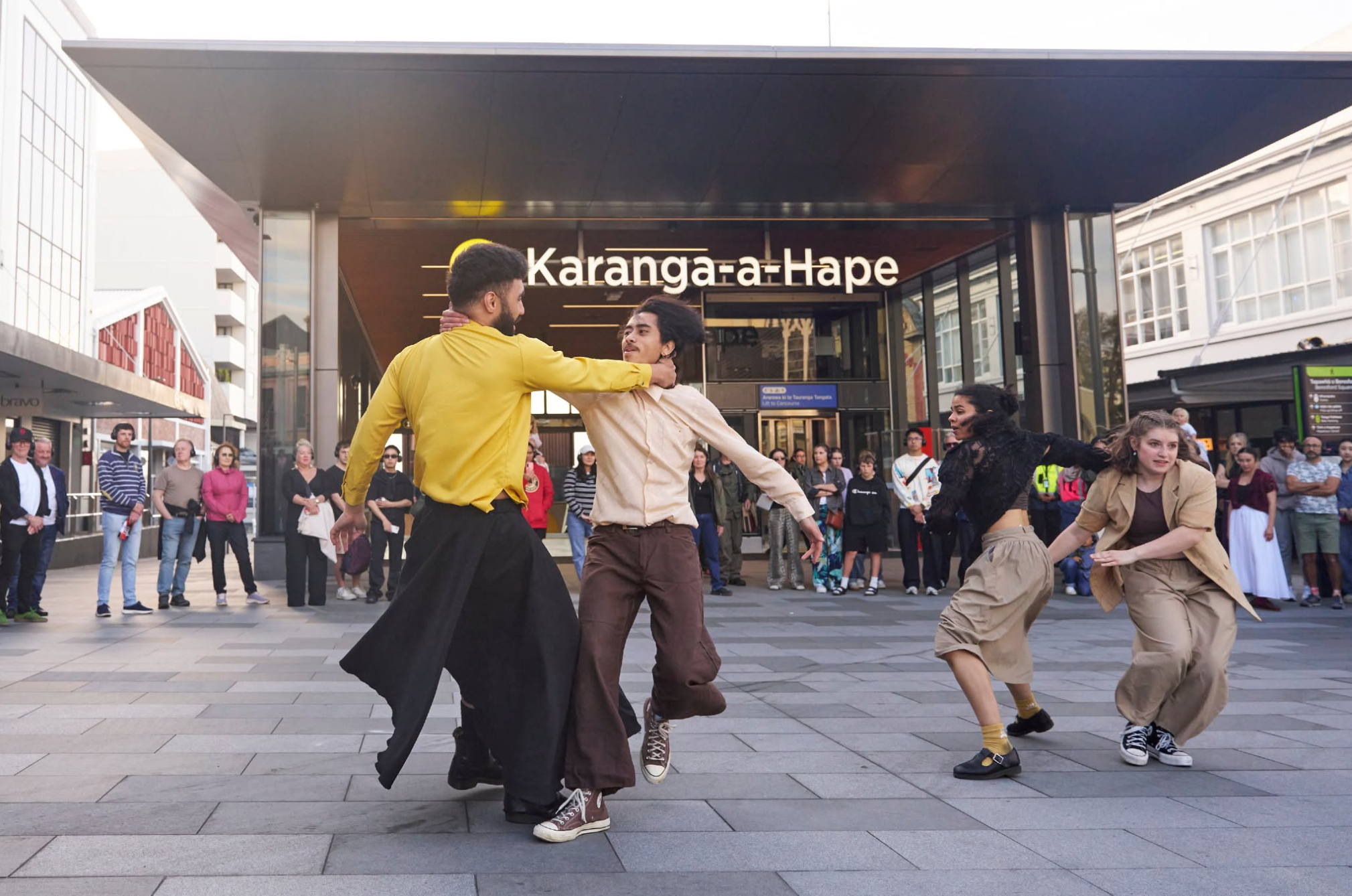
The duet work is particularly memorable. Partnerships often begin with an almost confrontational intensity, bodies responding to each other with sharp precision and calculated force. There is a martial quality to some interactions, as though each dancer is testing the limits of the other's momentum. Yet just as quickly, these encounters soften. Fleeting moments of tenderness emerge before slipping away, creating a constant tension between strength and vulnerability. The choreography never allows those emotional shifts to settle comfortably, which makes them all the more affecting.
Group sequences provide a different kind of pleasure. At various points the ensemble moves with an almost ritualistic unity, creating patterns that ripple through the environment. There is a hypnotic quality to these sections as dancers weave through public spaces with shared purpose. The collective movement gains additional power because it is contrasted with the individuality displayed elsewhere throughout the work.
Some of the most striking passages occur when the performers slow the action dramatically. Bodies seem to melt into one another, rolling across surfaces and folding through space with remarkable fluidity. Time appears to stretch. In a busy urban environment defined by urgency and constant motion, these moments create a feeling of contemplative stillness that feels surprisingly profound. Watching dancers move with such patience amidst the rush of city life becomes one of the work's most powerful visual ideas.
The production also possesses a welcome sense of playfulness. At one point the performers travel through the city with an infectious energy that encourages the audience to follow in their wake. These moments help ensure that Tōrua never becomes overly solemn or conceptual. Despite its artistic ambitions, the work remains accessible and inviting. Curiosity rather than exclusivity drives the experience.
Perhaps the most impressive achievement of Tōrua is the way it changes audience perception. By the end of the performance, familiar streets and landmarks feel subtly transformed. The city appears more textured, more alive and more interconnected than it did beforehand. The work encourages audiences to reconsider not only their surroundings but also their relationship to movement itself. Every pathway becomes a potential stage. Every passerby becomes part of an unfolding choreography.
What could have been a simple promenade performance instead becomes an immersive exploration of place, perspective and human connection. Through its combination of site-responsive choreography, richly varied movement styles and thoughtfully designed soundscape, Tōrua succeeds in turning everyday urban space into something extraordinary. It is a dance work that asks audiences to move, listen and look more closely, rewarding them with a fresh understanding of a city they may have thought they already knew.
Review written by Alex Moulton
