Performed as part of the Tempo Dance Festival
Presented by Rebecca Jensen
Suspended in an endless countdown, a group of pro-wrestlers and dancers embody stasis. Join for a moment, or stay for three hours to watch the delirium unfold. A hypnotic loop. Repetition without resolution. The future stalled.
Marking Out 3 Count is the kind of performance that lingers long after it ends, not because of a singular shocking image or dramatic revelation, but because of the way it slowly reshapes your relationship with time, labour and performance itself. Presented as a durational work that audiences can enter and leave freely, Rebecca Jensen's ambitious collaboration between contemporary dancers and professional wrestlers turns a deceptively simple gesture into the foundation of an engrossing examination of spectacle, exhaustion and belief. What begins as an exploration of professional wrestling's familiar three-count gradually evolves into something stranger, more unsettling and unexpectedly profound.
Set within the cavernous surroundings of Te Puna Creative Hub, the performance operates in a suspended state. There is no clear beginning, middle or end in the conventional sense. Instead, the work loops endlessly, trapping performers and audience inside a cycle that continually repeats while subtly transforming with every rotation. The effect is hypnotic. The longer you remain inside its orbit, the more the repetition ceases to feel repetitive. Small changes become monumental. A shift in pace, a hesitation in movement, or a slightly delayed response suddenly carries enormous weight.
The central premise revolves around the referee's three-count, one of professional wrestling's most recognisable rituals. In wrestling, that sequence of three strikes against the mat is loaded with authority. It determines winners and losers, closes storylines and delivers apparent certainty. Yet everyone understands that the outcome has already been decided. The count serves as both a crucial storytelling device and an elaborate illusion. It exists to convince audiences that something fair and spontaneous has just occurred, even though the result was predetermined long before the referee's hand touched the canvas.
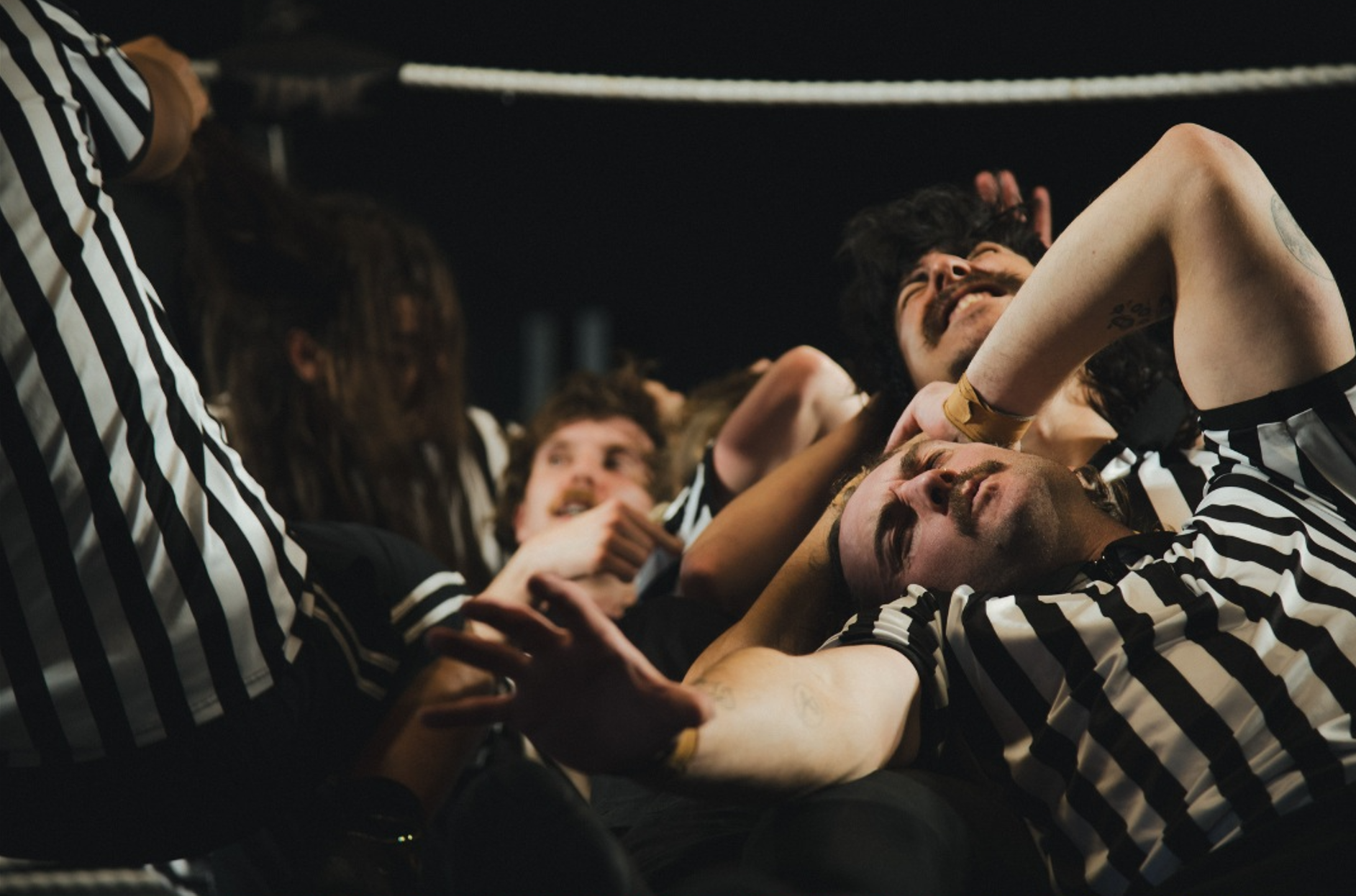
Jensen takes that contradiction and stretches it to extraordinary lengths. By isolating the mechanics of the three-count and removing it from its usual narrative framework, she transforms a familiar theatrical gesture into an object of fascination. What remains is not wrestling and not quite dance, but something occupying an intriguing space between the two. The performers repeatedly circle through fragments of action, breaking apart and reconstructing the language of the wrestling ring until it begins to resemble an elaborate choreographic score.
The collision between professional wrestlers and contemporary dancers proves to be one of the production's most compelling qualities. Both disciplines share more common ground than audiences might initially realise. Each relies on timing, physical storytelling, spatial awareness and the manipulation of audience attention. Yet they often approach these goals through very different methods. Bringing the two forms together highlights both their similarities and their differences.
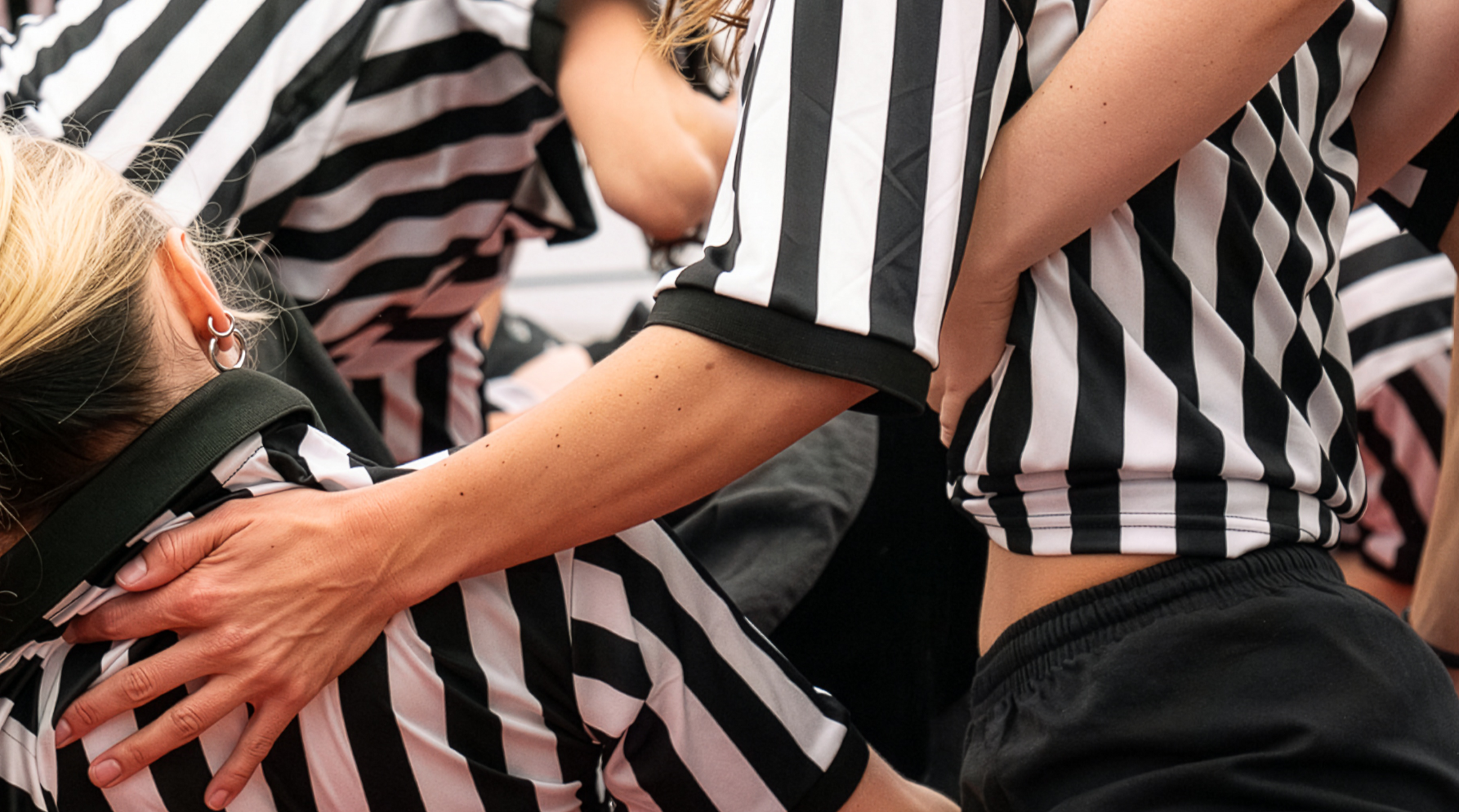
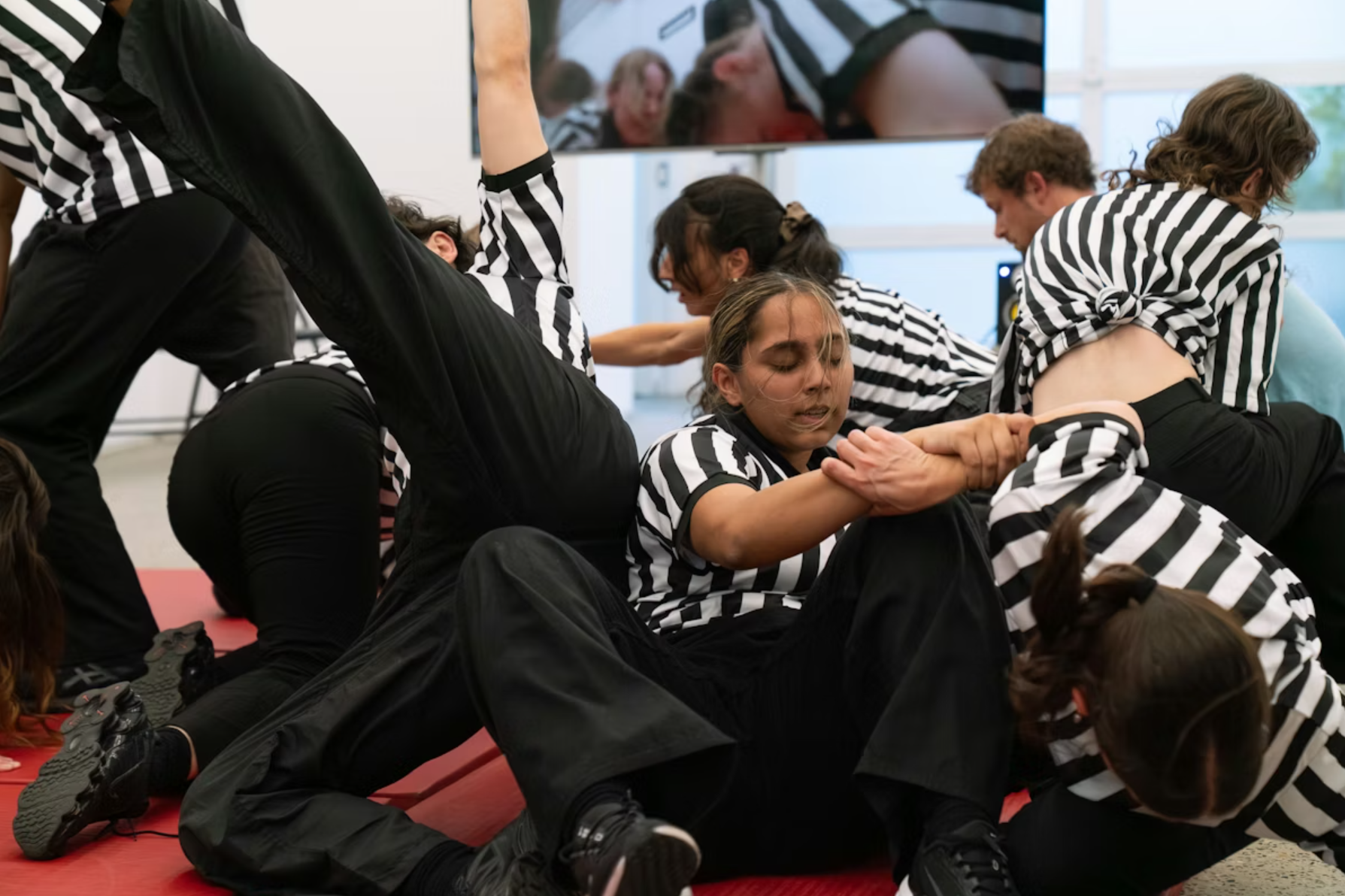
Throughout the performance, the cast continually shifts between states of full engagement and apparent detachment. One moment bodies collide with explosive force, crashing to the floor with dramatic impact. The next, performers move through actions with a measured informality that resembles rehearsal rather than performance. This fluctuation creates a fascinating tension. The audience is never entirely certain whether they are witnessing the "show" or the preparation for the show.
That ambiguity feels central to the work's success. The title itself hints at a blurring of boundaries. In dance, marking is a practical tool used to conserve energy while rehearsing choreography. In wrestling culture, a mark is someone who wholeheartedly believes in the staged fiction unfolding before them. Jensen cleverly positions the audience at the intersection of those ideas, encouraging us to question where performance ends and reality begins.
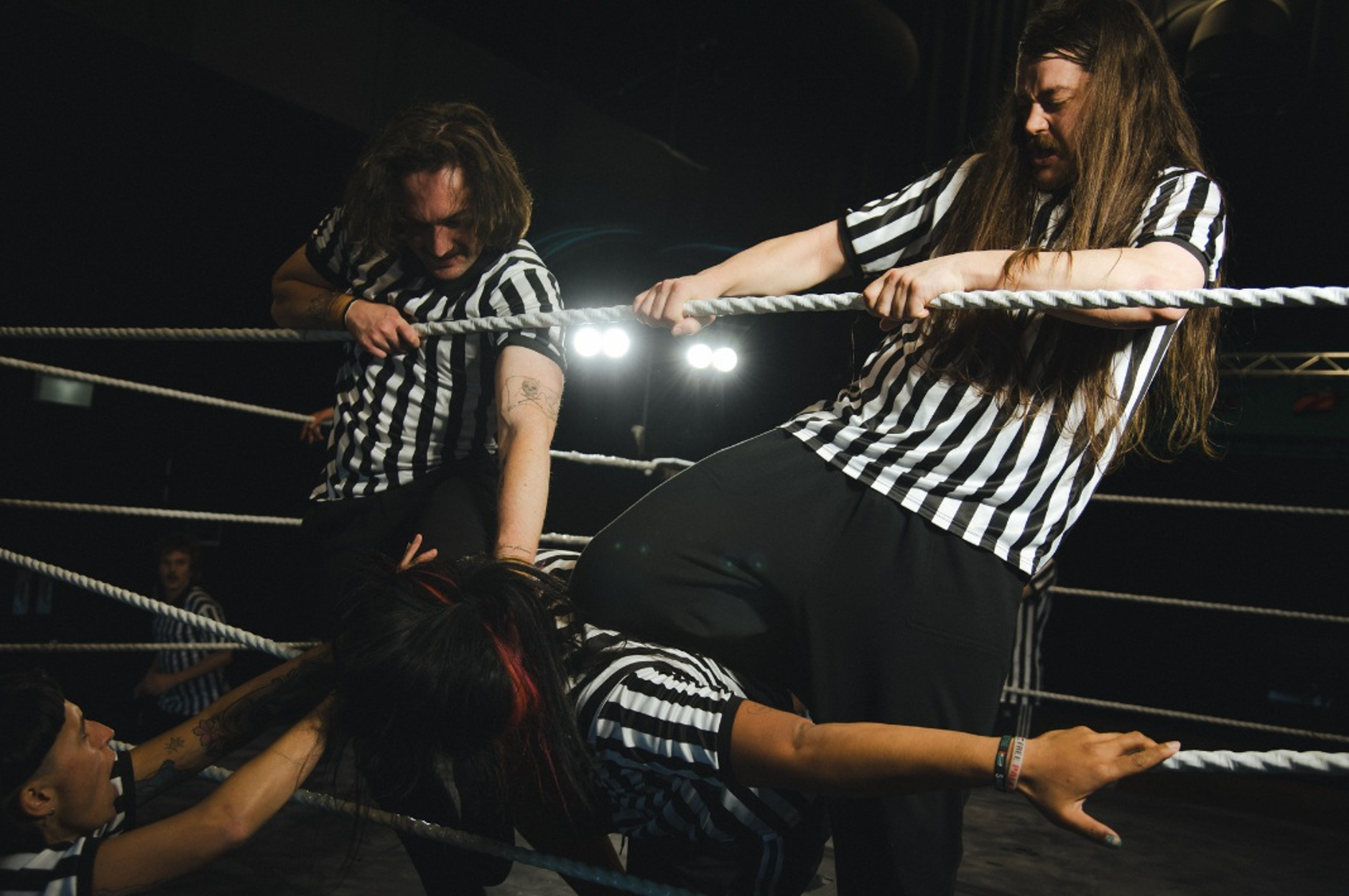
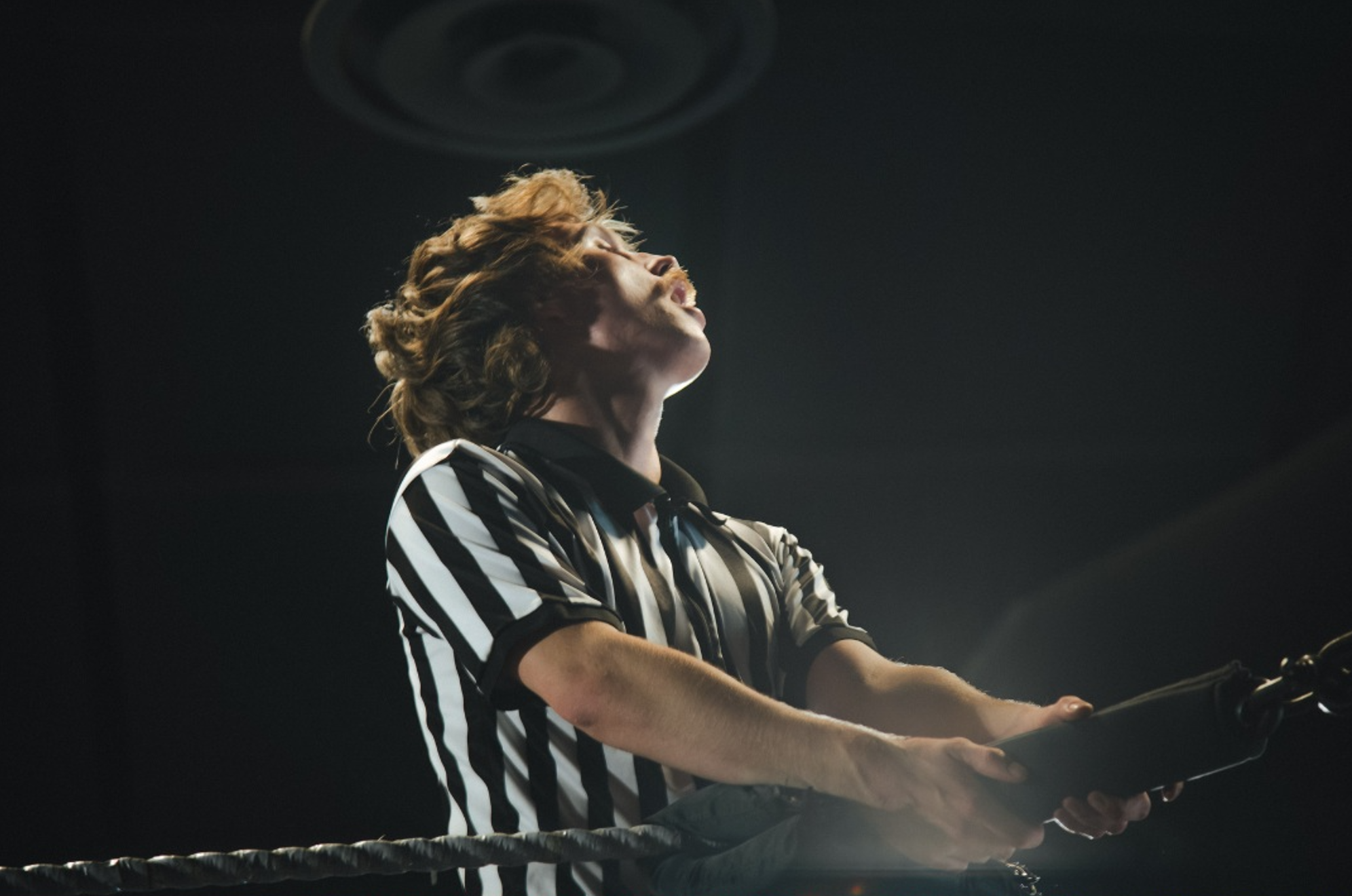
The choreography repeatedly returns to the physical vocabulary of officiating and competition. Referees drop to their knees. Arms rise into the air. Hands strike the floor. Wrestlers grapple, separate and reset. Dancers weave through these actions, drawing attention not to their intended meaning but to their underlying structure. Stripped of narrative context, the movements begin to take on entirely new significance. The familiar mechanics of sport become abstract patterns of effort and repetition.
For all its conceptual sophistication, however, Marking Out 3 Count never becomes purely intellectual. Its greatest strength lies in its physical immediacy. The performers' bodies remain at the centre of every moment. Over time, the cumulative effect of repeated exertion becomes impossible to ignore. What initially appears crisp and controlled gradually starts to fray at the edges. Fatigue enters the room and becomes an active participant in the work.
Because the performance unfolds over such an extended duration, exhaustion cannot be faked. Audiences witness genuine physical deterioration occurring in real time. Breathing becomes heavier. Recovery periods become more noticeable. Movements lose a degree of polish and gain a different kind of truthfulness. The work evolves from a study of theatrical illusion into a portrait of human endurance.
The sound design plays a crucial role in shaping this transformation. Rather than relying on dramatic musical cues or familiar wrestling spectacle, the production foregrounds the sounds of labour. Bodies hitting the floor become percussion. Footsteps create rhythm. Breaths, grunts and impacts build an evolving acoustic landscape that feels simultaneously mechanical and deeply human.
These raw sounds are layered with an atmospheric score that rarely offers the kind of emotional release audiences might expect. Instead of building towards climactic peaks, the audio reinforces the sense of suspension that defines the work. Rhythms repeat. Textures accumulate. Patterns emerge and dissolve. Time begins to feel elastic. An hour can disappear unexpectedly, while a few minutes can seem to stretch indefinitely.
Particularly striking is the recurring cadence of the three-count itself. Each sequence of strikes lands with an almost ritualistic significance. Repeated relentlessly throughout the performance, the sound transforms from a functional sporting signal into something approaching a metronome for the entire space. The count becomes a governing force, directing bodies through cycles of effort and recovery while continually reminding audiences of the performance's central fixation.
There is also a surprising vulnerability beneath the work's conceptual framework. By removing the spectacle traditionally associated with professional wrestling, Marking Out 3 Count exposes the immense physical effort required to sustain illusion. Without bright lights, entrance themes and narrative storylines to distract us, attention settles entirely on the bodies doing the work. Every fall carries weight. Every recovery demands effort. Every repetition accumulates meaning.
The most remarkable aspect of the production may be its ability to sustain fascination through repetition alone. Conventional storytelling teaches audiences to expect progression and closure. Jensen instead offers continual return. Yet rather than becoming monotonous, the loop becomes increasingly absorbing. The audience starts searching for minute variations, reading significance into tiny shifts and becoming attuned to details that might otherwise go unnoticed.
By the end, Marking Out 3 Count has quietly transformed from an exploration of professional wrestling into something much broader. It becomes a meditation on performance itself, on the rituals we collectively agree to believe in and on the labour required to maintain those illusions. Blending dance, sport and endurance art into a singular experience, Rebecca Jensen has created a work that is as intellectually stimulating as it is physically affecting. It may revolve around a simple count of three, but its questions about authenticity, effort and belief continue to echo long after the final slap hits the floor.
Review written by Alex Moulton
