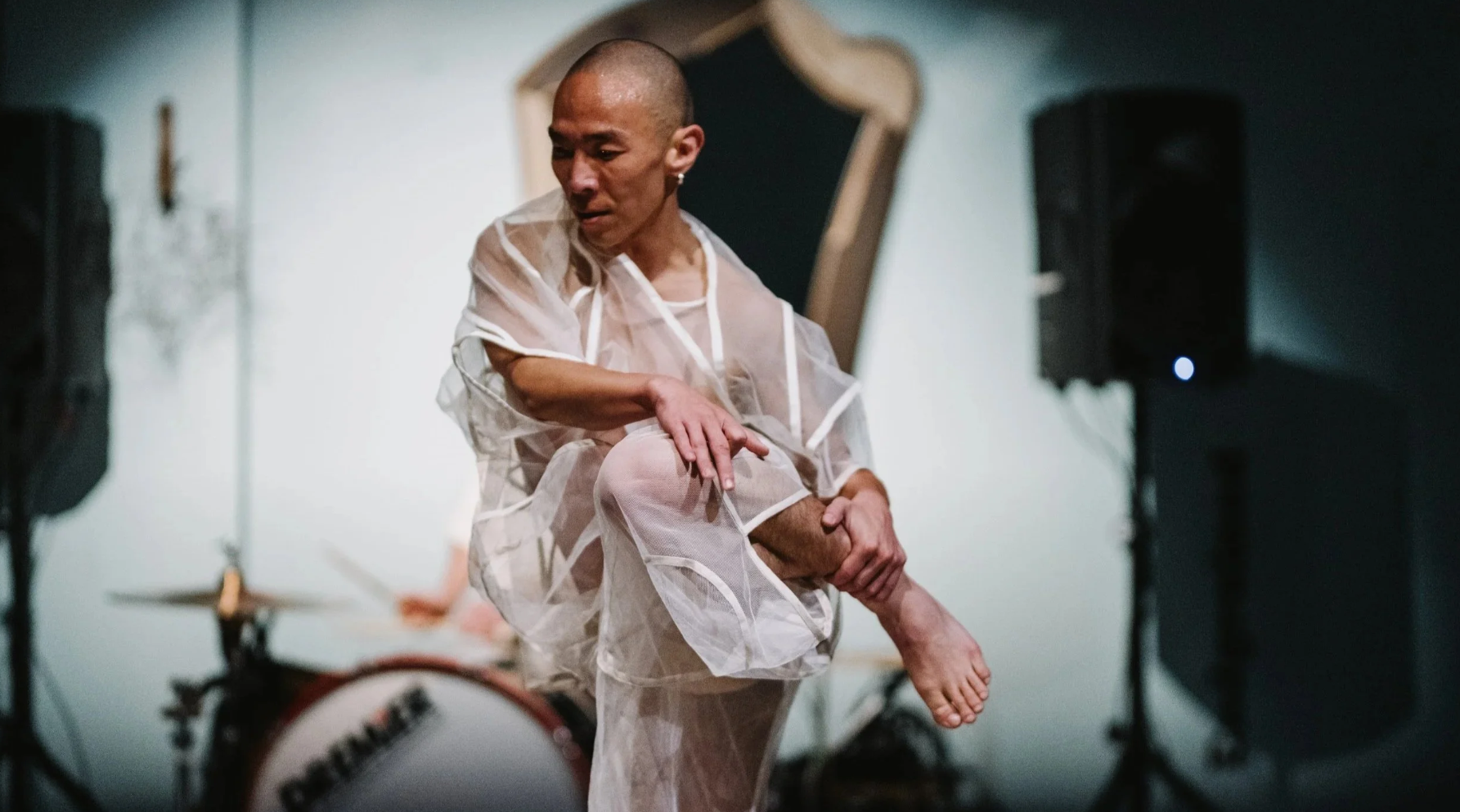
Performed as part of the Tempo Dance Festival
Presented by Objectspace
Drawing from Xin Ji’s debut solo work Body Story, this intimate gallery performance traces the story of a body through moments where the emotional and physical collide.
Body Story 0.25 is a deeply intimate work that strips away the comfortable distance often afforded by theatre and asks its audience to sit with the body in all its fragility, resilience and contradiction. Presented within the confines of Objectspace, choreographer and performer Xin Ji's condensed reimagining of his larger solo work becomes less a dance performance and more an act of exposure. Across a tightly concentrated half hour, movement, sound, image and costume converge to create a physically demanding meditation on identity, transformation and survival that unfolds only a few feet from its audience.
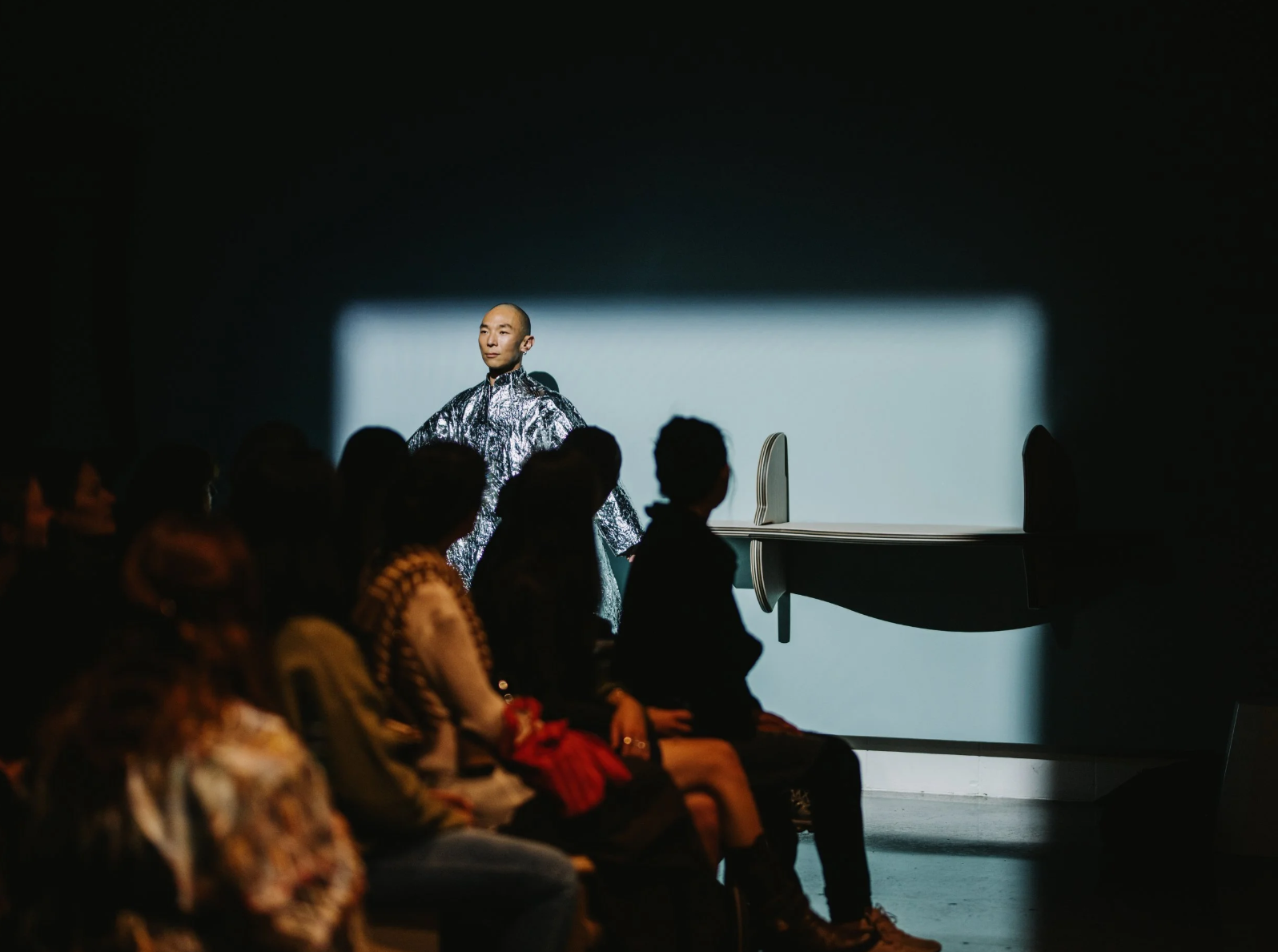
What distinguishes the experience almost immediately is the environment in which it is staged. Rather than occupying a traditional theatre with its clear divisions between performer and observer, Body Story 0.25 places viewers around the performance area itself. The audience surrounds the action from multiple angles, creating a sense that there is nowhere for either side to hide. Every shift of weight, every trembling muscle and every breath exists within close proximity. The arrangement invites observation but also creates an uncomfortable degree of mutual visibility. As viewers watch the performer, there is a lingering awareness of being observed in return.
This heightened intimacy amplifies every creative choice throughout the work. Small gestures become enormous. Moments of stillness carry extraordinary weight. The physical reality of the body becomes impossible to ignore. In a larger theatre, many details would likely be absorbed into the overall stage picture. Here, even the slightest adjustment of posture feels significant.
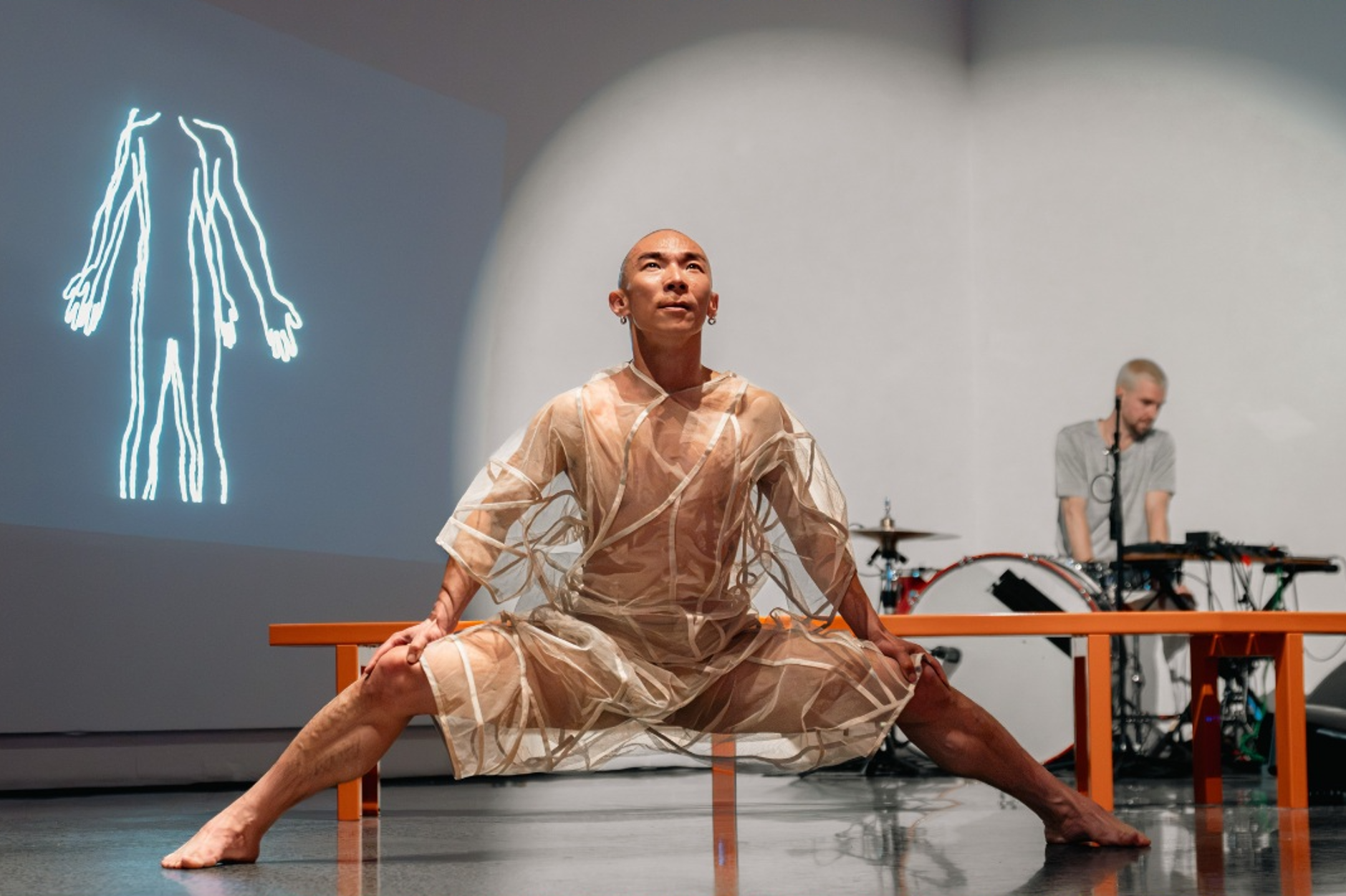
The performance unfolds less as a linear narrative than as an evolving emotional landscape. Xin Ji avoids straightforward storytelling in favour of a series of physical and psychological states that seem to flow into one another. There are moments characterised by uncertainty and hesitation, followed by passages of reckless abandon and eventual bursts of liberated energy. Rather than presenting these experiences as neatly separated chapters, the work allows them to overlap and bleed together, mirroring the often messy reality of personal transformation.
Underlying these shifting states is a powerful exploration of the body as both archive and battleground. The work frequently suggests a body carrying accumulated histories, expectations and pressures. Rather than illustrating specific events, the choreography locates meaning within the physical responses to those experiences. Memory is embedded in movement. Emotion reveals itself through muscular tension, collapse and recovery.
One of the most striking aspects of the production is its use of materiality. Costume and physical objects become extensions of the choreographic language rather than decorative design elements. At times, the body appears enclosed within a restrictive shell, creating an immediate visual impression of confinement and protection existing simultaneously. The performer navigates this imposed barrier through careful, constrained movements that make even minor shifts feel laborious.
The resulting imagery is remarkably effective. Every motion produces friction. Every attempt at movement feels negotiated rather than freely chosen. The body's relationship to the material surrounding it becomes increasingly fraught, creating a palpable sense of restriction that extends beyond the purely physical. The struggle appears psychological as much as anatomical, evoking broader questions about identity, adaptation and self-preservation.
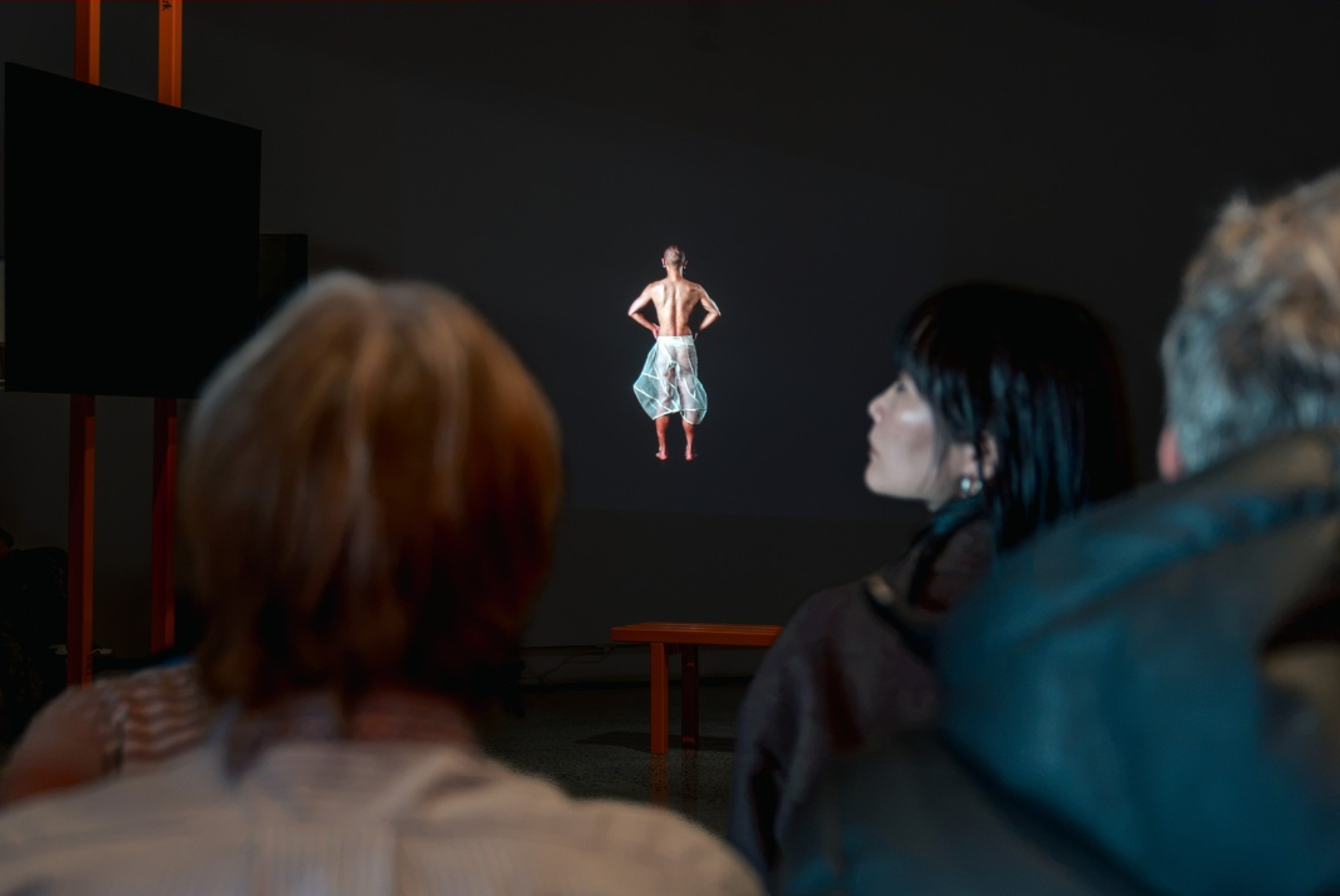
As the performance progresses, these visual metaphors evolve into something far more vulnerable. Layers fall away and the body becomes increasingly exposed. The transition radically alters the audience's relationship with the performer. Attention shifts from the external structures surrounding the body to the body itself. Skin, muscle and breath become central components of the visual landscape.
It is here that Xin Ji's extraordinary physical control becomes most apparent. The choreography pushes the body into demanding and often uncomfortable configurations that appear to test the limits of flexibility, balance and endurance. Limbs fold into unusual shapes. The spine curves and twists through positions that seem simultaneously elegant and painful. Throughout these sequences, there is a persistent tension between beauty and strain.
What makes these moments particularly impactful is the transparency of the effort involved. The performance does not attempt to disguise exertion. On the contrary, it foregrounds it. The audience can see the physical cost of every movement. Muscles quiver under pressure. Breathing becomes heavier. Balance is continually negotiated rather than effortlessly maintained. The body exists as a living, working entity rather than an idealised object.
This emphasis on labour gives the work much of its emotional power. The choreography often feels less concerned with achieving aesthetic perfection than with documenting a process of endurance. Certain passages resemble acts of persistence rather than acts of performance, generating a profound sense of vulnerability.
The collaboration with composer Alistair Deverick further deepens this effect. Rather than functioning as mere accompaniment, the live sound design actively shapes the atmosphere and drives the action. Sound and movement appear locked in an ongoing dialogue, each influencing the intensity and direction of the other. At times, the relationship feels almost adversarial, as if the sonic environment is applying pressure that the performer must physically respond to or overcome.
The live nature of the score contributes significantly to the performance's unpredictability. Because the sound is generated in real time, there is a constant sense of risk underpinning the work. The audience is not witnessing a fixed sequence but an active exchange between collaborators. This dynamic keeps the performance feeling alive and immediate.
The acoustic proximity of the gallery space enhances these interactions further. Viewers hear every scrape against the floor, every exhalation and every subtle shift in weight. Physical contact with surfaces generates sounds that become integral parts of the composition. The body itself functions as an instrument, producing textures and rhythms that blend with Deverick's sonic interventions.
The relationship between movement and sound also reinforces one of the work's central concerns: transformation. Neither element remains static for long. Each evolves in response to changing circumstances, creating a continual process of becoming rather than arriving. The performance resists definitive conclusions, favouring states of transition and uncertainty.
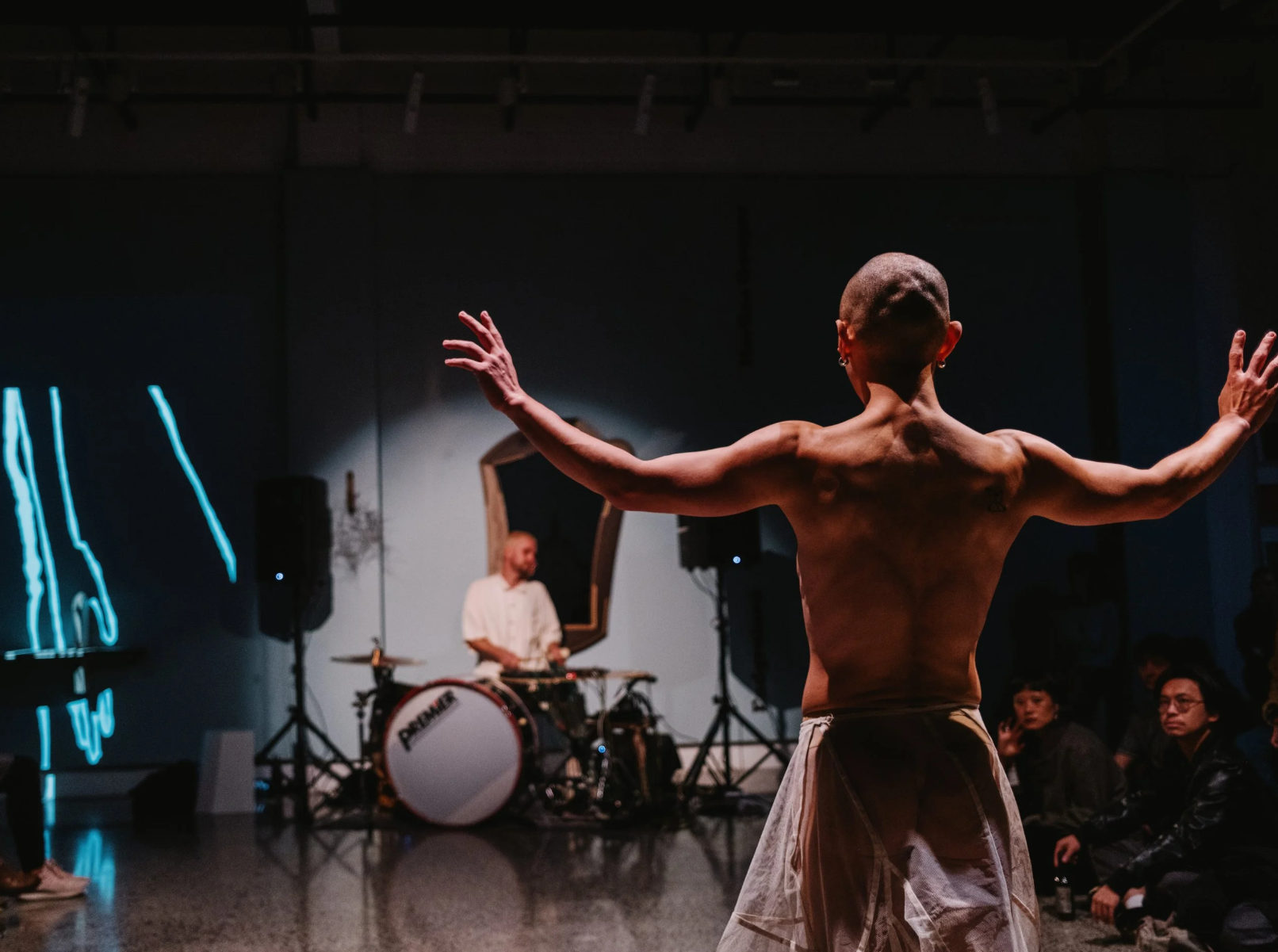
This focus on transformation extends to the broader themes embedded within the work. Body Story 0.25 frequently evokes the experience of negotiating systems that demand conformity while searching for spaces in which authenticity can exist. The body becomes both site and symbol of that struggle. It bends, adapts, resists and reclaims itself through movement. Rather than presenting transformation as neat or empowering, the work acknowledges its complexity and cost.
What ultimately makes Body Story 0.25 so compelling is its willingness to sit within discomfort. It asks audiences to engage not only with vulnerability but with the physical realities that vulnerability entails. There are no easy emotional shortcuts, no grand theatrical distractions and no comfortable distance from the performer. Instead, viewers are invited into an intimate encounter with a body in constant negotiation with itself and the world around it.
In just thirty minutes, Xin Ji crafts an experience that feels remarkably expansive. Through its fusion of contemporary dance, physical theatre, live sound and visual symbolism, Body Story 0.25 becomes a powerful reflection on endurance, identity and transformation. Staged within the intimate architecture of Objectspace, it achieves a rare level of immediacy, turning spectatorship into participation and physical presence into something deeply affecting. Long after the performance concludes, it leaves behind an awareness of the body's extraordinary capacity to endure, adapt and reinvent itself.
Review written by Alex Moulton
