Big Low Dream
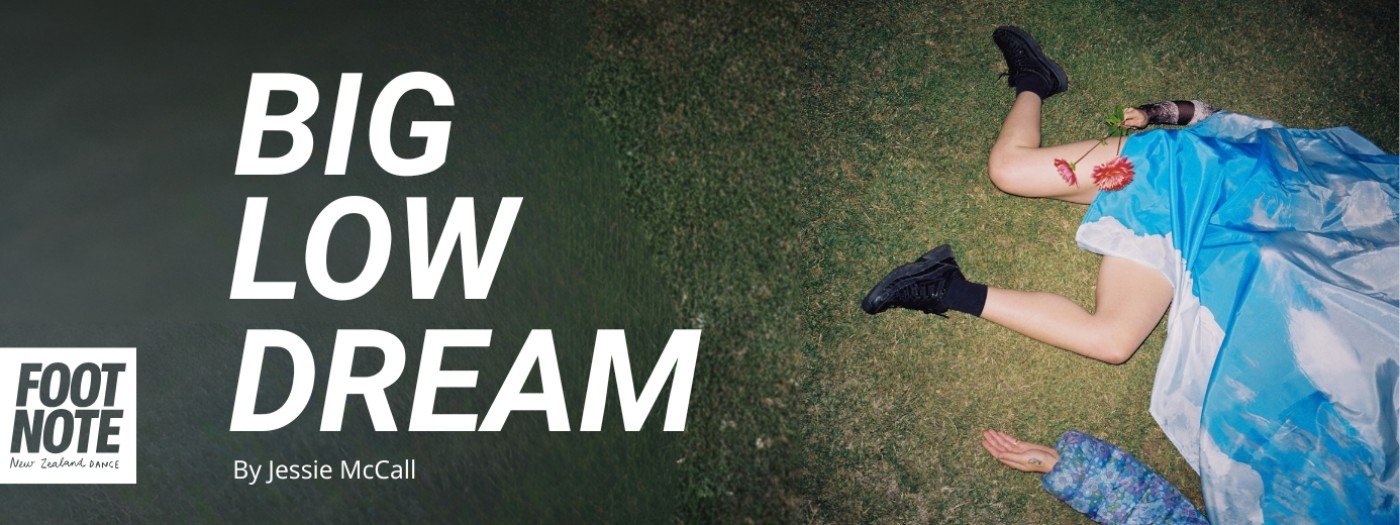
Performed as part of the 2026 Tempo Dance Festival
Presented by Footnote New Zealand Dance
Big Low Dream is a new contemporary dance work about what we reach for, together, in the dark. Choreographer Jessie McCall looks to dream logic - unruly, queer, ethically imaginative, as a way to hold onto meaning in a time of overlapping crises. Paradises slip their frames. Unexpected pleasures co-inhabit with the unthinkable. Spectacle flirts with collapse.
Big Low Dream is the kind of contemporary dance production that refuses to tell audiences exactly what it means. Instead, it presents a collection of images, movements, sounds, and ideas, then invites each person in the theatre to find their own path through them. At times it feels like performance art, at times installation, at times contemporary dance in its purest form. Most of all, it feels like a dream. Not the neat, coherent kind that can be explained over breakfast, but the strange, fragmented kind where symbols keep changing shape and meaning slips through your fingers the moment you think you've grasped it.
Choreographer Jessie McCall describes the work as an exploration of dreaming through a period of uncertainty, and that idea is immediately evident. Big Low Dream unfolds as a sequence of shifting dream states rather than a traditional narrative. Scenes emerge, dissolve, reappear in altered forms, and then vanish entirely. Images repeat with slight variations. Certain sounds return again and again. Blackouts function almost like gaps in memory, interrupting momentum before launching us somewhere completely different. The result is a production that constantly keeps the audience off-balance without ever feeling chaotic.
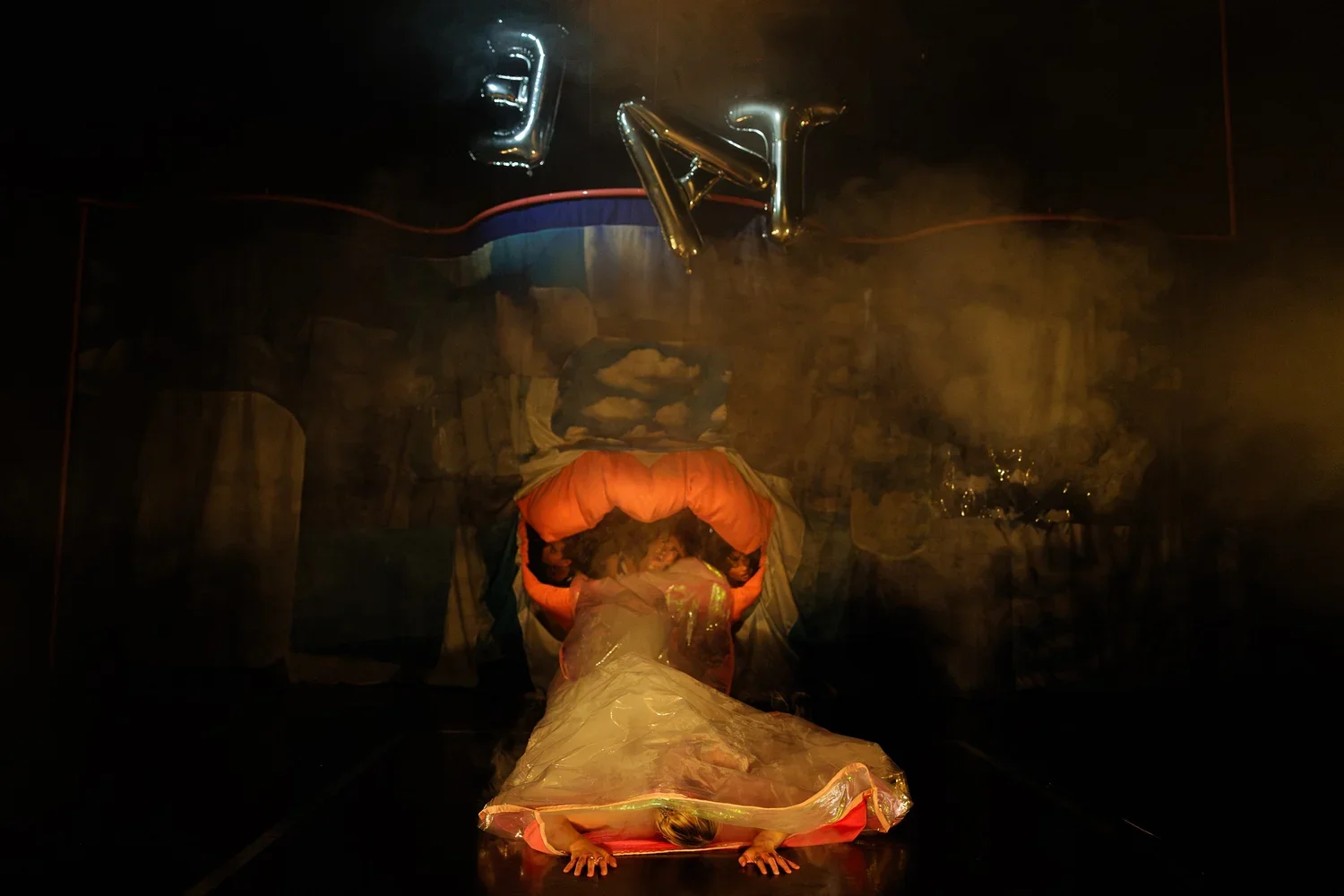
The visual design immediately establishes this dreamlike environment. A patchwork sky of blue and white clouds stretches across the back wall, dominated by a giant pair of oversized red lips. The image is simultaneously playful and slightly unsettling. Throughout the performance, the lips become a portal, swallowing dancers, revealing new props, and producing new surreal images. Sometimes it feels inviting. Sometimes it feels threatening. Much like the production itself, it refuses to settle into any single interpretation.
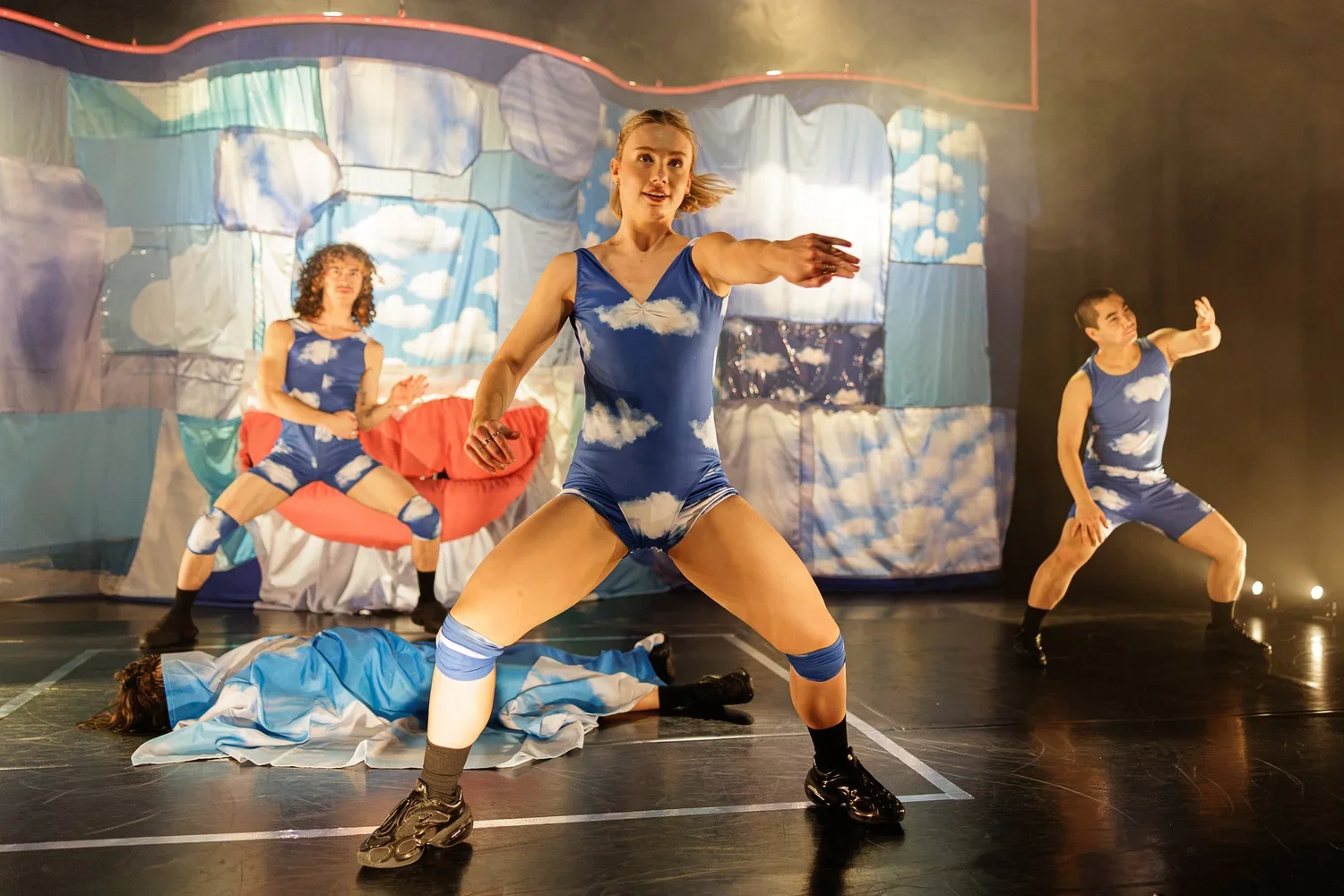
What makes Big Low Dream particularly fascinating is how choreography extends beyond the dancers themselves. In many productions, props exist to support movement. Here, props are movement. Balloons, smoke, plastic shapes, fabric, tripods, lighting effects, and sound cues become equal participants in the work. Objects are constantly transformed into something else entirely. A simple piece of material may begin as one thing before becoming several others over the course of the evening. Words formed from floating balloons appear and disappear, reshaping themselves into new meanings as scenes evolve. The audience is constantly being asked to reconsider what they are seeing.
That process of reinterpretation becomes central to the experience. Much like a dream, nothing remains fixed for long.
The soundtrack plays a major role in establishing this feeling. Built entirely from elements of The Cranberries' Dreams, Thomas Lambert's sound design transforms a familiar song into something increasingly unfamiliar. At times the music remains recognisable. At others, it breaks apart into distorted fragments, stretched notes, isolated vocals, pulsing rhythms, and unsettling drones. Moments of beauty sit alongside sections that are deliberately abrasive. Some sequences are surprisingly moving, while others border on overwhelming. Yet the soundscape consistently reinforces the production's dream logic, shifting mood and atmosphere with remarkable precision.
The dancers themselves are exceptional throughout.
Airu Matsuda, Caleb Heke, Sasha Matsumoto, and Millie Maden navigate an extraordinary amount of material, not only performing demanding choreography but also manipulating props, constructing visual images, and transitioning environments. The work constantly asks them to move between performer and object, between controlling and being controlled, between active participants and symbolic figures within larger visual compositions.
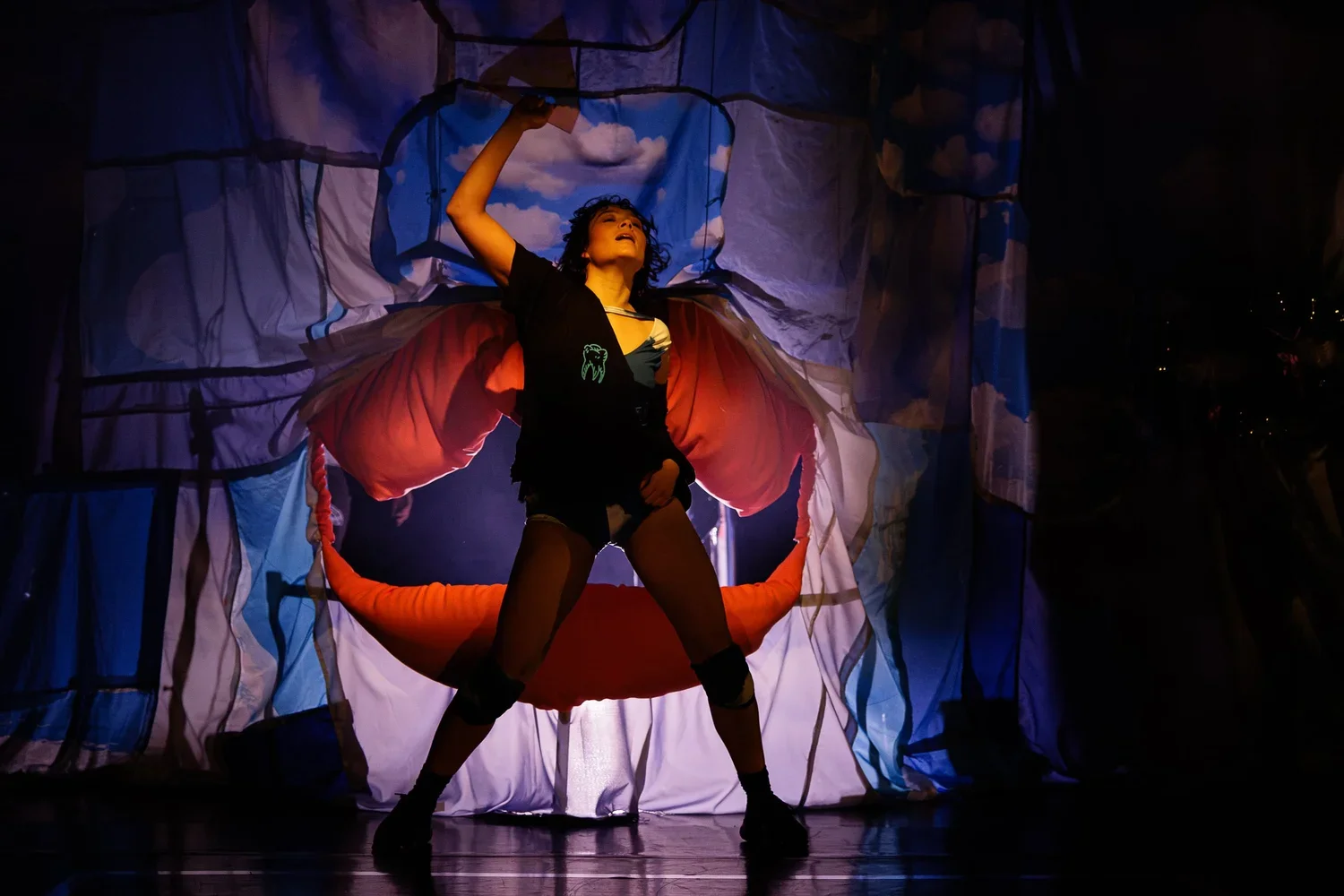
Each performer brings a distinct quality to the stage. Matsuda combines subtle humour with remarkable physical control, often finding small moments of comedy within increasingly surreal scenarios. Matsumoto brings a thoughtful, investigative quality to the movement, creating performances that feel curious and deeply engaged. Maden is explosive and energetic when required but equally capable of moments of vulnerability and restraint. There is a confidence to her work that makes even the strangest imagery feel grounded.
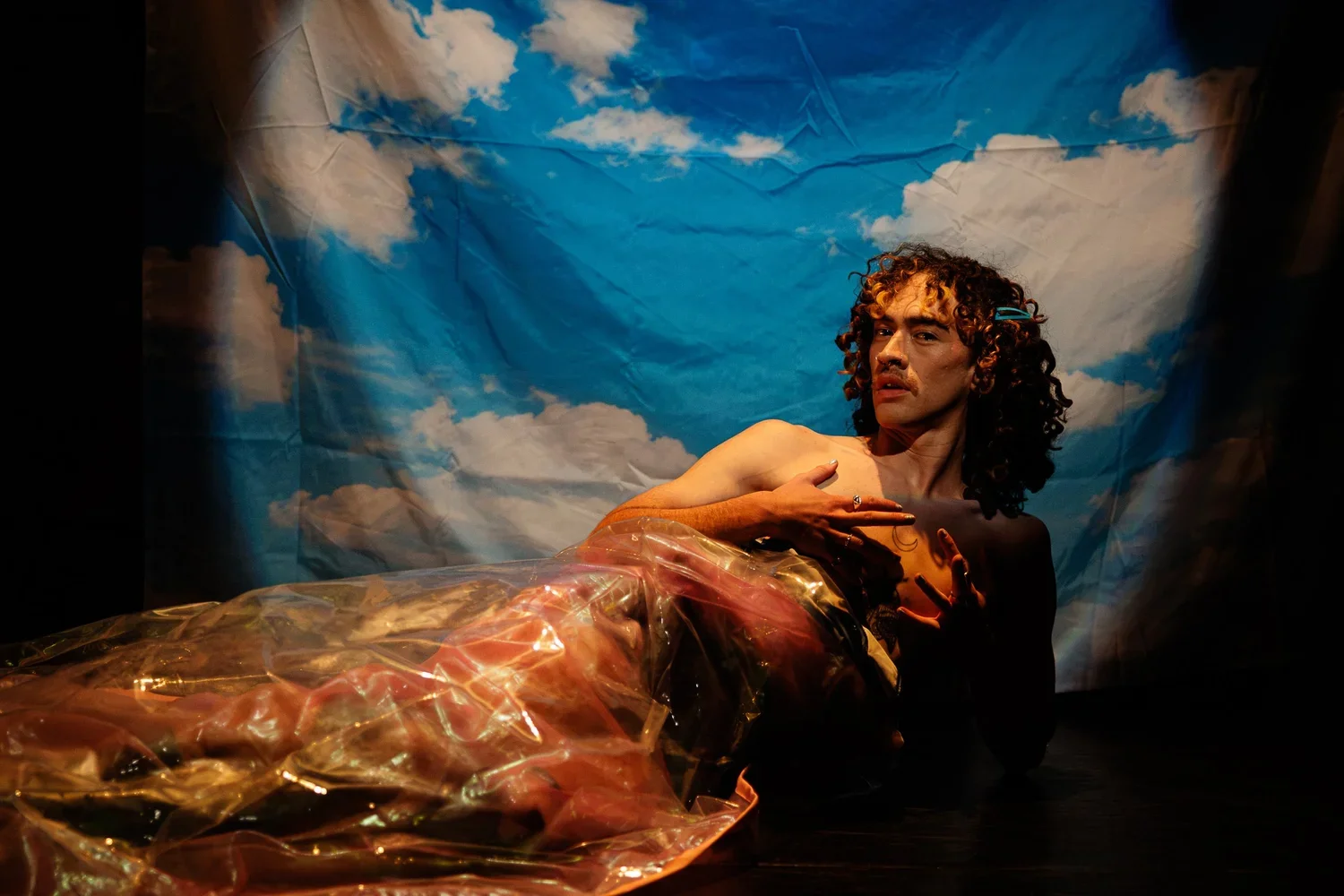
However, it is Caleb Heke who consistently draws the eye. His movement quality is extraordinary. There is a fluidity and athleticism to his dancing that almost seems to ignore conventional physical limitations. Certain sequences feel as though his body is being pulled by forces beyond his control, submitting and resisting simultaneously. Even in crowded scenes, attention naturally gravitates toward him. There are moments where the movement appears almost impossible, yet he executes it with remarkable grace.
Some of the production's strongest sections come through partnering work. A particularly inventive duet involving shared clothing creates a fascinating exploration of intimacy, interdependence, and confinement. Bodies become entangled within fabric, simultaneously supporting and restricting one another. The sequence is technically impressive, emotionally resonant, and visually captivating. Several other duets throughout the performance continue this exploration of connection, often blurring the line between tenderness and discomfort.
That tension exists throughout the entire work. Big Low Dream is frequently funny, but its humour often arrives alongside something darker. Gold balloons spelling out words can feel simultaneously ridiculous and ominous. A playful jazz sequence can reappear later carrying an entirely different emotional weight. Images that generate laughter in one moment become unsettling when revisited under different circumstances. The production continually shifts between fantasy and nightmare without committing fully to either.
The lighting design plays a significant role in facilitating these changes. Tony Black uses light not simply to illuminate the performers but to shape entire environments and emotional states. Areas of the stage emerge and disappear. Images are isolated or expanded. Transitions become part of the choreography. Combined with the recurring blackouts, the lighting creates the sensation of drifting between dream states, never entirely certain where one scene ends and another begins.
For audiences unfamiliar with contemporary dance, Big Low Dream may prove challenging. It offers no clear plot to follow and no singular message to take away. Contemporary dance often prioritises ideas, emotion, and interpretation over conventional storytelling, and this production fully embraces that philosophy. Every audience member will likely leave with a different understanding of what they have witnessed.
Yet that ambiguity is also the production's greatest strength.
Big Low Dream never insists upon a single meaning. Instead, it creates space for personal interpretation. Some images feel political. Others feel deeply emotional. Some appear completely abstract. The production trusts its audience enough to draw their own connections and construct their own narratives from the material presented.
Ultimately, Big Low Dream feels less like watching a story and more like stepping temporarily inside somebody else's subconscious. Strange images collide with familiar emotions. Humour coexists with anxiety. Beauty sits alongside discomfort. It is ambitious, inventive, and frequently mesmerising. While not every image will resonate equally with every audience member, there is no denying the imagination, craftsmanship, and physical commitment on display.
Like dreams themselves, Big Low Dream lingers long after it is over, not because it provides easy answers, but because it leaves you questioning what exactly you just experienced.
Big Low Dream was performed at Auckland’s Q Theatre on September 25 & 26, 2026.
Review written by Alex Moulton
