Cabaret
CABARET is presented by arrangement with Concord Theatricals on behalf of Tams-Witmark LLC.
Berlin, 1929. Germany stands on the edge of an abyss. In the twilight of the Jazz Age, nothing is taboo at the Kit Kat Club, where boys, girls and everyone in between are living each day as if it’s their last. Caught up in a hedonistic whirl of sex and booze, cabaret singer Sally Bowles is blind to the gathering storm, but even she can’t run from darkness. With the shadow of the Third Reich looming, soon the world will change forever. Yet, behind the fading velvet curtains of a seedy nightclub, the city’s pulsing underbelly is still frantically beating back the flames.
Some musicals age. Others somehow become more relevant with every passing decade. Cabaret falls firmly into the latter category. Set in Berlin at the end of the 1920s, it tells a story that unfolds against the rise of political extremism, social division, and growing public apathy, but what makes the musical so enduring is not its historical setting. It is the uncomfortable realisation that the warning signs it presents remain easy to recognise today. Auckland Theatre Company's production understands this perfectly, delivering a show that is simultaneously entertaining, seductive, heartbreaking, and increasingly difficult to ignore.
From the opening moments, audiences are invited into the world of the Kit Kat Club. The atmosphere is playful, provocative, and full of life. Music pours from the stage, performers weave between scenes with confidence, and there is a sense that every desire can be indulged somewhere within the club's walls. Director Benjamin Kilby-Henson allows audiences to become as immersed in the world as Clifford Bradshaw does. Like Clifford, we are encouraged to enjoy the spectacle, to laugh at the jokes, to be distracted by the glamour, and to lose ourselves in the seemingly endless festivities.
That seductive atmosphere is helped enormously by the production design. Dan Williams has created a set that does an impressive amount with relatively few major structural changes. The Kit Kat Club remains the visual backbone of the production, but through careful use of lighting, staging, and props, the same space becomes apartments, train stations, shops, streets, and intimate meeting places. Chairs are rearranged to create entirely new environments. A luggage chest suggests Clifford's writing room. A descending glass panel transforms part of the stage into Herr Schultz's fruit shop. The transitions happen organically and rarely interrupt the flow of the story. Everything remains visible, allowing scene changes to happen as part of the action rather than stopping the production dead while curtains close.
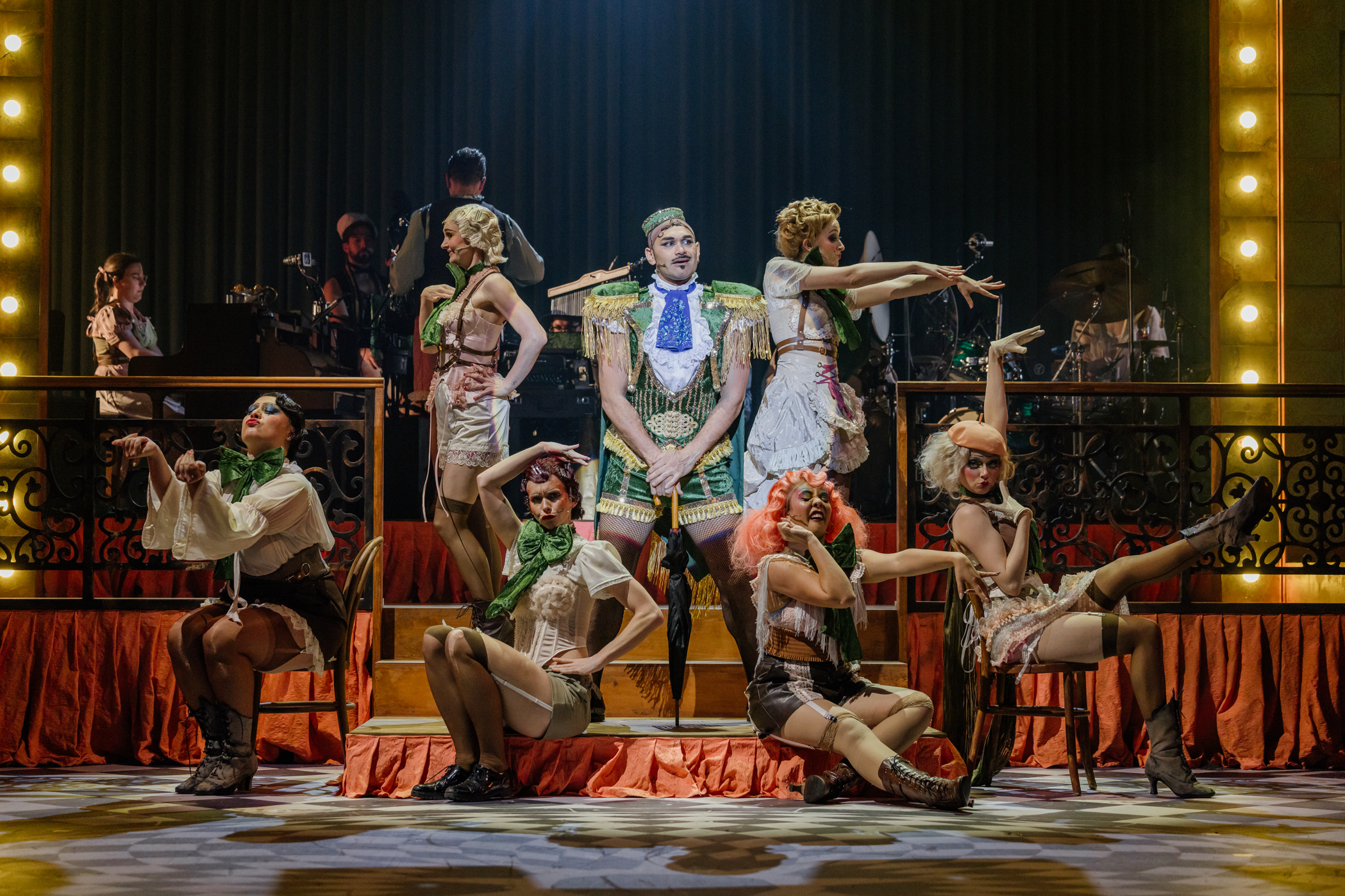
Photo credit: Andi Crown Photography
This approach helps reinforce one of Cabaret's greatest strengths. The show constantly moves forward. Characters drift in and out of scenes. Ensemble members help reshape locations while remaining part of the world. Choreography, blocking, and scene changes blend together so naturally that it often feels like the entire production is one continuous movement.
The first half thrives on that energy. Through Clifford Bradshaw's eyes, we are introduced to a Berlin overflowing with possibility. Justin Rogers gives Clifford a likeable curiosity that makes him an effective audience surrogate. He is fascinated by this lively and uninhibited city, eager to experience everything it has to offer while remaining slightly outside of it all. His relationship with Sally Bowles forms much of the show's emotional momentum, and Nomi Cohen proves an excellent Sally.
Cohen captures both the confidence and fragility that make Sally such an enduring character. On the surface, she appears fearless, throwing herself into every opportunity and refusing to acknowledge consequences. Beneath that confidence sits someone desperately trying to maintain control over her own narrative. Cohen handles both aspects beautifully. Her vocal performances are excellent throughout the production, but it is often in the quieter scenes that she does her strongest work, allowing Sally's vulnerabilities to emerge naturally without undermining the character's larger-than-life personality.
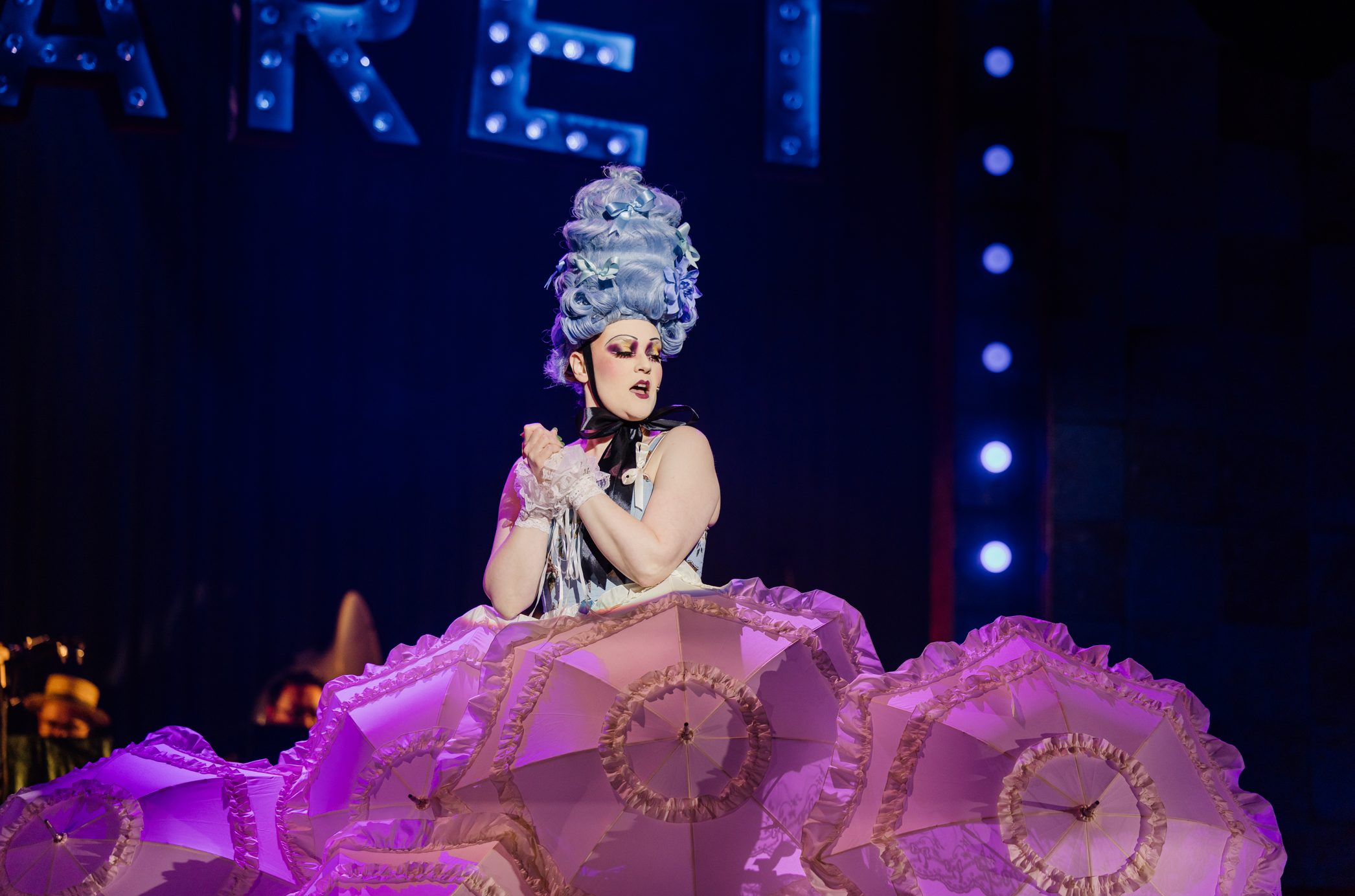
Photo credit: Andi Crown Photography
Hovering over everything is Matu Ngaropo's extraordinary Emcee. The Emcee is one of musical theatre's most iconic roles, functioning simultaneously as entertainer, narrator, observer, and warning sign. Ngaropo takes complete ownership of the character. His physicality is mesmerising, his vocals are exceptional, and his attention to detail is remarkable. Even in moments when he is not the centre of attention, the eye is often drawn back to him. The Emcee becomes the anchor that holds the entire production together, guiding audiences deeper into the spectacle while quietly reminding them that something darker is approaching.
As entertaining as the Kit Kat Club scenes are, Cabaret has always been more than a story about nightlife and excess. Beneath the flamboyance and humour sits an exploration of what happens when societies become comfortable ignoring problems because confronting them would be inconvenient. This production handles that transition exceptionally well. Gradually, almost imperceptibly, the atmosphere begins to change. The party continues, but the energy shifts. The optimism begins to drain away. Characters who initially seemed harmless reveal more complicated motivations. Politics begins intruding into lives that would prefer not to engage with it. The world outside the club starts forcing its way inside.
Jonathan Martin's Ernst Ludwig is particularly effective in this regard. The production wisely avoids presenting him as anything other than an ordinary member of the community for much of the story. That choice allows the character to feel fully integrated into the social fabric of Berlin, making his role in later events significantly more powerful. Martin gives Ernst a genuine warmth and charm that helps deepen the impact of the narrative.
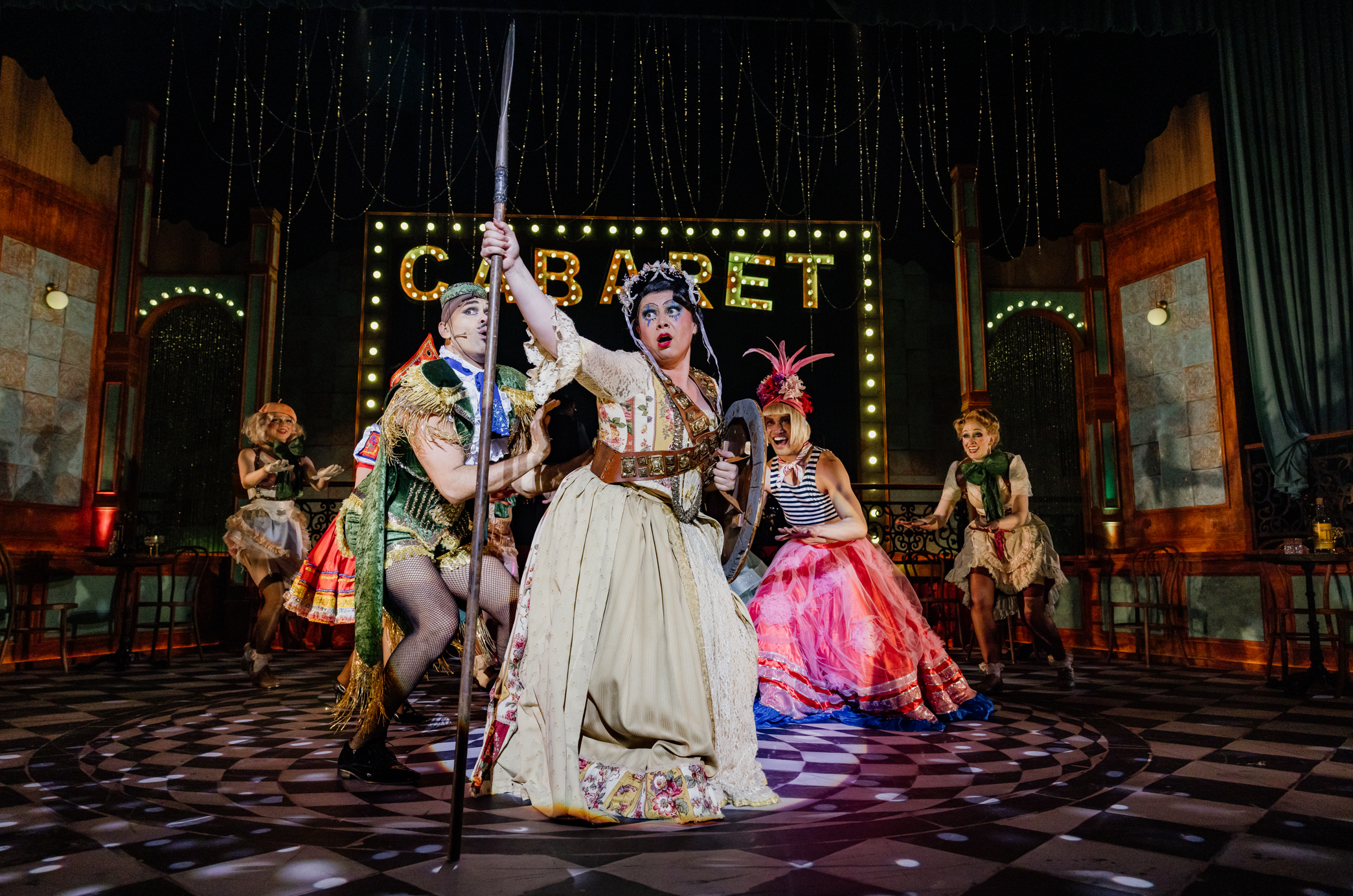
Photo credit: Andi Crown Photography
Meanwhile, Susan Brady and Steven Ray provide the emotional heart of the production as Fräulein Schneider and Herr Schultz. Their relationship offers a welcome contrast to the youthful impulsiveness surrounding them. Their story is simple, sincere, and deeply human. While other characters are consumed by excitement, ambition, or identity, Schneider and Schultz are simply trying to build a life together. Their scenes become increasingly affecting as external pressures begin to influence deeply personal decisions, and both actors deliver performances full of warmth and quiet dignity.
Visually, the production continues to impress throughout. Rachel Marlow and Bradley Gledhill's lighting design does much of the heavy lifting when it comes to shaping mood and location. Musical numbers are given distinct visual identities through colour and intensity. Spotlights constantly shift focus across the stage, guiding audience attention with precision. At times the lighting becomes almost oppressive, particularly during moments of rising tension. Combined with Kira Josephson's choreography, the result is a production that feels alive even during scene transitions.
The costuming is equally impressive and does a lot of subtle storytelling throughout the production. There is lace everywhere, layered fabrics, mismatched textures, and outfits that feel assembled rather than manufactured. In keeping with the economic reality of late Weimar Germany, the costumes rarely look like coordinated costumes in the traditional theatre sense. Instead, they give the impression that every character has pieced together their wardrobe from whatever was available to them. The result is a world that feels authentic, worn, and just a little frayed around the edges.

Photo credit: Andi Crown Photography
Despite every outfit being unique, there is still a strong visual coherence across the production. Colour is used particularly well during the larger musical numbers, helping individual performers stand out while reinforcing the mood of each scene. As the story progresses, the clothing gradually becomes more restrained and uniform, mirroring the wider changes taking place within the community. It is a subtle detail, but one that contributes significantly to the production's ability to tell its story visually.
The band's placement at the rear of the stage is another inspired choice. Rather than hiding the musicians away, the production embraces them as part of the Kit Kat Club itself. The music feels physically connected to the action unfolding on stage, reinforcing the sense that performance and reality are increasingly blurring together.
What ultimately makes this production so successful is its relevance. It is difficult to watch Cabaret without thinking about contemporary events. Rising political divisions, intolerance, social fragmentation, and public complacency all feel uncomfortably familiar. Yet the production never forces those comparisons. Instead, it trusts the audience to recognise them for themselves.
Cabaret remains one of the greatest musicals ever written because it understands how easily people convince themselves that someone else will deal with the problem. Auckland Theatre Company's production embraces that truth while delivering outstanding performances, inventive staging, and some genuinely breathtaking musical sequences. It is playful, poignant, and increasingly devastating. More than anything, it reminds us that history rarely arrives all at once. Sometimes it appears gradually, while everyone is still busy enjoying the show.
The season of Cabaret runs from 22 September - 18 October 2026 at Auckland’s ASB Waterfront Theatre. Purchase tickets here.
Review written by Alex Moulton
